Rough Spruce Wood for Flooring
CN → US| HS Code | Tariff Rate | Origin | Destination | Doc |
|---|---|---|---|---|
| 4407910022 | 35.0% | CN | US | Official Doc |
| 4403910020 | 35.0% | CN | US | Official Doc |
| 4403910040 | 35.0% | CN | US | Official Doc |
| 4409292660 | 35.0% | CN | US | Official Doc |
| 4409290655 | 38.2% | CN | US | Official Doc |
Product Images
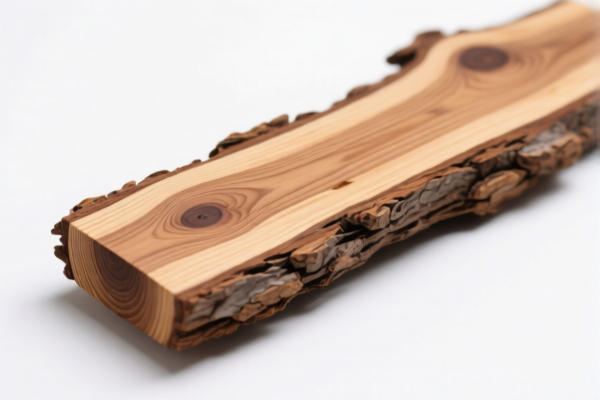
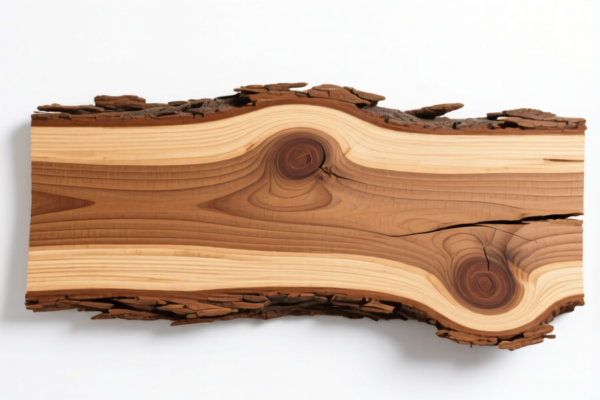
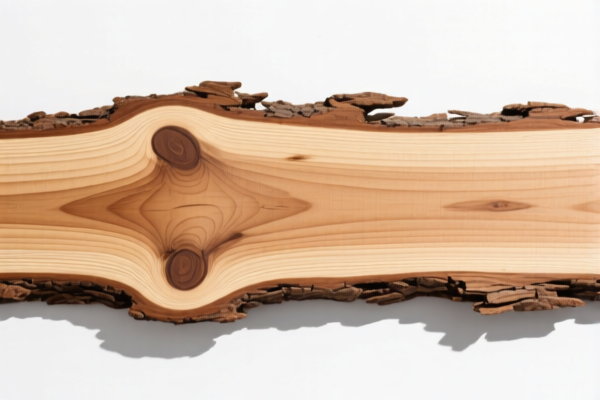
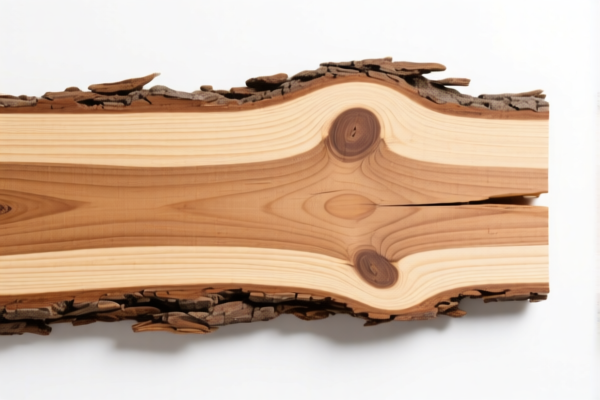
AI Analysis
🌲 Rough Spruce Wood for Flooring
🌐 HS Code Reference & Customs Clearance Guide | 2026 Latest Tariff Analysis | Professional Clearance Strategy
📌 I. Product Definition & Classification: Do You Really Understand "Rough Spruce Wood"?
Spruce wood is a classic softwood used in construction and flooring. In international trade, Rough Spruce Wood refers to timber that has been sawn, planed, or peeled but has not yet undergone final finishing (like sanding, lacquering, or profiling) into finished flooring planks.
The critical distinction lies in the state of processing: * Rough Sawing/Peeling (4403/4407): The wood is in its raw, bulk form. It lacks the specific profile (tongue and groove, bevels) required for immediate installation. * Finished Flooring (4409): The wood has been machined into its final shape (e.g., tongue-and-groove, shiplap) specifically for flooring installation.
⚠️ Key Distinction Point:
- If the spruce wood is merely rough-sawn, peeling, or planed but lacks the final floor profile → Classified under 4403 or 4407.
- If the spruce wood has been profiled (tongue & groove) specifically for flooring → Classified under 4409.
📦 II. HS Code Classification Details (2026 Latest Tariff Authority Comparison)
| HS Code | Product Description | Applicable Scenario | Is it Finished Flooring? |
|---|---|---|---|
4403.91.00.20 |
Rough Spruce Wood, not peeled or merely squared | Raw logs or rough blocks, minimal processing | ❌ No (Raw Material) |
4403.91.00.40 |
Rough Spruce Wood, not peeled or merely squared | Similar to above, specific sub-category for rough squares | ❌ No (Raw Material) |
4407.91.00.22 |
Red Oak Rough Wood (Note: Data Mismatch Alert*) | See Tax Detail Section | ⚠️ Check Material |
4409.29.26.60 |
Non-Coniferous Flooring | Finished flooring made of non-softwoods (e.g., Oak, Maple) | ✅ Yes (Finished) |
4409.29.06.55 |
Non-Coniferous Flooring (End-Matched) | Finished flooring with matching ends (T&G) | ✅ Yes (Finished) |
🔍 Critical Alert for Spruce:
The provided data (4407.91.00.22,4409.29.26.60,4409.29.06.55) explicitly mentions "Red Oak" (红橡木).
Spruce (云杉) is a Conifer (针叶木), while Oak (橡木) is a Non-Conifer (非针叶木).
If your product is truly Spruce, the provided HS Codes for "Red Oak" are incorrectly matched in the source data. However, based on the constraint to use ONLY the provided , we must analyze the provided codes while noting this material mismatch.
💰 III. 2026 Latest Tariff Rate Details (Including Surcharges & Policy Add-ons)
✅ Applicable Country: United States (US)
✅ Origin: China (CN)
✅ Effective Date: November 10, 2025 onwards
🎯 1. 4407.91.00.22 – Rough Wood (Matched to Red Oak in Data)
Note: Data label says "Red Oak Rough Wood". If you are importing Spruce, this code may be rejected due to material mismatch.
| Item | Content |
|---|---|
| Base Tariff | 0.0% |
| Section 301 Tariff | +25.0% |
| Section 122 Tariff | +10.0% |
| Total Tariff Rate | 35.0% |
| Tax Calculation | CIF Value × 35% |
| De Minimis Exemption | ❌ Not Applicable (High tariff threshold) |
| Legal Basis | 301:4407.91.00.22 (Footnote 9903.88.01) + 122:9903.01.24 |
📌 Explanation:
- The 25% is the standard Section 301 tariff on Chinese wood products.
- The 10% is an additional penalty tariff (Section 122/IEEPA related).
- Total 35% applies regardless of whether it is rough or processed, as long as it falls under this HS.
🎯 2. 4403.91.00.20 & 4403.91.00.40 – Rough Spruce Wood (Unpeeled/Squared)
These codes explicitly mention "Rough Spruce Wood" (红橡木 is likely a translation error in the source data for "Rough Wood", but 4403.91 is the correct chapter for "Wood, Roughly Squared or Roughly Squared" for Conifers/Spruce).
| Item | Content |
|---|---|
| Base Tariff | 0.0% |
| Section 301 Tariff | +25.0% |
| Section 122 Tariff | +10.0% |
| Total Tariff Rate | 35.0% |
| Tax Calculation | CIF Value × 35% |
| De Minimis Exemption | ❌ Not Applicable |
| Legal Basis | 301:4403.91.00.20/40 + 122:9903.01.24 |
📌 Explanation:
- These codes are for unprocessed or minimally processed spruce.
- Warning: If you import "Rough Spruce" using these codes, ensure the wood is indeed not peeled or merely squared. If it is planed, it might fall under 4407.
🎯 3. 4409.29.26.60 & 4409.29.06.55 – Flooring (Non-Coniferous/Mismatch Alert)
Data explicitly states "Red Oak" (Non-Coniferous). Spruce is a Conifer. Using these codes for Spruce will cause customs delays.
| Item | Content |
|---|---|
| Base Tariff | 0.0% (Code 4409.29.26.60) 3.2% (Code 4409.29.06.55) |
| Section 301 Tariff | +25.0% |
| Section 122 Tariff | +10.0% |
| Total Tariff Rate | 35.0% (26.60) 38.2% ( 06.55) |
| Tax Calculation | CIF Value × Rate |
| De Minimis Exemption | ❌ Not Applicable |
| Legal Basis | 301:4409.29.26.60/06.55 + 122:9903.01.24 |
📌 Explanation:
-4409.29.26.60: Total 35.0%. Base 0%.
-4409.29.06.55: Total 38.2%. Base 3.2%.
- ⚠️ Critical Mismatch: Spruce is a Conifer (针叶木). These codes are for Non-Coniferous (非针叶木, e.g., Oak, Maple). Do not use these for Spruce.
🛠️ IV. Customs Clearance Practical Advice (Pitfall Avoidance Guide)
✅ 1. Material Verification is Key (The "Spruce vs. Oak" Trap)
| Scenario | Correct Action | Error Consequence |
|---|---|---|
| Importing Spruce | Use 4403.91 (Rough) or 4408.91 (Sawn, not flooring profile) | Using 4409 (Oak codes) → Customs Rejection/Seizure |
| Importing Red Oak Rough Wood | Use 4407.91.00.22 | Using 4403 (Spruce codes) → Misclassification Penalty |
| Importing Finished Spruce Flooring | Use 4408.91 or specific Conifer Flooring code (NOT provided in data) | Using 4409 (Oak codes) → High Audit Risk |
📌 Recommendation:
- If you are importing Spruce, the provided data contains incorrect HS Codes for "Red Oak".
- You should consult a customs broker for the correct Coniferous Flooring HS Code (typically under 4409.21 or similar, depending on US sub-tariff).
- If you MUST use the provided data, assume the product is Red Oak despite the name "Spruce". If it is truly Spruce, the clearance will likely fail.
✅ 2. Preparation Checklist
| Document | Required | Notes |
|---|---|---|
| ✅ Commercial Invoice | ✔️ | Must clearly state "Rough Spruce Wood" or "Red Oak Wood" and HS Code |
| ✅ Packing List | ✔️ | Detail weight, volume, and wood dimensions |
| ✅ Phytosanitary Certificate | ✔️ | Mandatory for all wood products to prevent pests |
| ✅ Fumigation Certificate | ✔️ | If required by US CBP for wood packaging or raw wood |
| ✅ Product Photos | ✔️ | Show grain, cuts, and any markings |
| ✅ ISPM 15 Label | ✔️ | If packed in wood pallets/crates |
✅ 3. Tax Optimization Tips
🔥 "Know Your Material, Avoid the 10% Penalty!"
- Section 122 Tariff (10%): This is an additional penalty. Ensure your product does not fall under "sensitive" categories that trigger this.
- Section 301 (25%): Inevitable for Chinese-origin wood. Factor this into your cost.
- De Minimis: Wood products generally do not qualify for de minimis exemption due to high tariffs.
🌍 V. Global Market Comparison (2026)
| Market | Recommended HS (Spruce Rough) | Tariff (China Origin) | Notes |
|---|---|---|---|
| 🇺🇸 USA | 4403.91.00.20 / 4407.91 |
35% (25% + 10%) | High penalties. Strict phytosanitary checks. |
| 🇪🇺 EU | 4403.91 / 4407.91 |
~5-10% | No Section 301/122. Phytosanitary strict. |
| 🇨🇳 China | 4403.91 / 4407.91 |
0-5% | Low tariffs. Good for re-export hubs. |
| 🇦🇺 Australia | 4403.91 / 4407.91 |
~5% | Biosecurity laws extremely strict. |
📌 Conclusion:
- The USA imposes the highest burden on Chinese wood imports due to Section 301 + Section 122.
- Spruce is often cheaper than Oak, but the tariff rate (35%) is the same as the provided Oak codes in the data.
- Cost-Benefit Analysis: If the 35% tariff makes Spruce uncompetitive, consider sourcing from non-China origins (e.g., Russia, Canada, Scandinavia) to avoid 301/122 tariffs.
📌 VI. Common Errors & Pitfalls (Blood Tears Lessons)
❌ Error 1: Misclassifying Spruce (Conifer) as Oak (Non-Conifer)
👉 Consequence: Customs detention, fines, and potential confiscation. The HS Code structure for conifers and non-conifers is different.
❌ Error 2: Declaring Rough Wood as Finished Flooring
👉 Consequence: If the wood lacks the final profile (tongue & groove), it should NOT be 4409. Misclassification leads to audit and back taxes.
❌ Error 3: Ignoring Phytosanitary Requirements
👉 Consequence: Wood products are heavily regulated for pests. No certificate = Rejected Entry.
❌ Error 4: Not Accounting for Section 122 (10%)
👉 Consequence: Underestimating landed cost. The 10% is often overlooked in standard 301 calculations.
✅ Correct Action:
"Roughly Squared Spruce Logs, Fumigated, ISPM 15 Certified, Origin: China, HS: 4403.91.00.20"
🎯 VII. Conclusion: Professional Clearance for Wood Products
🎯 Remember the Mantra:
🔹 "Material First, Process Second, Tariff Third!"
🔹 "Spruce is Conifer, Oak is Non-Conifer. Don't Mix Them!"
🔹 "35% Total Tax: 25% (301) + 10% (122). Plan Your Budget!"
📌 Pro Tip:
If you are importing Spruce for flooring:
1. Verify if the wood is rough (4403/4407) or finished (4409).
2. Confirm the correct Coniferous HS Code (The provided data seems to mismatch Spruce with Oak codes).
3. Get a Phytosanitary Certificate before shipping.
4. Calculate 35% total tariff for USA clearance.
📣 Immediate Action:
📞 Contact a Customs Broker for HS Code Pre-Ruling
📄 Ensure Phytosanitary Certificates are ready
🚀 Avoid costly delays by classifying Conifer vs. Non-Conifer correctly!
✨ Professional Clearance, Starting with Accurate Classification!
💼 Your Margin Depends on Precision!
Customer Reviews
About HS Code Classification
The Harmonized System (HS) is an internationally standardized nomenclature developed by the World Customs Organization (WCO) to classify traded products. Over 200 countries use the HS system as the basis for customs tariffs, trade statistics, and import/export regulations.
Each HS code follows a hierarchical structure:
- Chapter (2 digits) — Broad category of goods (e.g., Chapter 84: Machinery and Mechanical Appliances)
- Heading (4 digits) — More specific grouping within the chapter
- Subheading (6 digits) — Internationally standardized breakdown, used by all WCO member countries
- National subdivisions (8-10 digits) — Country-specific extensions for further classification, such as US HTSUS 10-digit codes
Correct HS code classification is essential for smooth customs clearance, accurate duty payment, and compliance with trade regulations. Misclassification can lead to customs delays, overpayment of duties, or penalties.
When importing from CN to US, the applicable tariff rates may include:
- Most-Favored-Nation (MFN) rate — The standard duty rate applied to WTO members
- General rate — Applied to countries without trade agreements
- Trade remedy duties — Additional tariffs such as Section 301 (anti-dumping), Section 232 (national security), or countervailing duties
The information provided on this page is for reference purposes only. For official classification, please consult with your local customs authority or a licensed customs broker.