Rough Spruce and Fir Log Poles
CN → US| HS Code | Tariff Rate | Origin | Destination | Doc |
|---|---|---|---|---|
| 4407120019 | 35.0% | CN | US | Official Doc |
| 4407120017 | 35.0% | CN | US | Official Doc |
| 4401110000 | 35.0% | CN | US | Official Doc |
| 4407120059 | 35.0% | CN | US | Official Doc |
| 4407120020 | 35.0% | CN | US | Official Doc |
| 4403240135 | 35.0% | CN | US | Official Doc |
Product Images
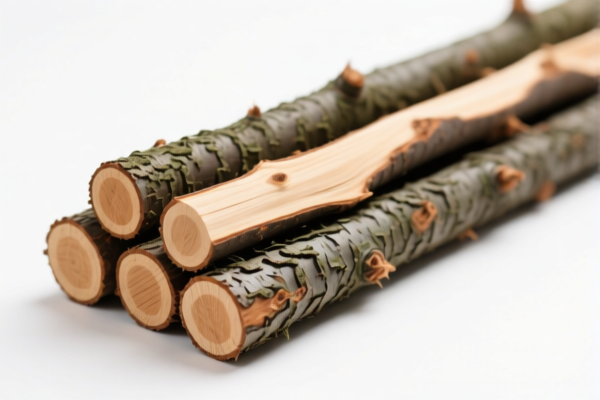
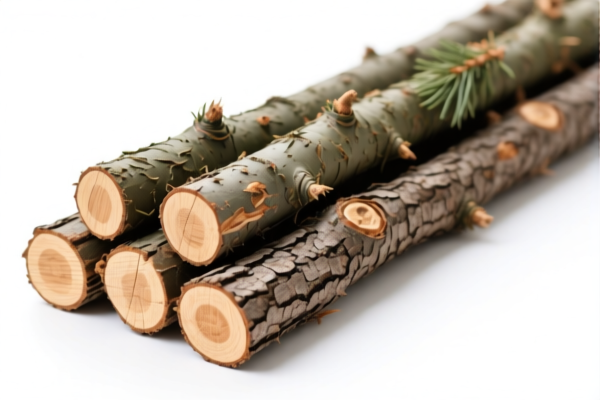
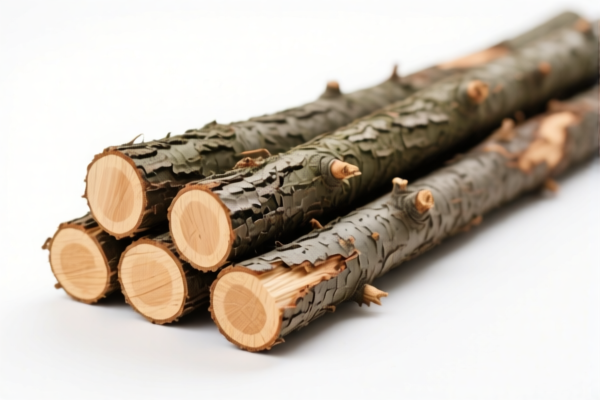
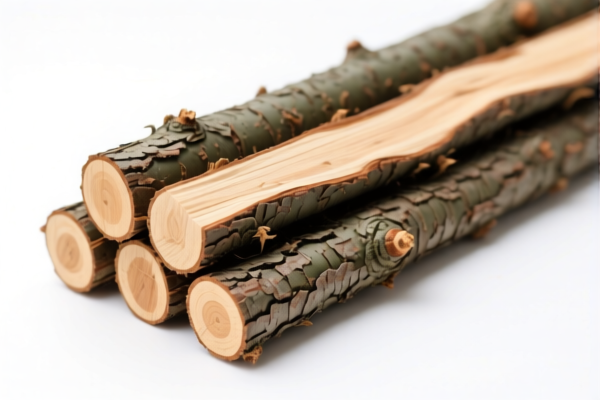
AI Analysis
🌲 Rough Spruce and Fir Log Poles (Unprocessed Timber)
🌐 HS Code Reference & Customs Clearance Guide | 2026 Latest Tariff Analysis | Professional Clearance Strategy for North American Markets
📌 I. Product Definition & Classification: Do You Understand "Rough Logs"?
Rough Spruce and Fir Log Poles refer to unprocessed timber derived from Spruce (Picea) and Fir (Abies) species, typically characterized by their natural shape or simply debarked and trimmed, without significant planing, sawing, or industrial processing into standard lumber dimensions. In international trade, these are classified under Chapter 44 (Wood and Articles of Wood), specifically focusing on whether they are considered "raw fuel/log" or "sawn/rough timber."
⚠️ Key Distinction:
- If the logs are primarily for fuel or remain in their natural cylindrical state without specific sawing dimensions → Often grouped under 4401.11 (Fuel wood in logs) or specific raw log categories.
- If the logs are sawn longitudinally (even if rough) or intended for structural use (poles) with specific rough-hewn characteristics → They fall under 4407.12 (Wood sawn lengthwise).
- Critical Note: The term "Poles" often implies a structural form, but if they are "Rough" and not planed, customs authorities scrutinize whether they meet the definition of "sawn" (4407) or "raw logs" (4401).
📦 II. HS Code Classification Details (2026 Latest Tariff Authority Comparison)
| HS Code | Product Description | Application Scenario | Processing State |
|---|---|---|---|
4401.11.00.00 |
Spruce and Fir Logs (Fuel Wood) | Logs primarily for burning; natural cylindrical shape; minimal processing. | ✅ Raw/Natural |
4403.24.01.35 |
Rough Spruce/Fir Logs (Unprocessed) | Logs that are debarked but not sawn; raw material for further processing. | ✅ Unprocessed |
4407.12.00.19 |
Rough Spruce/Fir Poles (Specific Rough Grade) | Sawn/rough-hewn poles, Spruce/Fir, specific rough texture classification. | ✅ Rough Sawn |
4407.12.00.17 |
Rough Spruce/Fir Poles (Other Rough) | Similar to above, covering other rough texture variants not specified in 19. | ✅ Rough Sawn |
4407.12.00.20 |
Spruce/Fir Wood, Sawn, Other | Spruce/Fir wood sawn longitudinally, not specified as rough poles. | ✅ Sawn |
4407.12.00.59 |
Other Spruce/Fir Wood, Sliced/Sawn | Spruce/Fir wood sliced or sawn, not fitting specific rough pole categories. | ✅ Sliced/Sawn |
🔍 Key Reminder:
-4401.11vs.4407.12: The primary difference is processing. If the log is merely debarked and tipped, it may lean towards4401. If it is sawn to length or shaped (even roughly) into a pole, it typically falls under4407.
- "Rough" Classification: Codes ending in.17and.19specifically target rough surfaces, distinguishing them from planed or smoothed timber.
- Species Specificity: All codes below specifically require Spruce or Fir (Picea/Abies). Other softwoods (e.g., Pine) are misclassified here.
💰 III. 2026 Latest Tariff Rate Breakdown (Including Surtaxes, Policy Surcharges)
✅ Applicable Country: United States (US)
✅ Country of Origin: China (CN)
✅ Effective Date: November 10, 2025 (and subsequent imports)
🎯 1. 4401.11.00.00 – Spruce and Fir Logs (Fuel Wood)
| Item | Content |
|---|---|
| Base Tariff | 0% (ad valorem) |
| USITC Surtax | +25% (under USITC Footnote for Section 301) |
| Section 122 Surtax | +10% (Specific trade remedy provision) |
| Total Tariff | 35.0% |
| Tax Calculation | CIF Value × 35% |
| De Minimis Eligibility | ❌ Not Eligible (deny_de_minimis) |
| Legal Basis Path | Section 301:4401.11.00.00 → Section 122: 4401.11.00.00 |
📌 Explanation:
- The 25% surtax is imposed under Section 301 of the Trade Act of 1974, targeting specific Chinese imports.
- The 10% surtax under Section 122 is a specific additional duty on certain wood products.
- Total 35% is a significant cost barrier. Accurate declaration is crucial to avoid penalties.
🎯 2. 4403.24.01.35 – Rough Spruce/Fir Logs (Unprocessed)
| Item | Content |
|---|---|
| Base Tariff | 0% |
| USITC Surtax | +25% |
| Section 122 Surtax | +10% |
| Total Tariff | 35.0% |
| Tax Calculation | CIF × 35% |
| De Minimis Eligibility | ❌ Not Eligible |
| Legal Basis Path | Section 301:4403.24.01.35 → Section 122: 4403.24.01.35 |
📌 Note:
- Even though these are "unprocessed," they are subject to the same high surtaxes as sawn timber due to their origin and product category.
- Ensure the description explicitly states "Rough" and "Unprocessed" to distinguish from planed lumber.
🎯 3. 4407.12.00.19 & 4407.12.00.17 – Rough Spruce/Fir Poles (Specific Categories)
| Item | Content |
|---|---|
| Base Tariff | 0% |
| USITC Surtax | +25% |
| Section 122 Surtax | +10% |
| Total Tariff | 35.0% |
| Tax Calculation | CIF × 35% |
| De Minimis Eligibility | ❌ Not Eligible |
| Legal Basis Path | Section 301:4407.12.00.1X → Section 122: 4407.12.00.1X |
📌 Explanation:
- These codes cover sawn but rough poles. The distinction between.19and.17is often based on specific roughness grades or dimensions defined in the tariff notes.
- 35% total duty applies uniformly.
- Misclassifying as "Planed Lumber" or "Other Wood" may lead to audits and back-taxes.
🎯 4. 4407.12.00.20 & 4407.12.00.59 – Other Spruce/Fir Wood (Sawn/Sliced)
| Item | Content |
|---|---|
| Base Tariff | 0% |
| USITC Surtax | +25% |
| Section 122 Surtax | +10% |
| Total Tariff | 35.0% |
| Tax Calculation | CIF × 35% |
| De Minimis Eligibility | ❌ Not Eligible |
| Legal Basis Path | Section 301:4407.12.00.2X/5X → Section 122: 4407.12.00.2X/5X |
📌 Note:
- These are "catch-all" categories for Spruce/Fir wood that is sawn/sliced but doesn't fit the specific "Rough Pole" definitions.
- If your product is a standard rough pole, using these codes might be incorrect if more specific.17/.19codes apply.
🛠️ IV. Customs Clearance Practical Advice (Real-World Pitfall Avoidance Guide)
✅ 1. Required Documentation List (All are Mandatory)
| Document | Must Provide | Description |
|---|---|---|
| ✅ Product Specification Sheet | ✔️ | Include species (Spruce/Fir), dimensions, moisture content, processing state (Rough/Debarked). |
| ✅ Photos of Goods | ✔️ | Clear images showing the rough texture, debarking status, and ends of the logs/poles. |
| ✅ Commercial Invoice | ✔️ | Must clearly state "Rough Spruce and Fir Log Poles" and exact HS Code. |
| ✅ Packing List | ✔️ | Detail weight, volume, and number of poles/logs. |
| ✅ Phytosanitary Certificate | ✔️ | Essential for wood products to prevent pest introduction. |
| ✅ Fumigation Certificate | ✔️ | Required if not pressure-treated. |
| ✅ Origin Certificate | ✔️ | To prove Country of Origin (China) and apply correct surtaxes. |
✅ 2. Declaration Tips (Key Mantra)
🔥 “Be Specific: Species, Shape, and Surface! ‘Rough’ must be declared!”
| Situation | Correct Declaration | Incorrect Practice |
|---|---|---|
| Logs are natural, cylindrical, not sawn | 4401.11.00.00 or 4403.24.01.35 |
Misdeclaring as "Lumber" → Risk of classification error |
| Poles are sawn but rough-surfaced | 4407.12.00.19 or 4407.12.00.17 |
Declaring as "Planed Lumber" → Wrong rate |
| Product is a mix of Spruce and Fir | Ensure description lists both or the dominant species | Declaring only "Softwood" → Vague and risky |
| Surface is unplaned | Explicitly use "Rough" in description | Describing as "Sawn Timber" without "Rough" |
✅ 3. Special Cases Handling
| Situation | Handling Advice |
|---|---|
| Mixed Species | If the shipment contains both Spruce and Fir, declare the primary species or use a code that covers both if available (e.g., 4407.12.00.59 might be a fallback if specific codes don't fit, but prefer specific). |
| Debarked vs. Unbarked | Clearly state if logs are debarked. Debarked logs may still be 4403 or 4401 depending on further processing. |
| Moisture Content | High moisture content may trigger additional phytosanitary checks. Ensure documentation reflects current state. |
| Intended Use | If declared as "Fuel Wood" (4401), ensure they are not suitable for structural use to avoid misclassification. |
🌍 V. Global Market Clearance Comparison (2026 Latest)
| Country/Region | Recommended HS Code | Tariff | Certification | Remarks |
|---|---|---|---|---|
| 🇺🇸 United States | 4407.12.00.19 / 4401.11.00.00 |
35% (25% + 10%) | Phytosanitary + Fumigation | High surtaxes for Chinese origin. |
| 🇨🇳 China | 4407.12 / 4401.11 |
0-5% (Export Duty varies) | Fumigation | Main import hub for softwood. |
| 🇪🇺 European Union | 4407.12 / 4401.11 |
0-5% (Eco-Voluntary) | EUTM (EU Timber Regulation) | Strict legality verification. |
| 🇯🇵 Japan | 4407.12 / 4401.11 |
0% (FTA eligible) | Phytosanitary | FTA benefits if from eligible country. |
📌 Conclusion:
- The US is the most challenging market due to the 35% total tariff (25% Section 301 + 10% Section 122).
- China, EU, and Japan have significantly lower or zero tariffs, making them more competitive for timber exports.
- Phytosanitary compliance is critical globally to prevent rejection at borders.
📌 VI. Common Errors & Pitfalls (Lessons Learned the Hard Way)
❌ Error 1: Declaring "Rough Poles" as "Planed Lumber" (4407.12.00.00 generic)
👉 Consequence: Customs may reject due to mismatched physical characteristics; potential fines for misdeclaration.
❌ Error 2: Omitting "Rough" in the description
👉 Consequence: Customs may assume planed/smooth timber, leading to delays and requests for additional proof of surface texture.
❌ Error 3: Not providing a Phytosanitary Certificate
👉 Consequence: Shipment rejection or destruction at the port of entry due to pest risks.
❌ Error 4: Misidentifying Species (e.g., calling Pine "Spruce")
👉 Consequence: Incorrect HS Code assignment; potential audit and back-taxes.
✅ Correct Practice:
"Rough Spruce and Fir Log Poles, Debarked, Unprocessed, for Structural Use, Certified Fumigated, HS Code: 4407.12.00.19"
🎯 VII. Conclusion: Precise Declaration for Smooth Clearance
🎯 Remember the Mantra:
🔹 "Rough = 4407.12.00.17/19, Log = 4401.11/4403.24"
🔹 "35% Total Tariff for US/China, Plan Everything Ahead!"
🔹 "Phytosanitary is Key, No Certificate, No Entry!"
📌 Pro Tip:
If you are exporting to the US, consider supply chain diversification or processing in third countries (where eligible) to mitigate the 35% tariff burden.
Always request a Pre-Ruling (Advance Ruling) from US Customs and Border Protection (CBP) for high-volume shipments.
📣 Immediate Action:
📞 Consult with a licensed customs broker.
📸 Provide high-resolution photos of the rough surface and log ends.
🚀 Ensure Phytosanitary Certificates are obtained before shipping.
✨ Professional Clearance Starts with Accurate Classification!
💼 Every Percent of Tariff Counts in Your Profit Margin!
Customer Reviews
About HS Code Classification
The Harmonized System (HS) is an internationally standardized nomenclature developed by the World Customs Organization (WCO) to classify traded products. Over 200 countries use the HS system as the basis for customs tariffs, trade statistics, and import/export regulations.
Each HS code follows a hierarchical structure:
- Chapter (2 digits) — Broad category of goods (e.g., Chapter 84: Machinery and Mechanical Appliances)
- Heading (4 digits) — More specific grouping within the chapter
- Subheading (6 digits) — Internationally standardized breakdown, used by all WCO member countries
- National subdivisions (8-10 digits) — Country-specific extensions for further classification, such as US HTSUS 10-digit codes
Correct HS code classification is essential for smooth customs clearance, accurate duty payment, and compliance with trade regulations. Misclassification can lead to customs delays, overpayment of duties, or penalties.
When importing from CN to US, the applicable tariff rates may include:
- Most-Favored-Nation (MFN) rate — The standard duty rate applied to WTO members
- General rate — Applied to countries without trade agreements
- Trade remedy duties — Additional tariffs such as Section 301 (anti-dumping), Section 232 (national security), or countervailing duties
The information provided on this page is for reference purposes only. For official classification, please consult with your local customs authority or a licensed customs broker.