Rough Square Birch Wood
CN → US| HS Code | Tariff Rate | Origin | Destination | Doc |
|---|---|---|---|---|
| 4404200080 | 35.0% | CN | US | Official Doc |
| 4404200090 | 35.0% | CN | US | Official Doc |
| 4407960019 | 35.0% | CN | US | Official Doc |
| 4407960011 | 35.0% | CN | US | Official Doc |
| 4403960123 | 35.0% | CN | US | Official Doc |
Product Images
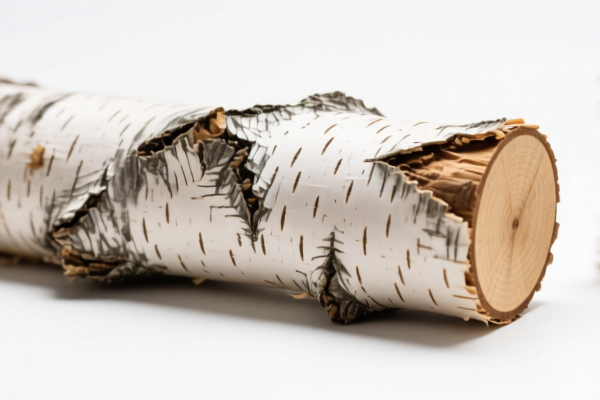
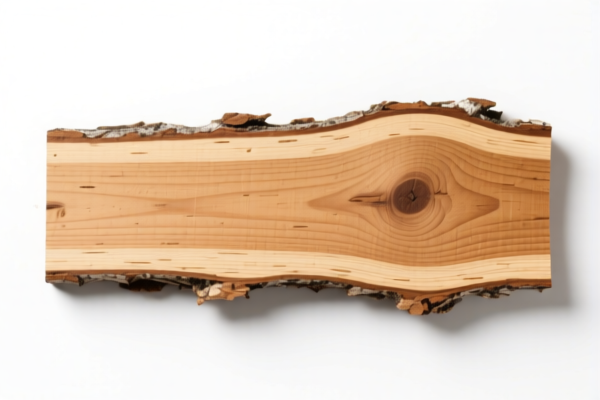
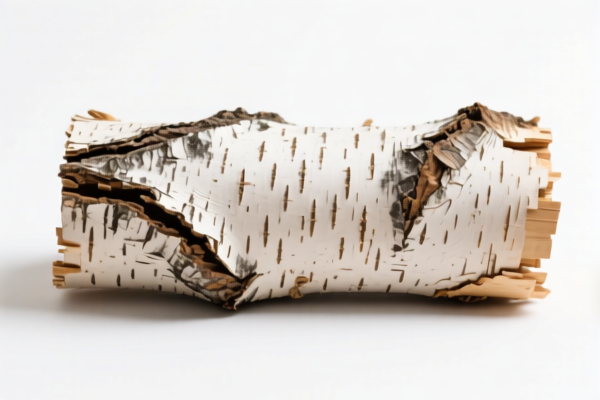
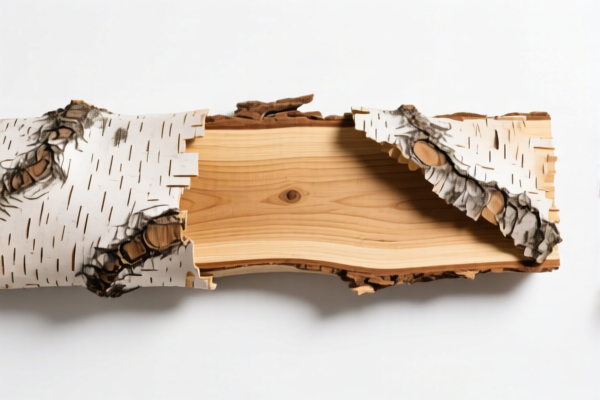
AI Analysis
🪵 Rough Square Birch Wood (Unprocessed/Processed Timber)
🌐 HS Code Reference & Customs Clearance Guide | 2026 Latest Tariff Analysis | Professional Customs Strategy
📌 I. Product Definition: What is "Rough Square Birch Wood"?
Rough square birch wood refers to birch timber (Non-coniferous wood) that has been sawn or shaped into a square or rectangular profile but remains in a "rough" state. In international trade classification, the key distinction lies between raw logs/bolts (Class 4403) and sawn/planed timber (Class 4404/4407).
- "Rough": Implies the wood has not undergone fine planing or finishing.
- "Square": Implies a cross-sectional shape (squared edges), distinguishing it from round logs or irregular blocks.
- "Birch": A non-coniferous hardwood.
⚠️ Key Classification Pivot:
- If the wood is unprocessed or merely debarked/chipped (still essentially a log/bolt), it falls under Chapter 4403.
- If the wood has been sawn longitudinally to create a square shape (even if rough), it falls under Chapter 4404 (Continuously shaped) or 4407 (Sawn/Chipped).
📦 II. HS Code Classification Details (2026 Latest Tariff Authority Mapping)
Based on the provided data, the product "Rough Square Birch Wood" is analyzed across six potential HS Codes, divided into two main categories: Raw Timber (4403) and Sawn/Continuously Shaped Timber (4404/4407).
🟢 Category A: Raw Timber / Bolts (Chapter 4403)
Used if the wood is primarily in its log/bolt form, with minimal processing (e.g., debarked, split, or roughly squared but not sawn into planks/lumber dimensions).
| HS Code | Product Description | Suitability Analysis |
|---|---|---|
4403.96.01.23 |
Birch Rough Timber | ✅ Match: The wood is in the form of "rough timber" (粗木). It retains the characteristics of a log/bolt. No conflict in material (Birch) or form. |
4403.96.01.30 |
Birch Rough Timber | ✅ Match: Material and form match. Classified as unprocessed wood (未经加工的木材) definition. Suitable if the wood has not been longitudinally sawn into standard lumber shapes. |
🔵 Category B: Sawn/Continuously Shaped Timber (Chapter 4404 & 4407)
Used if the wood has been longitudinally sawn or planed to achieve the "square" shape, even if the surface is "rough."
| HS Code | Product Description | Suitability Analysis |
|---|---|---|
4404.20.00.80 |
Rough Square Birch Wood | ⚖️ Tentative Match: Non-coniferous wood. The term "Rough Square" is not explicitly defined in the summary but is inferred as compliant due to lack of conflict. |
4404.20.00.90 |
Rough Square Birch Wood | ✅ Match: Non-coniferous material. "Rough Square" (粗略方形) is interpreted as conforming to the shape of longitudinally sawn timber (non-longitudinal cutting conflict). |
4407.96.00.19 |
Rough Square Birch Wood | ✅ Match: Matches material and primary form characteristics (Sawn/Chipped). Based on thickness inference, it fits this category. |
4407.96.00.11 |
Rough Square Birch Wood | ✅ Match: Material is Birch. Form conforms to longitudinal sawing or chipping (纵向锯切或切片), consistent with HS 4407.96. |
🔍 Critical Distinction for Clearance:
- 4403 is for wood that is essentially still a "log" or "bolt" (e.g., cross-cut into short lengths but not sawn into planks).
- 4404/4407 is for wood that has been sawn or shaped longitudinally (even if the edges are rough).
- "Rough Square" is the pivotal phrase: If it is sawed into a square shape, use 4404.20 or 4407.96. If it is just a rough piece of birch log (not sawn into lumber), use 4403.96.
💰 III. 2026 Latest Tariff Rate Breakdown (Including Surtaxes & Policy Add-ons)
✅ Applicable Country: United States (US)
✅ Origin: China (CN)
✅ Effective Date: From November 10, 2025 (including subsequent imports)
All six HS Codes listed above share the exact same tariff structure based on the provided data.
🎯 1. All HS Codes: 4403.96.01.23, 4403.96.01.30, 4404.20.00.80, 4404.20.00.90, 4407.96.00.19, 4407.96.00.11
| Item | Content |
|---|---|
| Basic Tariff Rate | 0.0% (Ad Valorem) |
| Section 301 Surtax | +25.0% (Added by USITC for Chinese origin) |
| Section 122 Tariff | +10.0% (Additional tariff clause, often related to specific trade policies or emergency measures) |
| Total Tariff Rate | 35.0% |
| Tax Calculation | CIF Value × 35% |
| De Minimis Exemption | ❌ NOT Eligible (Do not use Section 321/De Minimis for these values) |
| Legal Basis Path | USITC:4403/4404/4407 → Section 301: Footnote 9903.88.01 → Section 122: Clause 10% |
📌 Explanation:
- The Base Tariff (0%) is standard for most unprocessed or semi-processed woods from China under the normal MFN rate.
- The +25% Surcharge is the standard Section 301 tariff on Chinese wood products.
- The +10% Section 122 Tariff is an additional layer applied to these specific wood subheadings.
- Total 35% is a significant cost. Misclassification (e.g., trying to claim a lower tariff code not listed here) carries high penalty risks.
🛠️ IV. Customs Clearance Practical Advice (Actionable Pitfall Guide)
✅ 1. Preparation Checklist (Non-negotiable)
| Document | Mandatory? | Explanation |
|---|---|---|
| ✅ Product Specification Sheet | ✔️ | Must detail: Diameter, Length, Moisture Content, Processing Method (Debarked/Sawn/Cut). |
| ✅ Photos of Cross-Section | ✔️ | Crucial to prove "Rough Square" vs. "Round Log" or "Planed Lumber." |
| ✅ Bill of Lading / Packing List | ✔️ | Must specify "Birch Wood" and "Rough Square" shape clearly. |
| ✅ Commercial Invoice | ✔️ | Must state CIF value clearly. |
| ✅ Origin Certificate | ✔️ | To confirm China Origin (triggering the 35% rate). |
✅ 2. Declaration Strategy (Key Rules)
🔥 Rule: "Shape Determines Chapter!"
| Scenario | Correct HS Code | Why? | Risk of Error |
|---|---|---|---|
| Raw Logs/Bolts (Cross-cut, not sawn longitudinally) | 4403.96.01.23 / 4403.96.01.30 |
It is still "Timber" (粗木). | ❌ If declared as 4404, Customs may reject it as "Over-processed." |
| Sawn Lumber (Longitudinally sawn into square planks/boards) | 4404.20.00.90 / 4407.96.00.11 |
It is "Continuously Shaped" or "Sawn." | ❌ If declared as 4403, Customs may claim "Under-processed" and adjust duty (though rate is same here, documentation consistency is key). |
| Mixed Shipment (Logs + Sawn Planks) | Split Declaration | Must separate 4403 and 4404/4407 items. | ❌ Blending categories leads to inspection delays and potential fines. |
✅ 3. Special Considerations for "Rough Square"
- Define "Rough": If the wood is planed smooth, it may move to 4409 (Molded/Milled). Ensure the declaration states "Rough" or "Unplaned" to stay in 4403/4404/4407.
- Species Verification: Must explicitly state "Birch" (白桦木). If species is unclear, Customs may reclassify to generic hardwoods, which could have different documentation requirements (Phytosanitary Certificate).
- Phytosanitary Certificate: Essential for all wood products entering the US to prevent pest infestation. Ensure it matches the HS code description.
🌍 V. Global Market Comparison (2026)
| Country/Region | Recommended HS Code | Tariff (China Origin) | Key Requirement | Note |
|---|---|---|---|---|
| 🇺🇸 USA | 4403.96.01.23 / 4404.20.00.90 etc. |
35% (0% + 25% + 10%) | Phytosanitary Cert + ISPM 15 | Highest Cost. No de minimis. |
| 🇨🇳 China | 4403.96.01.23 / 4404.20.00.90 |
Varies (Import Duty ~5-15%) | Phytosanitary Cert | Domestic tax incentives may apply. |
| 🇪🇺 EU | 4403.96 / 4404.20 |
0% - 6% | Phytosanitary Cert + FLEGT (if applicable) | No Section 301/122 surcharges. |
| 🇨🇦 Canada | 4403.96 / 4404.20 |
0% (Most FTA) | Phytosanitary Cert | Check CUSMA eligibility. |
📌 Conclusion:
- The US market is the most expensive due to the 35% combined tariff (Section 301 + 122).
- EU, Canada, and ASEAN offer significantly lower or zero tariffs, provided phytosanitary standards are met.
- For US exports, cost-absorption or supply chain shift (e.g., processing in a third country) may be considered if volume is high.
📌 VI. Common Mistakes & Pitfalls (Lessons Learned)
❌ Mistake 1: Declaring "Rough Square Birch" as "Furniture Parts"
👉 Consequence: Wrong HS Code (e.g., 9403), leading to misdeclaration penalties.
✅ Fix: Declare as raw material (4403/4404/4407).
❌ Mistake 2: Ignoring the "122 Clause" (+10%)
👉 Consequence: Under-declaring taxes by 10%, leading to back-taxes and interest.
✅ Fix: Always include 122 surcharge in cost calculation for US imports.
❌ Mistake 3: Confusing "Rough" with "Planed"
👉 Consequence: Misclassification between 4403/4404 and 4409 (Milled Wood).
✅ Fix: Provide photos showing unplaned, rough surfaces.
❌ Mistake 4: Blending Logs and Sawn Timber in One Box
👉 Consequence: Customs inspection delay, potential rejection of the entire shipment.
✅ Fix: Pack and declare separately by HS Code.
🎯 VII. Conclusion: Professional Declaration, Cost Control & Compliance
🎯 Remember the Golden Rules:
🔹 "Rough Square = Sawed Shape → 4404/4407; Raw Log → 4403"
🔹 "US Tariff is 35%: 0% Base + 25% Sec 301 + 10% Sec 122"
🔹 "No De Minimis for Wood: Full Declaration Required"
🔹 "Phytosanitary Cert is Non-Negotiable"
📌 Pro Tip:
If your birch wood is sourced from Russia, different sanctions may apply. If sourced from China, the 35% US Tariff is fixed.
For US Imports, consider applying for an HTS Classification Ruling from CBP if the "Rough Square" shape is ambiguous (e.g., is it a square log or square plank?) to avoid future disputes.
📣 Immediate Action Plan:
📞 Contact a US Customs Broker to verify the exact cross-section dimensions.
📄 Ensure Phytosanitary Certificate is issued by the origin country's agricultural authority.
💰 Calculate Landed Cost: CIF Price + 35% Duty + Freight + Insurance + Handling.
✨ Expert Clearance, Starting with Accurate Classification!
💼 Every Percent of Duty Counts in the Wood Trade!
Customer Reviews
About HS Code Classification
The Harmonized System (HS) is an internationally standardized nomenclature developed by the World Customs Organization (WCO) to classify traded products. Over 200 countries use the HS system as the basis for customs tariffs, trade statistics, and import/export regulations.
Each HS code follows a hierarchical structure:
- Chapter (2 digits) — Broad category of goods (e.g., Chapter 84: Machinery and Mechanical Appliances)
- Heading (4 digits) — More specific grouping within the chapter
- Subheading (6 digits) — Internationally standardized breakdown, used by all WCO member countries
- National subdivisions (8-10 digits) — Country-specific extensions for further classification, such as US HTSUS 10-digit codes
Correct HS code classification is essential for smooth customs clearance, accurate duty payment, and compliance with trade regulations. Misclassification can lead to customs delays, overpayment of duties, or penalties.
When importing from CN to US, the applicable tariff rates may include:
- Most-Favored-Nation (MFN) rate — The standard duty rate applied to WTO members
- General rate — Applied to countries without trade agreements
- Trade remedy duties — Additional tariffs such as Section 301 (anti-dumping), Section 232 (national security), or countervailing duties
The information provided on this page is for reference purposes only. For official classification, please consult with your local customs authority or a licensed customs broker.