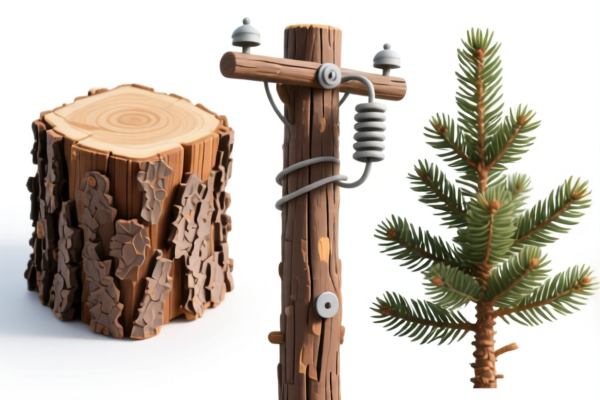
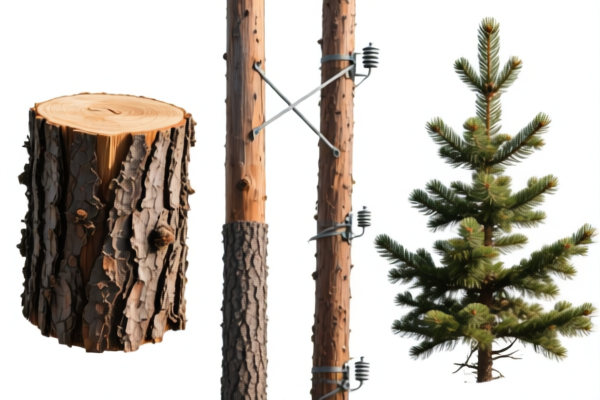
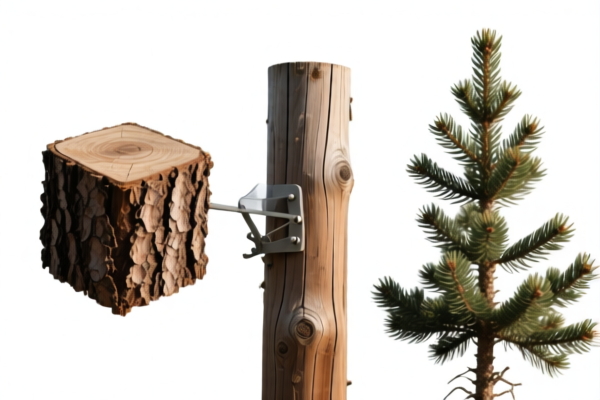
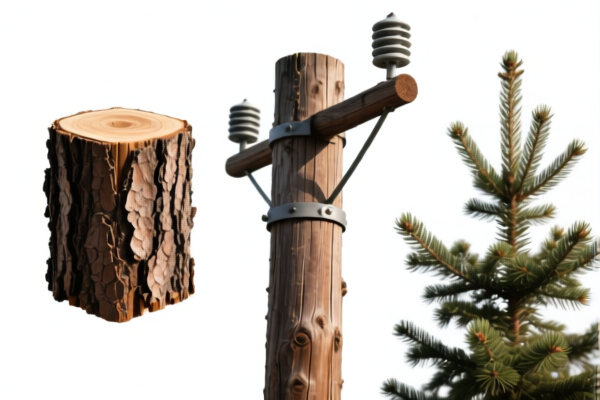
Rough Square Fir and Spruce Telephone Poles
CN → US| HS Code | Tariff Rate | Origin | Destination | Doc |
|---|---|---|---|---|
| 4404100080 | 35.0% | CN | US | Official Doc |
| 4407120020 | 35.0% | CN | US | Official Doc |
| 4403240112 | 35.0% | CN | US | Official Doc |
| 4407120059 | 35.0% | CN | US | Official Doc |
| 4403230112 | 35.0% | CN | US | Official Doc |
Product Images
AI Analysis
🌲 Rough Square Fir and Spruce Telephone Poles
🌐 HS Code Reference & Customs Clearance Guide | 2026 Tariff Full Analysis | Professional Clearance Strategy
📌 I. Product Definition & Classification: Do You Really Understand "Fir and Spruce Telephone Poles"?
Rough square fir and spruce telephone poles are fundamental infrastructure components used in telecommunications, power distribution, and electrical transmission. In international trade, these products are classified based on their wood species (coniferous), processing state (rough/squared but not otherwise worked), and specific use (telecommunications/power).
Key Material Characteristics: - Species: Spruce (Picea) and Fir (Abies), both belonging to the Coniferous Wood category. - Shape: "Rough Square" indicates the wood has been squared off on at least two opposite sides but retains its natural rough surface on the other sides. It is not sawn to uniform dimensions like lumber. - Form: Poles, Posts, or Stakes.
⚠️ Critical Distinction:
- If the wood is not preserved (untreated), it falls under Chapter 44 as raw wood products.
- If the wood is chemically treated (creosote, copper, etc.) for preservation, it may still fall under Chapter 44 but requires specific declaration of treatment methods to avoid health/safety flags.
- "Rough Square" is a key descriptor that often leads to classification under Heading 4403 (Wood Prepared for Specific Uses) or 4407 (Sawn Wood), depending on the exact dimensions and processing level. However, for telephone poles, 4403 is frequently the primary candidate if they are prepared specifically for use as poles/posts.
📦 II. HS Code Classification Details (2026 Latest Tariff Authority Comparison)
Based on the provided data, the following HS Codes are applicable. Note that all listed codes carry a 35% Total Tax Rate due to US-China trade tensions.
| HS Code | Product Description | Application Scenario | Key Classification Logic |
|---|---|---|---|
4404.10.00.80 |
Charpentry wood (Stakes and the like), split; of coniferous woods. | Poles, stakes, and posts made from split coniferous wood (Fir/Spruce). | Fits the "poles/posts" morphology requirement for coniferous wood. |
4407.12.00.20 |
Sawn wood, planed, sanded or finger-jointed, of coniferous woods. | Processed fir/spruce wood used in construction. | Matches the material (Fir/Spruce) and processing form (sawn/processed). |
4403.24.01.12 |
Wood prepared for specific uses (e.g., telephone, telegraph, power poles), of coniferous woods. | Specifically categorized telephone/telegraph/power poles made of Spruce/Fir. | Direct match for "Telephone/Telegraph/Power Poles" use case. |
4407.12.00.59 |
Sawn wood, other, of coniferous woods. | General coniferous wood products (Fir) not fitting other specific subheadings. | Broad category for processed Fir wood products. |
4403.23.01.12 |
Wood prepared for specific uses, of coniferous woods. | Wood poles for telephone/telegraph/power lines made of Spruce/Fir. | Specific use classification for coniferous wood poles. |
🔍 Key Reminder:
- All listed HS Codes apply to Coniferous Woods (Fir/Spruce).
- The term "Rough Square" suggests limited processing, which often aligns with 4403 (Prepared Wood) or 4404 (Charpentry Wood/Stakes).
- 4407 codes apply if the wood is more extensively sawn/processed into standard lumber forms before being formed into poles.
💰 III. 2026 Latest Tariff Rate Breakdown (Including Surtaxes & Policy Surcharges)
✅ Applicable Country: United States (US)
✅ Origin: China (CN)
✅ Effective Date: From November 10, 2025 (and subsequent imports)
🎯 1. 4404.10.00.80 — Charpentry Wood (Stakes/Poles), Coniferous
| Item | Details |
|---|---|
| Base Tariff | 0.0% (ad valorem) |
| USITC Surtax | +25.0% (Section 301 Tariff) |
| Section 122 Tariff | +10.0% (Specific clause for certain wood products) |
| Total Tax Rate | 35.0% |
| Tax Calculation | CIF Value × 35% |
| De Minimis Eligibility | ❌ Not Eligible (High tariff rates exclude this from de minimis relief) |
| Legal Basis Path | Section 301: 4404.10.00.80 → Section 122: 10% → Total: 35% |
📌 Explanation:
- The 25% USITC Surtax is applied under the U.S. Trade Act of 1974, Section 301, targeting Chinese goods.
- The 10% Section 122 Tariff is an additional levy on specific imports.
- Total 35% is a significant cost factor that must be factored into landed cost calculations.
🎯 2. 4407.12.00.20 & 4407.12.00.59 — Sawn Coniferous Wood
| Item | Details |
|---|---|
| Base Tariff | 0.0% (ad valorem) |
| USITC Surtax | +25.0% |
| Section 122 Tariff | +10.0% |
| Total Tax Rate | 35.0% |
| Tax Calculation | CIF Value × 35% |
| De Minimis Eligibility | ❌ Not Eligible |
| Legal Basis Path | Section 301: 4407.12.xxxxx → Section 122: 10% → Total: 35% |
📌 Note:
- Whether classified under.20(specific processed form) or.59(other), the tax burden remains identical.
- These codes apply if the wood is processed into sawn timber before being used as poles or if the pole is made from standard lumber sections.
🎯 3. 4403.24.01.12 & 4403.23.01.12 — Wood Prepared for Specific Uses (Poles)
| Item | Details |
|---|---|
| Base Tariff | 0.0% (ad valorem) |
| USITC Surtax | +25.0% |
| Section 122 Tariff | +10.0% |
| Total Tax Rate | 35.0% |
| Tax Calculation | CIF Value × 35% |
| De Minimis Eligibility | ❌ Not Eligible |
| Legal Basis Path | Section 301: 4403.24/23 → Section 122: 10% → Total: 35% |
📌 Note:
- These codes are the most specific for "Telephone/Telegraph/Power Poles."
- Customs authorities may prefer these codes if the product is explicitly marketed and packaged as utility poles.
- The 35% total rate applies uniformly across all provided HS Codes for Chinese-origin Fir/Spruce poles.
🛠️ IV. Customs Clearance Practical Advice (Real-World Pitfall Avoidance)
✅ 1. Required Documentation Checklist (No Exceptions)
| Document | Must Provide | Notes |
|---|---|---|
| ✅ Product Specification Sheet | ✔️ | Must detail wood species (Spruce/Fir), dimensions (length, diameter), and treatment status (untreated/treated). |
| ✅ Commercial Invoice | ✔️ | Must clearly state "Rough Square Fir and Spruce Telephone Poles" and the HS Code. |
| ✅ Packing List | ✔️ | Must specify weight, volume, and number of poles per pallet/shipment. |
| ✅ Phytosanitary Certificate | ✔️ | Critical for wood products. Must confirm no pests/diseases. Required by USDA APHIS. |
| ✅ Treatment Certificate | ✔️ | If poles are chemically treated (e.g., creosote), provide MSDS and treatment proof. |
| ✅ Bill of Lading/Air Waybill | ✔️ | Standard shipping documents. |
| ✅ Country of Origin Certificate | ✔️ | Confirm Chinese origin to apply correct tariff rates. |
✅ 2. Declaration Tips (Key Mnemonics)
🔥 "Species First, Shape Second, Use Specific, Tax Accurate!"
| Scenario | Correct Declaration | Incorrect Practice |
|---|---|---|
| Raw/Premature Poles | Use 4403.24.01.12 or 4403.23.01.12 | Misdeclare as "Timber Logs" → Lower tax but high risk of audit/fine. |
| Processed Sawn Poles | Use 4407.12.00.20 or 4407.12.00.59 | Declare as "Furniture Parts" → Wrong code, potential penalties. |
| Split/Stake Poles | Use 4404.10.00.80 | Ignore the "Rough Square" description. |
| Treated vs. Untreated | Clearly state "Untreated" or "Treated with [Chemical]" | Ambiguous description → Customs hold for inspection. |
✅ 3. Special Handling
| Situation | Handling Advice |
|---|---|
| Chemically Treated Poles | Provide MSDS (Material Safety Data Sheet) and Phytosanitary Certificate. Some chemicals may require additional environmental compliance declarations. |
| Mixed Species | If shipment contains both Fir and Spruce, ensure the dominant species is declared, or provide a detailed breakdown. |
| Dimensions Outside Standard | If dimensions are non-standard, ensure the description matches the HS Code definition for "Poles" or "Stakes." |
| Origin Transparency | Ensure Country of Origin is clearly marked on each pole or packaging to avoid misclassification. |
🌍 V. Global Main Market Clearance Comparison (2026 Latest)
| Country/Region | Recommended HS Code | Tariff (China Origin) | Certification Required | Notes |
|---|---|---|---|---|
| 🇺🇸 USA | 4403.24.01.12 / 4404.10.00.80 |
35% (0% Base + 25% Sec 301 + 10% Sec 122) | Phytosanitary Certificate, Fumigation Certificate | High tariff due to Section 301 and 122. De Minimis Excluded. |
| 🇨🇳 China | 4403.24.01.12 |
~5-10% | N/A (Import) | Lower base tariffs. |
| 🇪🇺 EU | 4403.24 |
~0-5% (if FSC Certified) | FSC/PEFC Certification, Phytosanitary | EU has strict wood sourcing regulations. |
| 🇨🇦 Canada | 4403.24.01 |
~5% | Phytosanitary Certificate | Border inspection for pests is common. |
| 🇲🇽 Mexico | 4403.24.01 |
~5% | Phytosanitary Certificate | USMCA may apply if grown/harvested in NA region. |
📌 Conclusion:
- USA is the only major market with the 35% tariff burden due to Section 301 and 122.
- Phytosanitary Compliance is non-negotiable for all markets to avoid shipment rejection.
- Consider supply chain diversification if US market share is critical and tariff impact is high.
📌 VI. Common Mistakes & Pitfall Guide (Blood & Tears Lessons)
❌ Mistake 1: Declaring "Telephone Poles" as "Timber Logs" (HS 4403.10)
👉 Consequence: Lower tax rate appears attractive, but Customs will inspect and reclassify → 35% Tariff + Penalties + Delays.
❌ Mistake 2: Ignoring the Phytosanitary Certificate
👉 Consequence: Shipment held at port for fumigation or destruction → Costly storage fees and lost time.
❌ Mistake 3: Not specifying Treatment Status
👉 Consequence: Customs may classify as hazardous material if chemicals are suspected → Additional inspections and delays.
❌ Mistake 4: Using "Wood Poles" without species specification
👉 Consequence: Customs cannot verify HS Code → Manual classification audit → High chance of misclassification.
✅ Correct Approach:
"Rough Square Fir and Spruce Telephone Poles, Untreated, Length: 10m, Diameter: 20cm, HS Code: 4403.24.01.12, Phytosanitary Certificate Attached"
🎯 VII. Conclusion: Professional Declaration, Save Time & Money!
🎯 Remember the Mnemonic:
🔹 "Species Specific, Shape Clear, Use Defined, Tax Accurate!"
🔹 "35% Tax for US, Phyto Cert is King, Declare Correct, Avoid Stinging!"
📌 Pro Tip:
- If your poles are grown/harvested in the US or Canada, they may qualify for USMCA Zero Tariff when exporting to the US.
- If from Europe, ensure FSC/PEFC Certification is present for EU/US markets.
- Pre-classification ruling with US Customs (CBP) is highly recommended for large shipments to avoid disputes.
📣 Immediate Action:
📞 Contact a licensed customs broker + Provide product photos + Apply for CBP Pre-Ruling
🚀 Ensure your Fir and Spruce Poles clear customs smoothly, efficiently, and profitably!
✨ Professional Clearance Starts with Accurate Classification!
💼 Every penny of your cost deserves precise calculation!
Customer Reviews
About HS Code Classification
The Harmonized System (HS) is an internationally standardized nomenclature developed by the World Customs Organization (WCO) to classify traded products. Over 200 countries use the HS system as the basis for customs tariffs, trade statistics, and import/export regulations.
Each HS code follows a hierarchical structure:
- Chapter (2 digits) — Broad category of goods (e.g., Chapter 84: Machinery and Mechanical Appliances)
- Heading (4 digits) — More specific grouping within the chapter
- Subheading (6 digits) — Internationally standardized breakdown, used by all WCO member countries
- National subdivisions (8-10 digits) — Country-specific extensions for further classification, such as US HTSUS 10-digit codes
Correct HS code classification is essential for smooth customs clearance, accurate duty payment, and compliance with trade regulations. Misclassification can lead to customs delays, overpayment of duties, or penalties.
When importing from CN to US, the applicable tariff rates may include:
- Most-Favored-Nation (MFN) rate — The standard duty rate applied to WTO members
- General rate — Applied to countries without trade agreements
- Trade remedy duties — Additional tariffs such as Section 301 (anti-dumping), Section 232 (national security), or countervailing duties
The information provided on this page is for reference purposes only. For official classification, please consult with your local customs authority or a licensed customs broker.