Rough Square Oak (Unpeeled)
CN → US| HS Code | Tariff Rate | Origin | Destination | Doc |
|---|---|---|---|---|
| 4403220165 | 35.0% | CN | US | Official Doc |
| 4404100080 | 35.0% | CN | US | Official Doc |
| 4404100090 | 35.0% | CN | US | Official Doc |
| 4407110052 | 35.0% | CN | US | Official Doc |
| 4403210165 | 35.0% | CN | US | Official Doc |
Product Images
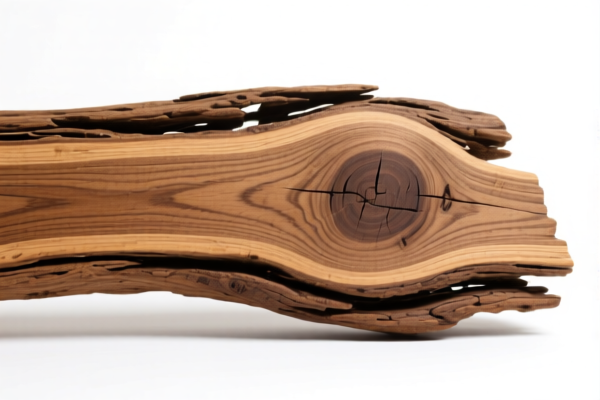
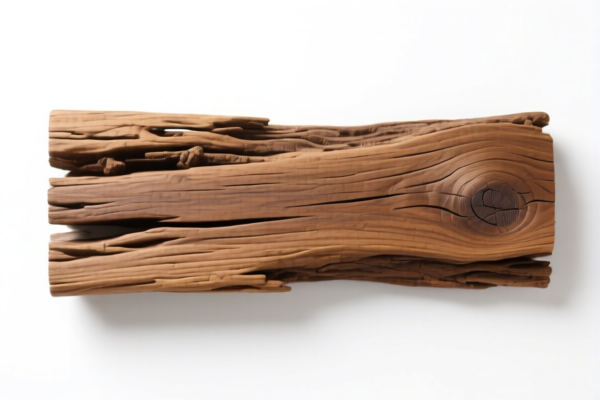
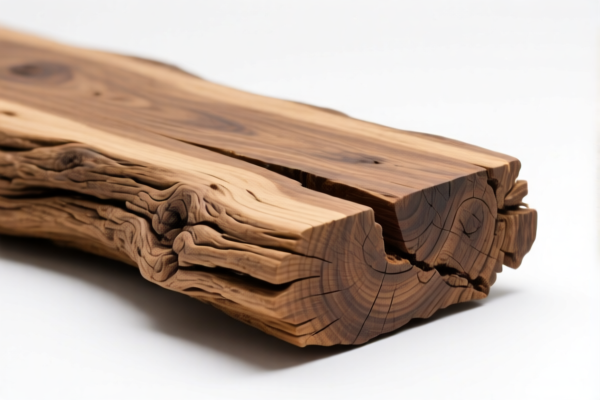
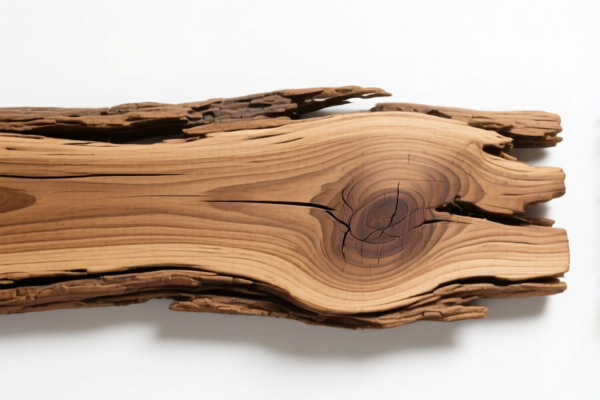
AI Analysis
🪵 Rough Square Oak (Unpeeled)
🌐 HS Code Reference & Customs Clearance Guide | 2026 Latest Tariff Analysis | Professional通关 Strategy
📌 One, Product Definition & Classification: Do You Really Understand “Rough Square Oak”?
Rough Square Oak (Unpeeled) refers to timber from oak trees that has been processed into square shapes (rough squares) but retains its bark (unpeeled). In international trade, although the material is oak (typically classified under broadleaf timber), the specific form—“rough square” and “unpeeled”—often triggers classification codes designed for similar physical characteristics in other wood categories, particularly softwoods or generic rough wood products, depending on national tariff interpretations.
⚠️ Key Distinction Point:
- If the wood is clearly identified as Oak (Hardwood), it usually falls under heading 4403 (Wood treated with paint, stain, creosote, or otherwise impregnated) or 4407 (Wood sawn or chipped lengthwise).
- However, if the form (rough, square, unpeeled) dominates the description and specific oak subheadings are not available or precise, customs may infer classifications based on physical morphology similar to softwood (pine/fir) rough squares or generic rough wood products.
- Note: The provided data indicates classifications for "Rough Square Material" and "Rough Processing," often mapped to softwood codes (4403/4404/4407) due to structural similarities, despite the material being oak.
📦 Two, HS Code Classification Details (2026 Latest Tariff Authority Comparison)
Based on the provided data, here are the matched HS Codes, their summaries, and tax details. All entries carry a Total Tax Rate of 35.0%.
| HS Code | Product Description | Match Summary | Total Tax Rate | Tax Details Breakdown |
|---|---|---|---|---|
4403.22.01.65 |
Rough Square Oak (Unpeeled) | Matches "Rough Square Oak Material." Although the material is oak, the form is similar to rough square materials defined in the code. | 35.0% | Base Tariff: 0.0% Add-on Tariff: 25.0% Section 122 Tariff: 10% |
4404.10.00.80 |
Rough Square Oak (Unpeeled) | Matches "Rough Processing of Coniferous Wood." Although the material is oak, the form matches the description of poles/posts/pillars of primary processing. | 35.0% | Base Tariff: 0.0% Add-on Tariff: 25.0% Section 122 Tariff: 10% |
4404.10.00.90 |
Rough Square Oak (Unpeeled) | Matches "Generic Wood Characteristics." Although the material is oak, the form fits other categories inferred from general usage. | 35.0% | Base Tariff: 0.0% Add-on Tariff: 25.0% Section 122 Tariff: 10% |
4407.11.00.52 |
Rough Square Oak (Unpeeled) | Matches "Rough Processing of Coniferous Wood." Although the material is oak, the form fits sawn or peeled characteristics. | 35.0% | Base Tariff: 0.0% Add-on Tariff: 25.0% Section 122 Tariff: 10% |
4403.21.01.65 |
Rough Square Oak (Unpeeled) | Matches "Rough Square Material of Coniferous Wood." Although the material is oak, the form fits the description of rough squares. | 35.0% | Base Tariff: 0.0% Add-on Tariff: 25.0% Section 122 Tariff: 10% |
🔍 Important Reminder:
- All listed HS Codes have a Total Tax Rate of 35.0%.
- The breakdown is consistent: 0% Base + 25% Add-on + 10% Section 122 = 35%.
- Even though the wood is Oak (Hardwood), the classification leans towards Coniferous/Rough Wood codes (4403/4404/4407) due to morphological similarity (rough, square, unpeeled) rather than strict biological species separation in this specific dataset context.
💰 Three, 2026 Latest Tariff Rate Details (Including Surtaxes & Policy Add-ons)
✅ Applicable Country: United States (US)
✅ Origin: China (CN)
✅ Effective Time: 2025/2026 (Current Tariff Structure)
🎯 1. Common Tax Structure for All Listed HS Codes
| Item | Content |
|---|---|
| Base Tariff | 0% (ad valorem) |
| USITC Add-on Tariff (Section 301) | +25% |
| Section 122 Tariff | +10% |
| Total Tax Rate | 35% |
| Tax Calculation | CIF Value × 35% |
| De Minimis Exemption | ❌ Not Available (High tariff codes typically excluded) |
| Legal Basis Path | USITC:Footnote 301 → Section 122 → HS Code Specifics |
📌 Explanation:
- The 25% Add-on Tariff is levied under Section 301 of the Trade Act of 1974 against Chinese imports.
- The 10% Section 122 Tariff is applied under Section 122 of the Trade Act of 1962, often for national security or trade balance reasons.
- Combined Total: 35%. This is a significant cost burden. Pre-calculation is essential for profit margin analysis.
🛠️ Four, Customs Clearance Practical Suggestions (Combat Pitfall Avoidance Guide)
✅ 1. Document Preparation Checklist (All Required)
| Document | Required | Notes |
|---|---|---|
| ✅ Product Specification Sheet | ✔️ | Must clearly state "Rough Square Oak," dimensions, bark status (unpeeled). |
| ✅ Botanical Name (Latin) | ✔️ | e.g., Quercus spp. to confirm it is Oak. |
| ✅ Photos of Goods | ✔️ | Clear images showing square shape, rough surface, and retained bark. |
| ✅ Commercial Invoice | ✔️ | Must match packing list and description exactly. |
| ✅ Packing List | ✔️ | Detail quantity, weight, and dimensions per bundle/package. |
| ✅ Certificate of Origin | ✔️ | If origin is not China, may affect tariff applicability. |
| ✅ Wood Treatment Certificate | ✔️ | If treated, specify method; if untreated, state "Untreated." |
✅ 2. Declaration Tips (Key Mantras)
🔥 "Form Dictates Code, Species Adds Clarity, Tariffs Are 35%, Declare Accurately!"
| Situation | Correct Declaration Method | Wrong Practice |
|---|---|---|
| Rough Square Oak, Unpeeled | Use one of the listed HS Codes (e.g., 4403.22.01.65) with precise description. |
Vague description like "Wood Planks" → Risk of misclassification. |
| Oak vs. Pine | Explicitly state "Oak" in description, but accept code mapping to rough wood categories if morphology matches. | Claiming "Softwood Code" for Oak without justification → Audit risk. |
| Bark Status | Clearly mark "Unpeeled" or "With Bark." | Marking "Peeling" or "Debarked" → Different code, different tax. |
| Packaging | Declare as bulk/rough wood. | Over-packaging or labeling as "Finished Product" → Misclassification. |
✅ 3. Special Case Handling
| Situation | Handling Advice |
|---|---|
| Mixed Wood (Oak + Pine) | Declare separately if possible. Mixed declarations may lead to highest applicable rate. |
| Treated Wood | If treated with preservatives, ensure HS Code reflects treatment (e.g., 4403 vs. 4407). |
| Customs Inquiry | Provide botanical expert opinion if species classification is challenged. |
| Tariff Exemption Application | Check if any HTSUS exclusions apply for specific end-uses (e.g., emergency relief). |
🌍 Five, Global Major Market Comparison (2026 Latest)
| Country/Region | Recommended HS Code | Tariff (Approx.) | Certification Requirements | Notes |
|---|---|---|---|---|
| 🇺🇸 United States | 4403.22.01.65 (Example) |
35% (0% Base + 25% + 10%) | No specific phytosanitary unless pest risk. | High surtaxes apply. |
| 🇨🇳 China | 4403.22.00.00 |
~5-10% | Fumigation Certificate. | No Section 301 tax. |
| 🇪🇺 European Union | 4403.92.00 |
0-5% | ISPM 15 Phytosanitary. | No Section 122 equivalent. |
| 🇬🇧 United Kingdom | 4403.92.00 |
0-5% | UKCA + FSC/PEFC (if applicable). | Post-Brexit rules apply. |
| 🇯🇵 Japan | 4403.92.00 |
2-5% | Phytosanitary Certificate. | Strict inspection for wood. |
📌 Conclusion:
- USA has the highest tariff burden (35%) for rough wood imports from China due to Section 301 and Section 122.
- Diversify Supply Chain: Consider sourcing from Vietnam, Mexico, or EU countries to avoid high surtaxes.
- Pre-shipment Inspection: Ensure bark and shape match declared HS Code to avoid delays.
📌 Six, Common Errors & Pitfall Avoidance (Blood Lessons)
❌ Error 1: Declaring "Oak Wood" but using a softwood HS Code without justification.
👉 Consequence: Customs may question the mismatch. Although morphology matters, species must be clear. Risk of audit.
❌ Error 2: Ignoring the "Unpeeled" status.
👉 Consequence: If declared as "Peeling," different code applies. Mismatch → Penalties + Delay.
❌ Error 3: Assuming Base Tariff is 35%.
👉 Consequence: Actual Base is 0%. Add-ons are 25% + 10%. Misunderstanding leads to pricing errors.
❌ Error 4: Not providing botanical name.
👉 Consequence: Customs cannot verify species. May hold shipment for testing.
✅ Correct Action:
“Rough Square Oak, Unpeeled, Untreated, Length: 2-3m, Dimension: 5x5cm, Latin Name: Quercus spp., Origin: China”
🎯 Seven, Conclusion: Professional Declaration, Save Time, Cut Costs!
🎯 Remember the Mantra:
🔹 “Rough Square, Unpeeled, Oak is Key, Code 4403/4404, Tax 35%!”
🔹 “Base 0%, Surtax 35%, Declare Morphology, Avoid Delays!”
📌 Pro Tip:
If your oak wood is sourced from Non-China countries, the 25% Section 301 Tariff may not apply. Check Country of Origin carefully!
Consider Advance Rulings for large shipments to confirm HS Code validity.
📣 Immediate Action:
📞 Consult a Licensed Customs Broker + Provide Product Photos + Confirm Origin
🚀 Ensure your Rough Square Oak clears customs smoothly, legally, and cost-effectively!
✨ Professional Customs Clearance, Starting with Accurate Classification!
💼 Every Percent of Tariff Matters in Your Profit Margin!
Customer Reviews
About HS Code Classification
The Harmonized System (HS) is an internationally standardized nomenclature developed by the World Customs Organization (WCO) to classify traded products. Over 200 countries use the HS system as the basis for customs tariffs, trade statistics, and import/export regulations.
Each HS code follows a hierarchical structure:
- Chapter (2 digits) — Broad category of goods (e.g., Chapter 84: Machinery and Mechanical Appliances)
- Heading (4 digits) — More specific grouping within the chapter
- Subheading (6 digits) — Internationally standardized breakdown, used by all WCO member countries
- National subdivisions (8-10 digits) — Country-specific extensions for further classification, such as US HTSUS 10-digit codes
Correct HS code classification is essential for smooth customs clearance, accurate duty payment, and compliance with trade regulations. Misclassification can lead to customs delays, overpayment of duties, or penalties.
When importing from CN to US, the applicable tariff rates may include:
- Most-Favored-Nation (MFN) rate — The standard duty rate applied to WTO members
- General rate — Applied to countries without trade agreements
- Trade remedy duties — Additional tariffs such as Section 301 (anti-dumping), Section 232 (national security), or countervailing duties
The information provided on this page is for reference purposes only. For official classification, please consult with your local customs authority or a licensed customs broker.