Rough Square Oak Furniture Grade
CN → US| HS Code | Tariff Rate | Origin | Destination | Doc |
|---|---|---|---|---|
| 4407910022 | 35.0% | CN | US | Official Doc |
| 4407910063 | 35.0% | CN | US | Official Doc |
Product Images
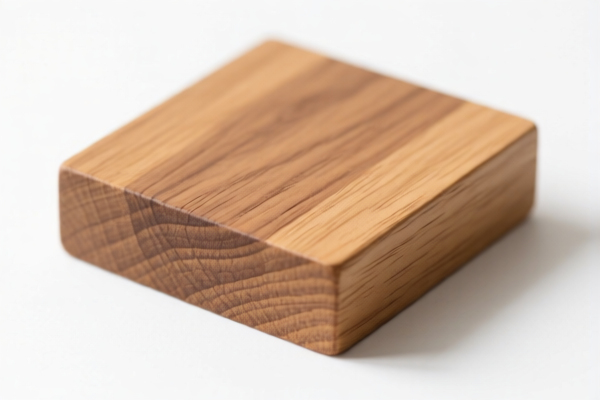
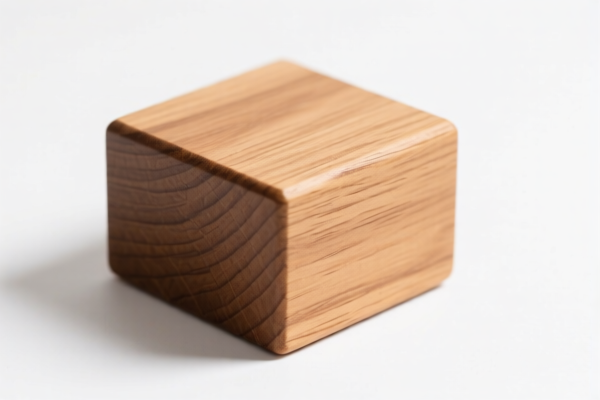
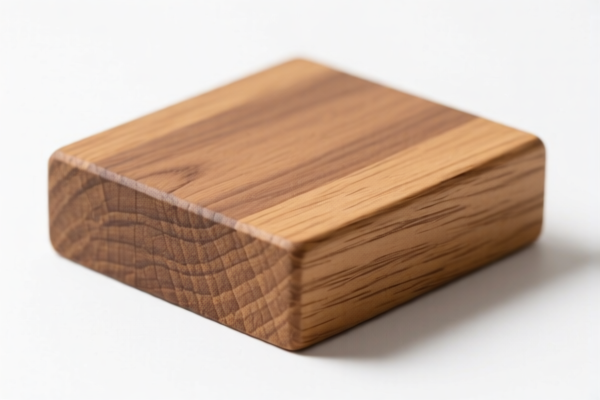
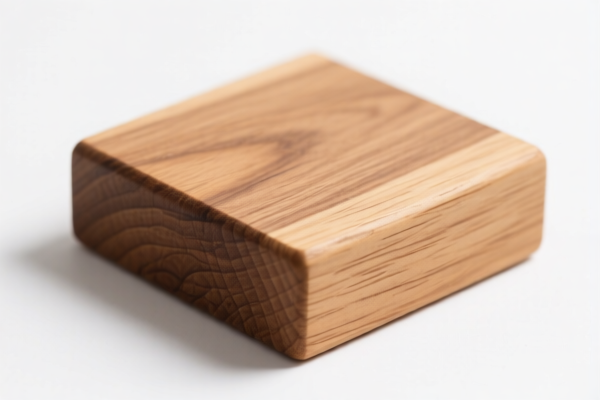
AI Analysis
🪵 Rough Square Oak Furniture Grade (Oak Timber)
🌐 HS Code Reference & Customs Clearance Guide | 2026 Latest Tariff Analysis | Professional Entry Strategy
📌 1. Product Definition & Classification: Do You Really Understand "Rough Square Oak"?
"Rough Square Oak" refers to sawn or chipped wood, lengthwise sliced or peeled, with a thickness exceeding 6mm. Specifically, it is Oak (Quercus spp.) timber that has been processed into a "square" cross-section (roughly squared up but not necessarily planed to finished dimensions) for furniture manufacturing.
In international trade, this product is categorized based on the species of Oak and its specific processing level: * Red Oak: A specific species often targeted for certain furniture applications. * Other Oak: Includes White Oak and other Quercus species.
⚠️ Key Distinction:
- If the wood is Red Oak (commonly referred to as "Red Oak" in trade), it falls under a specific sub-category.
- If the wood is Other Oak (e.g., White Oak, English Oak), it falls under a different sub-category.
- Both must have a thickness >6mm to qualify for Chapter 44 (Wood and Wood Articles).
📦 2. HS Code Classification Details (2026 Latest Tariff Authority Match)
| HS Code | Product Description | Application Scenario | Tax Rate (China Origin to US) |
|---|---|---|---|
4407.91.00.22 |
Wood, thickness >6mm: Other: Of Oak (Quercus spp.) Red Oak | Furniture grade timber, rough-squared Red Oak boards/stocks | 25.0% |
4407.91.00.63 |
Wood, thickness >6mm: Other: Of Oak (Quercus spp.) Other | Furniture grade timber, rough-squared White/Other Oak boards/stocks | 25.0% |
🔍 Key Reminder:
- Both codes fall under Section 4407, which covers wood sawn or chipped lengthwise, sliced or peeled.
- The distinction between...22(Red Oak) and...63(Other Oak) is critical for species declaration.
- Even if the wood is "Rough" or "Square," as long as it exceeds 6mm thickness, it belongs here, not in Chapter 46 (Woven Bamboo) or Chapter 94 (Furniture).
💰 3. 2026 Latest Tariff Rate Breakdown (Including Surtaxes)
✅ Applicable Country: United States (US)
✅ Origin: China (CN)
✅ Effective Date: November 10, 2025 (and subsequent imports)
🎯 1. 4407.91.00.22 —— Red Oak Timber (Rough Square)
| Item | Content |
|---|---|
| Base Tariff | 0% (ad valorem) |
| USITC Surtax | +25% (under Section 301) |
| Total Rate | 25.0% |
| Calculation | CIF Value × 25% |
| De Minimis Exemption | ❌ Not Applicable (Section 301 goods are excluded) |
| Legal Basis Path | USITC:4407.91.00.22 → FOOTNOTE:9903.88.01 (if applicable) |
📌 Explanation:
- The 25% surtax is applied under US Trade Law Section 301, targeting Chinese-origin wood products.
- There is no base tariff (0%), but the 301 surtax makes the total effective rate 25%.
- This is a high-cost item for US importers sourcing from China.
🎯 2. 4407.91.00.63 —— Other Oak Timber (e.g., White Oak) (Rough Square)
| Item | Content |
|---|---|
| Base Tariff | 0% (ad valorem) |
| USITC Surtax | +25% (under Section 301) |
| Total Rate | 25.0% |
| Calculation | CIF Value × 25% |
| De Minimis Exemption | ❌ Not Applicable (Section 301 goods are excluded) |
| Legal Basis Path | USITC:4407.91.00.63 → FOOTNOTE:9903.88.01 (if applicable) |
📌 Note:
- Same tax treatment as Red Oak.
- Whether it is White Oak, European Oak, or American White Oak, if it is not Red Oak, it falls under...63.
- The 25% total rate applies uniformly to all Chinese-origin Oak timber in this category.
🛠️ 4. Customs Clearance Practical Advice (Avoid Pitfalls)
✅ 1. Required Documentation Checklist (Mandatory)
| Document | Required? | Explanation |
|---|---|---|
| ✅ Species Declaration | ✔️ | Must specify Quercus species (Red Oak vs. White/Other Oak). Misclassification can lead to fines. |
| ✅ ISF (Importer Security Filing) | ✔️ | Must be filed 24 hours before loading at the port of export. |
| ✅ Fumigation Certificate | ✔️ | Mandatory for wood products to prevent pest invasion. |
| ✅ Phytosanitary Certificate | ✔️ | Issued by the exporting country’s agricultural authority. |
| ✅ Commercial Invoice | ✔️ | Clearly state "Oak Wood, Rough Square, Thickness >6mm". |
| ✅ Packing List | ✔️ | Detail board feet or cubic meters, weight, and dimensions. |
✅ 2. Declaration Tips (Key Mantra)
🔥 "Species Matters, Thickness Counts, Fumigation Is Key!"
| Scenario | Correct Declaration | Wrong Approach |
|---|---|---|
| Red Oak | 4407.91.00.22 |
Declare as "White Oak" → Customs audit + delay |
| White Oak | 4407.91.00.63 |
Declare as "Red Oak" → Misclassification penalty |
| Thickness ≤6mm | Not in Chapter 44 (likely Chapter 46 or 47) | Declare as 4407 → Rejection |
| Unfurnished Lumber | "Rough Sawn" or "Squaring" | Declare as "Finished Furniture" → Wrong HS Code |
✅ 3. Special Cases Handling
| Situation | Handling Advice |
|---|---|
| Mixed Species | If Red Oak and White Oak are in the same shipment, separate declarations are required for each HS Code. |
| Origin Fraud | Do not misdeclare Chinese-origin Oak as "Made in Vietnam" or "Made in USA" to avoid tariffs. Customs audits are frequent. |
| Thickness Dispute | Ensure thickness is consistently >6mm. If some boards are ≤6mm, they may be subject to different rules or rejection. |
| Fumigation Expiry | Ensure the ISPM 15 mark is valid and the fumigation certificate is within the validity period (usually 21 days). |
🌍 5. Global Market Comparison (2026 Latest)
| Country/Region | Recommended HS Code | Tariff (China Origin) | Certification Requirement | Notes |
|---|---|---|---|---|
| 🇺🇸 USA | 4407.91.00.22 / .63 |
25% | Fumigation + Phytosanitary | High tariff impact |
| 🇨🇳 China | 4407.91.00 |
5-10% | Fumigation | Import duty applies |
| 🇪🇺 EU | 4407.91.00 |
0-6% | Fumigation (ISPM 15) | Varies by species |
| 🇬🇧 UK | 4407.91.00 |
0-6% | Fumigation | Post-Brexit rules apply |
| 🇯🇵 Japan | 4407.91.00 |
0-3% | Fumigation | Low tariff |
📌 Conclusion:
- The US market imposes a 25% surtax on Chinese Oak timber, significantly increasing costs.
- EU/UK/Japan have lower or zero base tariffs, but strict phytosanitary requirements apply.
- Consider non-Chinese origins (e.g., Vietnam, Thailand) if targeting the US market to avoid the 25% surtax.
📌 6. Common Mistakes & Pitfalls (Lessons Learned)
❌ Mistake 1: Declaring "Oak" without specifying Red or Other
👉 Consequence: Customs may reject the declaration or assign a generic code, leading to delays and potential penalties.
❌ Mistake 2: Ignoring Thickness
👉 Consequence: If thickness is ≤6mm, it does not fall under 4407. Misdeclaration leads to rejection or reclassification.
❌ Mistake 3: Missing Fumigation Certificate
👉 Consequence: Detention at customs, additional fumigation fees, or return of goods.
❌ Mistake 4: Misdeclaring Origin
👉 Consequence: Severe penalties, blacklisting, and criminal charges for fraud.
✅ Correct Approach:
"Red Oak, Rough Square, Thickness >6mm, Fumigated, ISPM 15 Marked, Origin: China"
🎯 7. Conclusion: Precise Declaration Saves Money!
🎯 Remember the Mantra:
🔹 "Species First, Thickness Key, Fumigation Essential!"
🔹 "HS Code Determines Cost, 25% Surtax is Real, Declare Accurately!"
📌 Tip:
If your Oak timber is sourced from Vietnam, Thailand, or Mexico, you may avoid the 25% USITC surtax.
Consider pre-ruling with US Customs and Border Protection (CBP) to confirm classification and avoid surprises.
📣 Immediate Action:
📞 Contact a Licensed Customs Broker + Provide Product Specs + Verify Fumigation Status
🚀 Ensure Smooth Clearance, Cost Control, and Compliance!
✨ Professional Customs Clearance Starts with Accurate Classification!
💼 Every Dollar Saved is a Dollar Earned!
Customer Reviews
About HS Code Classification
The Harmonized System (HS) is an internationally standardized nomenclature developed by the World Customs Organization (WCO) to classify traded products. Over 200 countries use the HS system as the basis for customs tariffs, trade statistics, and import/export regulations.
Each HS code follows a hierarchical structure:
- Chapter (2 digits) — Broad category of goods (e.g., Chapter 84: Machinery and Mechanical Appliances)
- Heading (4 digits) — More specific grouping within the chapter
- Subheading (6 digits) — Internationally standardized breakdown, used by all WCO member countries
- National subdivisions (8-10 digits) — Country-specific extensions for further classification, such as US HTSUS 10-digit codes
Correct HS code classification is essential for smooth customs clearance, accurate duty payment, and compliance with trade regulations. Misclassification can lead to customs delays, overpayment of duties, or penalties.
When importing from CN to US, the applicable tariff rates may include:
- Most-Favored-Nation (MFN) rate — The standard duty rate applied to WTO members
- General rate — Applied to countries without trade agreements
- Trade remedy duties — Additional tariffs such as Section 301 (anti-dumping), Section 232 (national security), or countervailing duties
The information provided on this page is for reference purposes only. For official classification, please consult with your local customs authority or a licensed customs broker.