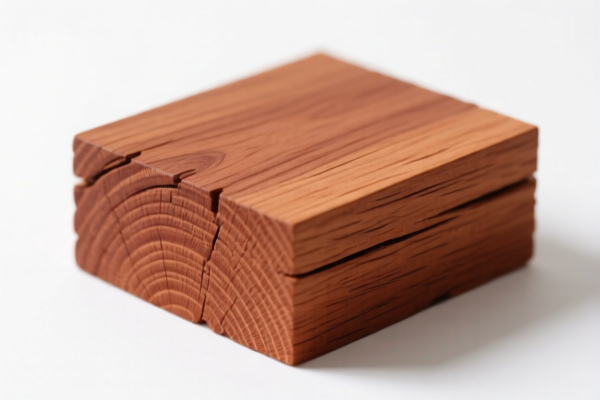
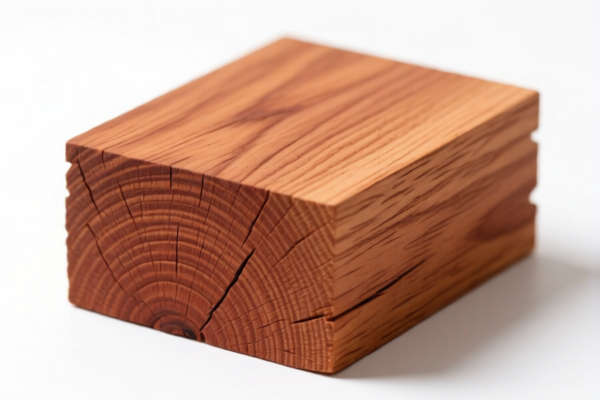
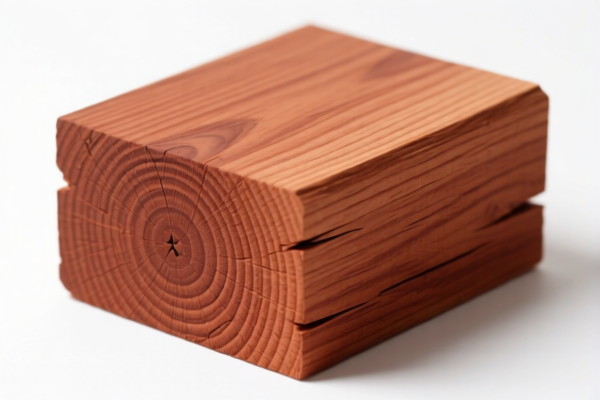
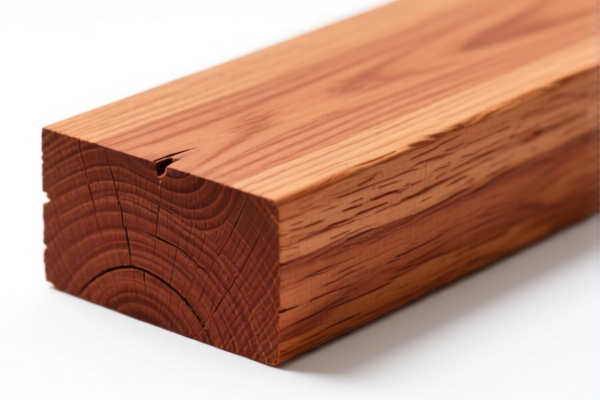
Rough Square Oak Timber
CN → US| HS Code | Tariff Rate | Origin | Destination | Doc |
|---|---|---|---|---|
| 4403910040 | 35.0% | CN | US | Official Doc |
| 4403910020 | 35.0% | CN | US | Official Doc |
| 4409299100 | 35.0% | CN | US | Official Doc |
| 4407910022 | 35.0% | CN | US | Official Doc |
Product Images
AI Analysis
🪵 Rough Square Oak Timber (粗锯橡木梁/粗糙橡木)
🌐 HS Code Reference & Customs Clearance Guide | 2026 Latest Tariff Analysis | Professional Clearance Strategy
📌 I. Product Definition & Classification: Do You Understand "Rough Square Oak"?
"Rough Square Oak Timber" refers to lumber made from oak (a non-coniferous hardwood), characterized by a rough, unsmoothed surface and square or rectangular cross-sections. In international trade, the classification depends heavily on the degree of processing and the specific type of oak (Red Oak vs. Other Oak).
Key Distinctions: * "Rough Sawn" (粗锯): The wood is sawn but not planed, sanded, or shaped beyond simple straight cuts. It retains its natural rough texture. * "Oak" (橡木): Includes both Red Oak and White Oak/Other Oak. * "Square Timber" (方材): Logs squared to a certain minimum dimension.
⚠️ Critical Classification Point:
- If the oak is Red Oak and is rough-sawn (not further processed into beams with continuous profiles) → Classify under 4403.91.00.20
- If the oak is White Oak/Other Oak and is rough-sawn → Classify under 4403.91.00.40
- If the oak is shaped along edges/faces (e.g., tongue-and-groove, chamfered) → Classify under 4409.29.91.00
- If it is simply sawn planks/sheets without squaring into timber beams → Classify under 4407.91.00.22
📦 II. HS Code Classification Details (2026 Latest Tariff Alignment)
| HS Code | Product Description | Application Scenario | Processing Level |
|---|---|---|---|
4403.91.00.20 |
Rough-sawn Red Oak beams or rough red oak | Construction beams, structural supports made of Red Oak | ✅ Rough-sawn, squared |
4403.91.00.40 |
Rough-sawn White/Other Oak beams or rough other oak | Construction beams, structural supports made of White Oak | ✅ Rough-sawn, squared |
4409.29.91.00 |
Oak beams with continuous profiling along edges/faces | Molding, tongue-and-groove, custom-shaped oak components | ✅ Continuous shaping |
4407.91.00.22 |
Rough oak planks/sheets (non-finished timber) | General sawn oak lumber, not squared into beams | ✅ Sawn, not squared |
🔍 Key Reminder:
- Red Oak vs. Other Oak: US Customs distinguishes between Red Oak (Quercus rubra) and Other Oak (Quercus alba, etc.). Misidentifying the oak species can lead to incorrect HS codes and potential penalties. - "Rough" vs. "Finished": If the wood is planed (S4S – Surfaced Four Sides), it may fall under 4407.91 (sawn wood) rather than 4403 (wood prepared for use). "Rough" is the key keyword here.
💰 III. 2026 Latest Tariff Rate Breakdown (Including Additional Duties & Policy Surcharges)
✅ Applicable Country: United States (US)
✅ Origin: China (CN)
✅ Effective Date: 2025 November 10 onwards (including subsequent imports)
🎯 1. 4403.91.00.20 & 4403.91.00.40 —— Rough-Sawn Red/Other Oak Timbers
| Item | Content |
|---|---|
| Base Tariff Rate | 0% (ad valorem) |
| USITC Additional Tariff | +25% (Under USITC Footnote 9903.88.01) |
| Section 301 / IEEPA Surcharge | +10% (For China/HK products, effective from Nov 10, 2025) |
| Total Tariff Rate | 35.0% |
| Tax Calculation | CIF Value × 35% |
| De Minimis Exemption? | ❌ No (deny_de_minimis) |
| Legal Basis Path | IEEPA:9903.01.25 → IEEPA:9903.01.24 → USITC:4403.91.xxxx → FOOTNOTE:9903.88.01 |
📌 Explanation:
- The 25% USITC tariff applies to wood products from China under Section 301. - The 10% IEEPA surcharge is an additional duty imposed on Chinese-origin goods. - Total of 35% is a significant cost factor. This applies to both Red and White Oak rough-sawn timber.
🎯 2. 4409.29.91.00 —— Oak Beams with Continuous Profiling
| Item | Content |
|---|---|
| Base Tariff Rate | 0% |
| USITC Additional Tariff | +25% |
| IEEPA Surcharge | +10% |
| Total Tariff Rate | 35.0% |
| Tax Calculation | CIF Value × 35% |
| De Minimis Exemption? | ❌ No |
| Legal Basis Path | IEEPA:9903.01.25 → IEEPA:9903.01.24 → USITC:4409.29.91.00 → FOOTNOTE:9903.88.01 |
📌 Note:
- Even if the oak is profiled (shaped), it still falls under the high tariff bracket for Chinese wood products. - Do not attempt to classify profiled oak as "finished furniture parts" to avoid tariffs; it is still considered processed timber.
🎯 3. 4407.91.00.22 —— Rough Oak Planks/Sheets
| Item | Content |
|---|---|
| Base Tariff Rate | 0% |
| USITC Additional Tariff | +25% |
| IEEPA Surcharge | +10% |
| Total Tariff Rate | 35.0% |
| Tax Calculation | CIF Value × 35% |
| De Minimis Exemption? | ❌ No |
| Legal Basis Path | IEEPA:9903.01.25 → IEEPA:9903.01.24 → USITC:4407.91.00.22 → FOOTNOTE:9903.88.01 |
📌 Note:
- This code applies to oak that is sawn but not squared into beams. - The tariff rate is identical to the beam codes. The distinction is purely for customs accuracy and product description.
🛠️ IV. Customs Clearance Practical Advice (Real-World Pitfall Avoidance)
✅ 1. Preparation Checklist (No Omissions)
| Document | Required | Explanation |
|---|---|---|
| ✅ Product Specification Sheet | ✔️ | Must specify: Oak species (Red/White), dimensions, rough-sawn status, treatment (e.g., heat-treated MB-15) |
| ✅ Photos of Raw Material | ✔️ | Show the rough surface, square cut, and any identification marks |
| ✅ Commercial Invoice | ✔️ | Clearly state "Rough-Sawn Oak Timber" or "Rough Oak Planks", not "Furniture Parts" |
| ✅ Phytosanitary Certificate | ✔️ | Mandatory for wood products to prevent pest/germs |
| ✅ Fumigation Certificate | ✔️ | If treated, provide proof of ISPM 15 compliance |
| ✅ Bills of Lading | ✔️ | Ensure weight and volume match invoice |
✅ 2. Declaration Tips (Key Mantra)
🔥 "Species Matters, Roughness Key, No Hidden Profiles, 35% is the Reality!"
| Scenario | Correct Declaration | Wrong Practice |
|---|---|---|
| Red Oak, Rough, Squared | 4403.91.00.20 - "Rough Sawn Red Oak Beams" |
Mislabel as "White Oak" → Potential audit |
| White Oak, Rough, Squared | 4403.91.00.40 - "Rough Sawn Other Oak Beams" |
Mislabel as "Red Oak" → Minor risk but inaccurate |
| Profiled Oak (e.g., Tongue & Groove) | 4409.29.91.00 - "Oak Beams with Continuous Profiling" |
Declare as "Rough Beams" → Under-declaration risk |
| Sawn Planks (Not Squared) | 4407.91.00.22 - "Rough Oak Planks" |
Declare as "Beams" → Misclassification |
✅ 3. Special Cases
| Case | Handling Advice |
|---|---|
| Heat-Treated Wood (HT) | Ensure phytosanitary certificate shows "HT" stamp. No chemical fumigation needed if heat-treated. |
| Mixed Shipments (Oak + Other Wood) | Separate HS codes per wood type. Do not combine Red Oak and Pine in one line item if possible. |
| Partial Processing (e.g., Cut to Length Only) | Still "Rough-Sawn". Do not declare as "Cut to Size" if surface is still rough. |
| Re-export from Third Country | If shipped from Canada/Mexico but made in China, US origin still applies for tariffs. |
🌍 V. Global Market Clearance Comparison (2026 Latest)
| Country/Region | Recommended HS Code | Tariff (China Origin) | Certification | Remarks |
|---|---|---|---|---|
| 🇺🇸 USA | 4403.91.00.20/40 or 4409.29.91.00 |
35% | Phytosanitary + ISPM 15 | High tariff, strict inspection |
| 🇨🇳 China | 4403.91 or 4409 |
0% (Import Duty) | Phytosanitary | Low tariff, focus on quality |
| 🇪🇺 EU | 4403 or 4409 |
0% (if FLEGT compliant) | FLEGT + ISPM 15 | Focus on legality of harvest |
| 🇬🇧 UK | 4403 or 4409 |
0% (if FLEGT compliant) | FLEGT + ISPM 15 | Post-Brexit rules apply |
| 🇦🇺 Australia | 4403 or 4409 |
5% | Phytosanitary + AQIS | Biosecurity strictness |
📌 Conclusion:
- USA imposes the highest costs (35%) due to Section 301 and IEEPA duties. - EU/UK require strong proof of legal sourcing (FLEGT) to avoid tariffs. - China imports with low duty, focusing on quality and phytosanitary standards.
📌 VI. Common Errors & Pitfall Avoidance (Lessons Learned)
❌ Error 1: Declaring "Furniture Parts" for Rough Oak Beams
👉 Consequence: Tariff evasion attempt → Heavy fines, seizure, 3-year import ban.
❌ Error 2: Mixing Red and White Oak in one HS Code
👉 Consequence: Customs audit → Delay in clearance, penalty for misclassification.
❌ Error 3: Missing Phytosanitary Certificate
👉 Consequence: Detention at port, re-export or destruction at owner's expense.
❌ Error 4: Not declaring "Rough-Sawn" Status
👉 Consequence: If planed, it may fall under different codes with different tariffs. Misdescription leads to discrepancy checks.
✅ Correct Practice:
"Rough-Sawn Red Oak Beams, 2x6, 8ft, Heat-Treated, ISPM 15 Compliant, FOB China"
🎯 VII. Conclusion: Precise Classification Saves Money!
🎯 Remember the Mantra:
🔹 "Species First, Roughness Key, 35% is the Price, Don't Hide It!"
🔹 "HS Code is Life, Tariff Difference is Huge, Mistake One Step, Cost Spikes!"
📌 Pro Tip:
If your rough oak is sourced from Vietnam, Mexico, or Canada, you may avoid the 10% IEEPA surcharge, reducing the total tariff to 25%.
Consider Advance Ruling to confirm classification before shipping.
📣 Immediate Action:
📞 Contact a Professional Customs Broker + Provide Photos + Apply for HS Code Advance Ruling
🚀 Let your oak timber clear smoothly, efficiently, and profitably!
✨ Professional Clearance Starts with Accurate Classification!
💼 Every Penny of Cost Deserves Precise Calculation!
Customer Reviews
About HS Code Classification
The Harmonized System (HS) is an internationally standardized nomenclature developed by the World Customs Organization (WCO) to classify traded products. Over 200 countries use the HS system as the basis for customs tariffs, trade statistics, and import/export regulations.
Each HS code follows a hierarchical structure:
- Chapter (2 digits) — Broad category of goods (e.g., Chapter 84: Machinery and Mechanical Appliances)
- Heading (4 digits) — More specific grouping within the chapter
- Subheading (6 digits) — Internationally standardized breakdown, used by all WCO member countries
- National subdivisions (8-10 digits) — Country-specific extensions for further classification, such as US HTSUS 10-digit codes
Correct HS code classification is essential for smooth customs clearance, accurate duty payment, and compliance with trade regulations. Misclassification can lead to customs delays, overpayment of duties, or penalties.
When importing from CN to US, the applicable tariff rates may include:
- Most-Favored-Nation (MFN) rate — The standard duty rate applied to WTO members
- General rate — Applied to countries without trade agreements
- Trade remedy duties — Additional tariffs such as Section 301 (anti-dumping), Section 232 (national security), or countervailing duties
The information provided on this page is for reference purposes only. For official classification, please consult with your local customs authority or a licensed customs broker.