Rough Square Oak Timber (Construction Grade)
CN → US| HS Code | Tariff Rate | Origin | Destination | Doc |
|---|---|---|---|---|
| 4407910022 | 35.0% | CN | US | Official Doc |
| 4407910063 | 35.0% | CN | US | Official Doc |
| 4403910040 | 35.0% | CN | US | Official Doc |
| 4403910020 | 35.0% | CN | US | Official Doc |
| 4407910022 | 35.0% | CN | US | Official Doc |
Product Images
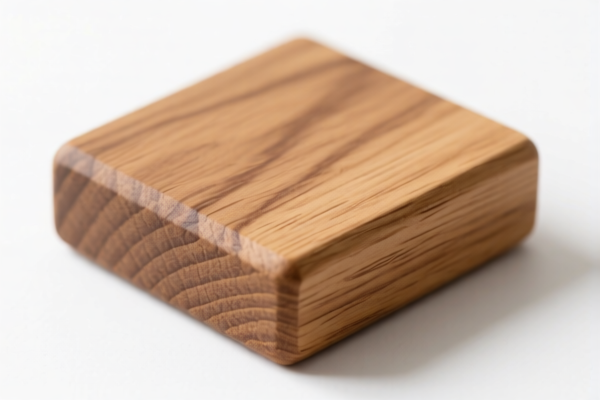
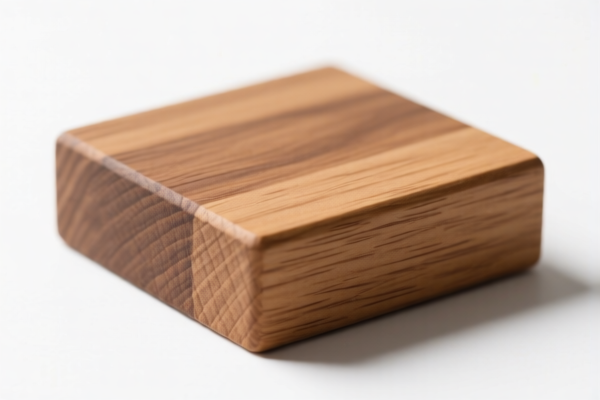
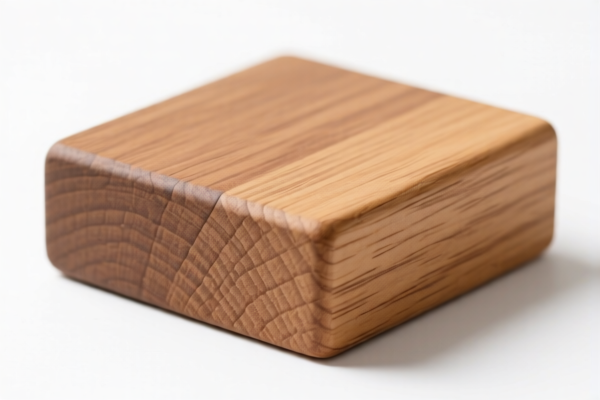

AI Analysis
🌲 Rough Square Oak Timber (Construction Grade)
🌐 HS Code Reference & Customs Clearance Guide | 2026 Latest Tariff Analysis | Professional Strategy for US Entry
📌 1. Product Definition & Classification: Are You Misclassifying "Lumber"?
"Rough Square Oak Timber" in the construction sector is not just a piece of wood; it is a specific processed wood product. In international trade, the distinction between "sawn wood" and other wood products is critical for tariff application.
Wood Sawn Lengthwise, Sliced, or Peed:
This category includes wood that has been cut along its length (sawn) into specific shapes (like squares or planks) but remains relatively unprocessed (rough-sawn).
Key Characteristic: Thickness > 6mm.
Processing Level: Planed, sanded, or end-jointed options exist, but "Rough" implies the basic sawn state.
⚠️ Critical Distinction Point:
If the Oak is Red Oak (Quercus rubra etc.): It falls under the specific "Red Oak" sub-category.
If the Oak is Other Oak (Quercus spp.): It falls under the "Other" sub-category.
🚨 Stop! Do not confuse with:
- Chips/Wood Waste: Goes to Chapter 47 (Pulp) or 44.01 (Bark).
- Veneer Sheets (<6mm): Goes to 44.08 (Veneer sheets).
- Furniture Parts: Goes to Chapter 94.
This product is strictly Chapter 44: Wood and Articles of Wood.
📦 2. HS Code Classification Details (2026 Latest Tariff Authority)
Based on the provided data, there are two possible HS codes depending on the specific species of Oak. Both share the same tax structure but differ in description.
| HS Code | Product Description | Specific Condition | Visual/Physical Trait |
|---|---|---|---|
4407.91.00.22 |
Other: Of Oak (Quercus spp.) Red Oak | Specifically identified as Red Oak | Reddish heartwood, typical for US construction/finishing |
4407.91.00.63 |
Other: Of Oak (Quercus spp.) Other | Any Oak species except Red Oak | White Oak, Scarlet Oak, Pin Oak, etc. |
🔍 Focus Reminder:
- Both codes apply to wood sawn, chipped, sliced, or peeled lengthwise.
- Both require a thickness exceeding 6 mm.
- The "Rough Square" shape confirms it is "sawn lengthwise" and not further processed into doors/windows (which would be Chapter 44.09 or 94.03).
💰 3. 2026 Latest Tariff Rate Breakdown (Detailed Tax Analysis)
✅ Applicable Market: United States (US)
✅ Origin: China (CN) (Implied by "Additional Tariff" structure in data)
✅ Effective Time: 2025/2026 Current Rules
🎯 1. 4407.91.00.22 (Red Oak) & 4407.91.00.63 (Other Oak)
| Item | Content |
|---|---|
| Base Tariff Rate | 0.0% (Ad Valorem) |
| Section 301 / Additional Tariff | +25.0% |
| Total Effective Tax Rate | 25.0% |
| Tax Calculation Basis | CIF Value (Cost + Insurance + Freight) × 25% |
| De Minimis Exemption | ❌ Not Applicable (Wood products of this value/type generally do not qualify for low-value package exemptions if subject to 301 duties) |
| Legal Basis Path | HTSUS:4407.91 → USITC:301 Footnotes → Additional Duty: 25% |
📌 Explanation:
- The Base Duty is 0%, making the raw timber duty-free under normal trade terms.
- However, the 25% Additional Tariff is the dominant cost driver. This is likely due to US Section 301 tariffs on Chinese goods.
- Total Cost Impact: For every $10,000 CIF value, you pay $2,500 in duties. This is a significant margin eater.
🛠️ 4. Customs Clearance Practical Advice (Pitfall Avoidance Guide)
✅ 1. Preparation Checklist (Non-Negotiable)
| Document | Required | Reason |
|---|---|---|
| ✅ Species Verification | ✔️ | Must explicitly state if it is "Red Oak" or "Other Oak". Misclassification changes the HS Code last 2 digits. |
| ✅ Dimension Proof | ✔️ | Invoice/Spec must show thickness > 6mm. If <6mm, HS Code changes to 4408 (Veneer), changing tax liability. |
| ✅ Process Description | ✔️ | State "Rough Sawn", "Sliced", or "Pealed". "Sawn lengthwise" is the key legal phrase for 44.07. |
| ✅ Phytosanitary Certificate | ✔️ | Mandatory for Wood. US CBP and USDA require this to prove no pests/diseases. |
| ✅ Commercial Invoice | ✔️ | Must clearly describe "Wood, Sawn, Lengthwise, Thickness > 6mm, of Oak". Avoid vague terms like "Lumber" without specs. |
| ✅ Fumigation Certificate | ✔️ | Proof of ISPM 15 compliance (if packed in wood pallets). |
✅ 2. Declaration Tips (Critical Keywords)
🔥 “Be Specific: Species, Process, Thickness.”
| Scenario | Correct Declaration | Wrong Declaration |
|---|---|---|
| Red Oak Planks | Wood, Sawn Lengthwise, >6mm, Red Oak (*Quercus rubra), Rough Sawn|Oak Lumber` |
|
| White Oak Beams | Wood, Sliced Lengthwise, >6mm, Other Oak (*Quercus* spp.), Rough Sawn |
Wooden Beams |
| Thin Oak Veneer | Note: If <6mm, this is NOT 4407. Use 4408. |
Using 4407 for thin sheets |
⚠️ Warning:
- If you declare "Other Oak" but it is actually "Red Oak", and vice versa, it is a material misdeclaration.
- While the tax rate is currently the same (25%), incorrect HS codes can lead to audits, fines, or seizure if the importer fails to prove the species correctly.
✅ 3. Special Handling for "Rough Square"
| Situation | Recommendation |
|---|---|
| Moisture Content | Declare actual moisture content. Wet wood may incur penalties or require treatment. |
| Mixing Species | If a shipment contains both Red and Other Oak, they must be separated and declared separately to ensure the correct sub-code (22 vs 63) is used for audit trails, even if tax is identical. |
| End-Jointed | If the "Square Timber" is end-jointed, it still falls under 44.07. Do not classify as Furniture Parts. |
🌍 5. Global Market Comparison (2026 Context)
| Country/Region | Recommended HS Code | Tariff (CN Origin) | Key Requirement | Notes |
|---|---|---|---|---|
| 🇺🇸 USA | 4407.91.00.22 / .63 |
25.0% (Total) | Phytosanitary Cert + USDA Inspection | High duty due to Section 301 |
| 🇨🇳 China | 4407.91.00 |
~5-8% | Phytosanitary Cert | Export from other countries to China |
| 🇪🇺 EU | 4407.91.00 |
0-4.5% (varies) | FLEGT License (if applicable) | No Section 301 equivalent, but strict wood legality rules |
| 🇬🇧 UK | 4407.91.00 |
0-4.5% | Timber Regulation (EUTR) | Post-Brexit, aligned with EU strictness |
📌 Conclusion:
- The 25% US tariff is the primary barrier.
- Ensure your supplier provides USDA-approved phytosanitary certificates to avoid detention at US ports.
- Verify the exact species to determine if it is.22or.63.
📌 6. Common Mistakes & Pitfalls (Lessons Learned)
❌ Mistake 1: Declaring "Oak Lumber" without specifying "Red" vs "Other".
👉 Consequence: Customs may hold the shipment for species verification, causing demurrage charges (storage fees) at the port.
❌ Mistake 2: Ignoring the ">6mm" rule.
👉 Consequence: If the wood is actually <6mm (veneer), you should have used HS 4408. Misclassification leads to underpayment of duties and penalties.
❌ Mistake 3: Missing Phytosanitary Certificate.
👉 Consequence: Immediate Rejection or Destruction by USDA APHIS. Wood is high-risk for pests.
❌ Mistake 4: Assuming "Rough" means "Unprocessed" = No Duty.
👉 Consequence: "Rough Sawn" is still "Sawn Wood" and attracts the 25% tariff. There is no "handmade" exemption.
✅ Correct Declaration Example:
"Wood Sawn Lengthwise, Rough Sawn, Thickness 25mm, of Red Oak (Quercus rubra), Phytosanitary Cert Attached"
🎯 7. Conclusion: Professional Sourcing & Clearance
🎯 Remember the Formula:
🔹 Tax = 0% Base + 25% Additional = 25%
🔹 HS Code Determinant = Species (Red vs Other)
🔹 Clearance Key = Phytosanitary Certificate + Accurate Dimensions
📌 Pro Tip:
If you are importing large volumes, consider Advance Rulings from US CBP to lock in your classification. Also, verify if your supplier has FTZ (Foreign Trade Zone) capabilities to defer duties until the goods enter US commerce.
📣 Immediate Action:
📞 Confirm species with supplier (Red vs Other)
📄 Request Phytosanitary Certificate before shipment
🚀 Accurate Classification = Faster Clearance = Lower Costs!
✨ Professional Clearance Starts with Precise Data!
💼 Your Timber, Your Tariff, Your Control!
Customer Reviews
About HS Code Classification
The Harmonized System (HS) is an internationally standardized nomenclature developed by the World Customs Organization (WCO) to classify traded products. Over 200 countries use the HS system as the basis for customs tariffs, trade statistics, and import/export regulations.
Each HS code follows a hierarchical structure:
- Chapter (2 digits) — Broad category of goods (e.g., Chapter 84: Machinery and Mechanical Appliances)
- Heading (4 digits) — More specific grouping within the chapter
- Subheading (6 digits) — Internationally standardized breakdown, used by all WCO member countries
- National subdivisions (8-10 digits) — Country-specific extensions for further classification, such as US HTSUS 10-digit codes
Correct HS code classification is essential for smooth customs clearance, accurate duty payment, and compliance with trade regulations. Misclassification can lead to customs delays, overpayment of duties, or penalties.
When importing from CN to US, the applicable tariff rates may include:
- Most-Favored-Nation (MFN) rate — The standard duty rate applied to WTO members
- General rate — Applied to countries without trade agreements
- Trade remedy duties — Additional tariffs such as Section 301 (anti-dumping), Section 232 (national security), or countervailing duties
The information provided on this page is for reference purposes only. For official classification, please consult with your local customs authority or a licensed customs broker.