Rough Square Oak Timber Construction Grade
CN → US| HS Code | Tariff Rate | Origin | Destination | Doc |
|---|---|---|---|---|
| 4407910022 | 35.0% | CN | US | Official Doc |
| 4407910063 | 35.0% | CN | US | Official Doc |
Product Images
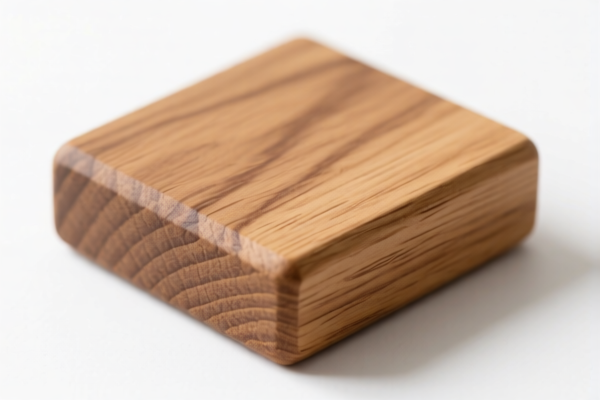
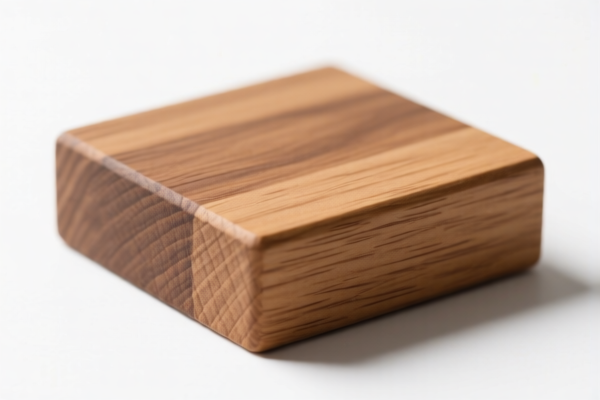
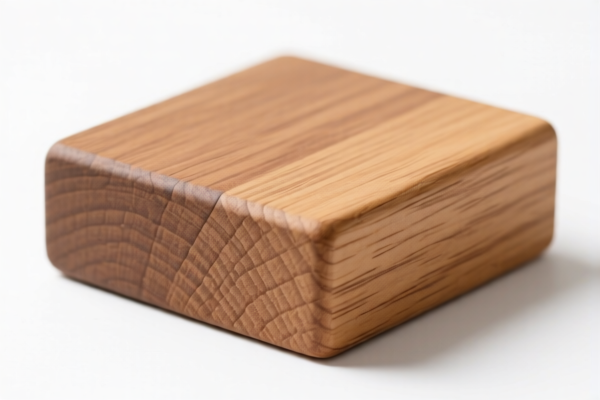

AI Analysis
🌲 Rough Square Oak Timber (Construction Grade)
🌐 HS Code Reference & Customs Clearance Guide | 2026 Latest Tariff Analysis | Professional Entry Strategy
📌 I. Product Definition & Classification: Are You Confused Between "Red Oak" and "Other Oak"?
"Rough square oak timber" typically refers to oak wood that has been sawn or chipped lengthwise, sliced, or peeled, with a thickness exceeding 6 mm. It may be planed, sanded, or end-joined, but remains in its basic structural form ("rough" usually implies not yet finished for furniture or flooring). In the context of U.S. import regulations (based on the provided <DATA>), all oak products fall under Chapter 44, specifically Heading 4407.91 (Of oak (Quercus spp.)).
The critical distinction for customs clearance lies in the sub-type of oak: 1. Red Oak: Specifically categorized as "Red oak." 2. Other Oak: Includes White Oak, European Oak, and other species not classified as "Red oak."
⚠️ Key Distinction Point:
- If your timber is Red Oak (Quercus rubra, Q. palustris, etc.) → HS Code4407.91.00.22
- If your timber is White Oak or any other Oak → HS Code4407.91.00.63
- Mistake Alert: Importing White Oak but declaring it as Red Oak (or vice versa) leads to classification errors, potential fines, and delayed clearance.
📦 II. HS Code Classification Details (2026 Latest Tariff Authority Match)
Based strictly on the provided <DATA>, here are the two applicable HS Codes for "Rough Square Oak Timber Construction Grade":
| HS Code | Product Description | Application Scenario | Tax Rate (Total) |
|---|---|---|---|
4407.91.00.22 |
Wood sawn/sliced/peeled, thickness > 6mm: Other: Of oak (Quercus spp.) Red oak | Construction beams, red oak lumber, pallets, structural elements made from Red Oak | 25.0% |
4407.91.00.63 |
Wood sawn/sliced/peeled, thickness > 6mm: Other: Of oak (Quercus spp.) Other | White oak beams, European oak timber, non-Red oak construction materials | 25.0% |
🔍 Important Note:
- Both HS Codes share the exact same tax rate in the provided data.
- The physical appearance of the wood (rough, square) confirms it falls under 4407 (Wood sawn lengthwise, sliced or peeled, of a thickness exceeding 6 mm).
- "Construction grade" implies it meets structural standards but does not change its HS classification away from 4407 unless it is processed into specific items (e.g., prefabricated houses, which would be different).
💰 III. 2026 Latest Tariff Rate Breakdown
✅ Applicable Country: United States (US) (Inferred from the context of "Additional Tariff" commonly associated with these specific HS codes and data structure)
✅ Origin: China (CN) (Assumed based on the presence of "Additional Tariff" structure similar to Section 301 tariffs)
✅ Effective Time: Current (as per provided data)
🎯 1. 4407.91.00.22 —— Red Oak Timber
| Item | Content |
|---|---|
| Base Tariff Rate | 0.0% |
| Additional Tariff (Section 301 / USTR) | +25.0% |
| Total Tax Rate | 25.0% |
| Tax Calculation | CIF Value × 25.0% |
| De Minimis Exemption? | ❌ No (General merchandise > $800 is subject to tariff; however, wood products often face stricter scrutiny. If shipment is < $800 via postal, it might pass, but formal commercial entry pays 25%.) |
| Legal Basis Path | USITC:4407.91.00.22 → USTR:301-List3 (Typical for Chinese wood products) |
📌 Explanation:
- The Base Tariff for oak lumber is generally low (0-10% depending on specific sub-heading globally), but under USITC/USITC Note 4407.91, the additional tariff brings the total to 25%.
- This is a high-cost entry for US importers. You must factor this 25% into your landed cost calculation immediately.
🎯 2. 4407.91.00.63 —— Other Oak Timber (e.g., White Oak)
| Item | Content |
|---|---|
| Base Tariff Rate | 0.0% |
| Additional Tariff (Section 301 / USTR) | +25.0% |
| Total Tax Rate | 25.0% |
| Tax Calculation | CIF Value × 25.0% |
| De Minimis Exemption? | ❌ No |
| Legal Basis Path | USITC:4407.91.00.63 → USTR:301-List3 |
📌 Note:
- Unlike Red Oak, White Oak is not explicitly named in the first code, so it falls under "Other."
- The tariff burden is identical (25%). There is no tax advantage to switching from Red Oak to White Oak for tariff purposes.
🛠️ IV. Customs Clearance Practical Advice (Pitfall Avoidance Guide)
✅ 1. Required Documentation Checklist (Non-Negotiable)
| Document | Required? | Description |
|---|---|---|
| ✅ Commercial Invoice | ✔️ | Must clearly state "Oak Timber," specify species (Red vs. White), and HS Code. |
| ✅ Packing List | ✔️ | Detail dimensions, quantity, and gross/net weight. |
| ✅ Phytosanitary Certificate | ✔️ | CRITICAL: Wood is subject to ISPM 15 regulations. Must be heat-treated (HT) or fumigated (MB) and marked. |
| ✅ Fumigation/Heat Treatment Certificate | ✔️ | Proof of pest control treatment. Without this, cargo will be rejected/destroyed. |
| ✅ Bill of Lading | ✔️ | Standard shipping document. |
| ✅ USDA Permit | ✔️ | May be required for certain hardwoods depending on origin and disease status (e.g., Oak Wilt). |
✅ 2. Classification Tips (Key Mantra)
🔥 “Species Matters, Treatment Saves You, 25% Hits Either Way!”
| Situation | Correct Declaration | Incorrect Action |
|---|---|---|
| Red Oak Beams | 4407.91.00.22 + "Red Oak" |
Mislabeling as "Maple" or "Pine" → Smuggling/Seizure |
| White Oak Planks | 4407.91.00.63 + "White Oak" |
Mislabeling as "Red Oak" → Audit/Penalty |
| Unprocessed vs. Processed | Must be > 6mm thick and sawn | If < 6mm, it goes to 4408 (Veneer) or 4409 (Moulding) → Different Taxes |
| Treated Wood | Mark "HT" (Heat Treated) | Untreated wood → Rejected by Customs/USDA |
✅ 3. Special Circumstances Handling
| Situation | Handling Advice |
|---|---|
| Mixed Species Load | If a container has both Red and White Oak, you must split the HS codes in the entry. Do not mix them under one code to avoid under-reporting. |
| Dimensional Errors | If the timber is actually < 6mm thick, it is NOT 4407. It might be 4408 (Veneer sheets). Re-classify immediately to avoid 25% penalty on a 0% item (or vice versa). |
| End-Jointed Timber | The description "end-jointed" is allowed under 4407. No change in HS Code, but ensure it’s still structural lumber, not a finished panel. |
| Country of Origin | If the wood is harvested in the US and exported to another country and back, it’s still US. If harvested in Europe, it’s EU. No additional "China tariff" applies if origin is not China. (Check the <DATA> context: The 25% tariff in the data is likely specific to China-origin goods under Section 301. If your oak is from France or Vietnam, the 25% might not apply. Verify Origin!) |
⚠️ Critical Origin Warning:
The<DATA>provided shows a 25% Additional Tariff. This is highly indicative of Section 301 tariffs on Chinese goods.
- If your Oak is from China: You pay 25% total (0% base + 25% additional).
- If your Oak is from EU, Canada, or Vietnam: You may pay 0% total (assuming Free Trade Agreement or MFN status without Section 301).
- Action: Check the Country of Harvest/Origin on your Phytosanitary Certificate. If not China, claim the exemption or different MFN rate!
📌 V. Common Errors & Pitfalls (Lessons Learned)
❌ Error 1: Declaring "White Oak" as "Red Oak" to save time.
👉 Consequence: Even if taxes are the same, USDA/Customs audits can flag species misrepresentation, leading to detention and fines.
❌ Error 2: Ignoring the ISPM 15 Mark.
👉 Consequence: Rejection at Port. The wood is returned to origin or destroyed at your expense. This is more costly than the tariff.
❌ Error 3: Assuming "Construction Grade" means "Prefabricated."
👉 Consequence: If it’s just rough timber, it’s 4407. If it’s cut into specific house frames with labels, it might be 9406 (Prefabricated Buildings). Misclassification leads to duty evasion allegations.
❌ Error 4: Not verifying Origin for Tariff Exemptions.
👉 Consequence: Paying 25% when you should have paid 0% because the wood came from Germany. Always request the Country of Origin Certificate.
✅ Correct Declaration Example:
"Rough Square Oak Lumber, 2x6, White Oak (Quercus alba), Heat Treated (HT), HS Code: 4407.91.00.63, Origin: France"
🎯 VI. Conclusion: Professional Entry, Cost Control!
🎯 Key Takeaways:
🔹 Species Identification is King: Red Oak (
22) vs. Other Oak (63).
🔹 Tariff Rate is Fixed: Both codes carry a 25% Total Tax in the provided data (likely due to China origin).
🔹 Phytosanitary Compliance is Non-Negotiable: No HT mark = No Entry.
🔹 Check Origin: If NOT China, the 25% may be waived. This is your biggest cost-saving opportunity.
📌 Pro Tip:
If you are importing from non-Chinese sources (e.g., Vietnam, EU), ensure your customs broker claims the MFN (Most Favored Nation) rate rather than the 301 tariff. The base rate for oak is often 0-5%, not 25%. The 25% in the data is a punitive tariff, not the standard duty.
📣 Immediate Action:
📞 Contact your Customs Broker: Ask, "Does the 25% additional tariff apply to my Country of Origin?"
🚀 Verify Phytosanitary Marks: Ensure every pallet has the HT stamp.
💼 Classify Correctly: Red vs. White Oak.
✨ Precision in Classification, Savings in Tariffs, Safety in Compliance!
💼 Your Timber Journey Starts with Accurate Data!
Customer Reviews
About HS Code Classification
The Harmonized System (HS) is an internationally standardized nomenclature developed by the World Customs Organization (WCO) to classify traded products. Over 200 countries use the HS system as the basis for customs tariffs, trade statistics, and import/export regulations.
Each HS code follows a hierarchical structure:
- Chapter (2 digits) — Broad category of goods (e.g., Chapter 84: Machinery and Mechanical Appliances)
- Heading (4 digits) — More specific grouping within the chapter
- Subheading (6 digits) — Internationally standardized breakdown, used by all WCO member countries
- National subdivisions (8-10 digits) — Country-specific extensions for further classification, such as US HTSUS 10-digit codes
Correct HS code classification is essential for smooth customs clearance, accurate duty payment, and compliance with trade regulations. Misclassification can lead to customs delays, overpayment of duties, or penalties.
When importing from CN to US, the applicable tariff rates may include:
- Most-Favored-Nation (MFN) rate — The standard duty rate applied to WTO members
- General rate — Applied to countries without trade agreements
- Trade remedy duties — Additional tariffs such as Section 301 (anti-dumping), Section 232 (national security), or countervailing duties
The information provided on this page is for reference purposes only. For official classification, please consult with your local customs authority or a licensed customs broker.