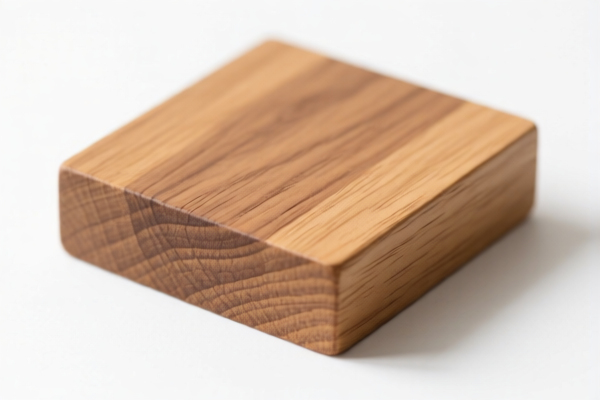
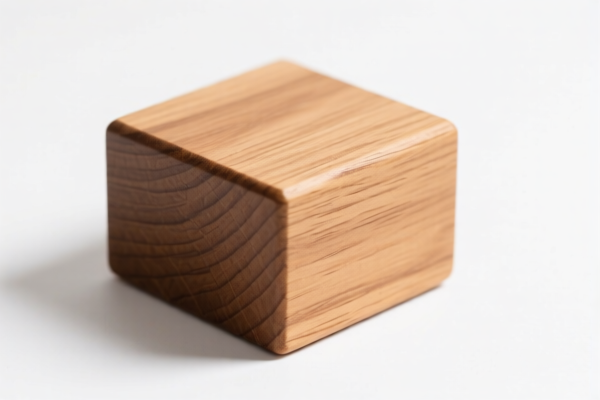
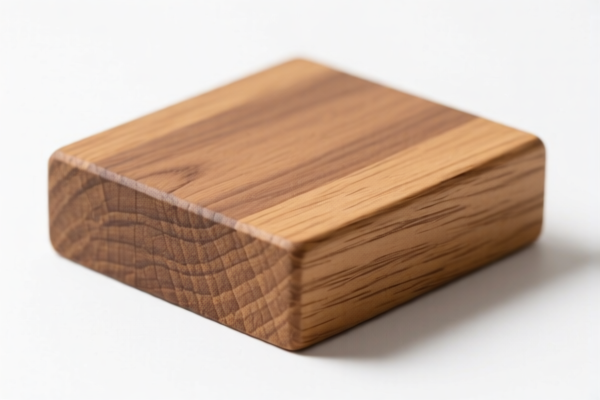
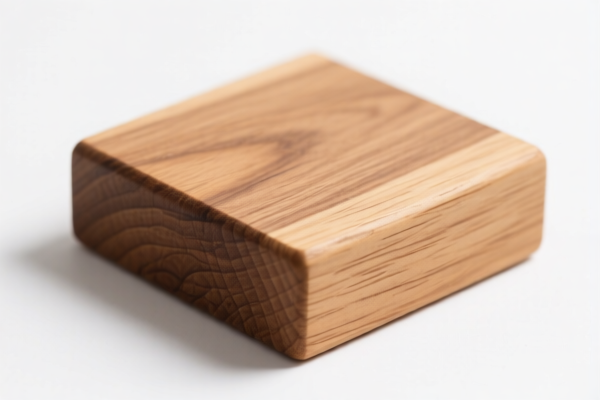
Rough Square Oak Wood (Furniture Grade)
CN → US| HS Code | Tariff Rate | Origin | Destination | Doc |
|---|---|---|---|---|
| 4403910020 | 35.0% | CN | US | Official Doc |
| 4403910040 | 35.0% | CN | US | Official Doc |
| 4407910022 | 35.0% | CN | US | Official Doc |
| 4409292660 | 35.0% | CN | US | Official Doc |
| 4409299100 | 35.0% | CN | US | Official Doc |
Product Images
AI Analysis
🪵 Rough Square Oak Wood (Furniture Grade)
🌐 HS Code Reference & Customs Clearance Guide | 2026 Latest Tariff Analysis | Professional Compliance Strategy
📌 I. Product Definition: What is "Rough Square Oak Wood"?
Rough Square Oak Wood, often referred to in trade as Unsawn Lumber or Sawn but not further worked wood, is the primary raw material for furniture manufacturing, flooring, and cabinetry. It is not yet planed, sanded, or finished.
In international trade, the classification depends heavily on the shape (square/rectangular) and the processing level (rough-cut vs. planed). For "Rough Square Oak," customs authorities look at whether it is considered "logs" (Chapter 4403) or "sawn wood" (Chapter 4407/4409).
⚠️ Key Distinction:
- If the wood is merely sawed but not smoothed (rough surface, irregular edges) → Often classified under 4403 (Wood prepared for preservation) or 4407 (Sawn wood).
- If it is profiled (e.g., tongue-and-groove for flooring) → Classified under 4409 (Wood continuously shaped).
- Oak (Quercus) is a broadleaf hardwood, which triggers specific sub-heading requirements.
📦 II. HS Code Classification Matrix (2026 Latest Tariff Data)
Based on the provided data for Rough Square Oak Wood, here are the 5 specific HS Codes and their rationales. Note that all listed codes carry a Total Tax of 35% due to US-China trade tensions.
| HS Code | Product Description & Summary | Classification Logic |
|---|---|---|
| 4403.91.00.20 | Rough Square Form, Oak Material, Furniture Grade, Primary Rough-Sawn Wood | Classified as prepared wood (preserved/treated or untreated but shaped) under Chapter 4403. Specifically for broadleaf hardwoods (Oak) in a rough square form. |
| 4403.91.00.40 | Oak Material, Roughly Square-Cut Form, Unprocessed Wood Category | Falls under 4403 as "wood roughly squared or roughly sawn." It emphasizes the "unprocessed" nature, distinct from planed lumber. |
| 4407.91.00.22 | Oak Material, Square Wood, Semi-finished/Primary Vertical Sawn Definition | Classified under 4407 (Sawn wood, chipped or peeled). This code applies if the wood is explicitly defined as "sawn" but not further worked (planed/molded). It targets the semi-finished state. |
| 4409.29.26.60 | Oak Material, Broadleaf, Furniture Grade & Flooring Processing Attributes | Classified under 4409 (Continuously shaped wood). This is used if the rough square wood has slight profiles suitable for flooring or specific furniture joints, even if still rough. It captures the "end-use" attribute. |
| 4409.29.91.00 | Oak Material, Rough Square Form, Residual Category (Catch-all) | A fallback classification under 4409. Used when the wood fits the "shaped" definition but doesn't match specific sub-headers for flooring or moldings. Based on the "other" category principle. |
🔍 Critical Insight:
- The difference between 4403 and 4407/4409 often lies in the degree of sawing and customs interpretation of "rough."
- 4403 is often for wood that is less worked than standard sawn timber.
- 4407/4409 are for wood that has been sawed into dimension but not finished.
- All 5 codes listed above result in the same total tax rate of 35% for US imports from China, simplifying the cost calculation but complicating the compliance documentation.
💰 III. 2026 Tariff Rate Breakdown (Detailed Tax Clauses)
✅ Applicable Country: United States (US)
✅ Origin: China (CN)
✅ Total Tax Rate: 35.0% (Uniform across all 5 HS Codes)
🎯 1. Tax Structure Analysis (Applicable to All 5 HS Codes)
| Component | Rate | Legal Basis / Description |
|---|---|---|
| Basic Duty (MFN) | 0.0% | Most Favored Nation rate for wood products is often 0% or low, but... |
| Section 301 Duty | 25.0% | Additional duty imposed on Chinese goods under Section 301 of the Trade Act of 1974. |
| Section 122 Duty | 10.0% | Additional duty under Section 122 of the Trade Act (or similar emergency trade provisions), often applied to specific categories of Chinese imports. |
| TOTAL TAX | 35.0% | Sum of Basic (0%) + 301 (25%) + 122 (10%). |
| Calculation Basis | CIF Value | Taxes are calculated on the Cost, Insurance, and Freight value. |
| De Minimis Exemption | ❌ Not Eligible | Shipments under $800 (Section 321) are NOT exempt from Section 301/122 duties. |
📌 Explanation:
- The 35% rate is a flat additive burden for these HS codes.
- Section 301 (25%) is the primary driver for tariffs on Chinese wood products.
- Section 122 (10%) adds further cost, likely related to emergency trade powers or specific sectoral protections.
- Compliance Warning: Even if the basic duty is 0%, the 25% + 10% surcharge makes this a high-cost import. Misclassification to a lower-tariff code (if any existed, which they don't in this dataset) would be customs fraud.
🛠️ IV. Customs Clearance Practical Advice (Avoid Pitfalls)
✅ 1. Required Documentation Checklist
| Document | Requirement | Purpose |
|---|---|---|
| Commercial Invoice | Must clearly state "Rough Square Oak Wood" and HS Code. | Defines value and description. |
| Packing List | Detail dimensions (length, width, thickness) and weight. | Helps customs verify "square" vs. "log" status. |
| Phytosanitary Certificate | MANDATORY for all wood imports. | Proves wood is free from pests/diseases (ISPM 15 standard). |
| Fumigation Certificate | If wood is not heat-treated. | Required for rough wood to prevent pest introduction. |
| Bill of Lading/Air Waybill | Original transport document. | Proof of shipment. |
| Country of Origin Certificate | Explicitly state "Made in China". | Triggers the 35% tariff; misdeclaration leads to heavy fines. |
✅ 2. Declaration Best Practices
🔥 "Be Precise: 'Rough' vs. 'Sawn' Matters, But Tax is Same!"
| Scenario | Recommended HS Code | Reason |
|---|---|---|
| Very rough, bark-on, minimally shaped | 4403.91.00.20 or 4403.91.00.40 |
Closer to "prepared wood" or "roughly squared." |
| Planed but not sanded, clear dimensions | 4407.91.00.22 |
Fits "sawn wood" definition. |
| Wood intended for flooring/joinery | 4409.29.26.60 |
End-use dictates classification. |
| Generic rough square oak | 4409.29.91.00 |
Safe fallback if end-use is ambiguous. |
📌 Key Tip:
- Even though the tax is 35% for all, the HS Code affects non-tariff barriers (e.g., specific phytosanitary rules for certain wood types).
- Oak is a broadleaf hardwood; ensure your phytosanitary certificate specifies "Quercus spp." (Oak species).
✅ 3. Special Considerations
| Issue | Advice |
|---|---|
| Moisture Content | Declare moisture content (e.g., "Air Dry" or "Kiln Dry"). High moisture can lead to rejection or mold issues. |
| Bark Status | Specify if bark is present or removed. Bark-on wood often has stricter phytosanitary requirements. |
| Chemical Treatment | If wood is pressure-treated, declare chemical composition. This may shift classification to 4403 (treated wood). |
| Value Declaration | Ensure CIF value is accurate. Under-invoicing leads to seizures and penalties. |
🌍 V. Global Market Comparison (2026)
| Market | HS Code Reference | Total Tax (China Origin) | Notes |
|---|---|---|---|
| 🇺🇸 United States | 4403 / 4407 / 4409 |
35.0% | High tariffs due to Section 301 & 122. |
| 🇨🇳 China | 4403 / 4407 / 4409 |
Varies (0-5%) | Import duties are low; focus on domestic trade. |
| 🇪🇺 European Union | 4403 / 4407 / 4409 |
0-3.7% | No Section 301 tariffs; standard EU duty applies. |
| 🇬🇧 United Kingdom | 4403 / 4407 / 4409 |
0-3.7% | Post-Brexit tariffs similar to EU for wood. |
| 🇯🇵 Japan | 4403 / 4407 / 4409 |
0-6.0% | Low duties; CPTEE benefits may apply. |
📌 Conclusion:
- The US is the most expensive market for Chinese rough square oak due to the 35% surcharge.
- For other markets, the tax is significantly lower, making the US market highly sensitive to tariff policy changes.
- Strategy: Consider non-Chinese origins (e.g., Vietnam, Romania) to avoid the 35% US tariff, if supply chain allows.
📌 VI. Common Errors & Pitfalls (Lessons Learned)
❌ Error 1: Declaring "Rough Square Oak" as "Lumber" without specifying "Rough"
👉 Consequence: Customs may reclassify to a different subheading, leading to delayed clearance or penalties for incorrect description.
❌ Error 2: Ignoring Phytosanitary Certificates
👉 Consequence: Immediate rejection or quarantine at US port. Wood without proper certificates is prohibited.
❌ Error 3: Assuming "Furniture Grade" means Finished Product
👉 Consequence: If declared as "Furniture," it may be misclassified. Raw wood must be declared as such, even if intended for furniture.
❌ Error 4: Misdeclaring Country of Origin
👉 Consequence: If wood is from China but declared as "Vietnam" to avoid tariffs, this is fraud. Penalties include seizure of goods and fines up to 3x the value.
✅ Correct Approach:
"Rough Square Oak Wood, Unprocessed, Phytosanitary Certified, Origin: China, HS Code: 4403.91.00.20, Value: $X, CIF: $Y"
🎯 VII. Conclusion: Professional Declaration Saves Money
🎯 Key Takeaway:
🔹 "Tax is 35% for all rough oak, but correct HS Code ensures compliance."
🔹 "Phytosanitary Certs are non-negotiable."
🔹 "Don't under-value; customs audits are strict."
📌 Pro Tip:
- If you are importing large volumes, consider applying for a Tariff Engineering Exemption or Special Trade Agreement benefits if available (though unlikely for China-origin wood under current 301 rules).
- Consult a licensed customs broker to verify the exact HS Code based on physical samples, as "rough" vs. "sawn" can be subjective.
📣 Immediate Action:
📞 Hire a Customs Broker to review your shipment documentation.
📦 Ensure Phytosanitary Certs are ready before shipping.
💼 Budget for 35% Duty in your cost analysis to avoid margin erosion.
✨ Compliance is Key to Smooth Customs!
💼 Your Wood, Your Reputation, Your Profit – Declare with Precision!
Customer Reviews
About HS Code Classification
The Harmonized System (HS) is an internationally standardized nomenclature developed by the World Customs Organization (WCO) to classify traded products. Over 200 countries use the HS system as the basis for customs tariffs, trade statistics, and import/export regulations.
Each HS code follows a hierarchical structure:
- Chapter (2 digits) — Broad category of goods (e.g., Chapter 84: Machinery and Mechanical Appliances)
- Heading (4 digits) — More specific grouping within the chapter
- Subheading (6 digits) — Internationally standardized breakdown, used by all WCO member countries
- National subdivisions (8-10 digits) — Country-specific extensions for further classification, such as US HTSUS 10-digit codes
Correct HS code classification is essential for smooth customs clearance, accurate duty payment, and compliance with trade regulations. Misclassification can lead to customs delays, overpayment of duties, or penalties.
When importing from CN to US, the applicable tariff rates may include:
- Most-Favored-Nation (MFN) rate — The standard duty rate applied to WTO members
- General rate — Applied to countries without trade agreements
- Trade remedy duties — Additional tariffs such as Section 301 (anti-dumping), Section 232 (national security), or countervailing duties
The information provided on this page is for reference purposes only. For official classification, please consult with your local customs authority or a licensed customs broker.