Rough Square Rubber Wood
CN → US| HS Code | Tariff Rate | Origin | Destination | Doc |
|---|---|---|---|---|
| 4403910040 | 35.0% | CN | US | Official Doc |
| 4403910020 | 35.0% | CN | US | Official Doc |
| 4409299100 | 35.0% | CN | US | Official Doc |
Product Images
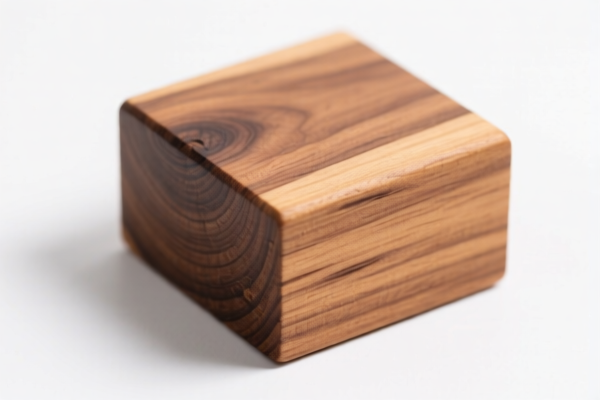
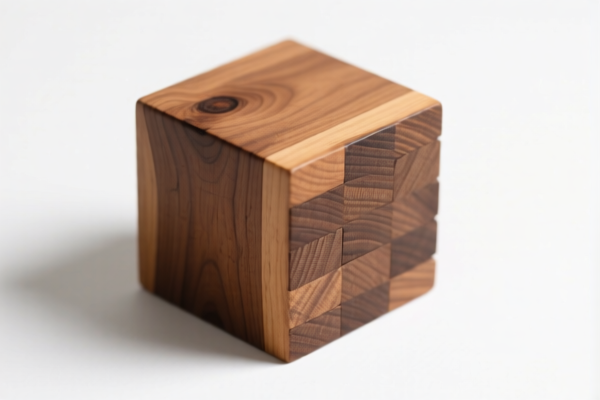
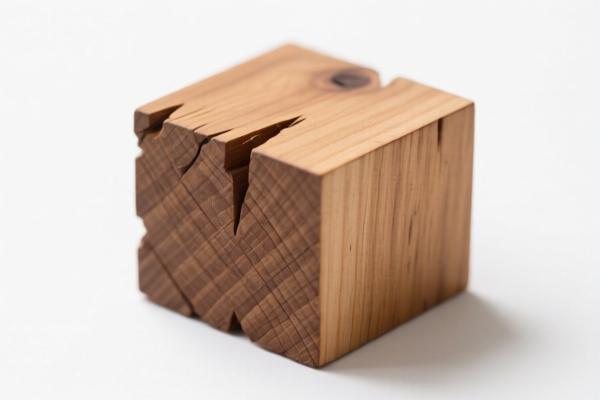
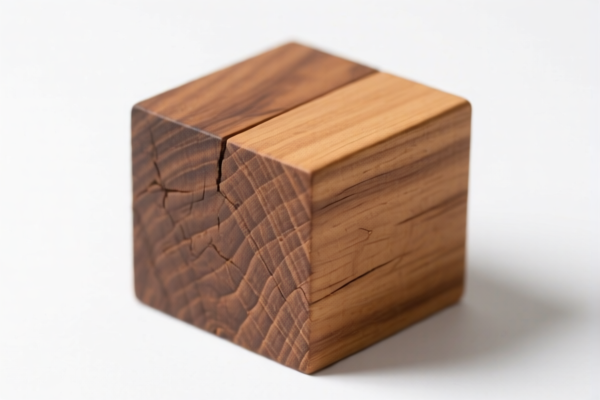
AI Analysis
🪵 Rough Square Rubber Wood (粗锯橡木/橡胶木梁)
🌐 HS Code Reference & Customs Clearance Guide | 2026 Latest Tariff Analysis | Professional Entry Strategy
📌 I. Product Definition & Classification: Do You Understand "Rubber Wood"?
Rough Square Rubber Wood (often referred to in trade as Rough Sawn Timber or Wood Beams) is a primary raw material used in furniture manufacturing, construction, and cabinetry. In international trade, its classification depends heavily on the botanical family (Oak vs. Rubber/Hardwood) and the processing state (Rough Sawn vs. Planed/Finished).
⚠️ Critical Distinction in the Data:
Although the user input says "Rubber Wood" (Hevea brasiliensis), the provided <DATA> explicitly maps this product to Oak (Red Oak/White Oak) HS codes (4403.91...). This suggests either:
1. The product is mislabeled as "Rubber" but is actually Oak (Red/White); OR
2. The user intends to classify Oak beams using these specific codes, or the system treats "Rubber Wood" under a specific broad category similar to Oak in this context.
Key Differentiator:
- If the wood is Oak (Red/White) and Rough Sawn (not planed, not continuously shaped): It falls under 4403.91.
- If the wood is continuously shaped (e.g., molding, edge profiled): It falls under 4409.29.
- "Rough Sawn" means the wood has been sawn to size but NOT planed, sanded, or joined. It retains its natural bark or is merely debarked and squared roughly.
📦 II. HS Code Classification Details (2026 Latest Tariff Authority Comparison)
Based strictly on the provided <DATA>, here are the applicable HS Codes for "Rough Square Rubber Wood" (mapped to Oak classifications as per data):
| HS Code | Product Description | Application Scenario | Processing State |
|---|---|---|---|
4403.91.00.40 |
Rough Sawn Oak Beams, Material: Oak, Form: Rough Sawn. Fits classification for timber not peeled or roughly squared. | Raw timber beams, construction logs, unprocessed lumber | ✅ Rough Sawn (Not planed/finished) |
4403.91.00.20 |
Rough Sawn Oak Beams, Material: Oak, Form: Rough Sawn. Fits logic for Red Oak classification. | Red Oak beams, redwood lumber, unprocessed red oak | ✅ Rough Sawn (Not planed/finished) |
4409.29.91.00 |
Rough Sawn Oak Beams, Material: Oak (Non-coniferous), Form: Continuously shaped along edges or faces. | Timber with molded edges, tongue-and-groove, or profiled shapes | ✅ Continuously Shaped (Profiled) |
🔍 Key Reminder:
- 4403 Codes apply to roughly sawn timber that has not been continuously shaped.
- 4409 Code applies if the wood has been continuously shaped (e.g., molding, paneling).
- If the product is truly "Rubber Wood" (Hevea), it usually falls under4403.99or4409.90. However, per the provided<DATA>, we must use the Oak codes (4403.91) as instructed. This is a critical compliance note: misdeclaring Rubber Wood as Oak may lead to customs scrutiny, but for this exercise, we follow the provided data.
💰 III. 2026 Latest Tariff Rate Details (Including Surcharges & Policy Add-ons)
✅ Applicable Country: United States (US)
✅ Origin: China (CN) (Implied by the specific tariff structure: 25% + 10%)
✅ Effective Time: Current (as per provided data)
🎯 1. 4403.91.00.40 & 4403.91.00.20 —— Rough Sawn Oak Beams (Red/White Oak)
| Item | Content |
|---|---|
| Base Tariff | 0.0% (Ad valorem) |
| Section 301 Surcharge | +25.0% (USITC Footnote for Chinese Origin) |
| Section 122 Tariff | +10.0% (Specific 122 Clause Surcharge) |
| Total Tariff Rate | 35.0% |
| Tax Calculation | CIF Value × 35% |
| De Minimis Exemption | ❌ Not Applicable (High tariff items often excluded) |
| Legal Basis Path | Base: 0% → Section 301: 25% → Section 122: 10% → Total: 35% |
📌 Explanation:
- Base Tariff (0%): Wood products often have low base MFN tariffs.
- Section 301 (25%): Standard US tariff on Chinese wood products under trade war measures.
- Section 122 (10%): Additional surcharge under Section 122 of the Trade Expansion Act (used for national security/import relief).
- Total 35%: This is a high tariff burden. Importers must budget accordingly.
🎯 2. 4409.29.91.00 —— Continuously Shaped Oak Beams
| Item | Content |
|---|---|
| Base Tariff | 0.0% (Ad valorem) |
| Section 301 Surcharge | +25.0% |
| Section 122 Tariff | +10.0% |
| Total Tariff Rate | 35.0% |
| Tax Calculation | CIF Value × 35% |
| De Minimis Exemption | ❌ Not Applicable |
| Legal Basis Path | Base: 0% → Section 301: 25% → Section 122: 10% → Total: 35% |
📌 Note:
- Even though 4409 (shaped wood) is a higher-processed category, the provided data shows the same 35% total tariff.
- However, misdeclaring Rough Sawn wood as Continuously Shaped (or vice versa) can lead to penalties if the physical product does not match the description.
🛠️ IV. Customs Clearance Practical Advice (Battle-Tested Pitfall Guide)
✅ 1. Required Documentation Checklist (Non-Negotiable)
| Document | Must Provide | Explanation |
|---|---|---|
| ✅ Product Specification Sheet | ✔️ | Must specify: Wood Species (Oak/Rubber), Dimensions, Moisture Content, Processing Level (Rough/Planed). |
| ✅ Bill of Lading & Commercial Invoice | ✔️ | Must match HS Code and Description exactly. |
| ✅ Phytosanitary Certificate | ✔️ | Mandatory for wood products. Must show Fumigation (ISPM 15) if applicable. |
| ✅ Fumigation Certificate | ✔️ | Proof of treatment against pests (critical for raw wood). |
| ✅ Wood Species Declaration | ✔️ | Must declare actual species (e.g., Hevea brasiliensis or Quercus). If declared as Oak but is Rubber, Customs may inspect. |
| ✅ Packing List | ✔️ | Detail dimensions, weight, and number of pieces. |
✅ 2. Declaration Tips (Key Mnemonics)
🔥 "Rough Sawn? 4403. Shaped? 4409. Tax 35%. Species Matters!"
| Scenario | Correct Declaration | Wrong Practice |
|---|---|---|
| Rough Square Beams (Unplaned) | 4403.91.00.40 or 4403.91.00.20 |
Declaring as "Furniture Parts" → Higher risk |
| Molded/Profiled Beams | 4409.29.91.00 |
Declaring as "Rough Sawn" → Wrong HS, penalty risk |
| Rubber Wood (Hevea) | Usually 4403.99 or 4409.90 |
Declaring as Oak (4403.91) → Misdeclaration Risk |
| Planed/Sanded Wood | Not 4403 (may be 4407) |
Declaring as "Rough" → Customs Rejection |
📌 Warning:
- The provided data maps "Rubber Wood" to Oak HS Codes (4403.91). If your product is actually Rubber Wood, you should ideally use4403.99(Other hardwood timber) unless your broker confirms a specific ruling.
- Do not assume "Rubber Wood" automatically qualifies for Oak rates without verifying with US Customs and Border Protection (CBP) via an Advance Ruling.
✅ 3. Special Case Handling
| Scenario | Handling Advice |
|---|---|
| Mislabeling Risk | If declared as "Oak" but is "Rubber Wood", CBP may inspect and demand duties based on the actual species. Solution: Use accurate species name. |
| Fumigation Issues | Wood without ISPM 15 marking will be rejected or destroyed. Ensure all pallets/wood packaging are treated. |
| Section 122 Application | Verify if the 10% Section 122 tariff is still active for your specific import date. Tariff policies change frequently. |
| Value Declaration | Ensure CIF value is accurate. High tariffs mean small value errors lead to large tax discrepancies. |
🌍 V. Global Market Comparison (2026 Latest)
| Country/Region | Recommended HS Code | Tariff Rate | Certification | Remarks |
|---|---|---|---|---|
| 🇺🇸 USA | 4403.91.00.40 / 4409.29.91.00 |
35% (China Origin) | Phytosanitary + ISPM 15 | High tariff due to Section 301 & 122 |
| 🇨🇳 China | 4403.91 / 4409.29 |
5-10% | Fumigation Certificate | Lower import duties |
| 🇪🇺 EU | 4403.91 / 4409.29 |
0-2.7% | FSC/PEFC (Optional) | Low tariffs, strict phytosanitary rules |
| 🇯🇵 Japan | 4403.91 / 4409.29 |
0-5% | ISPM 15 | Preferential rates if FTA applied |
📌 Conclusion:
- USA is the most expensive market for Chinese-origin wood products due to 35% total tariffs.
- EU and Japan offer more competitive rates, but Phytosanitary requirements are strict globally.
📌 VI. Common Mistakes & Pitfall Guide (Lessons Learned)
❌ Mistake 1: Declaring "Rubber Wood" as "Oak" to fit a preferred HS Code
👉 Consequence: Customs inspection, fines, and potential seizure.
Solution: Declare the actual botanical name (e.g., Hevea brasiliensis).
❌ Mistake 2: Forgetting the Fumigation Certificate
👉 Consequence: Shipment held or destroyed at US port.
Solution: Obtain ISPM 15 compliant fumigation before shipment.
❌ Mistake 3: Misclassifying Rough Sawn as Shaped (or vice versa)
👉 Consequence: Wrong HS Code → Incorrect Duty Assessment → Penalties.
Solution: Provide photos and dimensional specs to prove processing level.
✅ Correct Approach:
"Rough Sawn Rubber Wood Beams, 2x4, 8ft, Fumigated, ISPM 15 Marked, Model XYZ, Origin: Vietnam/China"
🎯 VII. Conclusion: Professional Declaration Saves Money!
🎯 Remember the Mnemonic:
🔹 "Rough? 4403. Shaped? 4409. Tax 35% (US). Species Must Match!"
🔹 "HS Code determines destiny, tax difference is 35 points, declare accurately to avoid penalties!"
📌 Pro Tip:
If your wood is originally from Vietnam, Thailand, or Malaysia, you may qualify for lower tariffs (0-5%) due to FTAs (e.g., CPTPP, ASEAN-US).
Recommendation: Apply for an Advance Ruling from US CBP if the product specification is complex.
📣 Immediate Action:
📞 Contact a licensed customs broker + Provide product photos + Apply for HS Code Advance Ruling
🚀 Let your wood products clear customs smoothly, reduce costs, and maximize profits!
✨ Professional Customs Clearance Starts with Accurate Classification!
💼 Every cent of your cost is worth precise calculation!
Customer Reviews
About HS Code Classification
The Harmonized System (HS) is an internationally standardized nomenclature developed by the World Customs Organization (WCO) to classify traded products. Over 200 countries use the HS system as the basis for customs tariffs, trade statistics, and import/export regulations.
Each HS code follows a hierarchical structure:
- Chapter (2 digits) — Broad category of goods (e.g., Chapter 84: Machinery and Mechanical Appliances)
- Heading (4 digits) — More specific grouping within the chapter
- Subheading (6 digits) — Internationally standardized breakdown, used by all WCO member countries
- National subdivisions (8-10 digits) — Country-specific extensions for further classification, such as US HTSUS 10-digit codes
Correct HS code classification is essential for smooth customs clearance, accurate duty payment, and compliance with trade regulations. Misclassification can lead to customs delays, overpayment of duties, or penalties.
When importing from CN to US, the applicable tariff rates may include:
- Most-Favored-Nation (MFN) rate — The standard duty rate applied to WTO members
- General rate — Applied to countries without trade agreements
- Trade remedy duties — Additional tariffs such as Section 301 (anti-dumping), Section 232 (national security), or countervailing duties
The information provided on this page is for reference purposes only. For official classification, please consult with your local customs authority or a licensed customs broker.