Rough Square Timber Post
CN → US| HS Code | Tariff Rate | Origin | Destination | Doc |
|---|---|---|---|---|
| 4407190055 | 35.0% | CN | US | Official Doc |
| 4407190056 | 35.0% | CN | US | Official Doc |
Product Images
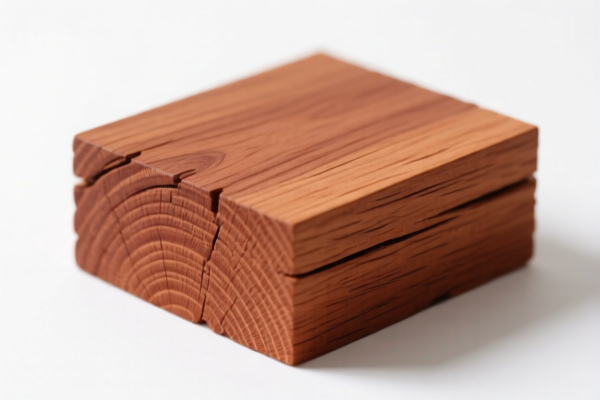
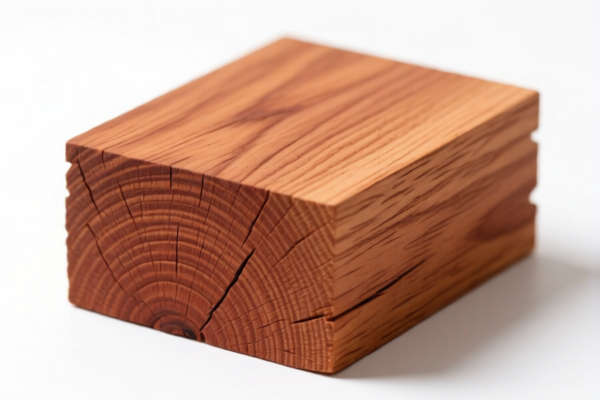
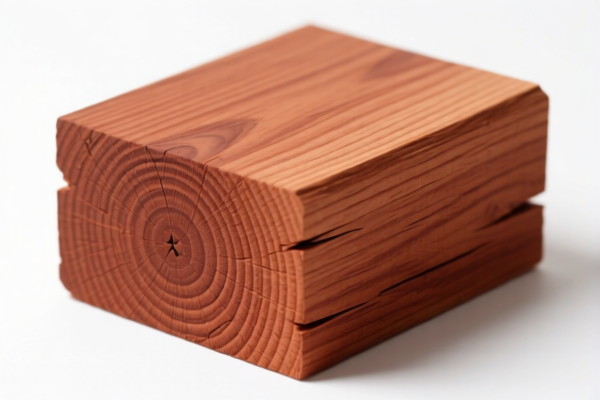
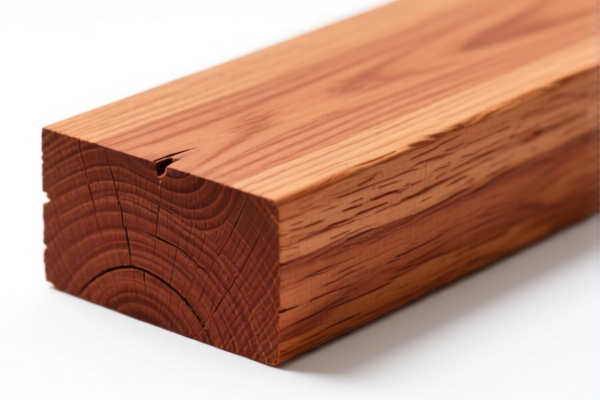
AI Analysis
🪵 Rough Square Timber Post (Douglas-fir)
🌐 HS Code Reference & Customs Clearance Guide | 2026 Latest Tariff Analysis | Professional Strategy for Structural Wood
📌 I. Product Definition & Classification: What Exactly is a "Rough Square Timber Post"?
A Rough Square Timber Post refers to wood that has been sawn or chipped lengthwise, sliced, or peeled, with a thickness exceeding 6 mm, but remains in its "Rough" state (unplaned, unsanded, and not end-joined). Specifically, this analysis focuses on Douglas-fir (Pseudotsuga menziesii), a high-strength coniferous wood widely used for structural posts, beams, and railway ties.
In international trade, the classification hinges on two critical dimensions: 1. Processing Level: "Rough" (no surface planing/sanding). 2. Minimum Dimension: The smallest cross-sectional measurement (width or thickness).
⚠️ Key Distinction Point:
- If the minimum dimension is ≥ 12.7 cm (5 inches) → It is classified as structural timber.
- If the minimum dimension is ≥ 5.1 cm but < 12.7 cm → It is classified as smaller dimensional lumber/staves.
- Crucial: Both categories fall under Douglas-fir, Coniferous, Not Treated, and Rough.
📦 II. HS Code Classification Details (2026 Latest Tariff Authority Match)
Based on the provided data, there are two specific HS Codes for Rough Douglas-fir posts, differentiated strictly by their minimum dimension.
| HS Code | Product Description | Minimum Dimension Criteria | Common Application |
|---|---|---|---|
4407.19.00.55 |
Douglas-fir (Rough, Not Treated) | ≥ 5.1 cm but < 12.7 cm | Fencing posts, small structural supports, landscaping timbers |
4407.19.00.56 |
Douglas-fir (Rough, Not Treated) | ≥ 12.7 cm | Large structural posts, bridge pilings, heavy-duty construction beams |
🔍 Critical Reminder:
- "Rough" Definition: The wood must NOT be planed, sanded, or tongue-and-grooved. If it is planed, it moves to a different subheading (e.g.,4407.19.00.50for planed).
- "Not Treated": The wood must be chemically untreated. Preservative-treated wood falls under Chapter 44 heading 4403.
- Douglas-fir Specificity: You must confirm the species is Pseudotsuga menziesii. Misidentification as "Other Coniferous" could lead to incorrect tariff codes.
💰 III. 2026 Tariff Rate Details (Detailed Tax Breakdown)
✅ Applicable Country: United States (US)
✅ Origin: China (CN) (Assumed based on the "Additional Tariff" context typical in US-China trade data)
✅ Status: High Risk / High Duty
✅ Effective Time: Current applicable rates (Subject to USITC/USMCA adjustments)
🎯 1. 4407.19.00.55 — Rough Douglas-fir (Small Dimension: 5.1–12.7 cm)
| Item | Content |
|---|---|
| Base Tariff Rate | 0.0% (Free under most FTA/GSP, but subject to Section 301) |
| Section 301 Additional Tariff | +25.0% (Applied to most Chinese wood products) |
| Total Tax Rate | 25.0% |
| Tax Calculation | Ad Valorem (CIF Value × 25%) |
| De Minimis Exemption | ❌ Not Eligible (Wood products are generally excluded from $800 de minimis for duty calculation if they fall under specific restricted lists, but primarily: No duty-free entry for commercial shipments) |
| Legal Basis Path | HTSUS:4407.19.00.55 → USITC Footnote: 9903.03.08 (Section 301 List 3/4) |
📌 Explanation:
- The Base Rate is 0%, meaning no traditional customs duty applies for most origins.
- However, the 25% Additional Tariff is mandatory for goods originating in China.
- This is a Section 301 tariff, imposed due to trade tensions. It is not a "base" duty but a punitive addition.
🎯 2. 4407.19.00.56 — Rough Douglas-fir (Large Dimension: ≥ 12.7 cm)
| Item | Content |
|---|---|
| Base Tariff Rate | 0.0% |
| Section 301 Additional Tariff | +25.0% |
| Total Tax Rate | 25.0% |
| Tax Calculation | Ad Valorem (CIF Value × 25%) |
| De Minimis Exemption | ❌ Not Eligible |
| Legal Basis Path | HTSUS:4407.19.00.56 → USITC Footnote: 9903.03.08 |
📌 Note:
- Despite the size difference, the tariff rate is identical (25% total).
- Both codes are treated equally under current US-China trade regulations.
- Volume Matters: Larger posts (4407.19.00.56) are typically higher value per unit, so the absolute tax paid is higher, even if the percentage is the same.
🛠️ IV. Customs Clearance Practical Advice (Field Guide)
✅ 1. Documentation Checklist (Mandatory)
| Document | Required? | Explanation |
|---|---|---|
| ✅ Commercial Invoice | ✔️ | Must clearly state "Rough Douglas-fir (Pseudotsuga menziesii)". Avoid vague terms like "Wood Post". |
| ✅ Packing List | ✔️ | Must specify minimum dimension (e.g., "Min. Dim: 15cm") to justify 4407.19.00.56 vs 55. |
| ✅ Species Declaration | ✔️ | Must explicitly name the species. Customs may require a botanist’s certificate if disputed. |
| ✅ Phytosanitary Certificate | ✔️ | CRITICAL for wood imports. Must confirm no pests (e.g., Emerald Ash Borer, Pine Bark Beetle). Issued by the exporting country's agricultural authority. |
| ✅ Fumigation Certificate | ✔️ | Proof of heat treatment or methyl bromide fumigation to meet ISPM 15 standards (if packaged) or direct import requirements. |
| ✅ Bill of Lading/Air Waybill | ✔️ | Standard shipping document. |
✅ 2. Declaration Tips (Key Mnemonics)
🔥 "Rough means Unplaned, Size Dictates Code, Species Must Be Named!"
| Scenario | Correct Declaration | Incorrect Declaration | Consequence |
|---|---|---|---|
| Large Posts (≥12.7cm) | 4407.19.00.56 - "Rough Douglas-fir Posts, Min Dim 15cm" |
"Wood Posts" | Rejection for lack of specificity; potential penalty |
| Small Posts (5.1-12.7cm) | 4407.19.00.55 - "Rough Douglas-fir Staves, Min Dim 8cm" |
"Timber" | Misclassification; potential duty underestimation |
| Planed/Sanded Wood | Do NOT use these codes | Use 4407.19.00.55 |
25% Underpayment Penalty + Back Duties |
| Treated Wood | Do NOT use these codes | Use 4407.19.00.56 |
Code Error (Should be Ch 4403); fines |
✅ 3. Special Circumstances
| Situation | Handling Advice |
|---|---|
| Mixed Sizes in One Container | Split the declaration. If you have both ≥12.7cm and 5.1-12.7cm, you must declare two separate lines with separate HS codes. Mixing them can lead to the entire shipment being assessed at the highest rate or flagged for inspection. |
| Origin: Non-China (e.g., Canada/US) | If the Douglas-fir is grown in Canada or the US, the 25% Section 301 tariff does NOT apply. The rate may be 0% total. Ensure your Certificate of Origin is accurate. |
| IPPC Mark on Pallets | Ensure any wooden packaging has the IPPC stamp. If not, the packaging may be denied entry or require costly fumigation at the port. |
🌍 V. Global Market Comparison (2026)
| Country/Region | Recommended HS Code | Total Duty (China Origin) | Notes |
|---|---|---|---|
| 🇺🇸 USA | 4407.19.00.55 / .56 |
25.0% | High tariff due to Section 301. Strict phytosanitary checks. |
| 🇨🇳 China | 4407.19.00.55 / .56 |
Varies (0-10%) | Import duties on wood can be low, but VAT applies (13%). |
| 🇪🇺 EU | 4407.19.00 |
Varies | EU uses a different 8-digit code structure. May have anti-dumping duties on certain wood products. |
| 🇨🇦 Canada | 4407.19.00.00 |
0% (if Canadian origin) | CUSMA (USMCA) benefits apply if originating in North America. |
📌 Conclusion:
- The US market is the most expensive for Chinese-origin Douglas-fir due to the flat 25% surcharge.
- Phytosanitary compliance is the biggest non-tariff barrier. Failure to provide a valid Phytosanitary Certificate will result in immediate rejection or destruction of goods.
📌 VI. Common Mistakes & Pitfalls (Lessons Learned)
❌ Mistake 1: Declaring "Planed" wood as "Rough" to avoid higher inspection rates.
👉 Consequence: Customs will inspect and find planed surfaces. 25% back-duty + 20% penalty.
❌ Mistake 2: Ignoring the "Minimum Dimension" rule.
👉 Consequence: Declaring a 10cm post as 4407.19.00.56 (≥12.7cm). Customs will reclassify to .55 and may issue a misdeclaration notice.
❌ Mistake 3: Forgetting the Phytosanitary Certificate.
👉 Consequence: Cargo held at port. Daily storage fees accumulate rapidly. May be ordered to be re-exported or destroyed.
❌ Mistake 4: Assuming "Douglas-fir" is exempt from tariffs.
👉 Consequence: It is not exempt from the 25% Section 301 tariff if from China. Only US/Canadian origin wood is exempt.
✅ Correct Approach:
"Rough Douglas-fir (Pseudotsuga menziesii) Square Posts, Min Dim 15cm, Not Treated, Fumigated, Phytosanitary Cert Attached, HS 4407.19.00.56"
🎯 VII. Conclusion: Professional Declaration, Cost Control, Risk Mitigation
🎯 Remember the Mantra:
🔹 "Rough = Unplaned, Size = Code Split, Species = Critical, Phytosanitary = Mandatory!"
🔹 "25% Tax is Real for China, 0% if Canadian, Document Everything!"
📌 Pro Tip:
If your Douglas-fir is sourced from Canada or the USA, ensure your Certificate of Origin clearly states the harvesting location. This can save you the entire 25% tariff.
For Chinese-origin wood, budget for the 25% additional duty in your CIF price calculation. Do not underestimate the cost of phytosanitary compliance.
📣 Immediate Action:
📞 Verify the minimum dimension of your posts.
📞 Confirm the origin of the wood (Chinese vs. North American).
📞 Request the Phytosanitary Certificate from the supplier before shipment.
🚀 Clear Customs Smoothly, Avoid Delays, Protect Your Margin!
✨ Professional Clearance Starts with Precise Classification!
💼 Your timber investment deserves accurate tax planning!
Customer Reviews
About HS Code Classification
The Harmonized System (HS) is an internationally standardized nomenclature developed by the World Customs Organization (WCO) to classify traded products. Over 200 countries use the HS system as the basis for customs tariffs, trade statistics, and import/export regulations.
Each HS code follows a hierarchical structure:
- Chapter (2 digits) — Broad category of goods (e.g., Chapter 84: Machinery and Mechanical Appliances)
- Heading (4 digits) — More specific grouping within the chapter
- Subheading (6 digits) — Internationally standardized breakdown, used by all WCO member countries
- National subdivisions (8-10 digits) — Country-specific extensions for further classification, such as US HTSUS 10-digit codes
Correct HS code classification is essential for smooth customs clearance, accurate duty payment, and compliance with trade regulations. Misclassification can lead to customs delays, overpayment of duties, or penalties.
When importing from CN to US, the applicable tariff rates may include:
- Most-Favored-Nation (MFN) rate — The standard duty rate applied to WTO members
- General rate — Applied to countries without trade agreements
- Trade remedy duties — Additional tariffs such as Section 301 (anti-dumping), Section 232 (national security), or countervailing duties
The information provided on this page is for reference purposes only. For official classification, please consult with your local customs authority or a licensed customs broker.