Rough Square Western Red Cedar Wood
CN → US| HS Code | Tariff Rate | Origin | Destination | Doc |
|---|---|---|---|---|
| 4407190068 | 35.0% | CN | US | Official Doc |
| 4407190069 | 35.0% | CN | US | Official Doc |
Product Images
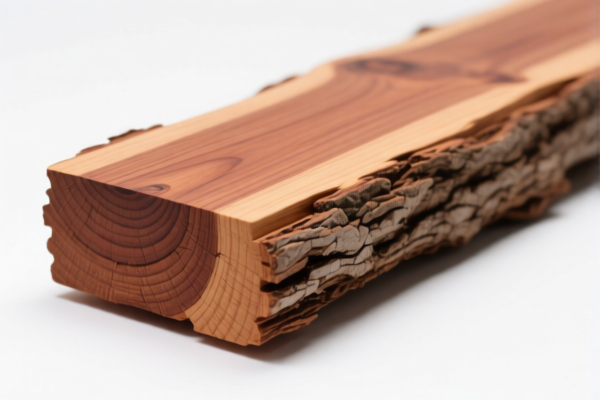
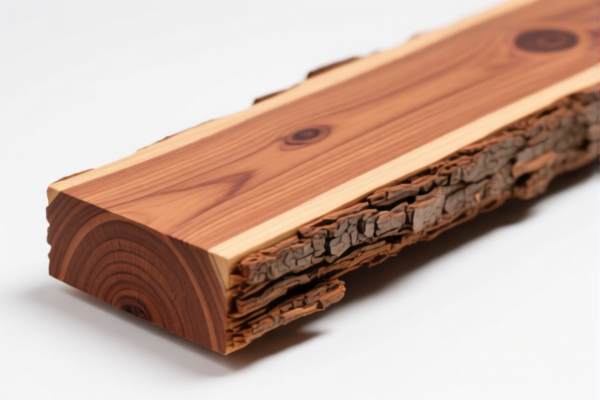
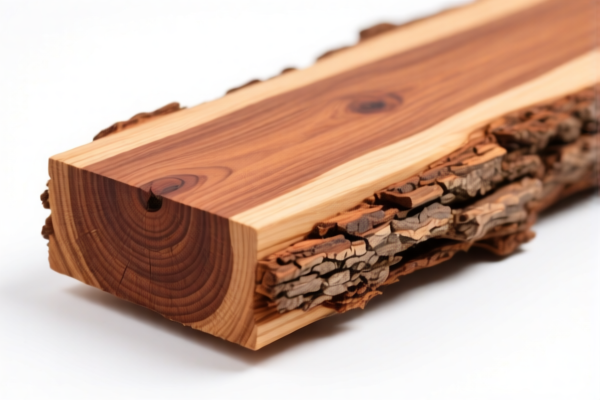
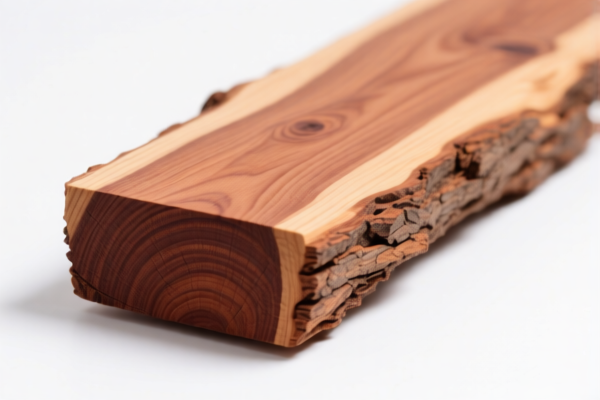
AI Analysis
🪵 Western Red Cedar: Rough Sawn Lumber (4407 Series)
🌐 HS Code Reference & Customs Clearance Guide | 2026 Latest Tariff Analysis | Professional Compliance Strategy
📌 I. Product Definition & Classification: Do You Really Know "Western Red Cedar" Lumber?
Western Red Cedar (Thuja plicata) is a premium softwood native to the Pacific Northwest of North America, widely used in outdoor decking, siding, fencing, and high-end cabinetry due to its natural resistance to rot, insects, and weathering.
In international trade, specifically under the Harmonized System (HS), sawn wood is categorized by species, treatment, and finish. For Western Red Cedar, the classification hinges on two critical factors: 1. Treatment Status: Is it chemically or physically treated? (This case: Not Treated). 2. Surface Finish: Is it planed/sanded/smoothed, or is it "Rough"? (This case: Rough).
⚠️ Key Distinction:
- "Rough" Lumber: Sawed wood that has not been planed, sanded, or otherwise smoothed on at least one side. It retains the saw marks from the mill.
- Planed/Sanded Lumber: Smoothed surfaces, often sold as "SPF" (Surfaced Plain Four Sides) or "S2S" (Surfaced Two Sides).
- Treatment: If the wood has been pressure-treated with preservatives (e.g., for ground contact), it falls under different subheadings. Here, it is natural, untreated cedar.
📦 II. HS Code Classification Details (2026 Latest Tariff Authority Match)
Based on the provided data, the product "Rough Western Red Cedar Wood" falls under Chapter 44 (Wood and articles of wood), specifically Heading 44.07 (Wood sawn or chipped lengthwise, sliced or peeled, whether or not planed, sanded or end-jointed, of a thickness exceeding 6 mm).
| HS Code | Product Description | Application Scenario | Treatment Status | Surface Finish |
|---|---|---|---|---|
4407.19.00.68 |
Western red cedar: Rough | Outdoor structures, fencing, untreated structural components | ❌ Not Treated | ✅ Rough (Unplaned) |
4407.19.00.69 |
Western red cedar: Other | Planed, sanded, or end-jointed cedar boards; premium indoor/outdoor finishes | ❌ Not Treated | ❌ Planed/Sanded/Joined |
🔍 Critical Analysis:
- HS Code4407.19.00.68is the correct match for "Rough" Western Red Cedar.
- HS Code4407.19.00.69is for "Other" treatments/finishes (i.e., if you plane, sand, or joint the wood, or if it is treated, though the description says "Not treated," the "Other" category typically captures finished or treated variants not covered by "Rough").
- Since your product is explicitly "Rough", you MUST use4407.19.00.68to avoid misclassification penalties. Using69for rough lumber is incorrect and may trigger customs audits.
💰 III. 2026 Latest Tariff Rate Breakdown (Including Additional Duties)
✅ Applicable Country: United States (US)
✅ Origin: China (CN) (Note: Western Red Cedar is typically harvested in NA, but if processed/exported via China or declared as Chinese origin for some reason, these rates apply. If origin is USA/Canada, MFN rates may differ, but the data provided implies a China-US trade context with additional tariffs)
✅ Effective Date: Current as of 2026 Tariff Schedule
🎯 1. HS Code 4407.19.00.68 —— Western Red Cedar, Rough (Not Treated)
| Item | Content |
|---|---|
| Basic Tariff Rate | 0.0% (Most Favored Nation / General) |
| Section 301 Additional Tariff | +25.0% (USITC Footnote for Chapter 44 Wood Products from China) |
| Total Effective Rate | 25.0% |
| Tax Calculation Basis | CIF (Cost, Insurance, and Freight) Value × 25% |
| De Minimis Exemption | ❌ Not Eligible (Wood products generally exceed de minimis thresholds or are excluded under Section 301) |
| Legal Authority Path | HTSUS:4407.19.00 → USITC:Section 301 → Additional Duty:25% |
📌 Explanation:
- The base tariff is 0%, meaning there is no standard import duty for this wood type under normal MFN treatment.
- However, due to Section 301 Trade Remedy Measures, a 25% additional tariff is imposed on Chinese-origin wood products (including sawn timber) to protect domestic timber industries.
- Total Duty = 25%. This is a significant cost burden that must be factored into your landed cost calculations.
- Unlike electronics or machinery, there is no IEEPA 10% surcharge listed in the provided data for this specific wood code; only the 25% Section 301 applies.
🎯 2. HS Code 4407.19.00.69 —— Western Red Cedar, Other (Not Treated)
| Item | Content |
|---|---|
| Basic Tariff Rate | 0.0% |
| Section 301 Additional Tariff | +25.0% |
| Total Effective Rate | 25.0% |
| Tax Calculation Basis | CIF Value × 25% |
| De Minimis Exemption | ❌ Not Eligible |
📌 Note: The tax rate is identical to the "Rough" category because the additional tariff applies to the heading level (4407.19) for Western Red Cedar, not just the specific sub-subheading. The distinction between
68and69is purely for product classification accuracy, not tax differentiation in this dataset.
🛠️ IV. Customs Clearance Practical Advice (Pitfall Avoidance Guide)
✅ 1. Documentation Checklist (Essential for Smooth Clearance)
| Document | Required | Purpose |
|---|---|---|
| ✅ Commercial Invoice | ✔️ | Must clearly state: "Western Red Cedar, Rough Sawn, Not Treated, HTS 4407.19.00.68" |
| ✅ Packing List | ✔️ | Detail dimensions, quantity, weight (gross/net), and wood moisture content |
| ✅ Phytosanitary Certificate | ✔️ | Critical for Wood Products. Must confirm the wood is free from pests and fungi (ISPM 15 standards may apply if pallets are used) |
| ✅ Country of Origin Certificate | ✔️ | If claiming preferential treatment (e.g., if not Chinese origin), provide UCC or NAFTA/USMCA certificate |
| ✅ Bill of Lading / Air Waybill | ✔️ | Ensure description matches invoice exactly |
| ✅ Treatment Certificate | ✔️ | Explicitly state "NOT TREATED" to avoid misclassification as "Pressure Treated" (which has different HS codes) |
✅ 2. Classification & Declaration Tips (Key Mantra)
🔥 "Rough is 68, Smooth is 69, Not Treated is Key, 25% Duty Will Apply!"
| Scenario | Correct HS Code | Incorrect HS Code | Consequence |
|---|---|---|---|
| Rough, Unplaned, Untreated | 4407.19.00.68 |
4407.19.00.69 |
Misclassification → Delay, possible penalty, audit |
| Planed/Sanded, Untreated | 4407.19.00.69 |
4407.19.00.68 |
Over/Under-declaration risk |
| Pressure Treated | Different Code (Not in data) | 4407.19.00.68 |
High Risk: Treated wood has different environmental/duty rules |
| Wood < 6mm Thickness | Chapter 44 or 47 | 4407.19.00.68 |
Misclassification: Thin wood is not "sawn wood of thickness >6mm" |
✅ 3. Special Case Handling
| Situation | Handling Advice |
|---|---|
| Moisture Content | Ensure moisture content is stated. High moisture may trigger quarantine. |
| Fumigation | If wood is not ISPM 15 compliant, it may be rejected or require re-fumigation at your cost. |
| Origin Confusion | If cedar is harvested in Canada/USA but shipped via China, declare Original Country of Harvest (e.g., Canada), not China, to avoid Section 301 tariffs if possible. Provide proof of origin. |
| Mixed Loads | If mixed with other wood species, declare each species separately to ensure correct HS coding. |
🌍 V. Global Market Comparison (2026 Latest)
| Country/Region | Recommended HS Code | Tariff Rate | Certification Requirements | Notes |
|---|---|---|---|---|
| 🇺🇸 United States | 4407.19.00.68 |
25% (Chinese Origin) | Phytosanitary, ISPM 15 | High tariff due to Section 301 |
| 🇨🇳 China | 4407.19.00.68 |
Varies (Import Duty) | Phytosanitary | Often used for re-export or domestic construction |
| 🇪🇺 European Union | 4407.19.00 |
0% - 6.5% | FLEGT / Due Diligence | Strict sustainability laws; EUDR applies from 2024-2025 |
| 🇨🇦 Canada | 4407.19.00.00 |
0% (USMCA) | Phytosanitary | No tariffs if Canadian/US origin |
📌 Conclusion:
- US Importers face a 25% additional tariff if the wood is considered Chinese origin.
- Proof of Origin is Critical: If the cedar is harvested in North America, ensure the Country of Origin is correctly declared as Canada or USA to potentially avoid the 25% Section 301 tariff (subject to USMCA/CUSMA rules).
- EU Importers must comply with the EU Deforestation Regulation (EUDR), requiring geolocation data of the plot of land where the wood was harvested.
📌 VI. Common Errors & Pitfalls (Lessons Learned)
❌ Error 1: Declaring "Rough" cedar as "Planed" (4407.19.00.69)
👉 Consequence: Customs may accept it, but if inspected and found rough, it may lead to disputes. More importantly, it misrepresents the product quality for buyers.
❌ Error 2: Failing to state "Not Treated"
👉 Consequence: Customs may assume treated wood, requiring additional chemical disclosures, or misclassify it under treated wood codes with different restrictions.
❌ Error 3: Ignoring Phytosanitary Requirements
👉 Consequence: Seizure or Destruction of cargo. Wood is a high-risk category for pests. Always include a Phytosanitary Certificate.
❌ Error 4: Incorrect HS Code for Thickness
👉 Consequence: Chapter 44.07 applies only to wood > 6mm. If your cedar is veneer or thin slabs (<6mm), it belongs in Chapter 44 (veneers) or Chapter 47 (pulp), not 44.07.
✅ Correct Declaration Example:
"Western Red Cedar, Rough Sawn, Not Treated, HTS 4407.19.00.68, Origin: Canada, ISPM 15 Compliant Pallets"
🎯 VII. Conclusion: Professional Declaration, Save Time & Money!
🎯 Remember the Mantra:
🔹 "Rough is 68, Smooth is 69, Not Treated is Mandatory, 25% Duty Applies!"
🔹 "Phytosanitary Certificate is Non-Negotiable!"
🔹 "Prove Origin to Avoid Tariffs if Possible!"
📌 Pro Tip:
If your Western Red Cedar is harvested in Canada or the USA, ensure your supplier provides a Certificate of Origin stating the country of harvest. If imported directly from North America to the US, Section 301 tariffs do not apply. The 25% tariff only applies if the country of origin is deemed China (e.g., if processed/transformed in China to such an extent that it changes origin).
👉 Recommendation: Consult with a customs broker to verify Origin Rules of Production if the wood is processed in China before export.
📣 Immediate Action Required:
📞 Contact your Customs Broker
📄 Prepare Phytosanitary Certificate
🌍 Verify Country of Origin
🚀 Ensure Smooth Clearance and Avoid 25% Surprise Costs!
✨ Professional Customs Clearance Starts with Accurate Classification!
💼 Your Bottom Line Depends on Correct HS Codes and Tariff Strategies!
Customer Reviews
About HS Code Classification
The Harmonized System (HS) is an internationally standardized nomenclature developed by the World Customs Organization (WCO) to classify traded products. Over 200 countries use the HS system as the basis for customs tariffs, trade statistics, and import/export regulations.
Each HS code follows a hierarchical structure:
- Chapter (2 digits) — Broad category of goods (e.g., Chapter 84: Machinery and Mechanical Appliances)
- Heading (4 digits) — More specific grouping within the chapter
- Subheading (6 digits) — Internationally standardized breakdown, used by all WCO member countries
- National subdivisions (8-10 digits) — Country-specific extensions for further classification, such as US HTSUS 10-digit codes
Correct HS code classification is essential for smooth customs clearance, accurate duty payment, and compliance with trade regulations. Misclassification can lead to customs delays, overpayment of duties, or penalties.
When importing from CN to US, the applicable tariff rates may include:
- Most-Favored-Nation (MFN) rate — The standard duty rate applied to WTO members
- General rate — Applied to countries without trade agreements
- Trade remedy duties — Additional tariffs such as Section 301 (anti-dumping), Section 232 (national security), or countervailing duties
The information provided on this page is for reference purposes only. For official classification, please consult with your local customs authority or a licensed customs broker.