Rough Western Hemlock Logs
CN → US| HS Code | Tariff Rate | Origin | Destination | Doc |
|---|---|---|---|---|
| 4403250150 | 35.0% | CN | US | Official Doc |
| 4403260150 | 35.0% | CN | US | Official Doc |
Product Images
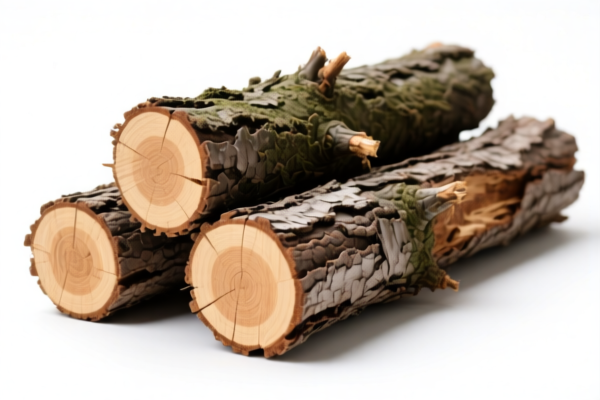
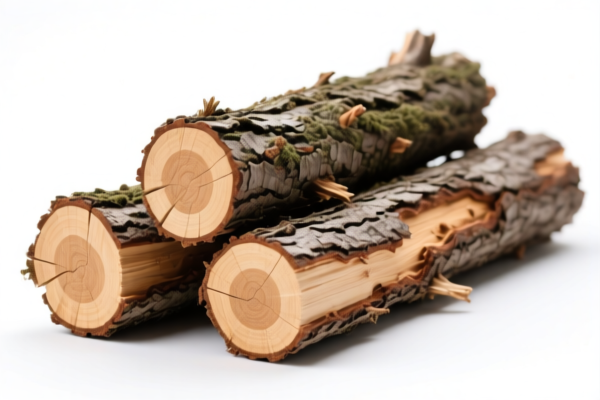
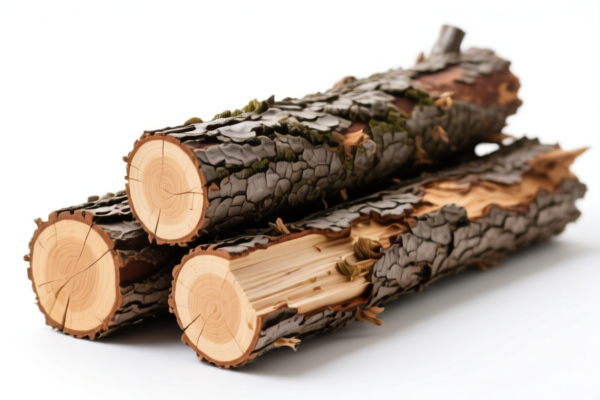
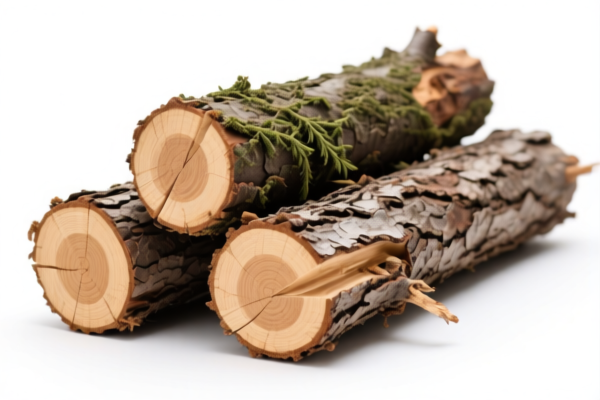
AI Analysis
🌲 Rough Western Hemlock Logs (Tsuga heterophylla)
🌐 HS Code Reference & Customs Clearance Guide | 2026 Latest Tariff Analysis | Professional Clearance Strategy
📌 I. Product Definition & Classification: Do You Understand "Rough Wood"?
Western Hemlock (Tsuga heterophylla) is a premium coniferous timber widely used in construction, furniture, and plywood manufacturing. In international trade, "Logs and Timber" are classified based on their processing state and dimensions.
Key Distinction: * "Logs" (4403.26): Generally refers to wood in the rough, stripped of bark, but not roughly squared. * "Timber/Planks" (4403.25): Refers to wood in the rough, stripped of bark, and roughly squared (even if just slightly).
⚠️ Critical Classification Point:
- If the wood is roughly squared (cut into rectangular/prismatic shapes), even if the ends are not finished, it falls under Timber (4403.25).
- If the wood is round or irregularly shaped (not squared), it falls under Logs (4403.26).
- Dimension Check: The smallest cross-sectional dimension must be 15 cm or more for these specific subheadings.
📦 II. HS Code Classification Details (2026 Latest Tariff Authority)
Based on the provided data, the Western Hemlock logs/timber are classified under two specific HS Codes depending on the processing state (Squared vs. Not Squared).
| HS Code | Product Description | Applicable Scenario | Cross-Section Requirement |
|---|---|---|---|
4403.25.01.50 |
Wood in the rough, whether or not stripped of bark or sapwood, or roughly squared: Other, coniferous: Other. Logs and timber: Western hemlock (Tsuga heterophylla) | Wood that has been roughly squared into beams or planks. | ✅ Smallest dimension ≥ 15 cm |
4403.26.01.50 |
Wood in the rough, whether or not stripped of bark or sap-wood, or roughly squared: Other, coniferous: Other Logs and timber: Western hemlock (Tsuga heterophylla) | Round logs or irregular shapes, not roughly squared. | ✅ Smallest dimension ≥ 15 cm |
🔍 Key Reminder:
- Both codes apply to Coniferous wood (specifically Western Hemlock).
- Both codes require the wood to be roughly squared (for 4403.25) or Logs (for 4403.26).
- The wood must be stripped of bark or sapwood (or at least in a state consistent with "in the rough").
- The smallest cross-sectional dimension must be 15 cm or more. If smaller, a different HS code applies.
💰 III. 2026 Latest Tariff Rate Breakdown (Including Additional Duties)
✅ Applicable Country: United States (US)
✅ Origin: China (CN) (Note: Data implies US tariffs on imports, likely subject to Section 301 or IEEPA duties)
✅ Effective Time: Current rates apply as per 2026 tariff schedule.
🎯 1. 4403.25.01.50 – Roughly Squared Western Hemlock Timber
| Item | Content |
|---|---|
| Base Tariff | 0.0% (ad valorem) |
| Additional Tariff | 25.0% (Section 301 / IEEPA Additional Duties) |
| Total Tariff Rate | 25.0% |
| Tax Calculation | CIF Value × 25% |
| De Minimis Exemption | ❌ Not Applicable (Wood products generally excluded from de minimis relief in high-duty categories) |
| Legal Basis | Section 301 Tariff Act / IEEPA Regulations for Chinese-origin wood products |
📌 Explanation:
- Base Tariff: 0% because Western Hemlock is a major timber import with low base duty.
- Additional Tariff: 25% is applied due to US Trade Policy restrictions on Chinese-origin wood products (often under Section 301 tariffs or specific IEEPA orders targeting forestry products).
- Total Cost Impact: You must budget for a 25% duty on the CIF value. This is a significant cost driver.
🎯 2. 4403.26.01.50 – Non-Squared Western Hemlock Logs
| Item | Content |
|---|---|
| Base Tariff | 0.0% (ad valorem) |
| Additional Tariff | 25.0% (Section 301 / IEEPA Additional Duties) |
| Total Tariff Rate | 25.0% |
| Tax Calculation | CIF Value × 25% |
| De Minimis Exemption | ❌ Not Applicable |
| Legal Basis | Section 301 Tariff Act / IEEPA Regulations for Chinese-origin wood products |
📌 Note:
- The tariff rate is identical to the squared timber.
- The distinction is purely classification for customs documentation and quota tracking (if any).
- Even if the wood is "logs" (not squared), the 25% additional duty still applies.
🛠️ IV. Customs Clearance Practical Advice (Pitfall Avoidance Guide)
✅ 1. Required Documentation Checklist (Mandatory)
| Document | Mandatory | Description |
|---|---|---|
| ✅ Commercial Invoice | ✔️ | Must specify: "Western Hemlock (Tsuga heterophylla)", HS Code, Quantity, CIF Value. |
| ✅ Packing List | ✔️ | Detail dimensions (ensure smallest cross-section ≥ 15 cm) and weight. |
| ✅ Certificate of Origin (CO) | ✔️ | Critical for proving origin. If non-US/non-China, may affect duty rates. |
| ✅ Phytosanitary Certificate | ✔️ | Essential for wood products. Must confirm no pests, fungi, or bark (if required). |
| ✅ Lumber Declaration | ✔️ | State whether wood is "Roughly Squared" (4403.25) or "Logs" (4403.26). |
| ✅ Bill of Lading | ✔️ | Clear description of goods, matching invoice. |
📌 Critical Point:
- Phytosanitary Certificate is non-negotiable for wood imports into the US. Lack of it will result in detention, fumigation, or return.
- Ensure the botanical name (Tsuga heterophylla) is clearly stated to avoid misclassification.
✅ 2. Classification Tips (Key Mnemonic)
🔥 "Squared is Timber, Round is Log, Both 25%, Watch the Size!"
| Scenario | Correct HS Code | Duty Rate | Common Mistake |
|---|---|---|---|
| Roughly Squared (Rectangular beams) | 4403.25.01.50 |
25% | Misclassifying as Logs → Still 25%, but documentation mismatch. |
| Round/Irregular Logs (Unsquare) | 4403.26.01.50 |
25% | Misclassifying as Squared → Potential penalty for incorrect declaration. |
| Smallest Dimension < 15 cm | ❌ Wrong Code | N/A | Must use different HS code (e.g., 4403.99). Do not use 4403.25/26. |
| With Bark Intact | ❌ Wrong Code | N/A | 4403.25/26 assume bark/sapwood stripped. If bark intact, different code. |
📌 Important:
- Dimension is Key: If the smallest cross-sectional dimension is less than 15 cm, these HS codes are invalid. Use the appropriate "Other" coniferous code.
- Bark Status: These codes assume bark/sapwood is stripped. If bark is present, clarify in documentation.
✅ 3. Special Situations Handling
| Situation | Handling Advice |
|---|---|
| Mixed Sizes | Ensure all pieces meet the ≥15 cm criterion for these codes. If mixed, declare the majority or separate shipments. |
| Bark Presence | If bark is present, do not use these codes. Declare as "Wood in the rough with bark" under a different HS code. |
| Origin Dispute | If wood is from Canada (common for Western Hemlock), verify origin. US-origin or Canadian-origin may have 0% tariff under USMCA. This 25% duty applies if origin is China. |
| Fumigation Required | If phytosanitary issues arise, be prepared for fumigation costs ($500–$2000+ per container) and delays. |
🌍 V. Global Market Clearance Comparison (2026 Latest)
| Country/Region | Recommended HS Code | Tariff (China Origin) | Certification | Notes |
|---|---|---|---|---|
| 🇺🇸 United States | 4403.25.01.50 / 4403.26.01.50 |
25% | Phytosanitary Certificate | High duty due to Section 301/IEEPA. |
| 🇨🇦 Canada | Same HS Code | 0% (USMCA) | Phytosanitary Certificate | North American trade benefits. |
| 🇨🇳 China | 4403.25/26 | 5% - 10% (Varies) | Phytosanitary Certificate | Lower base tariff, but import restrictions may apply. |
| 🇪🇺 European Union | 4403.25/26 | 0% - 3% | EUTS / FLEGT | Strict wood legality checks. |
| 🇬🇧 United Kingdom | 4403.25/26 | 0% - 3% | Timber Regulation | Post-Brexit, follows UK Timber Regulation. |
📌 Conclusion:
- US Tariff is 25% for China-origin Western Hemlock.
- Canadian Origin is duty-free under USMCA.
- EU/UK have lower base tariffs but strict legality and sustainability documentation (FLEGT/EUTS).
- Always verify origin before shipment to optimize duty costs.
📌 VI. Common Mistakes & Pitfall Guide (Lessons Learned)
❌ Mistake 1: Misclassifying "Roughly Squared" wood as "Logs"
👉 Consequence: Documentation mismatch → Customs delay, potential fines.
👉 Fix: Clearly state "Roughly Squared" or "Logs" on commercial invoice.
❌ Mistake 2: Ignoring the 15 cm dimension rule
👉 Consequence: Wrong HS code → Incorrect duty assessment → Penalties.
👉 Fix: Measure smallest cross-section of every log/plank.
❌ Mistake 3: Assuming all Western Hemlock is from Canada
👉 Consequence: If Chinese-origin, 25% duty applies. If declared as Canadian, fraud risk.
👉 Fix: Verify Certificate of Origin carefully.
❌ Mistake 4: No Phytosanitary Certificate
👉 Consequence: Detention, Fumigation, or Return.
👉 Fix: Obtain from exporting country’s agricultural authority before shipment.
✅ Correct Practice:
"Western Hemlock (Tsuga heterophylla) Logs/Timber, Roughly Squared/Unsquare, Smallest Dimension 15cm+, Stripped of Bark, Origin: [Country], with Phytosanitary Certificate"
🎯 VII. Conclusion: Professional Declaration, Save Time & Money!
🎯 Remember the Mantra:
🔹 "Squared is Timber, Round is Log, Both 25%, Watch the Size!"
🔹 "Origin is King: Chinese 25%, Canadian 0%!"
🔹 "No Phytosanitary Certificate = No Entry!"
📌 Tips:
- If your Western Hemlock is originating from Canada, claim USMCA Preferential Tariff (0%).
- If originating from the US, claim Free Trade Agreement (0%).
- Only Chinese-origin Western Hemlock is subject to the 25% additional duty in this dataset.
- Pre-clearance: Consider applying for an Advance Ruling if classification is ambiguous.
📣 Immediate Action:
📞 Contact a licensed customs broker.
📄 Ensure Phytosanitary Certificate is ready.
📏 Measure wood dimensions to confirm ≥15 cm.
🌍 Verify Certificate of Origin to determine correct duty rate.
🚀 Let your Western Hemlock clear customs smoothly, efficiently, and cost-effectively!
✨ Professional Clearance Starts with Accurate Classification!
💼 Every Percent of Duty Counts!
Customer Reviews
About HS Code Classification
The Harmonized System (HS) is an internationally standardized nomenclature developed by the World Customs Organization (WCO) to classify traded products. Over 200 countries use the HS system as the basis for customs tariffs, trade statistics, and import/export regulations.
Each HS code follows a hierarchical structure:
- Chapter (2 digits) — Broad category of goods (e.g., Chapter 84: Machinery and Mechanical Appliances)
- Heading (4 digits) — More specific grouping within the chapter
- Subheading (6 digits) — Internationally standardized breakdown, used by all WCO member countries
- National subdivisions (8-10 digits) — Country-specific extensions for further classification, such as US HTSUS 10-digit codes
Correct HS code classification is essential for smooth customs clearance, accurate duty payment, and compliance with trade regulations. Misclassification can lead to customs delays, overpayment of duties, or penalties.
When importing from CN to US, the applicable tariff rates may include:
- Most-Favored-Nation (MFN) rate — The standard duty rate applied to WTO members
- General rate — Applied to countries without trade agreements
- Trade remedy duties — Additional tariffs such as Section 301 (anti-dumping), Section 232 (national security), or countervailing duties
The information provided on this page is for reference purposes only. For official classification, please consult with your local customs authority or a licensed customs broker.