Rough eucalyptus wood for pulp production
CN → US| HS Code | Tariff Rate | Origin | Destination | Doc |
|---|---|---|---|---|
| 4703290040 | 35.0% | CN | US | Official Doc |
| 4703290020 | 35.0% | CN | US | Official Doc |
| 4403980095 | 35.0% | CN | US | Official Doc |
| 4407990295 | 35.0% | CN | US | Official Doc |
Product Images
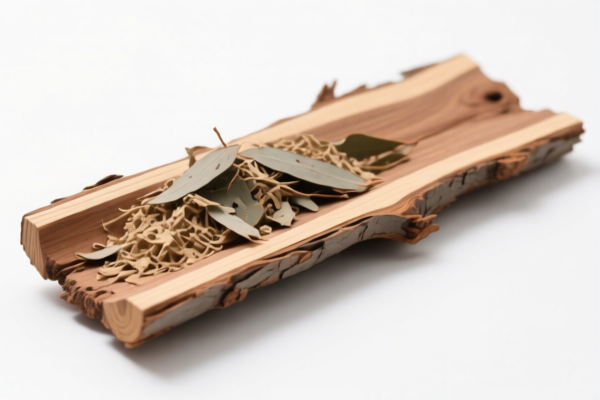
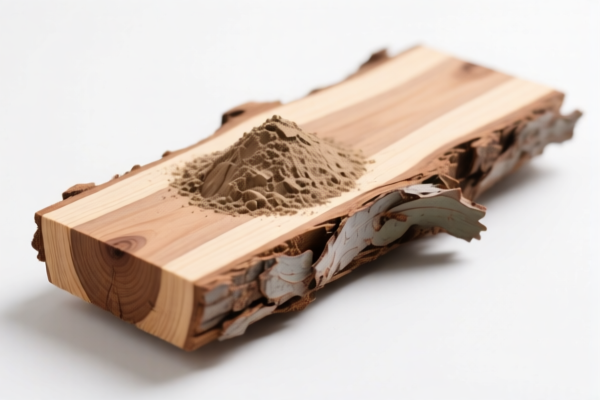
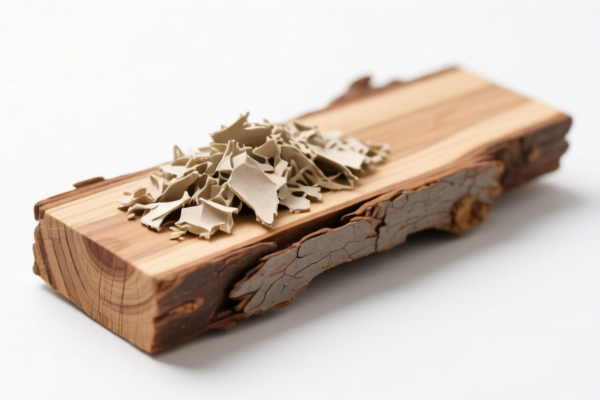
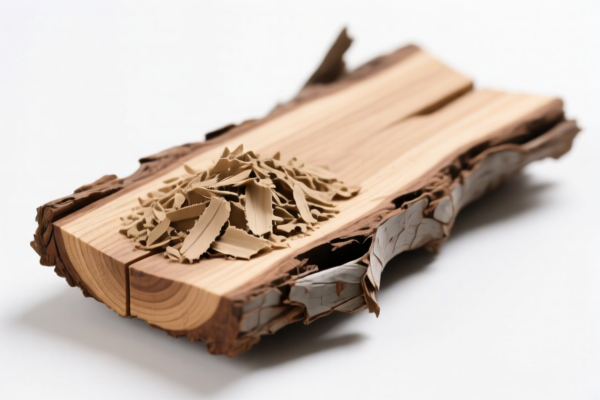
AI Analysis
🌳 Eucalyptus Wood (Rough, for Pulp Production)
🌐 HS Code Reference & Customs Clearance Guide | 2026 Latest Tariff Analysis | Professional Clearance Strategy
📌 I. Product Definition & Classification: What is "Rough Eucalyptus Wood for Pulp"?
This product consists of raw Eucalyptus logs or rough timber specifically destined for pulp manufacturing. In international trade, the critical distinction lies in the degree of processing: * Raw Timber (Logs/Rough Sawn): The wood has been felled and possibly debarked or cut to length but has not been chemically or mechanically processed into pulp. It retains its natural wood structure. * Wood Pulp: If the wood has been chemically or mechanically processed into fibrous material, it falls under different HS codes (e.g., 4703). However, based on the input "Rough Eucalyptus Wood," the classification focuses on the raw material state.
⚠️ Key Distinction Point: - If the product is solid wood (logs, rough planks) → It is classified under Chapter 44 (Wood and articles of wood). - If the product is fibrous material (pulp) → It is classified under Chapter 47 (Wood pulp). Note: The provided data includes scenarios where customs might debate whether the "rough wood" is actually being treated as "pulp precursor" or "wood material." We must address both potential classifications based on the provided data.
📦 II. HS Code Classification Details (2026 Latest Tariff Authority Comparison)
| HS Code | Product Description | Applicable Scenario | Material State | Key Classification Logic |
|---|---|---|---|---|
4403.98.00.95 |
Other wood, roughly squared or otherwise simply sawn, chipped, or split, of non-coniferous wood | Eucalyptus logs/rough timber not meeting specific coniferous categories | Solid Wood | "Eucalyptus" is non-coniferous; "Rough" implies minimal processing; falls under the "Other" residual category. |
4407.99.02.95 |
Wood sawn or chipped lengthwise, sliced or peeled, whether or not planed, sanded or finger-jointed, of a thickness exceeding 6 mm, of other timber | Eucalyptus planks/lumber exceeding 6mm thickness | Sawn Wood | "Other" non-coniferous wood; assumes sufficient thickness for lumber use; no material conflict. |
4703.29.00.40 |
Wood pulp, chemical, of non-coniferous plants, semi-bleached or bleached | Misclassification Risk: If the "rough wood" is actually semi-processed pulp or defined as pulp by intent | Chemical Pulp | "Eucalyptus" is non-coniferous; "Pulp" implies chemical processing; fits "Semi-bleached/Bleached" form. |
4703.29.00.20 |
Wood pulp, chemical, of non-coniferous plants, other | Misclassification Risk: Similar to above, focusing on "primary form" of chemical wood pulp | Chemical Pulp | Matches definition of non-coniferous chemical wood pulp in primary form. |
🔍 Critical Warning: - If you import actual logs/rough wood, you should generally use 4403 or 4407. - If you import pulp, you must use 4703. - The provided data suggests a high risk of classification dispute if the product is ambiguously described as "for pulp production." Customs may scrutinize whether it is raw wood (Ch. 44) or pulp (Ch. 47). Do not confuse the two.
💰 III. 2026 Latest Tariff Rate Details (Including Surtaxes & Policy Add-ons)
✅ Applicable Country: United States (US)
✅ Origin: China (CN)
✅ Effective Date: From November 10, 2025 (including subsequent imports)
🎯 1. 4403.98.00.95 — Other Wood, Non-Coniferous, Rough (Primary Candidate for "Rough Wood")
| Item | Content |
|---|---|
| Base Tariff | 0% (ad valorem) |
| USITC Additional Tariff | +25% (Under USITC Footnote related to Section 301) |
| IEEPA Additional Tariff | +10% (Targeting Chinese/Hong Kong products, effective Nov 10, 2025) |
| Total Tax Rate | 35.0% |
| Tax Calculation | CIF Value × 35% |
| De Minimis Exemption | ❌ Not Eligible (deny_de_minimis) |
| Legal Basis Path | IEEPA:9903.01.25 → IEEPA:9903.01.24 → USITC:4403.98.00.95 → FOOTNOTE:Section 301 |
📌 Explanation: - The "25% USITC surtax" stems from Section 301 of the U.S. Trade Act regarding Chinese imports. - The "10% IEEPA surtax" is an additional levy under the International Emergency Economic Powers Act. - Total 35%, which is a significant cost for timber imports.
🎯 2. 4407.99.02.95 — Other Sawn Wood, Non-Coniferous (If Thicker than 6mm)
| Item | Content |
|---|---|
| Base Tariff | 0% |
| USITC Additional Tariff | +25% |
| IEEPA Additional Tariff | +10% |
| Total Tax Rate | 35.0% |
| Tax Calculation | CIF × 35% |
| De Minimis Exemption | ❌ Not Eligible |
| Legal Basis Path | Same as above (IEEPA + USITC footnotes) |
📌 Note: - If the wood is sawn to a thickness >6mm, it shifts from "logs" (4403) to "sawn wood" (4407). - Tax rate remains identical at 35%, but the classification logic changes slightly. Ensure your invoice clearly states "Sawn Wood" if applicable.
🎯 3. 4703.29.00.40 & 4703.29.00.20 — Wood Pulp, Chemical, Non-Coniferous (If Classified as Pulp)
| Item | Content |
|---|---|
| Base Tariff | 0% |
| USITC Additional Tariff | +25% |
| IEEPA Additional Tariff | +10% |
| Total Tax Rate | 35.0% |
| Tax Calculation | CIF × 35% |
| De Minimis Exemption | ❌ Not Eligible |
| Legal Basis Path | IEEPA:9903.01.25 → IEEPA:9903.01.24 → USITC:4703.29.00.xx |
📌 Warning: - These codes apply ONLY if the product is pulp, not raw wood. - Misdeclaring raw wood as pulp (or vice versa) can lead to severe penalties and shipment delays. - If your product is raw wood, do NOT use these codes.
🛠️ IV. Customs Clearance Practical Advice (Battle-Tested Pitfall Guide)
✅ 1. Required Documentation Checklist (Mandatory)
| Document | Must Provide | Description |
|---|---|---|
| ✅ Product Specification Sheet | ✔️ | Must clearly state: "Rough Eucalyptus Wood," "For Pulp Production," dimensions, moisture content. |
| ✅ Phytosanitary Certificate | ✔️ | Critical! Issued by the country of origin confirming the wood is free from pests/diseases. |
| ✅ Commercial Invoice | ✔️ | Must specify exact HS Code (e.g., 4403.98.00.95) and declare "Eucalyptus Wood Logs/Rough Sawn." |
| ✅ Bill of Lading | ✔️ | Ensure description matches invoice precisely. |
| ✅ Wood Treatment Certificate | ✔️ | If fumigated (e.g., Methyl Bromide or Heat Treatment), provide proof. |
| ✅ Fumigation/Heat Treatment Label | ✔️ | Visible on packaging/logs with IPPC mark. |
✅ 2. Declaration Tips (Key Mantras)
🔥 “Raw Wood is Wood, Pulp is Fiber! Don’t Mix Them!”
| Situation | Correct Declaration | Wrong Practice |
|---|---|---|
| Raw Logs/Rough Timber | 4403.98.00.95 |
Misdeclare as 4703 (Pulp) → Penalty for Misclassification |
| Sawn Planks (>6mm) | 4407.99.02.95 |
Declare as "Lumber" without specifying "Non-Coniferous" → Audit Risk |
| Actual Pulp | 4703.29.00.40 |
Declare as "Wood Chips" → Higher Inspection Rate |
| Mixed Shipment | Separate Bills | Combine wood and pulp in one line item → Customs Rejection |
✅ 3. Special Cases Handling
| Situation | Handling Advice |
|---|---|
| "For Pulp Production" Labeling | Clearly state "Raw Eucalyptus Wood - Intended for Pulp Manufacturing" on invoice. Do not let this phrase imply the product is pulp. |
| Chinese Origin | Be aware of 301 & IEEPA tariffs (35% total). No de minimis exemption. Budget accordingly. |
| Phytosanitary Issues | USDA APHIS will inspect upon arrival. If pests are found, shipment may be destroyed or re-exported. Ensure pre-shipment fumigation. |
| Misclassification Risk | If customs doubts whether it's wood or pulp, provide product images, cross-section photos, and chemical analysis reports (if pulp) or growth rings/cut surface photos (if wood). |
🌍 V. Global Market Comparison for Eucalyptus Wood (2026)
| Country/Region | Recommended HS Code | Tariff (China Origin) | Certification Required | Notes |
|---|---|---|---|---|
| 🇺🇸 USA | 4403.98.00.95 |
35% | Phytosanitary, Fumigation | High tariff due to 301/IEEPA. Strict IPNS (Insect Pest Noxious Weeds) checks. |
| 🇨🇳 China | 4403.98.00.95 |
~5-10% (Varies) | Phytosanitary | Domestic demand high for pulp. |
| 🇪🇺 EU | 4403.98.00.95 |
0% (If EUTR compliant) | EUTR Compliance (Due Diligence) | Must prove legal sourcing and pest-free status. |
| 🇧🇷 Brazil | 4403.98.00.95 |
Varies | IBAMA Export Permit | Major exporter; check local export controls. |
📌 Conclusion: - USA is the most expensive market for Chinese-origin eucalyptus wood due to 35% total tariffs. - Compliance is key: Phytosanitary certificates are non-negotiable.
📌 VI. Common Errors & Pitfall Guide (Lessons Learned)
❌ Error 1: Declaring "Rough Wood" as "Wood Pulp" to save on phytosanitary costs 👉 Consequence: Immediate rejection, fines, and potential detention of shipment.
❌ Error 2: Omitting "Non-Coniferous" in description 👉 Consequence: Customs cannot correctly classify → Delays and potential higher duty assessment.
❌ Error 3: No Phytosanitary Certificate 👉 Consequence: USDA will refuse entry or order fumigation at exporter’s cost (often expensive).
❌ Error 4: Ignoring IEEPA 10% Surtax 👉 Consequence: Underpayment of duties → Back taxes + Penalties.
✅ Correct Practice:
"Eucalyptus Wood, Rough Sawn, for Pulp Use, Fumigated, IPPC Certified, Origin: China, HS Code: 4403.98.00.95"
🎯 VII. Conclusion: Precise Classification Saves Money!
🎯 Remember the Mantra:
🔹 "Raw Wood = Chapter 44, Pulp = Chapter 47. Don’t Mix!"
🔹 "35% Tariff for US Imports, No De Minimis Exemption!"
🔹 "Phytosanitary Cert is Your Ticket to Clear US Ports!"
📌 Pro Tip: If you are importing large volumes, consider applying for a Tariff Classification Ruling (Advance Ruling) from CBP to lock in the HS Code before shipment. This avoids disputes at the port.
📣 Immediate Action:
📞 Contact your freight forwarder + Provide Phytosanitary Cert + Verify HS Code
4403.98.00.95
🚀 Let your eucalyptus wood clear customs smoothly, avoid delays, and protect your profit margin!
✨ Professional Customs Clearance Starts with Accurate Classification!
💼 Every percentage point of tariff counts—calculate it precisely!
Customer Reviews
About HS Code Classification
The Harmonized System (HS) is an internationally standardized nomenclature developed by the World Customs Organization (WCO) to classify traded products. Over 200 countries use the HS system as the basis for customs tariffs, trade statistics, and import/export regulations.
Each HS code follows a hierarchical structure:
- Chapter (2 digits) — Broad category of goods (e.g., Chapter 84: Machinery and Mechanical Appliances)
- Heading (4 digits) — More specific grouping within the chapter
- Subheading (6 digits) — Internationally standardized breakdown, used by all WCO member countries
- National subdivisions (8-10 digits) — Country-specific extensions for further classification, such as US HTSUS 10-digit codes
Correct HS code classification is essential for smooth customs clearance, accurate duty payment, and compliance with trade regulations. Misclassification can lead to customs delays, overpayment of duties, or penalties.
When importing from CN to US, the applicable tariff rates may include:
- Most-Favored-Nation (MFN) rate — The standard duty rate applied to WTO members
- General rate — Applied to countries without trade agreements
- Trade remedy duties — Additional tariffs such as Section 301 (anti-dumping), Section 232 (national security), or countervailing duties
The information provided on this page is for reference purposes only. For official classification, please consult with your local customs authority or a licensed customs broker.