Rough sawn debarked eucalyptus wood
CN → US| HS Code | Tariff Rate | Origin | Destination | Doc |
|---|---|---|---|---|
| 4407190093 | 35.0% | CN | US | Official Doc |
| 4401490090 | 35.0% | CN | US | Official Doc |
| 4401394290 | 35.0% | CN | US | Official Doc |
| 4407290296 | 35.0% | CN | US | Official Doc |
| 4403980095 | 35.0% | CN | US | Official Doc |
Product Images
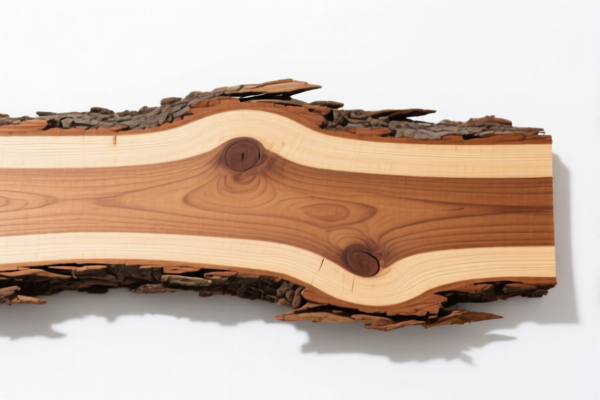
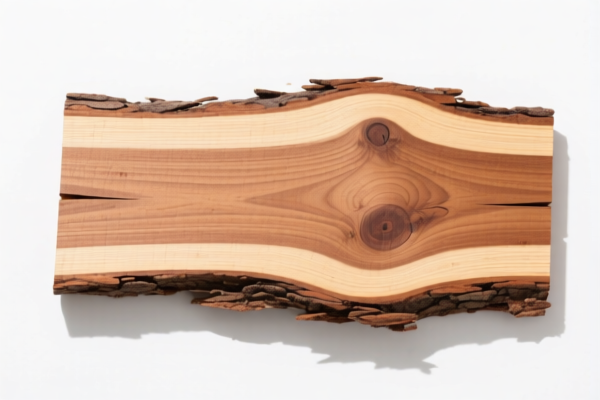
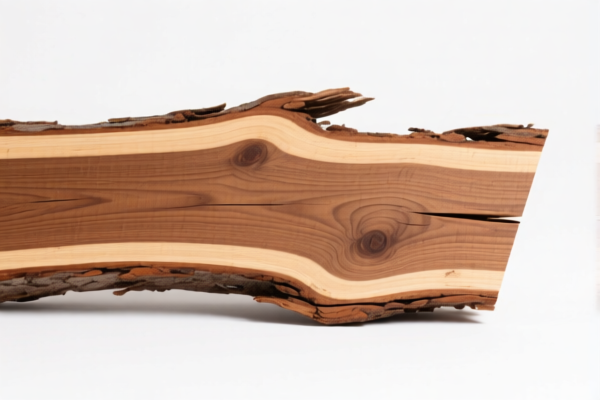
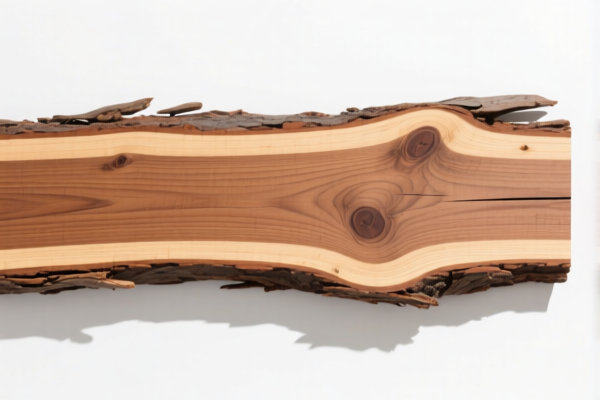
AI Analysis
🪵 Rough Sawn Debarked Eucalyptus Wood
🌐 HS Code Reference & Customs Clearance Guide | 2026 Latest Tariff Analysis | Professional Level Customs Strategy
📌 I. Product Definition & Classification: What Exactly is "Rough Sawn Debarked Eucalyptus"?
Rough sawn debarked eucalyptus wood is a primary timber product derived from the Eucalyptus genus. In international trade, its classification depends heavily on its physical state, intended use, and dimensional specifications. It is not a single unified category but falls into specific sub-categories based on whether it is processed for construction, used as fuel, or considered waste.
⚠️ Key Distinction Points:
- If the wood is >6mm thick and intended for structural/industrial use → Classified under Chapter 44 (Wood and articles of wood).
- If the wood is bought as fuel (logs, chips, or rough slabs) → Classified under Chapter 44 (Fuel wood).
- If the wood is scrap, offcuts, or sawdust → Classified under Chapter 44 (Waste).
📦 II. HS Code Classification Details (2026 Latest Tariff Authority Comparison)
| HS Code | Product Description | Application Scenario | Processing State |
|---|---|---|---|
4407.19.00.93 |
Rough sawn eucalyptus wood, thickness >6mm, untreated | Structural timber, flooring base, pallets | Planed, sawn, but not further processed |
4401.49.00.90 |
Eucalyptus wood, specifically for fuel | Biomass fuel, heating, industrial boilers | Logs, chips, or rough sawn pieces intended for combustion |
4401.39.42.90 |
Eucalyptus wood, classified as waste or shavings | Sawmill by-products, recycling material | Scrap, sawdust, or fragmented wood |
4407.29.02.96 |
Rough sawn eucalyptus, tropical wood catch-all | General tropical timber imports where specific sub-heading is unclear | Unprocessed timber falling under tropical wood categories |
4403.98.00.95 |
Rough sawn eucalyptus, "other" treated wood | Treated timber for outdoor use, landscaping | Preservative-treated, rough sawn |
🔍 Critical Reminder:
- Thickness Matters: For4407.19.00.93, the wood must exceed 6mm in thickness. Thinner veneers are classified differently.
- Purpose Matters: If declared as "fuel," even thick logs may fall under4401.49.00.90. Misdeclaring fuel wood as construction timber can lead to scrutiny.
- Treatment Status: If the wood is treated with preservatives, it shifts from4407(unprocessed) to4403(treated wood).
💰 III. 2026 Latest Tariff Rate Breakdown (Including Surtaxes & Policy Add-ons)
✅ Applicable Country: United States (US)
✅ Origin: China (CN)
✅ Effective Date: November 10, 2025 (and subsequent imports)
All listed HS Codes below share the same tariff structure for Chinese-origin eucalyptus wood due to broad categorization under Section XXII (USITC) and IEEPA regulations.
🎯 1. All Listed HS Codes (4407.19.00.93, 4401.49.00.90, 4401.39.42.90, 4407.29.02.96, 4403.98.00.95)
| Item | Content |
|---|---|
| Base Tariff Rate | 0.0% (Ad valorem) |
| USITC Surtax (Section 301) | +25.0% |
| IEEPA Surtax (122 Clause) | +10.0% (Targeting Chinese/Hong Kong products) |
| Total Tariff Rate | 35.0% |
| Tax Calculation | CIF Value × 35% |
| De Minimis Eligibility | ❌ NOT Eligible (Deny de minimis) |
| Legal Path | IEEPA:9903.01.25 → IEEPA:9903.01.24 → USITC:[Specific Code] → FOOTNOTE:9903.88.01 |
📌 Explanation:
- "Base Tariff 0%": Standard MFN (Most Favored Nation) duty for wood products is often zero.
- "USITC Surtax 25%": Imposed under Section 301 of the Trade Act, targeting Chinese manufactured and raw goods.
- "IEEPA Surtax 10%": Imposed under the International Emergency Economic Powers Act (IEEPA), specifically Section 122, targeting Chinese wood products due to trade tensions.
- Total 35%: This is a high tariff burden. Importers must factor this into landed cost calculations immediately.
🛠️ IV. Customs Clearance Practical Advice (Real-World Pitfall Avoidance)
✅ 1. Document Checklist (Non-negotiable)
| Document | Required? | Notes |
|---|---|---|
| ✅ Commercial Invoice | ✔️ | Must explicitly state: "Debarked Eucalyptus Wood," HS Code, Country of Origin (China). |
| ✅ Packing List | ✔️ | Detail weight, volume (CBM), and number of bundles. |
| ✅ Phytosanitary Certificate | ✔️ | MANDATORY. Issued by the exporting country's plant protection agency. Must confirm no pests/diseases. |
| ✅ Fumigation Certificate | ✔️ | Often required alongside Phytosanitary cert. Proof of treatment against insects. |
| ✅ Bill of Lading | ✔️ | Clean on-board B/L. |
| ✅ ISF (10+2) Filing | ✔️ | Must be filed 24 hours before loading. Incorrect HS code here leads to $5,000+ penalties. |
✅ 2. Declaration Tips (Critical Mnemonics)
🔥 “Debark, Saw, or Fuel? Declare Clear, Avoid Delay!”
| Scenario | Correct Declaration | Wrong Practice |
|---|---|---|
| Thick planks for construction | 4407.19.00.93 – "Rough Sawn Eucalyptus, >6mm" |
Calling it "lumber" without thickness details → Inspection delay |
| Logs for burning | 4401.49.00.90 – "Eucalyptus Fuel Wood" |
Calling it "timber" → Wrong HS, wrong tax treatment |
| Sawmill scraps | 4401.39.42.90 – "Eucalyptus Waste/Shavings" |
Calling it "raw wood" → Over-taxation or misclassification |
| Treated outdoor wood | 4403.98.00.95 – "Treated Eucalyptus" |
Calling it "untreated" → Violates phytosanitary laws |
✅ 3. Special Cases Handling
| Situation | Handling Advice |
|---|---|
| Mixed Loads | If a container has both eucalyptus and non-eucalyptus wood, declare separately. Mixed declarations cause customs holds. |
| Unfinished Pallets | If the eucalyptus is made into pallets, it may fall under 4415 (Packing material), not 4407. Check pallet dimensions. |
| Bark Presence | If the wood is not fully debarked, it may be classified as 4403 (In the rough) or 4407 depending on processing. "Debarked" must be explicitly stated. |
| Origin Transshipment | If shipped from Vietnam/Malaysia but origin is China, must declare China origin. Misdeclaration is fraud. |
🌍 V. Global Market Comparison (2026 Latest)
| Country/Region | Recommended HS Code | Tariff (China Origin) | Certification Required | Notes |
|---|---|---|---|---|
| 🇺🇸 USA | 4407.19.00.93 etc. |
35% (Base 0% + 25% + 10%) | Phytosanitary + ISF | High duty, strict wood pest checks. |
| 🇨🇳 China | 4407.19.00.93 |
5-15% (Import Duty) | N/A | If importing into China from elsewhere. |
| 🇪🇺 EU | 4407.19.00.93 |
0% (if no surtax) | EUTR (EU Timber Regulation) + FSC/PEFC | No US-style surtax, but strict legality proof. |
| 🇬🇧 UK | 4407.19.00.93 |
0% | UK Timber Regulation | Post-Brexit rules mirror EU EUTR. |
| 🇦🇺 Australia | 4407.19.00.93 |
5% | ITP (Import Terminal Protocol) | Strict biosecurity. |
📌 Conclusion:
- USA is the most expensive market for Chinese eucalyptus wood due to the 35% total tariff.
- EU/UK/Australia have no US-style 35% surtax, but have stricter environmental/legality regulations (EUTR/ITP).
- China itself imports eucalyptus; ensure your trade flow direction is clear.
📌 VI. Common Mistakes & Pitfall Guide (Lessons from Experience)
❌ Mistake 1: Declaring "Eucalyptus Logs" without specifying "Debarked" or "Rough Sawn"
👉 Consequence: Customs may classify as 4403 (In the rough) or reject for lack of detail.
❌ Mistake 2: Missing Phytosanitary Certificate
👉 Consequence: Seizure or Destruction of cargo. No exceptions.
❌ Mistake 3: Ignoring the 10% IEEPA Surcharge
👉 Consequence: Underpayment of duties. Customs will audit and charge back taxes + interest + penalties.
❌ Mistake 4: Mixing Treated and Untreated Wood
👉 Consequence: If treated wood (chemicals) is mixed with untreated, it may require fumigation proof for chemicals, not just pests.
✅ Correct Practice:
"Rough Sawn Debarked Eucalyptus Wood, Species: Eucalyptus spp., Thickness: >6mm, Untreated, Origin: China, HS Code: 4407.19.00.93, Phytosanitary Cert #12345 Attached"
🎯 VII. Conclusion: Professional Declaration, Cost Control, Compliance!
🎯 Remember the Mantra:
🔹 "Debark, Saw, and Specify. No Cert, No Entry. 35% Total, Check Twice!"
🔹 "HS Code Dictates Cost. 0% Base, 35% Final. Compliance is Key!"
📌 Pro Tip:
If your eucalyptus wood is exclusively for fuel (4401.49.00.90), ensure the invoice clearly states "For Fuel Use Only" to avoid being misclassified as high-value construction timber, which might trigger additional scrutiny.
📣 Immediate Action:
📞 Contact a licensed US Customs Broker.
📄 Prepare Phytosanitary Certificate + Fumigation Proof.
🚀 Ensure ISF 10+2 is filed 24 hours before loading.
✨ Professional Clearance Starts with Accurate Classification!
💼 Your Landed Cost Depends on Precision!
Customer Reviews
About HS Code Classification
The Harmonized System (HS) is an internationally standardized nomenclature developed by the World Customs Organization (WCO) to classify traded products. Over 200 countries use the HS system as the basis for customs tariffs, trade statistics, and import/export regulations.
Each HS code follows a hierarchical structure:
- Chapter (2 digits) — Broad category of goods (e.g., Chapter 84: Machinery and Mechanical Appliances)
- Heading (4 digits) — More specific grouping within the chapter
- Subheading (6 digits) — Internationally standardized breakdown, used by all WCO member countries
- National subdivisions (8-10 digits) — Country-specific extensions for further classification, such as US HTSUS 10-digit codes
Correct HS code classification is essential for smooth customs clearance, accurate duty payment, and compliance with trade regulations. Misclassification can lead to customs delays, overpayment of duties, or penalties.
When importing from CN to US, the applicable tariff rates may include:
- Most-Favored-Nation (MFN) rate — The standard duty rate applied to WTO members
- General rate — Applied to countries without trade agreements
- Trade remedy duties — Additional tariffs such as Section 301 (anti-dumping), Section 232 (national security), or countervailing duties
The information provided on this page is for reference purposes only. For official classification, please consult with your local customs authority or a licensed customs broker.