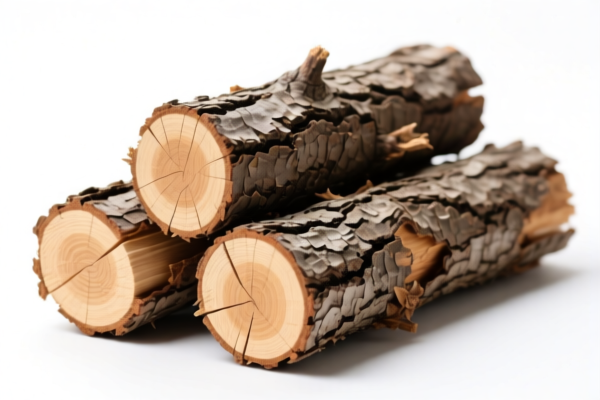
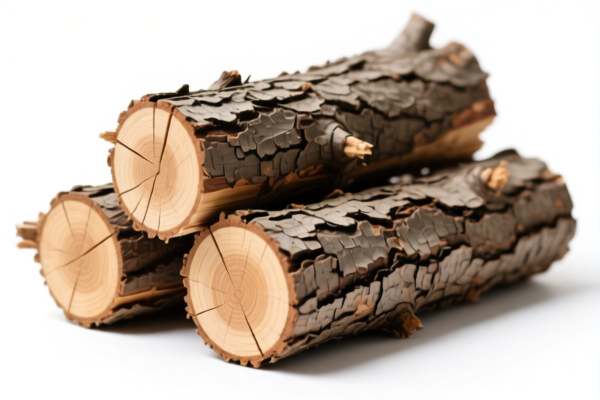
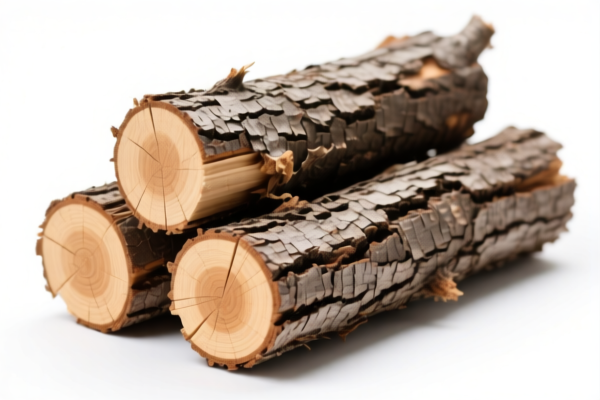
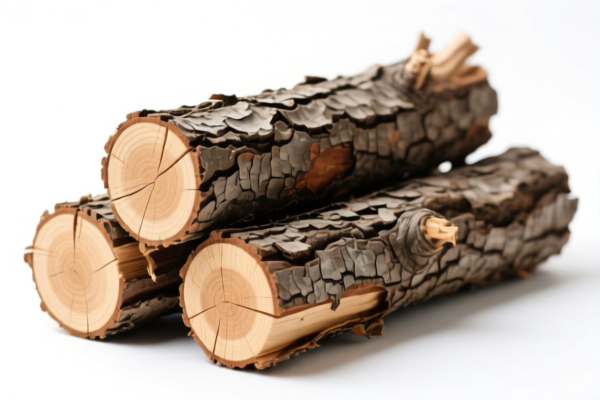
Rough wood logs with bark
CN → US| HS Code | Tariff Rate | Origin | Destination | Doc |
|---|---|---|---|---|
| 4401110000 | 35.0% | CN | US | Official Doc |
| 4403220165 | 35.0% | CN | US | Official Doc |
| 4403210130 | 35.0% | CN | US | Official Doc |
| 4401120000 | 35.0% | CN | US | Official Doc |
| 4403960123 | 35.0% | CN | US | Official Doc |
Product Images
AI Analysis
🌲 Rough Wood Logs with Bark: Global Tariff & Customs Clearance Guide
🌐 HS Code Reference & Customs Strategy | 2026 Latest Tariff Analysis | Professional Clearance Strategy
📌 1. Product Definition & Classification: Do You Really Understand "Rough Wood Logs"?
Rough wood logs, whether with or without bark, are the primary raw materials for the timber industry, used in plywood, paper production, furniture making, and fuel. In international trade, they are strictly categorized by wood species (hardwood vs. softwood) and processing state (raw, debarked, or charred).
Key Distinctions: * With Bark (Unpeeled): Logs retaining natural bark. Classified under specific wood types (e.g., Pine, Birch, Oak). * Without Bark (Peeling/Sawn): Logs where bark has been removed, often for further processing into lumber or veneer. * Fuel Wood: Logs intended for burning, often in smaller chunks or specific shapes.
⚠️ Critical Identification Point: - If the wood is coniferous (softwood) like Pine/Spruce, it typically falls under 4403.22. - If the wood is non-coniferous (hardwood) like Birch/Oak, it falls under 4403.96 or similar. - If it is charcoal/charred wood, it falls under 4401.11 or 4401.12.
📦 2. HS Code Classification Details (Based on Provided Data)
According to the provided data, all listed items carry a total tax rate of 35.0% due to specific trade restrictions (likely US-China trade context). Here is the precise mapping:
| HS Code | Product Description & Summary | Tax Detail Breakdown |
|---|---|---|
4401.11.00.00 |
Charcoal / Charred Wood: Rough wood, matched to wood material and charcoal form. | Total: 35% • Base Tariff: 0.0% • Additional Tariff: 25.0% • Section 301/122 Clause: 10% |
4403.22.01.65 |
Softwood Logs (Pine Class): Pine logs, matching material and rough form (whether peeled or not). | Total: 35% • Base Tariff: 0.0% • Additional Tariff: 25.0% • Section 301/122 Clause: 10% |
4403.21.01.30 |
Other Softwood Logs: Other logs, matching log form and rough sawn characteristics. | Total: 35% • Base Tariff: 0.0% • Additional Tariff: 25.0% • Section 301/122 Clause: 10% |
4401.12.00.00 |
Fuel Wood: Fuel wood, matching logs, wood chips, and other rough forms. | Total: 35% • Base Tariff: 0.0% • Additional Tariff: 25.0% • Section 301/122 Clause: 10% |
4403.96.01.23 |
Hardwood Logs (Birch Class): Birch rough wood, matching Birch material and rough log features. | Total: 35% • Base Tariff: 0.0% • Additional Tariff: 25.0% • Section 301/122 Clause: 10% |
🔍 Key Insight: - All items in the provided data sheet are subject to a flat 35% total tariff. - This consists of a 0% base duty plus 25% Additional Tariff (likely Section 301) and 10% Section 122/Trade Remedy Tariff. - The classification depends heavily on the botanical origin (Pine vs. Birch) and usage (Fuel vs. Construction).
💰 3. Detailed Tariff Rate Explanation (2026 Latest)
✅ Applicable Country: United States (US)
✅ Origin: China (CN) (Implied by the tax structure of 25%+10%)
✅ Effective Time: Current active rates under US Trade Policy
🎯 1. 4403.22.01.65 —— Pine Logs (Softwood)
| Item | Content |
|---|---|
| Base Duty Rate | 0% (ad valorem) |
| USITC Additional Tariff | +25% (Section 301 List 4A) |
| Section 122/Trade Clause | +10% (Specific trade remedy or administrative clause) |
| Total Tax Rate | 35% |
| Tax Calculation | CIF Value × 35% |
| De Minimis Exemption | ❌ Not Applicable (High-value raw materials usually excluded) |
| Legal Basis | HTSUS 4403.22 → USITC Footnotes → Section 301 Determinations |
📌 Explanation: - Pine logs are a major export from Canada/Russia/Scandinavia, but if sourced from China, they face these duties. - "With Bark" is explicitly mentioned in the summary, meaning the logs are unprocessed raw material.
🎯 2. 4403.96.01.23 —— Birch Logs (Hardwood)
| Item | Content |
|---|---|
| Base Duty Rate | 0% |
| USITC Additional Tariff | +25% |
| Section 122 Clause | +10% |
| Total Tax Rate | 35% |
| Tax Calculation | CIF × 35% |
| De Minimis Exemption | ❌ Not Applicable |
📌 Note: - Birch is a hardwood often used for plywood. - The classification 4403.96 specifically targets other hardwoods not previously specified (like Pine/Oak). - Bark status does not change the base rate but affects the duty-free quota eligibility (if any).
🎯 3. 4401.11.00.00 & 4401.12.00.00 —— Charcoal & Fuel Wood
| Item | Content |
|---|---|
| Base Duty Rate | 0% |
| USITC Additional Tariff | +25% |
| Section 122 Clause | +10% |
| Total Tax Rate | 35% |
| Tax Calculation | CIF × 35% |
📌 Warning: - Charcoal (4401.11) and Fuel Wood (4401.12) are often confused with raw logs. - Ensure your invoice clearly states "Charred Wood" or "Fuel Wood" to avoid misclassification penalties.
🛠️ 4. Customs Clearance Practical Advice (Battle-Tested Guide)
✅ 1. Required Documentation Checklist
| Document | Mandatory? | Description |
|---|---|---|
| ✅ Phytosanitary Certificate | ✔️ Critical | Issued by the origin country’s plant protection agency. Must confirm no pests/diseases. |
| ✅ Commercial Invoice | ✔️ | Must specify: HS Code, Wood Species (Latin name), Form (Log/Raw), Value. |
| ✅ Packing List | ✔️ | Detail volume (CBM), weight, and packaging type. |
| ✅ Bill of Lading/Air Waybill | ✔️ | Standard shipping document. |
| ✅ ISPM 15 Compliance (if pallets) | ✔️ | If wood pallets are used, they must be heat-treated or fumigated with IPPC mark. |
📌 Key Reminder: - Wood Species Identification: Customs may require a laboratory test or dendrochronology report to verify if the wood is truly Pine or Birch. Mislabeling can lead to seizure.
✅ 2. Classification Tips (Crucial Mnemonics)
🔥 “Species First, Form Second, Use Last!”
| Scenario | Correct Classification | Common Mistake |
|---|---|---|
| Pine logs with bark | 4403.22.01.65 |
Misclassified as "General Timber" → Higher scrutiny |
| Birch logs (hardwood) | 4403.96.01.23 |
Confused with Pine → Wrong tariff footnote |
| Wood chips for fuel | 4401.12.00.00 |
Labeled as "Raw Logs" → Penalty for misdescription |
| Charcoal from wood | 4401.11.00.00 |
Labeled as "Wood Logs" → Major compliance error |
✅ 3. Special Handling for "With Bark" Logs
| Issue | Handling Advice |
|---|---|
| Pest Control | Logs with bark are high-risk for insects (e.g., bark beetles). Ensure Phytosanitary Certificate is flawless. |
| Weight Discrepancy | Bark adds weight. Declare gross weight accurately. Under-declaration leads to fines. |
| Moisture Content | High moisture can lead to mold during transit. Ensure proper ventilation in containers. |
🌍 5. Global Customs Comparison (2026)
| Region | Recommended HS Code | Tariff (China Origin) | Certification | Notes |
|---|---|---|---|---|
| 🇺🇸 USA | 4403.22 / 4403.96 |
35% (0% Base + 25% Sec 301 + 10% Sec 122) | Phytosanitary + Fumigation | High Risk. Strict IPM (Import Permit) checks. |
| 🇨🇳 China | 4403 |
5-10% | N/A | Lower barriers for domestic trade. |
| 🇪🇺 EU | 4403 |
0-6% (depending on species) | FUMES Regulation + IPPC | Requires strict pest control documentation. |
| 🇯🇵 Japan | 4403 |
5-8% | Wood Packaging Material Declaration | Strict on bark and soil presence. |
📌 Conclusion: - The USA is the most challenging market due to the 35% total tariff. - Ensure your supplier provides legitimate origin documents to avoid anti-circumvention investigations.
📌 6. Common Mistakes & Pitfalls (Lessons from Experience)
❌ Mistake 1: Declaring "Birch Logs" when they are "Pine Logs" 👉 Consequence: Customs may reject the declaration, requiring re-inspection, causing delays and demurrage fees.
❌ Mistake 2: Ignoring the Phytosanitary Certificate 👉 Consequence: Cargo seized and destroyed at the port. No exceptions for "clean" logs.
❌ Mistake 3: Misclassifying Fuel Wood as Raw Logs 👉 Consequence: Different HS codes have different entry requirements. Misclassification leads to audits.
❌ Mistake 4: Not declaring "With Bark" 👉 Consequence: Customs may assume the wood is debarked, leading to pest control failure. Always specify "With Bark" or "Unpeeled".
✅ Correct Practice:
"Pine Logs (Pinus sylvestris), Unpeeled, With Bark, for Plywood Manufacturing, Phytosanitary Certificate Attached, HS Code 4403.22.01.65"
🎯 7. Final Recommendations
🎯 Remember:
🔹 "Species Matters!" – Pine, Birch, and Oak have different HS codes. 🔹 "Bark is Risk!" – Always include Phytosanitary certificates. 🔹 "35% is the Cost!" – Budget for the full 35% tariff if importing to the US from China.
📌 Pro Tip:
If your wood is sourced from Canada, Russia, or Scandinavia, the 35% US tariff may not apply (check Free Trade Agreements or specific country exclusions). Verify the Country of Origin carefully!
📣 Immediate Action:
📞 Consult with a licensed customs broker before shipping. 📄 Ensure all phytosanitary documents are in order. 🚀 Smooth clearance starts with accurate classification!
✨ Professional Customs Clearance, Starting with Precise Classification! 💼 Every percent of tax counts!
Customer Reviews
About HS Code Classification
The Harmonized System (HS) is an internationally standardized nomenclature developed by the World Customs Organization (WCO) to classify traded products. Over 200 countries use the HS system as the basis for customs tariffs, trade statistics, and import/export regulations.
Each HS code follows a hierarchical structure:
- Chapter (2 digits) — Broad category of goods (e.g., Chapter 84: Machinery and Mechanical Appliances)
- Heading (4 digits) — More specific grouping within the chapter
- Subheading (6 digits) — Internationally standardized breakdown, used by all WCO member countries
- National subdivisions (8-10 digits) — Country-specific extensions for further classification, such as US HTSUS 10-digit codes
Correct HS code classification is essential for smooth customs clearance, accurate duty payment, and compliance with trade regulations. Misclassification can lead to customs delays, overpayment of duties, or penalties.
When importing from CN to US, the applicable tariff rates may include:
- Most-Favored-Nation (MFN) rate — The standard duty rate applied to WTO members
- General rate — Applied to countries without trade agreements
- Trade remedy duties — Additional tariffs such as Section 301 (anti-dumping), Section 232 (national security), or countervailing duties
The information provided on this page is for reference purposes only. For official classification, please consult with your local customs authority or a licensed customs broker.