Roughly Processed Materials
CN → US| HS Code | Tariff Rate | Origin | Destination | Doc |
|---|---|---|---|---|
| 2515110000 | 35.0% | CN | US | Official Doc |
| 2515200000 | 38.0% | CN | US | Official Doc |
| 2516110000 | 35.0% | CN | US | Official Doc |
| 2516201000 | 35.0% | CN | US | Official Doc |
| 6802230000 | 38.7% | CN | US | Official Doc |
Product Images
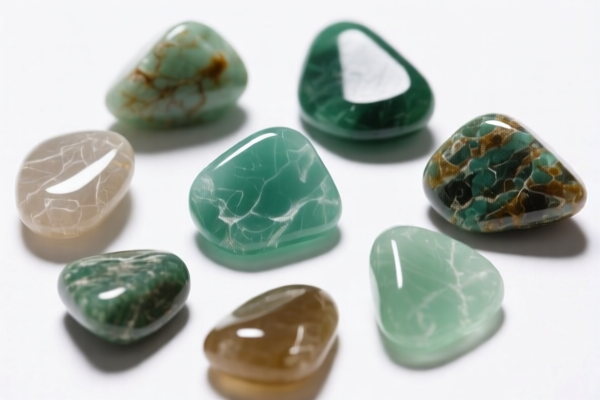
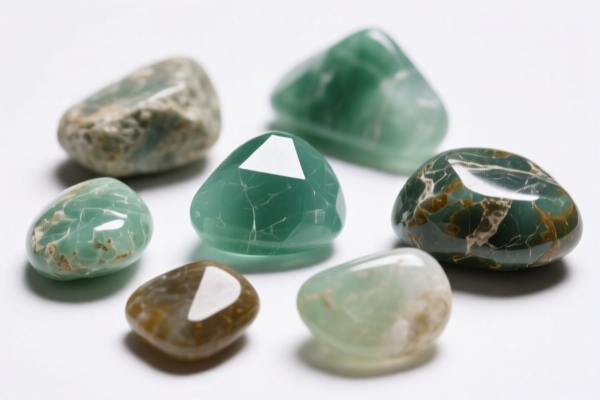
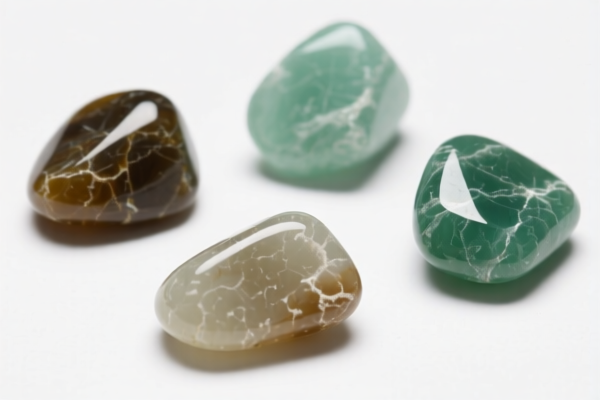
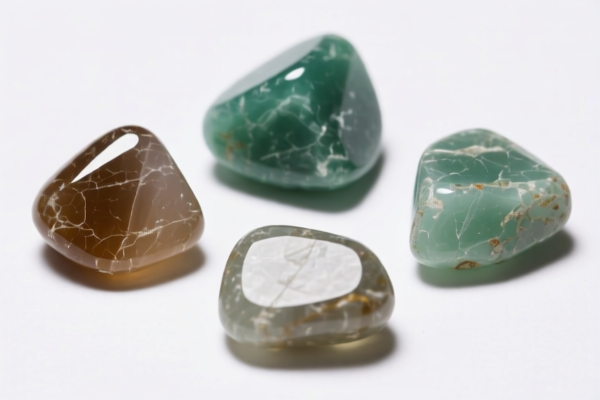
AI Analysis
🪨 Roughly Processed Materials (Natural Stone Blocks & Slabs)
🌐 HS Code Reference & Customs Clearance Guide | 2026 Latest Tariff Analysis | Professional Entry Strategy
📌 I. Product Definition & Classification: What Exactly Are "Roughly Processed Materials"?
"Roughly Processed Materials" in the context of international trade typically refers to natural stone (marble, granite, sandstone, etc.) that has undergone initial cutting or shaping but lacks final finishing, polishing, or detailed carving. These materials are the intermediate raw materials for construction, architecture, and interior design.
In customs classification, the specific HS Code depends heavily on the stone type (Marble vs. Granite vs. Sandstone) and the specific form (blocks, slabs, or semi-finished shapes). The data provided highlights two main categories: 1. Marble & Tufa (Limestone family): Under Chapter 2515. 2. Granite & Other Common Stones: Under Chapter 2516. 3. Worked Stone Articles: Under Chapter 6802 (if specifically worked articles rather than raw stone).
⚠️ Key Distinction Point:
- If the stone is simply cut into slabs/blocks without further working (like polishing or intricate carving) →归入 2515.11 / 2515.20 / 2516.11 / 2516.20
- If the stone is a "work" (e.g., simple cut plates ready for installation) → May fall under 6802.23
- Material Matters: Marble and Granite have different base tariffs.
📦 II. HS Code Classification Details (2026 Latest Tariff Authority对照)
| HS Code | Product Description | Applicable Material | State/Condition |
|---|---|---|---|
2515.11.00.00 |
Roughly worked Marble & Travertine | Marble, Travertine, etc. | Crude or roughly squared |
2515.20.00.00 |
Roughly worked Calcium Carbonate Stone | Limestone, Tufa, etc. | Crude or roughly shaped |
2516.11.00.00 |
Roughly worked Granite | Granite (Common Stone) | Crude or roughly squared |
2516.20.10.00 |
Roughly worked Sandstone | Sandstone | Crude or un-finished |
6802.23.00.00 |
Worked Stone Articles (Simple Cut) | General Stone | Simple cutting/sawing, no material conflict |
🔍 Important Note:
- 2515.11 and 2516.11 have a 0% Base Tariff, but attract heavy supplementary tariffs. - 2515.20 has a 3% Base Tariff. - 6802.23 is classified as a "worked article" rather than raw material, with a 3.7% Base Tariff.
💰 III. 2026 Latest Tariff Rate Breakdown (Including Supplementary Taxes & Policies)
✅ Applicable Country: United States (US)
✅ Origin: China (CN)
✅ Effective Time: Post-November 10, 2025 (including subsequent imports)
🎯 1. 2515.11.00.00 — Roughly Worked Marble/Travertine
| Item | Content |
|---|---|
| Base Tariff | 0.0% (ad valorem) |
| Section 301 Supplementary Tariff | +25.0% (USITC Footnote regarding Chinese imports) |
| Section 122 Tariff | +10.0% (Specific trade remedy/legislative clause) |
| Total Tax Rate | 35.0% |
| Tax Calculation | CIF Value × 35% |
| De Minimis Eligibility | ❌ Denied (High-value industrial/raw materials typically excluded) |
| Legal Basis Path | USITC:2515.11.00.00 → Section 301: 25% → Section 122: 10% |
📌 Explanation:
- "0% Base" might look attractive, but the 35% total is prohibitive. - The 25% is the standard "Trade War" tariff on Chinese stone products. - The 10% is a specific legislative addition (Section 122).
🎯 2. 2515.20.00.00 — Roughly Worked Calcium Carbonate Stone (Limestone/Tufa)
| Item | Content |
|---|---|
| Base Tariff | 3.0% (ad valorem) |
| Section 301 Supplementary Tariff | +25.0% |
| Section 122 Tariff | +10.0% |
| Total Tax Rate | 38.0% |
| Tax Calculation | CIF Value × 38% |
| De Minimis Eligibility | ❌ Denied |
| Legal Basis Path | USITC:2515.20.00.00 → Section 301: 25% → Section 122: 10% |
📌 Note:
- Limestone and Tufa fall under a different sub-heading than Marble, hence the higher base rate (3% vs 0%). - Total cost is higher than Marble due to the base tariff.
🎯 3. 2516.11.00.00 — Roughly Worked Granite
| Item | Content |
|---|---|
| Base Tariff | 0.0% (ad valorem) |
| Section 301 Supplementary Tariff | +25.0% |
| Section 122 Tariff | +10.0% |
| Total Tax Rate | 35.0% |
| Tax Calculation | CIF Value × 35% |
| De Minimis Eligibility | ❌ Denied |
| Legal Basis Path | USITC:2516.11.00.00 → Section 301: 25% → Section 122: 10% |
📌 Key Insight:
- Granite is classified under Chapter 2516. - Like Marble, it benefits from a 0% base but carries the same 35% total burden.
🎯 4. 2516.20.10.00 — Roughly Worked Sandstone
| Item | Content |
|---|---|
| Base Tariff | 0.0% (ad valorem) |
| Section 301 Supplementary Tariff | +25.0% |
| Section 122 Tariff | +10.0% |
| Total Tax Rate | 35.0% |
| Tax Calculation | CIF Value × 35% |
| De Minimis Eligibility | ❌ Denied |
| Legal Basis Path | USITC:2516.20.10.00 → Section 301: 25% → Section 122: 10% |
🎯 5. 6802.23.00.00 — Worked Stone Articles (Simple Cut)
| Item | Content |
|---|---|
| Base Tariff | 3.7% (ad valorem) |
| Section 301 Supplementary Tariff | +25.0% |
| Section 122 Tariff | +10.0% |
| Total Tax Rate | 38.7% |
| Tax Calculation | CIF Value × 38.7% |
| De Minimis Eligibility | ❌ Denied |
| Legal Basis Path | USITC:6802.23.00.00 → Section 301: 25% → Section 122: 10% |
📌 Warning:
- This code is for "Worked Stone Articles," which implies a higher level of processing than raw blocks. - It has the highest total tax rate (38.7%) due to the higher base tariff (3.7%).
🛠️ IV. Customs Clearance Practical Advice (Field Avoidance Guide)
✅ 1. Required Documentation Checklist (Mandatory)
| Document | Must Provide? | Explanation |
|---|---|---|
| ✅ Commercial Invoice | ✔️ | Must clearly state "Roughly Worked [Stone Type]" |
| ✅ Packing List | ✔️ | Detail weights, dimensions, and number of blocks/slabs |
| ✅ Certificate of Origin (CO) | ✔️ | Essential for verifying China origin (triggers 35-38.7% tariffs) |
| ✅ Product Specifications | ✔️ | Describe cutting method, dimensions, and surface finish level |
| ✅ Material Test Report | ✔️ | Confirm mineral composition (Marble vs. Limestone vs. Granite) |
| ✅ Photos of Cargo | ✔️ | Show loading condition and stone texture |
✅ 2. Declaration Tips (Critical Keywords)
🔥 “Stone Type Specific, Processing Level Clear, Avoid 'General Stone' Ambiguity!”
| Situation | Correct Declaration | Wrong Practice |
|---|---|---|
| Marble Blocks | 2515.11.00.00 - Roughly worked Marble |
Vague "Stone Blocks" |
| Granite Slabs | 2516.11.00.00 - Roughly worked Granite |
Misclassified as Marble |
| Limestone Tufa | 2515.20.00.00 - Roughly worked Calcium Carbonate |
Misclassified as Granite |
| Pre-cut Countertop Blanks | 6802.23.00.00 - Worked Stone Articles |
Under-declared as raw blocks |
| Sandstone Cladding Blocks | 2516.20.10.00 - Roughly worked Sandstone |
Not distinguished from Granite |
✅ 3. Special Circumstances Handling
| Situation | Handling Advice |
|---|---|
| Mixed Containers | Ensure separate packing lists for Marble, Granite, and Limestone. Mixed classification can lead to audits. |
| Semi-Finished Countertops | If edges are pre-cut for a specific kitchen, classify under 6802.23 (38.7%), not raw blocks. |
| Origin Substitution | If stone is quarried in Vietnam or India, IEEPA Exemptions may apply. Verify CO carefully. |
| Damage During Transport | Provide pre-loading photos to avoid disputes over "worked" vs "damaged" status. |
🌍 V. Global Market Customs Comparison (2026 Latest)
| Country/Region | Recommended HS Code | Tariff Rate (China Origin) | Certification | Remarks |
|---|---|---|---|---|
| 🇺🇸 USA | 2515.11 / 2516.11 |
35.0% (Marble/Granite) | None (Physical Inspection Common) | Highest cost due to 301+122 tariffs |
| 🇺🇸 USA | 2515.20 |
38.0% (Limestone) | None | Higher base rate |
| 🇺🇸 USA | 6802.23 |
38.7% (Worked Stone) | None | Most expensive category |
| 🇨🇳 China | 2515.11 |
0% - 5% (Import Duty) | None | No heavy supplementary tariffs |
| 🇪🇺 EU | 2515.11 |
0% (If GSP/FTA eligible) | CE (if used in construction) | Generally lower tariffs than US |
| 🇦🇺 Australia | 2515.11 |
5% | None | Moderate tariffs |
📌 Conclusion:
- USA is the most expensive market for Chinese stone products due to the 35-38.7% effective tariff rate. - China Origin is critical: Any stone claimed as "Vietnamese" or "Indian" must have valid Country of Origin certificates to avoid these tariffs.
📌 VI. Common Errors & Pitfalls (Blood-Teaching Lessons)
❌ Error 1: Declaring "Worked Stone Countertops" as "Rough Blocks" (2515.11)
👉 Consequence: If detected by CBP, it is reclassified to 6802.23 (38.7%) → Under-declaration penalty + Back taxes!
❌ Error 2: Mixing Granite and Marble in one shipment without separate declarations
👉 Consequence: Customs may inspect each item individually, causing delays and storage fees.
❌ Error 3: Using vague terms like "Natural Stone"
👉 Consequence: Customs cannot determine the correct HS code → Audit and potential seizure.
❌ Error 4: Ignoring Section 122 Tariff
👉 Consequence: Even with 0% base, the 10% Section 122 is mandatory for many stone imports from China.
✅ Correct Approach:
"Roughly Worked Marble Blocks, Unpolished, Cut to Size, Origin: China, HS: 2515.11.00.00"
🎯 VII. Conclusion: Professional Declaration, Cost Control, and Efficiency!
🎯 Remember the Mantra:
🔹 "Stone Type First, Processing Level Second, Tariff Third!"
🔹 "Marble/Granite: 35%, Limestone: 38.7%, Worked: 38.7%!"
🔹 "Don't Under-declare, Or You Pay Double!"
📌 Pro Tip:
If your stone is quarried in Vietnam, India, or Brazil, ensure you have valid Certificates of Origin to potentially claim lower tariffs or exemptions.
Consider Advance Rulings (Pre-classification) for large shipments to avoid customs holds.
📣 Immediate Action:
📞 Contact a licensed customs broker + Provide Stone Sample Photos + Apply for HS Code Pre-classification
🚀 Clear the borders, save costs, and secure your supply chain!
✨ Professional Clearance Starts with Precise Classification!
💼 Every Dollar of Tax Saved is Pure Profit!
Customer Reviews
About HS Code Classification
The Harmonized System (HS) is an internationally standardized nomenclature developed by the World Customs Organization (WCO) to classify traded products. Over 200 countries use the HS system as the basis for customs tariffs, trade statistics, and import/export regulations.
Each HS code follows a hierarchical structure:
- Chapter (2 digits) — Broad category of goods (e.g., Chapter 84: Machinery and Mechanical Appliances)
- Heading (4 digits) — More specific grouping within the chapter
- Subheading (6 digits) — Internationally standardized breakdown, used by all WCO member countries
- National subdivisions (8-10 digits) — Country-specific extensions for further classification, such as US HTSUS 10-digit codes
Correct HS code classification is essential for smooth customs clearance, accurate duty payment, and compliance with trade regulations. Misclassification can lead to customs delays, overpayment of duties, or penalties.
When importing from CN to US, the applicable tariff rates may include:
- Most-Favored-Nation (MFN) rate — The standard duty rate applied to WTO members
- General rate — Applied to countries without trade agreements
- Trade remedy duties — Additional tariffs such as Section 301 (anti-dumping), Section 232 (national security), or countervailing duties
The information provided on this page is for reference purposes only. For official classification, please consult with your local customs authority or a licensed customs broker.