Roughly Processed Spruce and Fir Wood
CN → US| HS Code | Tariff Rate | Origin | Destination | Doc |
|---|---|---|---|---|
| 4407120017 | 35.0% | CN | US | Official Doc |
| 4407120058 | 35.0% | CN | US | Official Doc |
| 4401110000 | 35.0% | CN | US | Official Doc |
| 4407120059 | 35.0% | CN | US | Official Doc |
| 4407120020 | 35.0% | CN | US | Official Doc |
Product Images
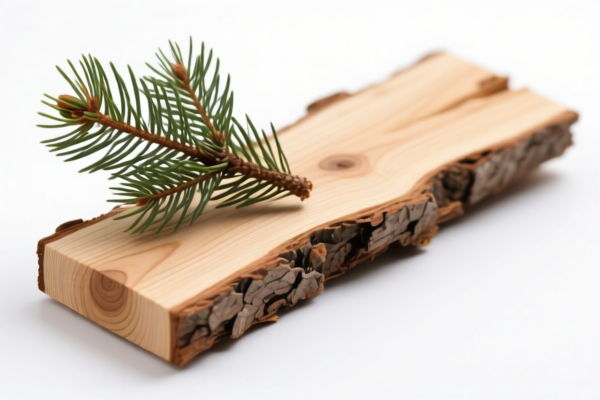
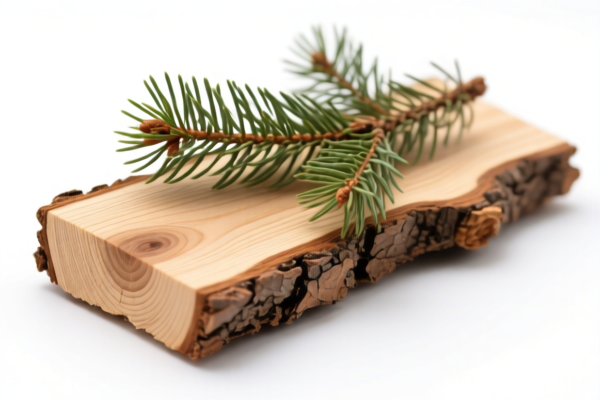
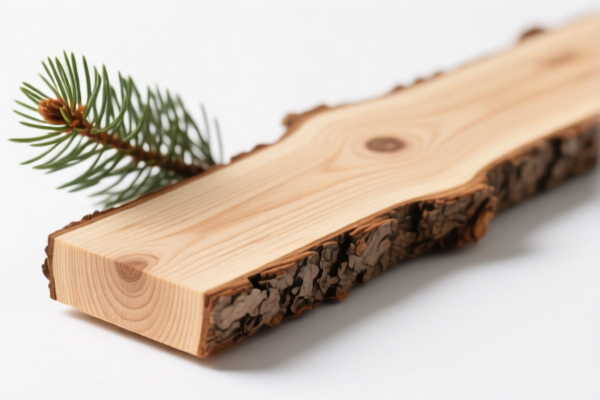
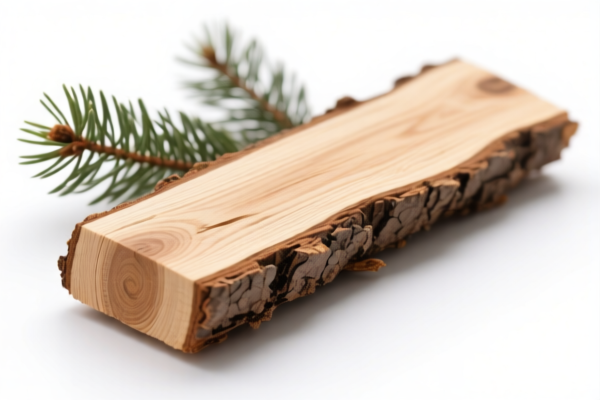
AI Analysis
🌲 Roughly Processed Spruce and Fir Wood (Timber & Lumber)
🌐 HS Code Reference & Customs Clearance Guide | 2026 Latest Tariff Analysis | Professional Clearance Strategy
📌 I. Product Definition & Classification: What Exactly is "Roughly Processed Spruce and Fir Wood"?
Spruce and Fir wood belongs to the category of Coniferous Timber. In international trade, the distinction between "Log" (原木) and "Roughly Processed Wood" (粗略加工木材) is critical for HS Code determination.
1. Logs (Logs/Timber in the rough)
- Definition: Wood from which the bark has been removed or roughly sawn, but not further manufactured.
- HS Code Range: Typically 4401.11.00.00 (if specifically identified as spruce/fir logs).
2. Roughly Processed Wood (Sawn or Chipped Lengthwise)
- Definition: Wood that has been sawn longitudinally or chipped, but not planed, sanded, or joined. This includes planks, boards, beams, and posts.
- HS Code Range: Typically 4407.12.00.xx.
- Key Distinction: If the wood has been cut into specific lengths or shapes suitable for construction or furniture manufacturing, it falls under Chapter 44 (Wood and Wood Articles), specifically Heading 4407.
⚠️ Key Differentiator:
- If the wood is unprocessed or just debarked → 4401.11.00.00 (Logs).
- If the wood is sawn longitudinally (even if rough edges) → 4407.12.00.xx (Sawn Timber).
- Shape Consistency: The "roughly processed" items in the data share the same material (Spruce/Fir) and form (Sawn/Chipped), leading to multiple sub-code variations based on specific dimensions or trade classifications.
📦 II. HS Code Classification Details (2026 Latest Tariff Authority Comparison)
| HS Code | Product Description | Application Scenario | Tax Rate |
|---|---|---|---|
4407.12.00.17 |
Roughly processed Spruce and Fir wood | Sawn timber, planks, beams; match successful, material and form consistent | 35.0% |
4407.12.00.58 |
Roughly processed Spruce and Fir wood | Covers material and form description is consistent | 35.0% |
4401.11.00.00 |
Spruce and Fir Logs | Coniferous wood, log form, meets material and form requirements | 35.0% |
4407.12.00.59 |
Spruce and Fir Logs (Sawn/Chipped) | Coniferous wood, longitudinal sawing or chipping form characteristics | 35.0% |
4407.12.00.20 |
Spruce and Fir Logs | Explicitly includes coniferous material requirements | 35.0% |
🔍 Focus Reminder:
- All listed HS codes have a Total Tax Rate of 35.0%.
- The primary difference lies in the specific sub-category (e.g., whether it's classified strictly as a "Log" under 4401 or "Sawn Timber" under 4407).
- 4407 codes generally apply to wood that has undergone longitudinal sawing or chipping.
- 4401 applies to logs (raw timber).
💰 III. 2026 Latest Tariff Rate Breakdown (Including Surtaxes & Policy Surcharges)
✅ Applicable Country: United States (US)
✅ Origin: China (CN)
✅ Effective Time: 2025/2026 (Current Trade Policy)
🎯 1. Common Tax Structure for All Listed Codes
| Item | Content |
|---|---|
| Base Tariff | 0.0% (ad valorem) |
| Section 301 Surcharge | +25.0% (USITC Footnote for Chinese-origin goods) |
| Section 122 Tariff | +10.0% (Specific trade provision) |
| Total Tax Rate | 35.0% |
| Tax Calculation | CIF Value × 35% |
| De Minimis Exemption | ❌ Not Applicable (High tax rate excludes low-value exemptions) |
| Legal Basis Path | USITC:4407.12.00.xx / USITC:4401.11.00.00 → Section 301: 25% → Section 122: 10% |
📌 Explanation:
- "Base Tariff 0%": Standard MFN (Most Favored Nation) rate for wood products.
- "Section 301 Surcharge 25%": Imposed on Chinese-origin goods under the US Trade Act Section 301.
- "Section 122 Tariff 10%": Additional surcharge based on specific trade enforcement provisions.
- Total 35%: This is a high tariff burden. Importers must account for this in cost calculations.
🛠️ IV. Customs Clearance Practical Advice (Real-World Pitfall Avoidance Guide)
✅ 1. Required Documentation Checklist (Essential)
| Document | Must Provide | Description |
|---|---|---|
| ✅ Product Specification Sheet | ✔️ | Include species (Spruce/Fir), dimensions, moisture content, processing method (sawn/chipped). |
| ✅ Phytosanitary Certificate | ✔️ | Critical for wood products. Issued by the exporting country's plant protection agency. |
| ✅ Commercial Invoice | ✔️ | Clearly state "Roughly Processed Spruce and Fir Wood" with HS Codes. |
| ✅ Packing List | ✔️ | Detail quantity, weight, and packaging type. |
| ✅ Bill of Lading/Air Waybill | ✔️ | Standard shipping document. |
| ✅ Certificate of Origin | ✔️ | To confirm Chinese origin (for tariff calculation). |
| ✅ Fumigation Certificate | ✔️ | If required by US CBP for wood packaging material. |
⚠️ Key Point:
- Phytosanitary Certificate is mandatory for wood products entering the US. Failure to provide it may result in shipment rejection or destruction.
✅ 2. Declaration Techniques (Key Mnemonics)
🔥 "Species Clear, Process Defined, Certificates Complete, Tariff Avoided!"
| Situation | Correct Declaration | Wrong Practice |
|---|---|---|
| Sawn Planks/Beams | 4407.12.00.xx - "Roughly Processed Spruce/Fir Wood" |
Misclassify as "Logs" (4401) → Risk of penalty if dimensions show processing. |
| Raw Logs | 4401.11.00.00 - "Spruce/Fir Logs" |
Misclassify as "Sawn Timber" → Unnecessary complexity if not processed. |
| Mixed Shipments | Separate declarations for Logs and Sawn Wood | Mixed HS Codes on one line → Customs review delays. |
| Fumigation | Include Phytosanitary Certificate number on Invoice | Omit certificate → Shipment held at port. |
✅ 3. Special Case Handling
| Situation | Handling Advice |
|---|---|
| Treated Wood | If chemically treated, may require additional declaration under different HS codes. |
| Wood Packaging Material (Pallets/Crates) | Must comply with ISPM 15 standards. Fumigation mark required. |
| End-Use Declaration | Specify if for construction, furniture, or paper production. |
| Dispute on Processing Level | Provide photos showing sawn edges vs. raw bark. Clear visual evidence helps customs classification. |
🌍 V. Global Main Market Customs Clearance Comparison (2026 Latest)
| Country/Region | Recommended HS Code | Tariff | Certification Requirements | Remarks |
|---|---|---|---|---|
| 🇺🇸 United States | 4407.12.00.xx / 4401.11.00.00 |
35% (0% Base + 25% Sec 301 + 10% Sec 122) | Phytosanitary Certificate, Fumigation | High tariff, strict phytosanitary rules. |
| 🇨🇳 China | 4407.12.00.xx |
0% (Import) / 13% (Export) | N/A | No surcharges. |
| 🇪🇺 European Union | 4407.12.00.xx |
0% (Most) | FSC/PEFC Certification (Optional but recommended) | No US-style surcharges. |
| 🇯🇵 Japan | 4407.12.00.xx |
0% - 3.2% | Phytosanitary Certificate | Low tariffs, strict quality checks. |
📌 Conclusion:
- US Market: Highest cost due to 35% total tariff.
- EU/Japan: Lower tariff burden, but phytosanitary requirements are strict globally.
- Strategic Advice: For US imports, consider supply chain diversification (e.g., sourcing from non-China origins) if possible, or factor the 35% into pricing.
📌 VI. Common Errors & Pitfall Guide (Lessons Learned)
❌ Error 1: Misclassifying Sawn Timber as Logs
👉 Consequence: If dimensions show sawn edges, customs will reclassify to 4407, potentially leading to penalties for misdeclaration.
❌ Error 2: Omitting Phytosanitary Certificate
👉 Consequence: Shipment rejected or destroyed at US port. No exceptions for wood products.
❌ Error 3: Incorrect Species Declaration (e.g., saying "Hardwood" for Spruce)
👉 Consequence: Species determination affects HS Code. Spruce/Fir are Softwood/Coniferous. Mislabeling leads to delays and fines.
❌ Error 4: Ignoring Section 301 & 122 Tariffs in Cost Calculation
👉 Consequence: Profit margin wiped out by unexpected 35% tax.
✅ Correct Practice:
"Roughly Sawn Spruce and Fir Timber, Length: 2-4m, Moisture: 20%, Phytosanitary Cert No: XXX, HS Code: 4407.12.00.17"
🎯 VII. Conclusion: Professional Declaration, Save Time and Money
🎯 Remember the Mantra:
🔹 "Species Specific, Process Clear, Phytosanitary Mandatory, Tariff 35% – Factor it in!"
🔹 "Logs vs. Sawn: Know the Difference, Avoid Customs Disputes!"
📌 Pro Tip:
If your wood products are treated with preservatives or fired wood, they may fall under different HS codes with different tax rates. Always verify with a customs broker before shipment.
📣 Immediate Action:
📞 Contact a Licensed Customs Broker + Provide Species & Processing Details + Ensure Phytosanitary Certificate
🚀 Let your timber shipments clear smoothly, efficiently, and cost-effectively!
✨ Professional Customs Clearance Starts with Accurate Classification!
💼 Every cent in tax savings counts!
Customer Reviews
About HS Code Classification
The Harmonized System (HS) is an internationally standardized nomenclature developed by the World Customs Organization (WCO) to classify traded products. Over 200 countries use the HS system as the basis for customs tariffs, trade statistics, and import/export regulations.
Each HS code follows a hierarchical structure:
- Chapter (2 digits) — Broad category of goods (e.g., Chapter 84: Machinery and Mechanical Appliances)
- Heading (4 digits) — More specific grouping within the chapter
- Subheading (6 digits) — Internationally standardized breakdown, used by all WCO member countries
- National subdivisions (8-10 digits) — Country-specific extensions for further classification, such as US HTSUS 10-digit codes
Correct HS code classification is essential for smooth customs clearance, accurate duty payment, and compliance with trade regulations. Misclassification can lead to customs delays, overpayment of duties, or penalties.
When importing from CN to US, the applicable tariff rates may include:
- Most-Favored-Nation (MFN) rate — The standard duty rate applied to WTO members
- General rate — Applied to countries without trade agreements
- Trade remedy duties — Additional tariffs such as Section 301 (anti-dumping), Section 232 (national security), or countervailing duties
The information provided on this page is for reference purposes only. For official classification, please consult with your local customs authority or a licensed customs broker.