Roughly Square Western Red Cedar Wood
CN → US| HS Code | Tariff Rate | Origin | Destination | Doc |
|---|---|---|---|---|
| 4407190068 | 35.0% | CN | US | Official Doc |
| 4407190069 | 35.0% | CN | US | Official Doc |
Product Images
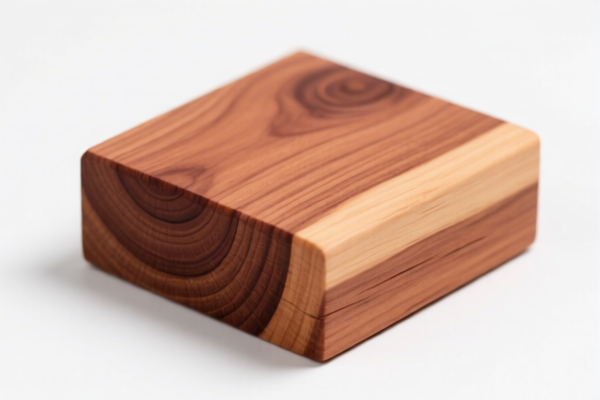
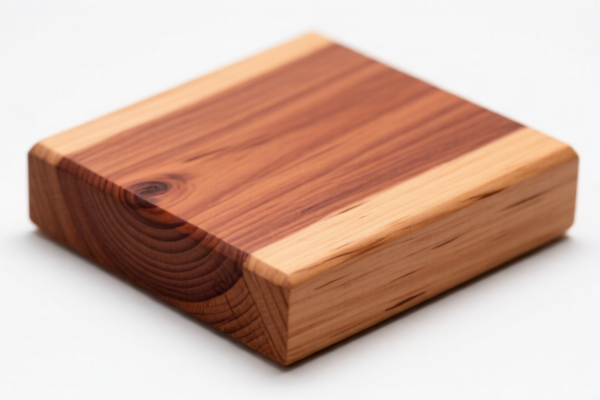
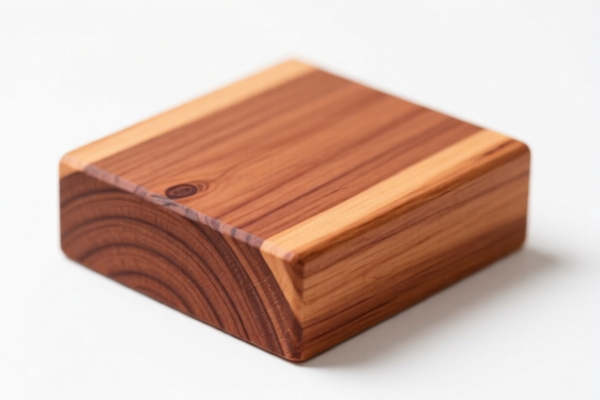
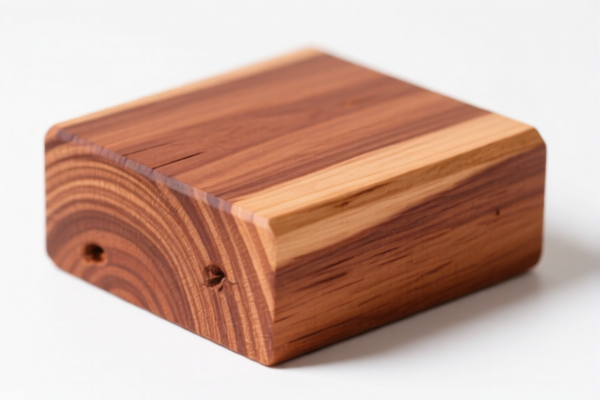
AI Analysis
🪵 Roughly Square Western Red Cedar Wood
🌲 Western Red Cedar (Lumber) | HS Code 4407.19.00.68 & 4407.19.00.69
🌐 HS Code Reference & Customs Clearance Guide | 2026 Latest Tariff Analysis | Professional Clearance Strategy
📌 1. Product Definition & Classification: What is "Roughly Square Western Red Cedar"?
Western Red Cedar (Thuja plicata) is a premium softwood known for its natural resistance to rot, insects, and weathering. It is widely used in outdoor construction (decking, siding, pergolas), luxury furniture, and cladding.
In international trade, this product falls under Chapter 44: Wood and articles of wood; wood charcoal.
⚠️ Key Classification Distinction:
- "Rough" vs. "Planed/Sanded": The term "Rough" in the prompt implies the wood has NOT been planed, sanded, or finished to a smooth surface. It retains its natural or sawn texture.
- "Square": Refers to the cross-sectional shape (rectangular or square profile), typical for dimensional lumber (e.g., 2x4, 4x4 posts).
- "Thickness > 6mm": As per the provided data, this classification applies only to lumber thicker than 6 mm.
📦 2. HS Code Classification Details (2026 Latest Tariff Authority对照)
Based on the provided <DATA>, there are two specific HS codes for Western Red Cedar lumber, differentiated by sub-category ("Rough" vs. "Other"). Since the user input specifies "Rough", the primary code is 4407.19.00.68. However, 4407.19.00.69 is provided for context.
| HS Code | Product Description | Condition | Status | Tax Rate (Total) |
|---|---|---|---|---|
4407.19.00.68 |
Western Red Cedar: Rough | Sawn/chipped, >6mm, NOT planed/sanded | ✅ Matches Input | 25.0% |
4407.19.00.69 |
Western Red Cedar: Other | Sawn/chipped, >6mm, planed/sanded/jointed | ❌ Not "Rough" | 25.0% |
🔍 Critical Note:
- The term "Rough" is the key classifier here. If the wood has been planed (smoothed) or sanded, it would fall under4407.19.00.69.
- Both codes carry the same total tax rate of 25.0%.
💰 3. 2026 Latest Tariff Rate Breakdown (Detailed Tax Clauses)
✅ Applicable Jurisdiction: United States (US)
✅ Origin: China (CN)
✅ Effective Date: Ongoing (Current as per provided data)
🎯 HS Code: 4407.19.00.68 – Rough Western Red Cedar
| Item | Detail |
|---|---|
| Product Description | Wood sawn or chipped lengthwise, sliced or peeled, whether or not planed, sanded or end-jointed, of a thickness exceeding 6 mm: Coniferous: Other: Not treated: Western red cedar: Rough |
| Base Tariff Rate | 0.0% (Most Favored Nation / MFN rate) |
| Additional Tariff (Section 301) | +25.0% (Due to US-China trade tensions) |
| Total Tax Rate | 25.0% |
| Tax Calculation Basis | Ad Valorem (Based on CIF Value: Cost + Insurance + Freight) |
| Example Calculation | If CIF Value = $10,000 → Tax = $10,000 × 25% = $2,500 |
📌 Explanation:
- Base Tariff (0%): Standard MFN duty for this wood product is zero.
- Additional Tariff (25%): This is a Section 301 Tariff, imposed specifically on certain Chinese-origin goods.
- Total Effective Rate: 25% is the final duty rate paid to US Customs.
- No IEEPA Surcharge: Unlike electronics (e.g., monitors), wood products in this category are not subject to the additional 10% IEEPA surcharge mentioned in the example. Only the 301 tariff applies.
🛠️ 4. Customs Clearance Practical Advice (Pitfall Avoidance Guide)
✅ 1. Essential Documentation Checklist
| Document | Required | Purpose |
|---|---|---|
| Commercial Invoice | ✔️ | Must clearly state: "Western Red Cedar, Rough, Square Profile, Thickness >6mm" |
| Packing List | ✔️ | Specify dimensions (e.g., 2x4, 4x4) and quantity (board feet or linear meters) |
| Bill of Lading (B/L) | ✔️ | To prove CIF value |
| Phytosanitary Certificate | ✔️ | CRITICAL for wood products to prove no pests/disease |
| ISPM 15 Marking | ✔️ | Wooden packaging/pallets must be heat-treated/fumigated and marked |
| Country of Origin Certificate | ✔️ | To confirm Chinese origin (triggers the 25% tariff) |
✅ 2. Classification & Declaration Tips
🔥 "Rough" is Key!
- Correct Declaration: "Western Red Cedar Lumber, Rough, Square Cut, Unfinished" → HS 4407.19.00.68
- Incorrect Declaration: "Western Red Cedar, Planed" → HS 4407.19.00.69 (Same tax, but wrong code if wood is rough)
- Risk: Misdeclaring "Rough" as "Planed" or vice versa may lead to customs audits, though the tax rate is identical in this case. However, misdeclaring the wood type (e.g., calling Cedar "Pine") can lead to severe penalties.
✅ 3. Special Handling for Wood Products
| Scenario | Advice |
|---|---|
| Moisture Content | Ensure moisture content is <19% to prevent mold during transit; may require additional inspection |
| Pest Control | ISPM 15 compliance is mandatory. Non-compliant pallets will be rejected or destroyed |
| Treated vs. Untreated | The HS code provided is for "Not treated" wood. If chemically treated (preservative), it may fall under HS 4403/4404 with different tariffs |
| End-Jointed | If wood is end-jointed but NOT planed/sanded, it may still be classified under "Rough" if the joining process doesn't involve surface finishing. Clarify with customs |
🌍 5. Global Market Comparison (2026)
| Country/Region | Recommended HS Code | Tariff Rate | Notes |
|---|---|---|---|
| 🇺🇸 USA | 4407.19.00.68 |
25.0% | Includes 301 Tariff. No base tariff. |
| 🇨🇳 China | 4407.19.00.68 |
8.0% | Standard import duty for Western Red Cedar. |
| 🇪🇺 EU | 4407.19.00.00 |
0.0% | No import duty if ISPM 15 compliant. |
| 🇬🇧 UK | 4407.19.00.00 |
0.0% | Post-Brexit tariff regime. |
| 🇨🇦 Canada | 4407.19.00.00 |
0.0% | USMCA/CUSMA preferential rate for NAFTA-origin wood. |
📌 Key Insight:
- The US market is the most expensive due to the 25% Section 301 tariff.
- The EU and UK have zero import duty, making them more competitive for Chinese Western Red Cedar.
- Canada has zero duty if the wood is sourced from the US, Mexico, or Canada under USMCA.
📌 6. Common Mistakes & Pitfalls (Blood Lessons)
❌ Mistake 1: Ignoring Phytosanitary Requirements
👉 Consequence: Shipment held at port for fumigation or destroyed. Delay + Extra Costs.
❌ Mistake 2: Misdeclaring "Rough" as "Planed"
👉 Consequence: While tax rate is same (25%), incorrect HS code may trigger additional scrutiny or audits. Reputation Risk.
❌ Mistake 3: Not ISPM 15 Compliant Packaging
👉 Consequence: Rejection of entire shipment. 100% Loss of Goods.
❌ Mistake 4: Underestimating 301 Tariff Impact
👉 Consequence: Budgeting for 0% base tariff leads to unexpected 25% duty payment. Cash Flow Crisis.
✅ Correct Approach:
"Western Red Cedar, Rough, Square, >6mm thickness, UNTRREATED, ISPM 15 Pallets, HS 4407.19.00.68"
🎯 7. Conclusion: Professional Clearance, Cost Efficiency!
🎯 Key Takeaways:
🔹 "Rough" = HS 4407.19.00.68
🔹 Total Tax = 25% (0% Base + 25% Section 301)
🔹 ISPM 15 is Mandatory
🔹 US Market is High-Cost Due to Tariffs
📌 Pro Tip:
If your Western Red Cedar is sourced from the US or Canada, it may qualify for 0% duty under USMCA (if shipped to US) or FTA (if shipped to Canada).
Always verify the country of origin!
📣 Immediate Action:
📞 Contact a licensed customs broker to pre-clear your HS Code.
📄 Ensure Phytosanitary Certificate & ISPM 15 Marking are ready.
🚀 Avoid delays and penalties with precise documentation!
✨ Professional Clearance, Starting from Accurate Classification!
💼 Every Dollar Saved in Duty is Pure Profit!
Customer Reviews
About HS Code Classification
The Harmonized System (HS) is an internationally standardized nomenclature developed by the World Customs Organization (WCO) to classify traded products. Over 200 countries use the HS system as the basis for customs tariffs, trade statistics, and import/export regulations.
Each HS code follows a hierarchical structure:
- Chapter (2 digits) — Broad category of goods (e.g., Chapter 84: Machinery and Mechanical Appliances)
- Heading (4 digits) — More specific grouping within the chapter
- Subheading (6 digits) — Internationally standardized breakdown, used by all WCO member countries
- National subdivisions (8-10 digits) — Country-specific extensions for further classification, such as US HTSUS 10-digit codes
Correct HS code classification is essential for smooth customs clearance, accurate duty payment, and compliance with trade regulations. Misclassification can lead to customs delays, overpayment of duties, or penalties.
When importing from CN to US, the applicable tariff rates may include:
- Most-Favored-Nation (MFN) rate — The standard duty rate applied to WTO members
- General rate — Applied to countries without trade agreements
- Trade remedy duties — Additional tariffs such as Section 301 (anti-dumping), Section 232 (national security), or countervailing duties
The information provided on this page is for reference purposes only. For official classification, please consult with your local customs authority or a licensed customs broker.