Roughly Squared Coniferous Timber
CN → US| HS Code | Tariff Rate | Origin | Destination | Doc |
|---|---|---|---|---|
| 4403210125 | 35.0% | CN | US | Official Doc |
| 4403210120 | 35.0% | CN | US | Official Doc |
| 4409104010 | 35.0% | CN | US | Official Doc |
| 4407110042 | 35.0% | CN | US | Official Doc |
| 4409104090 | 35.0% | CN | US | Official Doc |
| 4407110052 | 35.0% | CN | US | Official Doc |
Product Images
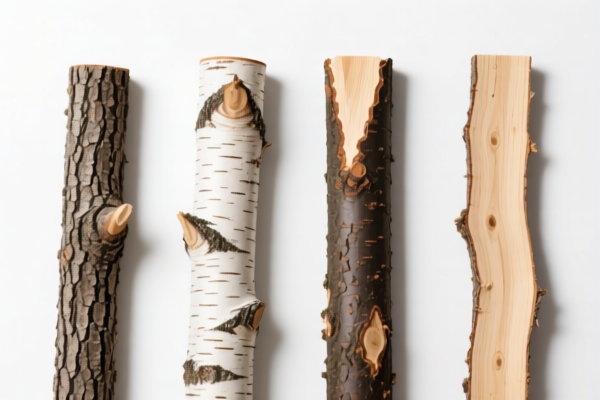
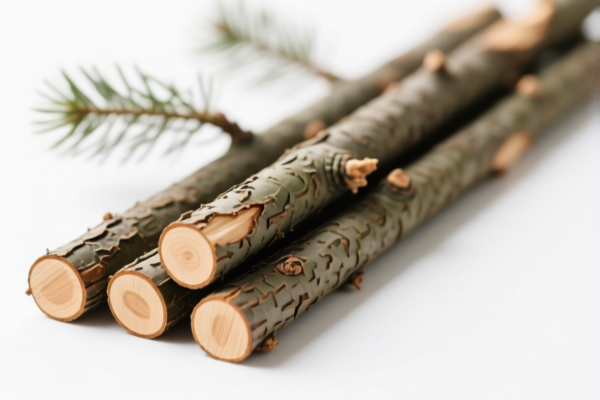
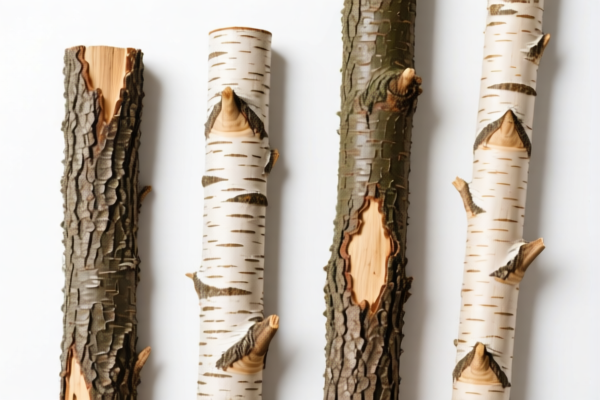
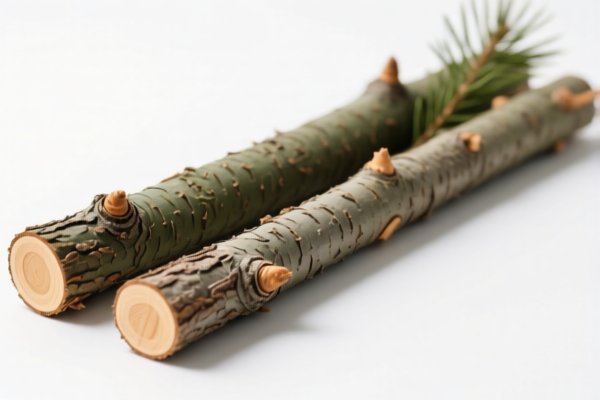
AI Analysis
🌲 Roughly Squared Coniferous Timber (Pine/Spruce/Fir etc.)
🌐 HS Code Reference & Customs Clearance Guide | 2026 Latest Tariff Analysis | Professional Clearance Strategy
📌 I. Product Definition: What is "Roughly Squared Coniferous Timber"?
Roughly Squared Coniferous Timber refers to wood from coniferous trees (such as pine, spruce, fir, larch) that has been sawn or chipped lengthwise but retains a relatively rough, unplaned surface. It is not yet precision-milled into flooring, furniture components, or moldings.
In international trade, the classification depends heavily on the processing level (how "rough" or "squared" it is) and the wood species. For Pine timber specifically, the provided data indicates a consistent tax burden due to US trade policies.
⚠️ Key Distinction:
- Roughly Squared/Unsawn: Classified under Chapter 44, Heading 4403 (Wood prepared for carpentry).
- Moulding/Profiled: Classified under Chapter 44, Heading 4409 (Wood continuously shaped along any of its edges).
- Sawn Planed/Finely Worked: Classified under Chapter 44, Heading 4407 (Wood sawn or chipped lengthwise).
📦 II. HS Code Classification Details (Based on Provided Data)
The following HS Codes are derived from the provided dataset for Pine Roughly Squared Coniferous Timber. Note that all listed codes carry the same tax structure due to specific US trade regulations.
| HS Code | Summary/Logic | Product Description & Application |
|---|---|---|
4403.21.01.25 |
Matching Log & Wood Category Based on logic from other categories. |
Roughly Squared Pine Timber. Fits the broad definition of pine timber, matching the category of logs and raw wood. Used for initial construction framing or bulk processing. |
4403.21.01.20 |
Wood Form/Shape Match Matches "Roughly Sawn or Un-sawn" category. |
Roughly Squared Pine Timber. Explicitly matches the wood form of "rough sawn" or "un-sawn" timber. Ideal for rough carpentry, scaffolding, or further milling. |
4409.10.40.10 |
Moulding Logic Match Material: Pine; Shape: Wood. |
Pine Timber. Matches the logic of "wood moulding pieces." Even if roughly squared, if it has continuous shaping along edges, it may fall here. |
4407.11.00.42 |
Sawn/Coarsely Made Match Material: Pine; Shape: Sawn/Coarse Wood. |
Pine Timber. Material matches Pine category; shape matches "sawn/coarsely worked" wood features. This is a standard classification for commercially prepared pine planks/lumber. |
4409.10.40.90 |
Moulded Piece Logic Material: Pine; Shape: Consistent with wood molded parts. |
Pine Timber. Material explicitly corresponds to Pine; shape is consistent with wood molded components. |
4407.11.00.52 |
Longitudinal Sawing Match Material: Pine; Shape: Longitudinal Sawn Softwood. |
Pine Timber. Material matches Pine; shape belongs to "longitudinally sawn coniferous wood" processed form. Common for dimensional lumber (2x4s, etc., though "roughly squared" implies less finish). |
🔍 Important Note:
- All listed HS Codes fall under Chapter 44 (Wood and Articles of Wood).
- The distinction between4403(Prepared wood/Roughly squared) and4407(Sawn/Planed) or4409(Moulding) depends on the degree of machining.
- All codes above incur the same total tax rate as per the provided data.
💰 III. 2026 Latest Tariff Rate Breakdown (Including Surcharges & Policy Add-ons)
✅ Applicable Country: United States (US)
✅ Country of Origin: China (CN)
✅ Effective Date: Current US Trade Policy (Section 301 & IEEPA)
🎯 1. All Listed HS Codes (4403.21.01.25, 4403.21.01.20, 4409.10.40.10, 4407.11.00.42, 4409.10.40.90, 4407.11.00.52)
| Item | Detail |
|---|---|
| Basic Tariff | 0.0% (Ad Valorem) |
| Section 301 Additional Tariff | +25.0% |
| Section 122 Tariff (IEEPA) | +10.0% |
| Total Tax Rate | 35.0% |
| Tax Calculation | CIF Value × 35% |
| De Minimis Exemption | ❌ Not Available |
| Legal Basis Path | Section 301 (USITC) + IEEPA Section 122 → Applies to all listed Pine Wood HS Codes |
📌 Explanation:
- 0% Basic Tariff: Standard MFN (Most Favored Nation) rate for wood products is often 0% or very low.
- 25% Additional Tariff: Imposed under Section 301 of the Trade Act of 1974 against Chinese imports. This is the primary driver of the high cost.
- 10% Section 122 Tariff: Imposed under IEEPA (International Emergency Economic Powers Act), often related to specific strategic concerns or broad trade adjustments.
- Total 35%: This is a high tariff barrier. Importers must factor this into the landed cost.
🛠️ IV. Customs Clearance Practical Advice (Battle-Proven Guide)
✅ 1. Required Documentation Checklist (Missing Any = Delay)
| Document | Required | Notes |
|---|---|---|
| ✅ Commercial Invoice | ✔️ | Must clearly state "Roughly Squared Coniferous Timber (Pine)" and HS Code. |
| ✅ Packing List | ✔️ | Detail dimensions, weight, and number of bundles/pallets. |
| ✅ Certificate of Origin (CO) | ✔️ | To prove origin is China (subject to 35% tariff). If originating elsewhere, request exemption. |
| ✅ Phytosanitary Certificate | ✔️ | Crucial for Wood. Issued by the country of export’s plant protection agency. Proves freedom from pests/diseases. |
| ✅ Fumigation Certificate | ✔️ | If wood is not ISPM 15 compliant (treated wood), fumigation is mandatory. |
| ✅ ISPM 15 Marking | ✔️ | Wood packaging (pallets, crates) MUST have the IPPC mark. |
| ✅ Product Description | ✔️ | Specify if it is "Untreated" or "Treated" and dimensions (e.g., 2x4, rough sawn). |
✅ 2. Declaration Tips (Critical for Avoiding Penalties)
🔥 “Accurate Description, Clear Origin, and Proper Treatment are Key!”
| Scenario | Correct Declaration | Wrong Approach |
|---|---|---|
| Roughly Squared Pine | 4403.21.01.20 or 4403.21.01.25 |
Misdeclaring as "Finished Lumber" (4407) to seek lower duty → Audit Risk. |
| Moulded/Pine Trim | 4409.10.40.10 or 4409.10.40.90 |
If not moulded, declaring as 4409 → Rejection. |
| Sawn Pine Planks | 4407.11.00.42 or 4407.11.00.52 |
Ensure it matches "sawn/coarsely worked" definition. |
| Wood Packaging | Separate line item | Mixing wood packaging with product → Phytosanitary Hold. |
✅ 3. Special Considerations
| Issue | Handling Advice |
|---|---|
| Pest Control | Ensure ISPM 15 compliance. Untreated wood will be destroyed or re-exported. |
| Origin Fraud | Do not misdeclare origin as Vietnam/Malaysia if made in China. US Customs (CBP) uses advanced tracking. |
| Valuation | Declare accurate CIF value. Under-declaration leads to severe penalties. |
| Classification Dispute | If unsure between 4403 (Rough) and 4407 (Sawn), consult a customs broker. 4403 is for less processed; 4407 is for more processed. |
🌍 V. Global Market Comparison (2026)
| Country/Region | Recommended HS Code | Tariff Rate | Notes |
|---|---|---|---|
| 🇺🇸 USA | 4403 / 4407 / 4409 (Pine) |
35% (Total) | High due to Section 301 + IEEPA. |
| 🇨🇳 China | 4403 / 4407 |
Low (0-5%) | Export duty may apply. |
| 🇪🇺 EU | 4403 / 4407 |
0-3% | No Section 301 equivalent, but strict phytosanitary rules. |
| 🇯🇵 Japan | 4403 / 4407 |
0% | No significant tariffs, but high inspection standards. |
📌 Conclusion:
- USA is the most expensive market for Chinese-made pine timber due to 35% total tariffs.
- EU and Japan are more cost-effective but require strict phytosanitary compliance.
- Consider diversifying supply chains (e.g., sourcing from non-China origins) if targeting the US market to avoid 35% duties.
📌 VI. Common Mistakes & Pitfalls
❌ Mistake 1: Declaring "Roughly Squared" as "Finished Lumber"
👉 Result: Misclassification → Penalties + Back Taxes.
👉 Fix: Use accurate HS Code based on processing level.
❌ Mistake 2: Ignoring Phytosanitary Requirements
👉 Result: Cargo held at port → Storage fees + Destruction risk.
👉 Fix: Obtain Phytosanitary Certificate and ISPM 15 marking.
❌ Mistake 3: Under-declaring Value
👉 Result: CBP Audit → Fines up to 40% of duty evaded.
👉 Fix: Declare full CIF value.
✅ Correct Declaration Example:
"Roughly Squared Coniferous Timber, Pine Species, Untreated, ISPM 15 Compliant, HS Code: 4403.21.01.20, Origin: China"
🎯 VII. Conclusion: Professional Clearance, Cost Control, Efficiency
🎯 Key Takeaways:
🔹 "Roughly Squared Pine" incurs 35% tariff in the US.
🔹 Phytosanitary compliance is non-negotiable.
🔹 Accurate HS Code selection prevents delays.
📌 Pro Tip:
If your pine timber is sourced from Vietnam, Canada, or Russia, you may benefit from lower or zero tariffs in the US (depending on FTAs and trade status).
Recommendation: Apply for a Binding Ruling from US CBP if uncertain about HS Code classification.
📣 Immediate Action:
📞 Contact a licensed customs broker + Provide Phytosanitary Certificate + Verify HS Code
🚀 Smooth Clearance, Minimize Costs, Maximize Profit!
✨ Professional Customs Clearance Starts with Precise Classification!
💼 Every Percent Saved is Pure Profit!
Customer Reviews
About HS Code Classification
The Harmonized System (HS) is an internationally standardized nomenclature developed by the World Customs Organization (WCO) to classify traded products. Over 200 countries use the HS system as the basis for customs tariffs, trade statistics, and import/export regulations.
Each HS code follows a hierarchical structure:
- Chapter (2 digits) — Broad category of goods (e.g., Chapter 84: Machinery and Mechanical Appliances)
- Heading (4 digits) — More specific grouping within the chapter
- Subheading (6 digits) — Internationally standardized breakdown, used by all WCO member countries
- National subdivisions (8-10 digits) — Country-specific extensions for further classification, such as US HTSUS 10-digit codes
Correct HS code classification is essential for smooth customs clearance, accurate duty payment, and compliance with trade regulations. Misclassification can lead to customs delays, overpayment of duties, or penalties.
When importing from CN to US, the applicable tariff rates may include:
- Most-Favored-Nation (MFN) rate — The standard duty rate applied to WTO members
- General rate — Applied to countries without trade agreements
- Trade remedy duties — Additional tariffs such as Section 301 (anti-dumping), Section 232 (national security), or countervailing duties
The information provided on this page is for reference purposes only. For official classification, please consult with your local customs authority or a licensed customs broker.