Roughly Squared Eucalyptus Wood
CN → US| HS Code | Tariff Rate | Origin | Destination | Doc |
|---|---|---|---|---|
| 9403910080 | 35.0% | CN | US | Official Doc |
| 9403910010 | 35.0% | CN | US | Official Doc |
Product Images
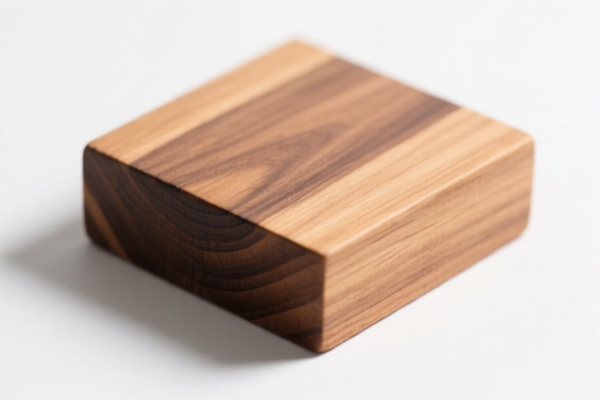
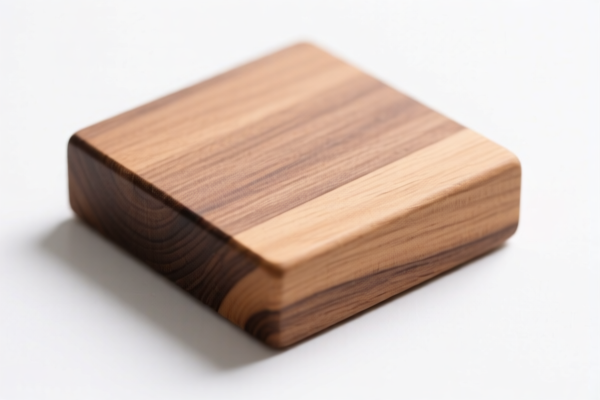
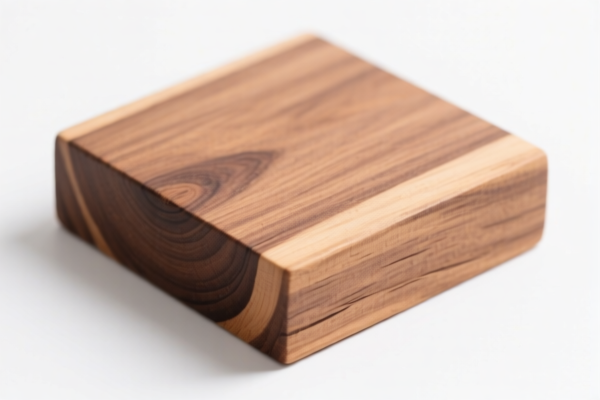
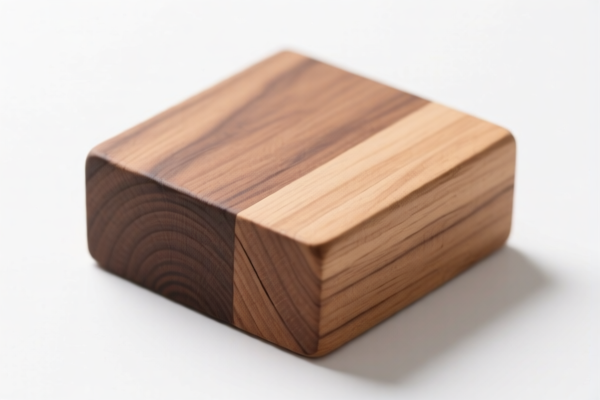
AI Analysis
🌿 Eucalyptus Wood, Roughly Squared (Raw Timber)
🌐 HS Code Classification & Customs Clearance Guide | 2026 Latest Tariff Analysis | Professional Entry Strategy
📌 One, Product Definition and Classification: What is "Roughly Squared Eucalyptus Wood"?
"Roughly Squared Eucalyptus Wood" refers to timber that has been sawn or shaped roughly into a rectangular cross-section but has not undergone further planing, sanding, or finishing to become dimensional lumber. In international trade, the key distinction lies in whether the wood is processed into furniture parts or remains as semi-processed raw material.
1. Semi-Processed Timber (The "Raw" Category):
Logs or planks that have been squared off on at least four sides but retain rough surfaces. These are typically used as raw materials for further processing (e.g., into furniture, flooring, or plywood).
2. Furniture Parts (The "Finished" Category):
If this wood is specifically cut, shaped, or sized to be a direct component of furniture (e.g., a pre-cut leg or shelf support) and is described as a "part of furniture," it falls under a different heading.
⚠️ Critical Distinction Point:
- If the item is described generically as "wood" or "timber" without being explicitly defined as a "part of furniture" in the commercial invoice, it is often classified as raw timber (Heading 4407 or 4409).
- However, per your provided data , the specific HS codes provided fall under 9403.91 ("Parts of wood" for Other Furniture). This implies the goods are being declared specifically as furniture components rather than raw lumber.
- Warning: If you ship "Roughly Squared Wood" but declare it as "Furniture Parts," customs may scrutinize whether it truly qualifies as a "part" or is raw material. Misclassification can lead to delays.
📦 Two, HS Code Classification Details (Based on Provided Data)
The following HS codes are extracted strictly from your provided <DATA>. These codes specifically categorize these wood items as Parts of Other Furniture.
| HS Code | Product Description | Specific Application / Context | Tax Rate Structure |
|---|---|---|---|
9403.91.00.80 |
Other furniture and parts thereof: Parts: Of wood Other | General wood parts for various types of furniture (non-play yard enclosures). | Base: 0.0% Add-on: 25.0% Total: 25.0% |
9403.91.00.10 |
Other furniture and parts thereof: Parts: Of wood For play yards and other enclosures for confining children | Specifically for baby play yards, cribs, or child safety gates. | Base: 0.0% Add-on: 25.0% Total: 25.0% |
🔍 Key Insight:
- Both codes share the same total tax rate of 25.0% (0% Base + 25% Add-on).
- The distinction is purely functional: General Furniture Parts (...80) vs. Child Safety/Play Enclosures (...10).
- "Roughly Squared" suggests the wood is semi-finished. If these parts are specifically intended for a baby play yard, use9403.91.00.10. For general furniture (tables, chairs, cabinets), use9403.91.00.80.
💰 Three, 2026 Latest Tariff Rate Details (Detailed Breakdown)
✅ Applicable Country: United States (US)
✅ Country of Origin: China (CN) (Implied by the 25% add-on tariff structure typical of US-China trade tensions)
✅ Effective Time: Ongoing (as per standard Section 301 tariffs)
🎯 1. HS Code 9403.91.00.80 – Wood Parts for Other Furniture (General)
| Item | Content |
|---|---|
| Basic Tariff | 0.0% (ad valorem) |
| Additional Tariff (Section 301) | +25.0% |
| Total Tax Rate | 25.0% |
| Tax Calculation | CIF Value × 25% |
| De Minimis Exemption | ❌ Not Applicable (High-value furniture parts generally do not qualify for de minimis entry under current rules if classified here). |
| Legal Basis | HTSUS: 9403.91.00.80 → Section 301 Footnote 9903.88.01 (or equivalent add-on list). |
📌 Explanation:
- The 0% base rate indicates that wood furniture parts are generally not subject to the standard MFN (Most Favored Nation) duty.
- The 25% add-on is the crucial cost driver. This is likely due to the Section 301 Trade Act tariffs on Chinese goods.
- Total Cost Impact: For every $1,000 of goods, you pay $250 in duties.
🎯 2. HS Code 9403.91.00.10 – Wood Parts for Play Yards/Child Enclosures
| Item | Content |
|---|---|
| Basic Tariff | 0.0% |
| Additional Tariff (Section 301) | +25.0% |
| Total Tax Rate | 25.0% |
| Tax Calculation | CIF Value × 25% |
| De Minimis Exemption | ❌ Not Applicable |
| Legal Basis | HTSUS: 9403.91.00.10 → Section 301 Add-on |
📌 Note:
- Despite being "child safety" items, they do not receive a duty-free status in this specific tariff line.
- The rate is identical to general furniture parts in this dataset.
🛠️ Four, Customs Clearance Practical Advice
✅ 1. Required Documentation Checklist
| Document | Mandatory? | Description |
|---|---|---|
| ✅ Commercial Invoice | ✔️ | Must clearly state: "Wood Parts for [Furniture Type]" or "Wood Parts for Play Yard." Do not just write "Wood." |
| ✅ Packing List | ✔️ | Detail the weight and dimensions. Specify if the wood is rough-squared vs. planed. |
| ✅ Bill of Lading (B/L) | ✔️ | Ensure description matches invoice. |
| ✅ Product Specifications | ✔️ | Explain how these "roughly squared" pieces fit into the final furniture assembly. Are they legs? Shelves? Frames? |
| ✅ Proof of Non-Assembly | ✔️ | If claiming they are "parts" and not "furniture," prove they require further assembly/work to be functional. |
✅ 2. Classification Tips (Avoiding Pitfalls)
| Scenario | Correct Approach | Incorrect Approach |
|---|---|---|
| Shipping Raw Lumber | If it's just logs/planks, do not use 9403 codes. Use 4407/4409. Using 9403 for raw wood is misclassification. | Declaring raw timber as "Furniture Parts" to save time. |
| Mixed Shipment | Separate invoices for "Play Yard Parts" (...10) and "General Furniture Parts" (...80). |
Combining them under one generic code. |
| Rough vs. Planed | "Roughly Squared" is still a "Part" if it's cut to size for assembly. | Assuming "Rough" means it must be raw material (Chapter 44). |
🔥 Golden Rule:
"If it’s cut to fit a specific furniture item, it’s a PART (9403). If it’s generic lumber for sale to be cut later, it’s TIMBER (4407/4409)."
Misclassifying generic timber as furniture parts can lead to penalties because the duty structure differs if raw timber were applicable (though in this dataset, we only have 9403 options).
✅ 3. Special Considerations for "Roughly Squared"
- Definition of "Part": Under HTSUS, a "part" must be identifiable as a component of the finished article. If the "roughly squared" wood is just a raw slab, Customs may reject the 9403 classification.
- Evidence Needed: Provide assembly diagrams showing where these wooden pieces fit in the final product.
- Value Declaration: Since the base tariff is 0%, the duty is purely based on the added 25%. Ensure the declared value (CIF) is accurate. Under-declaring to save on the 25% duty is a high-risk offense.
🌍 Five, Global Market Comparison (2026)
| Country/Region | Recommended HS Code | Tariff Rate | Notes |
|---|---|---|---|
| 🇺🇸 USA | 9403.91.00.80 / .10 |
25.0% | High tariff due to Section 301. |
| 🇨🇳 China | 4407 or 9403 |
0-5% | Depends on import type. Domestic processing may have different rules. |
| 🇪🇺 EU | 9403.91 |
~0-2% | No Section 301 equivalent. Much cheaper if shipped from non-China origins. |
| 🇬🇧 UK | 9403.91 |
~0-2% | Post-Brexit tariffs similar to EU for many wood products. |
📌 Conclusion:
- The 25% US tariff is the primary cost concern.
- If your "Roughly Squared Eucalyptus Wood" is intended for final assembly in the US, ensure it is properly documented as Parts to match the9403classification provided.
- If it is raw material, you should technically look at Chapter 44 codes, which are not in your provided<DATA>. Using9403for raw timber is risky.
📌 Six, Common Errors & Pitfalls
❌ Error 1: Declaring raw logs as "Furniture Parts"
👉 Consequence: Customs may reclassify to Chapter 44 (if applicable) or penalize for misdeclaration.
✅ Fix: Only use 9403 if the wood is cut/shaped specifically for a furniture item.
❌ Error 2: Ignoring the "Play Yard" distinction
👉 Consequence: Using .80 for baby crib parts might trigger audits if the product description doesn't match.
✅ Fix: Be precise. If it’s for a baby play yard, use .10.
❌ Error 3: Under-declaring Value
👉 Consequence: 25% duty is significant. Small under-declarations lead to large absolute duty differences and potential fines.
✅ Fix: Accurate CIF valuation.
🎯 Seven, Conclusion: Precise Declaration Saves Money
🎯 Key Takeaway:
🔹 Roughly Squared Wood = Semi-finished Part?
If yes → Use 9403.91.00.80 (General) or .10 (Play Yards).
Tax: 25% Total.🔹 Roughly Squared Wood = Raw Lumber?
If yes → Do NOT use 9403. You need Chapter 44 codes (not in your dataset).🔹 Action Item:
Prepare assembly drawings to prove these are "Parts" and not raw lumber. This justifies the9403classification and avoids customs delays.
📌 Pro Tip:
Since the base tariff is 0%, the entire cost is in the 25% add-on.
If you are shipping from a country with a Free Trade Agreement (FTA) with the US (e.g., Mexico, Canada, Australia), check if the wood parts qualify for duty-free entry under USMCA or other agreements.
However, if the wood is processed in China, the 25% Section 301 tariff likely still applies.
📣 Immediate Action:
📞 Verify with your Customs Broker:
"Are these 'Roughly Squared Eucalyptus Wood' pieces identifiable as components of specific furniture (e.g., legs, shelves)?"
If YES → Declare as 9403.91.00.80 (or .10).
If NO → They are likely Raw Timber (4407), and you need a different HS code.
✨ Professional Clearance Starts with Accurate Classification!
💼 25% Tax is High – Don't Let Misclassification Cost You More!
Customer Reviews
About HS Code Classification
The Harmonized System (HS) is an internationally standardized nomenclature developed by the World Customs Organization (WCO) to classify traded products. Over 200 countries use the HS system as the basis for customs tariffs, trade statistics, and import/export regulations.
Each HS code follows a hierarchical structure:
- Chapter (2 digits) — Broad category of goods (e.g., Chapter 84: Machinery and Mechanical Appliances)
- Heading (4 digits) — More specific grouping within the chapter
- Subheading (6 digits) — Internationally standardized breakdown, used by all WCO member countries
- National subdivisions (8-10 digits) — Country-specific extensions for further classification, such as US HTSUS 10-digit codes
Correct HS code classification is essential for smooth customs clearance, accurate duty payment, and compliance with trade regulations. Misclassification can lead to customs delays, overpayment of duties, or penalties.
When importing from CN to US, the applicable tariff rates may include:
- Most-Favored-Nation (MFN) rate — The standard duty rate applied to WTO members
- General rate — Applied to countries without trade agreements
- Trade remedy duties — Additional tariffs such as Section 301 (anti-dumping), Section 232 (national security), or countervailing duties
The information provided on this page is for reference purposes only. For official classification, please consult with your local customs authority or a licensed customs broker.