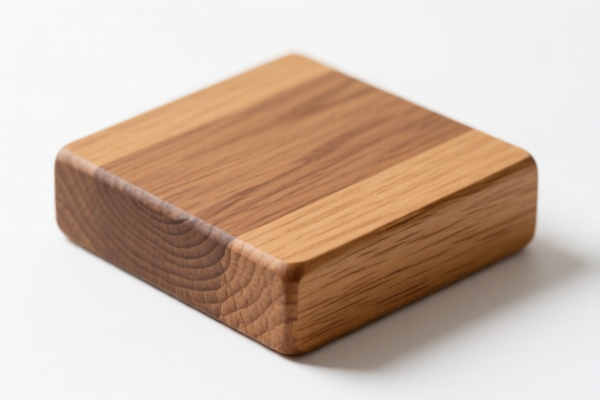
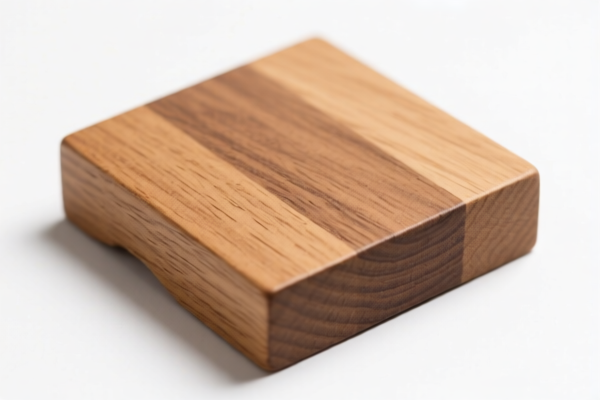
Roughly Squared Oak Wood (Barrel Making Grade)
CN → US| HS Code | Tariff Rate | Origin | Destination | Doc |
|---|---|---|---|---|
| 4403910040 | 35.0% | CN | US | Official Doc |
| 4403910020 | 35.0% | CN | US | Official Doc |
| 4407910063 | 35.0% | CN | US | Official Doc |
| 4409299100 | 35.0% | CN | US | Official Doc |
| 4403910040 | 35.0% | CN | US | Official Doc |
Product Images


AI Analysis
🪵 Roughly Squared Oak Wood (Barrel Making Grade)
🌐 HS Code Reference & Customs Clearance Guide | 2026 Latest Tariff Analysis | Professional Clearance Strategy
📌 I. Product Definition & Classification: What is "Roughly Squared Oak Wood"?
Roughly Squared Oak Wood, specifically designated for Barrel Making, refers to oak timber that has been sawn or hewn into a square or rectangular cross-section but is not yet planed or precision-machined for final furniture or flooring use. In international trade, its classification depends heavily on the processing stage (sawing vs. shaping) and dimensions.
It is primarily categorized under Chapter 44 (Wood and articles of wood; wood charcoal). The key distinction lies in whether it is considered: 1. Rough Timber: Simply sawn/hewn into squares (Chapters 44.03). 2. Sawn Wood: Thickness > 6mm, longitudinally sawn (Chapter 44.07). 3. Shaped Wood: Profiled edges, ready for cooperage assembly (Chapter 44.09).
⚠️ Critical Distinction Point:
- If the wood is not further processed than sawing/hewing into squares → Classify under 4403.91.
- If it is sawn to thickness > 6mm but not yet shaped into barrel staves → Classify under 4407.91.
- If it has pre-cut grooves/profiles for barrel assembly → Classify under 4409.29.
📦 II. HS Code Classification Details (2026 Latest Tariff Authority Cross-Reference)
Based on the provided data, here are the specific HS Codes and their corresponding tax implications. Note that all listed codes incur a Total Tax Rate of 35.0%.
| HS Code | Product Description | Application Scenario | Tax Detail Breakdown |
|---|---|---|---|
4403.91.00.40 |
Material: Oak; Form: Roughly Squared/Hewn; Class: Unprocessed Timber | Raw logs hewn into square shapes, minimal processing | Base Tariff: 0.0% Additional Tariff: 25.0% Section 122 Tariff: 10% Total: 35.0% |
4403.91.00.20 |
Material: Oak; Form: Rough/Cubed Sawing; Class: Rough-Sawn Oak Timber | Oak timber cut into rough blocks/squares, typical for further cooperage processing | Base Tariff: 0.0% Additional Tariff: 25.0% Section 122 Tariff: 10% Total: 35.0% |
4407.91.00.63 |
Material: Oak; Form: Rough Squared; Class: Longitudinally Sawn Wood (>6mm thick) | Oak planks/blocks >6mm thick, sawn lengthwise, not yet planed | Base Tariff: 0.0% Additional Tariff: 25.0% Section 122 Tariff: 10% Total: 35.0% |
4409.29.91.00 |
Material: Oak; Form: Rough Squared; Class: Shaped Non-Coniferous Wood | Oak wood with shaped profiles (e.g., initial cooperage cuts), non-coniferous | Base Tariff: 0.0% Additional Tariff: 25.0% Section 122 Tariff: 10% Total: 35.0% |
4403.91.00.40 |
Material: Oak; Form: Roughly Squared; Class: Unprocessed Timber Category | Reiteration of unprocessed rough oak, identical to first entry | Base Tariff: 0.0% Additional Tariff: 25.0% Section 122 Tariff: 10% Total: 35.0% |
🔍 Key Reminder:
- All listed HS Codes for Oak Wood attract a 35% Total Tax Rate.
- The Base Tariff is 0%, meaning the entire tax burden comes from Additional Tariffs (25%) and Section 122 Tariffs (10%).
- This is a high-tariff category for oak products originating from China, requiring precise classification to avoid misdeclaration penalties.
💰 III. 2026 Latest Tariff Rate Breakdown (Including Surcharges & Policy Add-ons)
✅ Applicable Country: United States (US)
✅ Origin: China (CN)
✅ Effective Date: From 2025/2026 (Current Trade Policy)
🎯 1. Why is the Tax Rate 35%?
| Component | Rate | Explanation |
|---|---|---|
| Base Tariff | 0% | Standard Most-Favored-Nation (MFN) rate for certain unprocessed/rough wood products is often 0%. |
| Additional Tariff (Section 301) | +25% | Applied under USITC Footnote 9903.88.01 (or similar) as part of the "Section 301" trade war tariffs on Chinese goods. |
| Section 122 Tariff | +10% | Specific additional tariff applied under US trade laws (Section 122 of the Trade Expansion Act of 1962), often targeting specific raw materials or strategic imports. |
| Total Effective Rate | 35% | Sum of 0% + 25% + 10%. This is a fixed high rate for these HS codes. |
| De Minimis Exemption | ❌ Not Applicable | Shipments cannot use the $800 de minimis exemption. These goods are subject to full duty calculation. |
| Legal Basis Path | IEEPA:9903.01.25 → USITC:4403.91.00.40 → FOOTNOTE:9903.88.01 |
The tax is legally grounded in emergency economic powers and specific USITC footnotes for Chinese-origin goods. |
📌 Explanation:
- The 25% Additional Tariff is the core penalty under "Section 301" targeting Chinese manufacturing and raw materials.
- The 10% Section 122 Tariff is a separate national security/trade remedy tariff.
- Total 35% makes exporting rough oak wood from China to the US extremely cost-prohibitive compared to domestic or non-China sources.
🛠️ IV. Customs Clearance Practical Advice (Battle-Tested Pitfall Guide)
✅ 1. Required Documentation Checklist (Missing items = Delay/Seizure)
| Document | Required | Notes |
|---|---|---|
| ✅ Commercial Invoice | ✔️ | Must clearly state "Roughly Squared Oak Wood," HS Code, Country of Origin (China), and CIF value. |
| ✅ Packing List | ✔️ | Detail weight, volume, and number of bundles/stacks. |
| ✅ Phytosanitary Certificate | ✔️ | Mandatory. Oak is prone to pests (e.g., acorn weevil, oak bark beetle). Must show ISPM 15 compliance (heat-treated/fumigated). |
| ✅ Fumigation Certificate | ✔️ | If phytosanitary cert is not sufficient, a separate fumigation cert may be required by CBP. |
| ✅ Bill of Lading (B/L) | ✔️ | Must match invoice and packing list exactly. |
| ✅ Certificate of Origin (CO) | ✔️ | Proves origin from China. Essential for applying (or disputing) tariffs. |
| ✅ Product Photos | ✔️ | Show cross-section to confirm "Roughly Squared" vs. "Planed." |
✅ 2. Declaration Tips (Key Mnemonics)
🔥 "Rough is 4403, Sawn is 4407, Shaped is 4409. All 35%, No Exemption!"
| Scenario | Correct HS Code | Wrong Declaration | Consequence |
|---|---|---|---|
| Raw logs hewn into squares | 4403.91.00.40 / 4403.91.00.20 |
"Furniture Wood" or "Planks" | Misclassification → 35% applies anyway, but potential penalties for false declaration. |
| Sawn planks >6mm thick | 4407.91.00.63 |
"Unprocessed Timber" | If truly sawn, misdeclaration may lead to duty evasion claims. |
| Pre-cut barrel staves | 4409.29.91.00 |
"Raw Timber" | "Shaped" wood may have different regulatory scrutiny. |
| Any of the above | N/A | Claiming "De Minimis" ($800 exemption) | Seizure & Penalty. Wood is explicitly excluded from de minimis for certain origins/tariffs. |
✅ 3. Special Circumstances Handling
| Situation | Recommendation |
|---|---|
| Oak from Vietnam/Malaysia | If processed significantly in Vietnam, may claim Country of Origin: Vietnam. Check if Vietnam-origin oak is exempt from Section 301/122 tariffs. |
| Mixed Wood Shipment | If oak is mixed with non-tariffed woods, separate declaration is required. Misdeclaration of non-oak as oak can lead to severe penalties. |
| Wood Treatment Proof | Provide ISPM 15 marks (heat treatment stamp) on packaging. CBP frequently inspects wood for pests. Lack of stamp = Rejection. |
| Valuation Dispute | CBP may question the CIF value. Provide payment proof, purchase contract, and insurance invoices to prove declared value. |
🌍 V. Global Market Clearance Comparison (2026 Latest)
| Country/Region | Recommended HS Code | Tariff Rate (China Origin) | Certification Requirement | Notes |
|---|---|---|---|---|
| 🇺🇸 USA | 4403.91.00.40 / 4407.91.00.63 |
35% (0% + 25% + 10%) | Phytosanitary + ISPM 15 | Highest cost market. Avoid unless margin is high. |
| 🇨🇳 China | 4403.91.00.40 |
0% (Domestic) | None | N/A for export. |
| 🇪🇺 EU | 4403.91.00 |
0% (Standard MFN) | EUTR (EU Timber Regulation) | No 301/122 tariffs. EU is a better market for cost structure. |
| 🇯🇵 Japan | 4403.91.00 |
0% (Standard MFN) | IPPC Mark | Competitive tariff environment. |
| 🇬🇧 UK | 4403.91.00 |
0% (Standard MFN) | IPPC Mark | Post-Brexit, UK applies its own tariff schedule, generally lower than US. |
📌 Conclusion:
- USA is the most expensive market due to the 35% combined tariff.
- EU, Japan, and UK offer 0% standard tariffs (plus potential FTAs if applicable), making them far more competitive for Chinese oak wood exports.
- Strategy: If selling to the US, ensure your product justifies the 35% cost or consider third-country transshipment (risky, requires legal advice) or origin shifting.
📌 VI. Common Errors & Pitfalls Guide (Lessons Learned)
❌ Error 1: Using "De Minimis" for small shipments
👉 Consequence: CBP seizes the entire shipment. Wood products from China are explicitly excluded from $800 exemption under Section 301/122.
Solution: Always declare formally, pay 35% duty, or use alternative routes/markets.
❌ Error 2: Misdeclaring "Sawn Planks" as "Raw Logs"
👉 Consequence: Incorrect HS Code (e.g., using a lower tariff code if one existed) leads to back duties + penalties. In this case, all are 35%, but misdeclaration triggers audit flags.
Solution: Accurately describe processing level (Hewn vs. Sawn vs. Shaped).
❌ Error 3: Missing Phytosanitary Certificate
👉 Consequence: Shipment rejected/destroyed at port. Wood is a high-risk category for invasive species.
Solution: Obtain valid Phytosanitary Cert and ISPM 15 marking before shipment.
❌ Error 4: Incorrect Country of Origin Declaration
👉 Consequence: If shipped from China but declared as "Vietnam" without transformation, fraud charges.
Solution: Ensure substantial transformation occurs if claiming non-China origin.
✅ Correct Declaration Example:
"Roughly Squared Oak Wood, Barrel Making Grade, Heat-Treated (ISPM 15), HS Code 4403.91.00.40, Origin: China, CIF Value: $X"
🎯 VII. Conclusion: Professional Declaration, Cost Optimization!
🎯 Remember the Key Takeaway:
🔹 "Oak Wood from China to US = 35% Tax. No Exemptions. Full Declaration."
🔹 "35% = 0% Base + 25% Section 301 + 10% Section 122."
🔹 "Phytosanitary Cert is Mandatory. Without it, No Entry."
📌 Pro Tip:
- If your oak wood is destined for the EU or Asia, leverage the 0% tariff advantage.
- For US-bound shipments, conduct a pre-shipment audit to ensure all documents (Invoice, Packing List, Phyto Cert) are flawless.
- Consider consulting a licensed customs broker to explore any potential exclusions or waivers (though rare for these HS codes).
📣 Immediate Action:
📞 Contact a Customs Broker + Verify Phytosanitary Status + Calculate Landed Cost (CIF + 35%)
🚀 Optimize Your Supply Chain: Choose the right market to avoid the 35% US tariff!
✨ Professional Clearance Starts with Accurate Classification!
💼 Every Percent of Tariff Counts! Protect Your Margins!
Customer Reviews
About HS Code Classification
The Harmonized System (HS) is an internationally standardized nomenclature developed by the World Customs Organization (WCO) to classify traded products. Over 200 countries use the HS system as the basis for customs tariffs, trade statistics, and import/export regulations.
Each HS code follows a hierarchical structure:
- Chapter (2 digits) — Broad category of goods (e.g., Chapter 84: Machinery and Mechanical Appliances)
- Heading (4 digits) — More specific grouping within the chapter
- Subheading (6 digits) — Internationally standardized breakdown, used by all WCO member countries
- National subdivisions (8-10 digits) — Country-specific extensions for further classification, such as US HTSUS 10-digit codes
Correct HS code classification is essential for smooth customs clearance, accurate duty payment, and compliance with trade regulations. Misclassification can lead to customs delays, overpayment of duties, or penalties.
When importing from CN to US, the applicable tariff rates may include:
- Most-Favored-Nation (MFN) rate — The standard duty rate applied to WTO members
- General rate — Applied to countries without trade agreements
- Trade remedy duties — Additional tariffs such as Section 301 (anti-dumping), Section 232 (national security), or countervailing duties
The information provided on this page is for reference purposes only. For official classification, please consult with your local customs authority or a licensed customs broker.