Roughly Squared Pine Wood
CN → US| HS Code | Tariff Rate | Origin | Destination | Doc |
|---|---|---|---|---|
| 4403210165 | 35.0% | CN | US | Official Doc |
| 4403220165 | 35.0% | CN | US | Official Doc |
| 4409109040 | 35.0% | CN | US | Official Doc |
| 4409104500 | 35.0% | CN | US | Official Doc |
| 4407110052 | 35.0% | CN | US | Official Doc |
| 4407110042 | 35.0% | CN | US | Official Doc |
Product Images
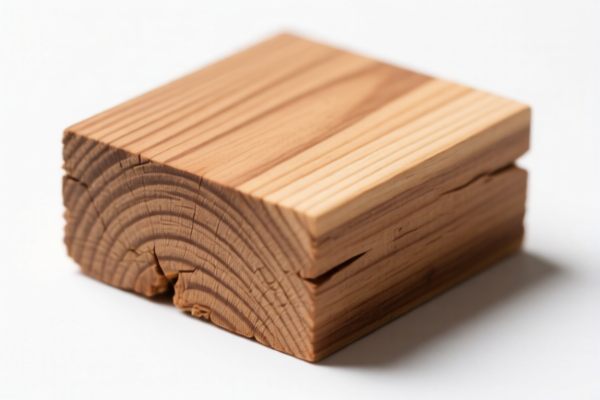
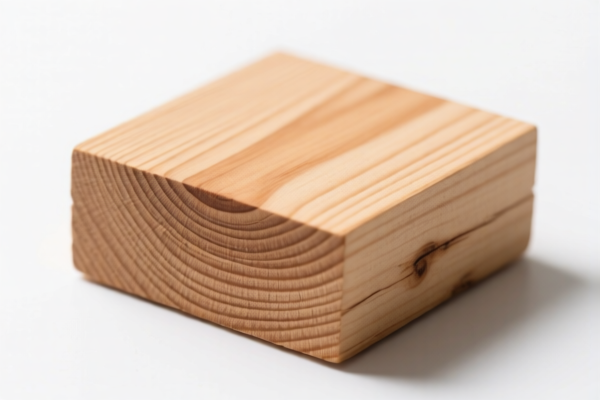


AI Analysis
🌲 Pine Wood (Roughly Squared / Sawn)
🌐 HS Code Reference & Customs Clearance Guide | 2026 Latest Tariff Analysis | Professional Entry Strategy
📌 Part I: Product Definition & Classification – Do You Really Know "Pine Wood"?
Pine wood (Pinus spp.) is one of the most widely traded timber products globally. In international trade, it is categorized based on its processing state and physical dimensions. For "Roughly Squared Pine Wood," the classification depends heavily on whether the wood is in its rough (log) state or already sawn/peeled into planks or beams.
Key Distinctions:
Rough Wood (Logs/Timber): Wood in the rough, stripped of bark or sapwood, but not shaped into precise geometric forms like squared beams. Often includes logs with the smallest cross-sectional dimension ≥15 cm.
Sawn/Peeled Wood: Wood cut lengthwise, sliced, or peeled, with a thickness >6 mm. This includes "Rough" boards that have not been planed or sanded smooth.
⚠️ Critical Classification Point:
- If the wood is roughly squared (cut into rectangular shapes but still rough/unplaned) and meets specific dimension criteria, it may fall under 4403 (Timber in the rough) or 4407 (Sawn wood).
- "Roughly squared" often implies a step between raw logs and finished lumber. If the smallest cross-sectional dimension is ≥15 cm, it is likely 4403.21. If it is thinner (>6mm) but still rough, it is 4407.11.
- Species Matters: Specific pine species (e.g., Eastern White Pine Pinus strobus) have distinct HS codes.
📦 Part II: HS Code Classification Details (2026 Latest Tariff Alignment)
Based on your provided data, here are the relevant HS Codes for Pine Wood, ranging from rough timber to rough-sawn lumber.
| HS Code | Product Description | Key Characteristics | Processing State |
|---|---|---|---|
4403.21.01.65 |
Wood in the rough (other coniferous) | Pine (Pinus spp.) | Smallest cross-sectional dimension ≥15 cm. Roughly squared or raw logs. |
4403.22.01.65 |
Wood in the rough (other coniferous) | Pine (Pinus spp.) | Other pine species, not meeting the ≥15 cm criterion. Roughly squared or raw logs. |
4407.11.00.42 |
Sawn/Peeled Wood (thickness >6mm) | Eastern White Pine (Pinus strobus) OR Red Pine (Pinus resinosa) | Not treated, Rough (unplaned). |
4407.11.00.52 |
Sawn/Peeled Wood (thickness >6mm) | Other Pine (Pinus spp.) | Not treated, Rough (unplaned). |
🔍 Focus on "Roughly Squared":
- If your wood is thick logs/beams (cross-section ≥15cm), use4403.21.01.65.
- If your wood is boards/planks (thin, >6mm) but still rough (not sanded/planed), use4407.11.00.52(for general pine) or4407.11.00.42(if specifically White/Red Pine).
- "Rough" means no surface finishing (no planing, sanding, or tonguing/grooving).
💰 Part III: 2026 Tariff Rate Breakdown (Crucial for Cost Calculation)
✅ Applicable Country: United States (US)
✅ Origin: China (CN) [Assumed based on typical 25% tariff data context]
✅ Effective Date: 2025-11-10 onwards
All HS Codes listed below share the same tariff structure in the provided data.
🎯 1. General Pine Wood – Rough Sawn/Squared (4407.11.00.52)
Description: Other pine, not treated, rough, thickness >6mm.
| Item | Content |
|---|---|
| Base Tariff | 0.0% |
| Section 301 Additional Tariff | +25.0% |
| Total Tax Rate | 25.0% |
| Tax Calculation | CIF Value × 25% |
| De Minimis Exemption | ❌ Not Eligible (Typically, wood products under 301 are excluded from de minimis for small packages if high value, but standard de minimis ($800) may apply if no 301. However, for commercial shipments, 301 applies fully.) |
| Legal Basis | USITC HTS 4407.11.00.52 + 301 Footnote |
📌 Explanation:
- The 25% additional tariff is applied under Section 301 of the Trade Act of 1974, targeting specific Chinese-origin wood products to protect domestic lumber industries.
- Even though the base tariff is 0%, the 25% penalty tariff makes it expensive.
- "Rough" is key here: If you plane or sand it further (e.g., into tongue-and-groove), it might move to 4409, which also carries a 25% additional tariff in the data.
🎯 2. Eastern White Pine / Red Pine – Rough Sawn (4407.11.00.42)
Description: Pinus strobus or Pinus resinosa, not treated, rough, thickness >6mm.
| Item | Content |
|---|---|
| Base Tariff | 0.0% |
| Section 301 Additional Tariff | +25.0% |
| Total Tax Rate | 25.0% |
| Tax Calculation | CIF Value × 25% |
📌 Note: Same rate as general pine. Specific species identification is required for this code.
🎯 3. Rough Timber Logs – ≥15 cm Cross-Section (4403.21.01.65)
Description: Wood in the rough, Pine (Pinus spp.), smallest cross-sectional dimension ≥15 cm.
| Item | Content |
|---|---|
| Base Tariff | 0.0% |
| Section 301 Additional Tariff | +25.0% |
| Total Tax Rate | 25.0% |
| Tax Calculation | CIF Value × 25% |
📌 Note: This applies to larger beams or logs that are roughly squared but not yet sawn into thin boards.
🎯 4. Other Pine Timber – Rough (4403.22.01.65)
Description: Wood in the rough, Other Pine (Pinus spp.).
| Item | Content |
|---|---|
| Base Tariff | 0.0% |
| Section 301 Additional Tariff | +25.0% |
| Total Tax Rate | 25.0% |
| Tax Calculation | CIF Value × 25% |
🛠️ Part IV: Customs Clearance Practical Advice
✅ 1. Documentation Checklist (Non-Negotiable)
| Document | Must Provide? | Purpose |
|---|---|---|
| Commercial Invoice | ✅ Yes | Must clearly state "Pine Wood", "Pinus spp.", "Roughly Squared", and "Unplaned". |
| Packing List | ✅ Yes | Detail dimensions (LxWxH) and quantity. |
| Phytosanitary Certificate | ✅ Yes | Critical for wood! Must be issued by the exporting country’s plant protection organization. Shows no pests/disease. |
| Fumigation Certificate | ✅ Yes | Often required if wood is not ISPM 15 compliant. |
| Bill of Lading / Air Waybill | ✅ Yes | Standard shipping document. |
| Product Photos | ✅ Yes | Show the rough texture (not planed) to justify HS Code 4407 vs 4409. |
✅ 2. Classification Tips (Avoid Pitfalls)
🔥 "Rough" vs. "Finished" is Everything!
- If the wood is planed, sanded, or shaped (tongue/groove), it moves to 4409 (Shaped wood).
- Data Check: HS4409.10.90.40and4409.10.45.00also carry a 25% additional tariff.
- So, does finishing save money? ❌ NO. Both Rough (4407) and Shaped (4409) pine wood from China face 25% additional tariffs.
- Strategy: Ensure your description matches the physical state. If it's rough, declare 4407. If it's shaped, declare 4409. Misdeclaration leads to fines and delays.
✅ 3. Species Identification is Key
- Eastern White Pine (Pinus strobus) and Red Pine (Pinus resinosa) must be explicitly declared for
4407.11.00.42. - All other pines (Ponderosa, Loblolly, etc.) fall under
4407.11.00.52("Other Pine"). - Tip: Have botanical names ready. Customs may inspect or require lab tests if species is disputed.
✅ 4. Special Cases
| Scenario | Advice |
|---|---|
| Treated Wood | If wood is painted, pressure-treated, or chemically preserved, it may fall under 4403.24 (Timber impregnated with wood preservatives). Check if tariffs differ. |
| Small Dimensions (<15cm) | If the smallest cross-section is <15 cm, it likely falls under 4403.22.01.65 (Other Pine, rough), not 4403.21. |
| Parquet Strips | If shaped for flooring, check 4409. Tariff is still 25%, but ensure correct classification to avoid "misdeclaration." |
🌍 Part V: Global Market Comparison (2026)
| Country/Region | Recommended HS Code | Tariff (China Origin) | Notes |
|---|---|---|---|
| 🇺🇸 USA | 4407.11.00.52 or 4403.21.01.65 |
25% (Additional) | Base is 0%, but 301 adds 25%. High cost. |
| 🇨🇳 China | 4407.11.00.52 |
Varies (Most Favored Nation) | Import duty into China may be lower, but export from China is the focus here. |
| 🇪🇺 EU | 4407 series |
Varies (0-10%) | No Section 301 equivalent, but anti-dumping duties may apply to certain timber. |
| 🇬🇧 UK | 4407 series |
Varies | Post-Brexit, UK has its own tariff schedule. |
| 🇨🇦 Canada | 4407 series |
0% | No significant additional tariffs on pine wood from China. |
📌 Conclusion for US Market:
- Pine wood from China is heavily taxed at 25% additional duty.
- There is no tariff advantage to further processing (e.g., planing) if it remains within HS Chapter 44 (Wood).
- Strategy: Consider sourcing from non-China origins (e.g., USA, Canada, EU) if entering the US market to avoid the 25% penalty. Or, factor this cost into your pricing.
📌 Part VI: Common Mistakes & Pitfalls (Lessons Learned)
❌ Mistake 1: Declaring "Roughly Squared" wood as "Planed" to avoid inspection.
👉 Consequence: Customs inspection reveals rough surface → Penalty + Back Taxes + Delay.
❌ Mistake 2: Not providing a Phytosanitary Certificate.
👉 Consequence: Seizure or Destruction of cargo due to pest risk. This is the #1 reason for wood shipment failures.
❌ Mistake 3: Misidentifying Pine Species.
👉 Consequence: If you claim "White Pine" but it's "Loblolly Pine," you may be fined for misclassification. Use botanical names.
❌ Mistake 4: Ignoring the "Smallest Cross-Section" Rule.
👉 Consequence: If you declare 4403.21 (≥15cm) but the wood is 10cm wide, it should be 4403.22. Misdeclaration leads to corrected duties + penalties.
✅ Correct Practice:
"Pine Wood, Roughly Squared, Unplaned, Rough Surface, Pinus Spp., Fumigated, Phytosanitary Certificate Attached, CIF Value: $XX,XXX"
🎯 Part VII: Conclusion – Precision Saves Money!
🎯 Remember:
🔹 "Rough" = 25% Tax. "Shaped" = 25% Tax. "Roughly Squared" = 25% Tax.
🔹 Phytosanitary Certificate is Non-Negotiable.
🔹 Species Matters: White/Red Pine vs. Other Pine.
🔹 Check Cross-Section Size: ≥15cm vs. <15cm.
📌 Pro Tip:
If your pine wood is not from China, or if it is treated in a specific way, the tariff may differ. Always verify with a licensed customs broker. For Chinese pine wood, budget for a 25% additional duty on top of the CIF value.
📣 Immediate Action:
📞 Contact a Customs Broker + Provide Phytosanitary Certificate + Confirm Species & Dimensions
🚀 Ensure Smooth Clearance, Avoid Seizure, and Manage Costs!
✨ Professional Classification Starts with Accurate Data!
💼 Every Pinch of Pine is Precious – Don’t Waste It on Fines!
Customer Reviews
About HS Code Classification
The Harmonized System (HS) is an internationally standardized nomenclature developed by the World Customs Organization (WCO) to classify traded products. Over 200 countries use the HS system as the basis for customs tariffs, trade statistics, and import/export regulations.
Each HS code follows a hierarchical structure:
- Chapter (2 digits) — Broad category of goods (e.g., Chapter 84: Machinery and Mechanical Appliances)
- Heading (4 digits) — More specific grouping within the chapter
- Subheading (6 digits) — Internationally standardized breakdown, used by all WCO member countries
- National subdivisions (8-10 digits) — Country-specific extensions for further classification, such as US HTSUS 10-digit codes
Correct HS code classification is essential for smooth customs clearance, accurate duty payment, and compliance with trade regulations. Misclassification can lead to customs delays, overpayment of duties, or penalties.
When importing from CN to US, the applicable tariff rates may include:
- Most-Favored-Nation (MFN) rate — The standard duty rate applied to WTO members
- General rate — Applied to countries without trade agreements
- Trade remedy duties — Additional tariffs such as Section 301 (anti-dumping), Section 232 (national security), or countervailing duties
The information provided on this page is for reference purposes only. For official classification, please consult with your local customs authority or a licensed customs broker.