Round Cake Mold
CN → US| HS Code | Tariff Rate | Origin | Destination | Doc |
|---|---|---|---|---|
| 7323930035 | 62.0% | CN | US | Official Doc |
| 7323915020 | 15.3% | CN | US | Official Doc |
| 6911108010 | 38.3% | CN | US | Official Doc |
| 6911108090 | 38.3% | CN | US | Official Doc |
| 3924104000 | 13.4% | CN | US | Official Doc |
| 3924103000 | 22.8% | CN | US | Official Doc |
Product Images
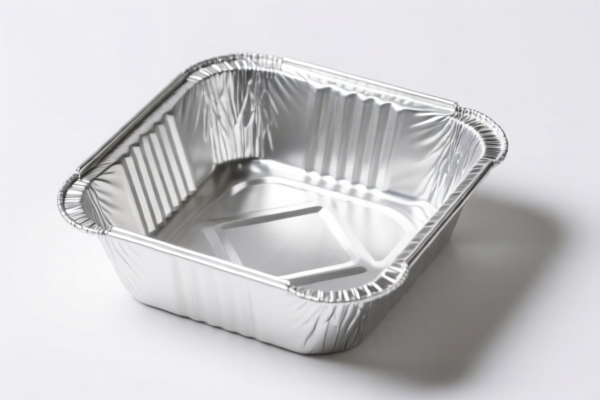
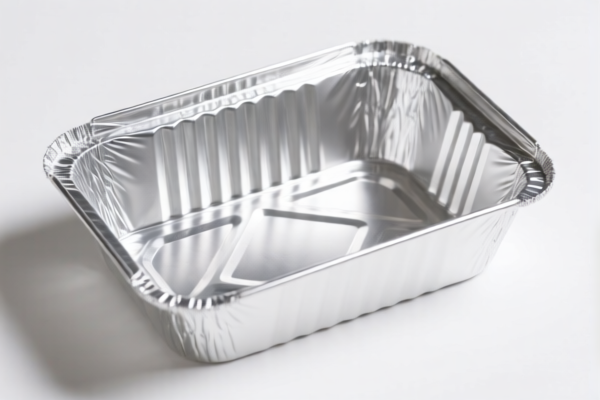
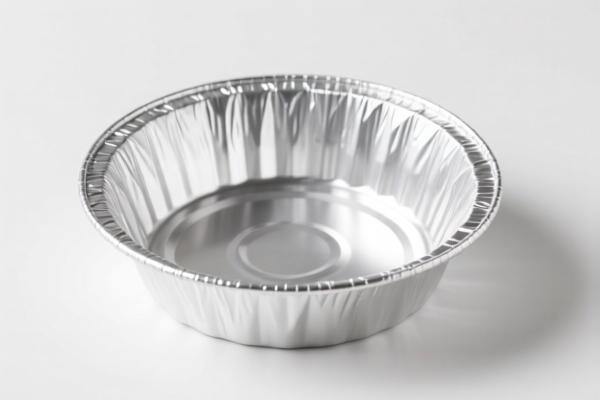
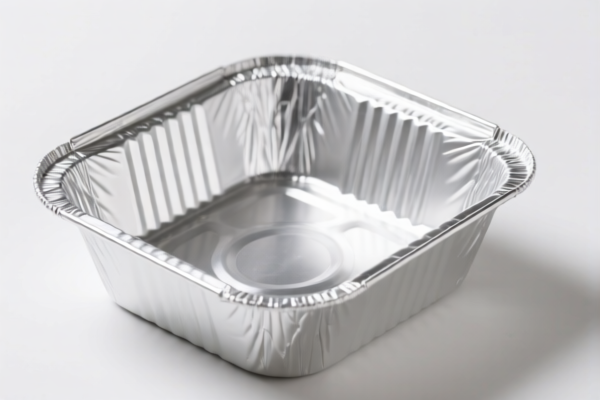
AI Analysis
🎂 Round Cake Mold (Bakeware)
🌐 HS Code Reference & Customs Clearance Guide | 2024-2025 Tax Rate Analysis | Professional Strategy
📌 I. Product Definition: What Exactly is a "Round Cake Mold"?
A Round Cake Mold is a cooking vessel specifically designed for baking cakes in a circular shape. In international trade, its classification depends entirely on the material it is made from and its specific design purpose (e.g., stovetop vs. oven-only).
Common materials include: 1. Porcelain/China: Ceramic molds used for baking or serving. 2. Plastics: Heat-resistant silicone or plastic molds. 3. Stainless Steel: Durable metal molds, often non-stick coated. 4. Cast Iron: Heavy-duty molds, often enameled or raw.
⚠️ Critical Classification Point:
- If it is not suitable for stove-top use (oven-only), it is classified as Bakeware.
- If it is suitable for stove-top use, it may fall under different cooking ware categories (not covered in the provided DATA, but generally distinct).
- Material is King: The HS Code changes drastically based on whether it is porcelain, plastic, steel, or cast iron.
📦 II. HS Code Classification Details (Based on Provided DATA)
Below are the specific HS Codes derived from your input data, categorized by material.
| HS Code | Product Description | Material | Key Characteristics |
|---|---|---|---|
6911.10.80.10 |
Tableware/Kitchenware, Other: Suitable for food/drink contact | Porcelain/China | Ceramic bakeware/serving ware. |
6911.10.80.90 |
Tableware/Kitchenware, Other: Other | Porcelain/China | Ceramic bakeware/serving ware (non-food contact or other). |
3924.10.40.00 |
Tableware/Kitchenware, Plastics: Other | Plastics | Heat-resistant plastic or silicone molds. |
3924.10.30.00 |
Tableware/Kitchenware, Plastics: Trays | Plastics | Plastic trays or shallow molds. |
7323.93.00.35 |
Table/Kitchen Articles, Iron/Steel: Of Stainless Steel: Cooking Ware: Bakeware (not suitable for stove top) | Stainless Steel | Metal oven-safe molds. |
7323.91.50.20 |
Table/Kitchen Articles, Iron/Steel: Of Cast Iron, Not Enameled: Bakeware | Cast Iron | Heavy metal oven-safe molds. |
🔍 Note on "Bakeware":
The data explicitly distinguishes "Bakeware (cookware not suitable for stove top use)". This is the most common classification for round cake molds intended for ovens. If a mold can be used on a stove, it might be misclassified if labeled "Bakeware," leading to penalties.
💰 III. 2024-2025 Tariff Rate Breakdown (US Imports from China)
✅ Applicable Country: United States (US)
✅ Origin: China (CN)
✅ Effective Time: Current rates apply (including Section 301 and IEEPA duties)
🎯 1. Porcelain/China Molds
HS Codes: 6911.10.80.10 / 6911.10.80.90
| Item | Details |
|---|---|
| Base Tariff | 20.8% |
| Additional Tariff (Section 301/Other) | 7.5% |
| Total Tariff Rate | 28.3% |
| Tax Detail | 基础关税: 20.8%, 加征关税: 7.5% |
| Total Tax | 28.3% |
📌 Explanation:
Ceramic products face a significant combined tariff. There is no mention of "50% aluminum/copper/steel" surcharge for porcelain, so only the 28.3% applies.
🎯 2. Plastic Molds
HS Codes: 3924.10.40.00 / 3924.10.30.00
A. General Plastic Kitchenware (3924.10.40.00)
| Item | Details |
|---|---|
| Base Tariff | 3.4% |
| Additional Tariff | 0.0% |
| Total Tariff Rate | 3.4% |
| Tax Detail | 基础关税: 3.4%, 加征关税: 0.0% |
B. Plastic Trays/Shallow Molds (3924.10.30.00)
| Item | Details |
|---|---|
| Base Tariff | 5.3% |
| Additional Tariff (Section 301) | 7.5% |
| Total Tariff Rate | 12.8% |
| Tax Detail | 基础关税: 5.3%, 加征关税: 7.5% |
📌 Explanation:
- Standard plastic molds enjoy a very low tariff (3.4%).
- If declared as "Trays" or similar, the rate jumps to 12.8%.
- No 50% steel/aluminum surcharge applies to plastics.
🎯 3. Stainless Steel Molds
HS Code: 7323.93.00.35
| Item | Details |
|---|---|
| Base Tariff | 2.0% |
| Standard Additional Tariff | 0.0% |
| Steel/Aluminum/Copper Surcharge | 50% |
| Total Tariff Rate | 52.0% |
| Tax Detail | 基础关税: 2.0%, 加征关税: 0.0%, 钢,铝铜制品加征关税: 50% |
📌 Explanation:
- This is a high-cost classification.
- The 50% additional duty is a specific levy on "Steel, Aluminum, Copper products" (likely referencing recent trade actions or specific category surcharges).
- Total: 52%. This is extremely high and must be factored into pricing.
🎯 4. Cast Iron Molds
HS Code: 7323.91.50.20
| Item | Details |
|---|---|
| Base Tariff | 5.3% |
| Additional Tariff | 0.0% |
| Total Tariff Rate | 5.3% |
| Tax Detail | 基础关税: 5.3%, 加征关税: 0.0% |
📌 Explanation:
- Cast iron (not enameled) has a much more favorable rate (5.3%) compared to stainless steel.
- Note: If the cast iron is enameled, it might fall under a different subheading not listed here, which could have different rates. The provided data specifically says "not enameled."
🛠️ IV. Customs Clearance Practical Advice
✅ 1. Documentation Checklist (Must-Haves)
| Document | Requirement | Reason |
|---|---|---|
| Product Specification Sheet | ✔️ Required | Must state material (Porcelain/Plastic/Steel/Iron), dimensions, and intended use (Oven-safe vs. Stove-top). |
| Material Declaration | ✔️ Required | Crucial for HS Code accuracy. A "stainless steel" mold declared as "plastic" will result in fines. |
| Food Contact Statement | ✔️ Recommended | For HS 6911.10.80.10, proving "suitable for food contact" ensures correct sub-classification. |
| Photos (Clear & Detailed) | ✔️ Required | Show the product, branding, and any "Oven Safe" or "Not for Stove Top" markings. |
| Commercial Invoice | ✔️ Required | Clearly describe the item as "Round Cake Mold" and specify material. |
| Packing List | ✔️ Required | Detail weights and quantities. |
✅ 2. Classification Strategy & Cost Saving Tips
🔥 "Material First, Then Function"
| Scenario | Recommended HS Code | Tariff Rate | Strategy |
|---|---|---|---|
| Plastic Silicone Mold | 3924.10.40.00 |
3.4% | ✅ Lowest Cost. Ideal for budget-friendly products. Ensure it's not declared as a "Tray." |
| Cast Iron Mold (Raw) | 7323.91.50.20 |
5.3% | ✅ Moderate Cost. Good for heavy-duty, premium market. Ensure it is not enameled to match the code. |
| Porcelain/Ceramic Mold | 6911.10.80.10 |
28.3% | ⚠️ Higher Cost. If it's for serving as well as baking, this code is appropriate. Ensure it's marked for food contact. |
| Stainless Steel Mold | 7323.93.00.35 |
52.0% | ❌ Very High Cost. Avoid if possible due to the 50% steel surcharge. Consider material substitution or origin changes. |
📌 Key Warning:
- Do NOT declare a stainless steel mold as plastic to save on taxes. Customs will inspect and penalize you.
- Do NOT declare a stove-top safe pan as "Bakeware" if it can be used on a stove. The description "Bakeware (cookware not suitable for stove top use)" is specific. If it can be used on a stove, it may be misclassified, leading to delays.
✅ 3. Special Considerations
| Situation | Advice |
|---|---|
| Enamelled Cast Iron | The provided data only covers non-enameled cast iron (7323.91.50.20). If your product is enameled, you must find the correct HS Code (likely different) to avoid misclassification. |
| Non-Stick Coating | For stainless steel molds, the presence of non-stick coating doesn't change the base material classification (Steel), so the 52% tariff still applies. |
| Plastic "Trays" | If your cake mold is shallow and wide, customs might classify it as a "Tray" (3924.10.30.00, 12.8%) instead of "Other" (3924.10.40.00, 3.4%). Ensure the description emphasizes "Mold" and its function, not just shape. |
🌍 V. Global Market Context (2024-2025)
| Market | Recommended HS Code (Example) | Estimated Duty (China Origin) | Notes |
|---|---|---|---|
| 🇺🇸 USA | See table above | 3.4% - 52% | Section 301 + Steel Surcharge significantly impact metal/steel products. |
| 🇨🇳 China | 6911/3924/7323 | 5% - 15% | Lower duties, but import regulations for food-contact materials are strict. |
| 🇪🇺 EU | 6911/3924/7323 | 0% - 6.5% | No Section 301 or Steel Surcharge. More favorable for steel/ceramics. |
| 🇬🇧 UK | 6911/3924/7323 | 0% - 6% | Post-Brexit tariffs, generally lower than US for steel. |
📌 Conclusion:
- The US market is the most expensive for steel and ceramic cake molds due to additional tariffs.
- Plastic molds remain the most tariff-efficient option for the US.
- For steel molds, consider origin diversification (e.g., manufacturing in Vietnam or Mexico) to avoid the 50% steel surcharge and Section 301 duties.
📌 VI. Common Errors & Pitfalls
❌ Error 1: Declaring Stainless Steel as "Metal Cookware" generally without specifying "Bakeware"
👉 Consequence: May be classified under a different subheading with higher duties or rejected for lack of specificity.
❌ Error 2: Ignoring the "Not Suitable for Stove Top" requirement
👉 Consequence: If the product is stove-top safe, using the "Bakeware" code (7323.93.00.35) is misclassification. Customs may audit and impose penalties.
❌ Error 3: Confusing Enamelled vs. Non-Enameled Cast Iron
👉 Consequence: Using 7323.91.50.20 (non-enameled) for an enameled pan will lead to incorrect duty assessment and potential delays.
❌ Error 4: Mislabeling Plastic Molds as "Trays"
👉 Consequence: Unnecessary increase from 3.4% to 12.8%. Ensure proper product naming.
✅ Correct Practice:
"Round Cake Mold, Material: [Porcelain/Plastic/Stainless Steel/Cast Iron], Use: Oven Baking Only, Not for Stove Top, Food Contact Safe"
🎯 VII. Conclusion: Professional Declaration, Cost Efficiency
🎯 Remember:
🔹 "Material Dictates Code, Function Dictates Rate."
🔹 "Plastic is Cheap (3.4%), Cast Iron is Reasonable (5.3%), Steel is Expensive (52%), Ceramic is Moderate (28.3%)."
🔹 "Beware of the 50% Steel Surcharge – It Can Kill Your Margin."
📌 Tips:
- For Stainless Steel molds, strongly consider origin optimization or switching to Cast Iron or Plastic if cost is a primary driver.
- Always provide clear photos and specifications to Customs to prove the "Bakeware" nature (oven-only) and material.
- If your cast iron is enameled, consult a customs broker for the correct HS Code, as it differs from the non-enameled code provided.
📣 Action Plan:
📞 Consult with a licensed customs broker for a Pre-Ruling on your specific product design.
🚀 Optimize your supply chain to mitigate the high US tariffs on steel and ceramic goods.
✨ Precision in Classification, Profitability in Trade!
💼 Your Bottom Line Depends on the Right HS Code!
Customer Reviews
About HS Code Classification
The Harmonized System (HS) is an internationally standardized nomenclature developed by the World Customs Organization (WCO) to classify traded products. Over 200 countries use the HS system as the basis for customs tariffs, trade statistics, and import/export regulations.
Each HS code follows a hierarchical structure:
- Chapter (2 digits) — Broad category of goods (e.g., Chapter 84: Machinery and Mechanical Appliances)
- Heading (4 digits) — More specific grouping within the chapter
- Subheading (6 digits) — Internationally standardized breakdown, used by all WCO member countries
- National subdivisions (8-10 digits) — Country-specific extensions for further classification, such as US HTSUS 10-digit codes
Correct HS code classification is essential for smooth customs clearance, accurate duty payment, and compliance with trade regulations. Misclassification can lead to customs delays, overpayment of duties, or penalties.
When importing from CN to US, the applicable tariff rates may include:
- Most-Favored-Nation (MFN) rate — The standard duty rate applied to WTO members
- General rate — Applied to countries without trade agreements
- Trade remedy duties — Additional tariffs such as Section 301 (anti-dumping), Section 232 (national security), or countervailing duties
The information provided on this page is for reference purposes only. For official classification, please consult with your local customs authority or a licensed customs broker.