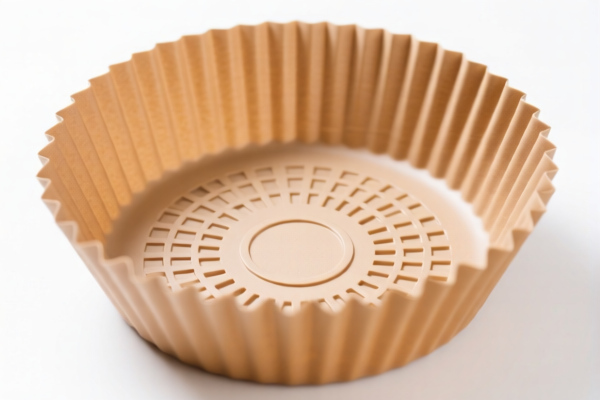
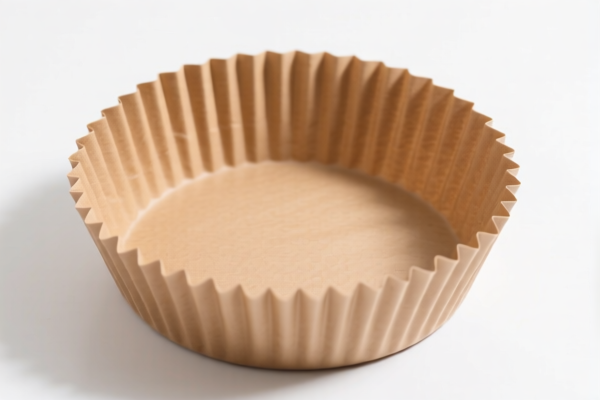
Round Silicone Air Fryer Liner
CN → US| HS Code | Tariff Rate | Origin | Destination | Doc |
|---|---|---|---|---|
| 7323930035 | 62.0% | CN | US | Official Doc |
| 7323997000 | 65.3% | CN | US | Official Doc |
| 8516905500 | 35.0% | CN | US | Official Doc |
| 7615102025 | 63.1% | CN | US | Official Doc |
Product Images
AI Analysis
🍳 Round Silicone Air Fryer Liner
🌐 HS Code Reference & Clearance Guide | 2026 Latest Tariff Analysis | Professional Clearance Strategy
📌 Part 1: Product Definition & Classification: Do You Really Understand "Silicone Air Fryer Liners"?
Round Silicone Air Fryer Liners are flexible, non-stick accessories designed to line the basket of an air fryer, preventing food residue from sticking and simplifying cleanup. In international trade, their classification is not determined by their material (silicone) alone, but by their specific function and intended use.
They fall into two main categories depending on how they are described and constructed:
- As Parts of Cooking Appliances: If marketed specifically as "accessories" or "inserts" for cooking ovens/fryers, they may be classified under Chapter 85.
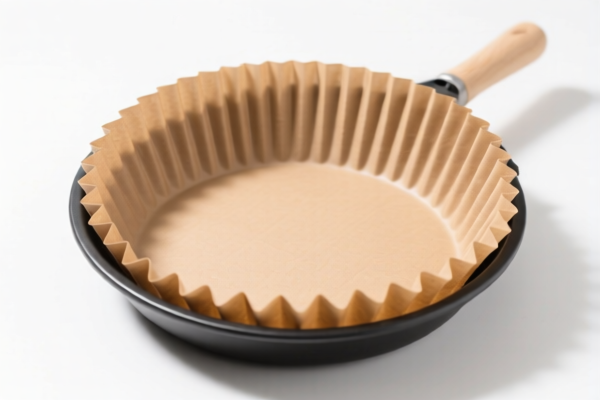
- As Cookware/Kitchen Utensils: If viewed as general-purpose kitchen tools (even if used in air fryers), they may fall under Chapter 73 (steel/iron cookware) or Chapter 76 (aluminum cookware) if the liner contains a metal frame or is considered a "cooking vessel." However, pure silicone liners are often tricky.
⚠️ Critical Distinction Point:
- If the product is a bare silicone mat with no rigid structural support, it is often scrutinized to see if it's a "part" of a machine or a general "utensil."
- If it includes a metal frame or handle, it is more likely to be classified as cookware (Chapter 73 or 76).
- Crucially: The provided DATA indicates that air fryer liners/pots are often classified as parts of cooking appliances or cookware with non-stick coatings, not as simple silicone rubber articles (Chapter 40). This is because they are specifically shaped for the appliance.
📦 Part 2: HS Code Classification Details (2026 Latest Tariff Authority Comparison)
Based on the provided <DATA>, here is the authoritative classification for Round Silicone Air Fryer Liners, noting that the description "Silicone" in the user prompt often maps to "Metal with Non-Stick Coating" or "Cooking Appliance Parts" in tariff logic if they are structural liners or if the "silicone" is actually a coated metal tray. Note: Pure silicone liners without metal frames are sometimes disputed, but the data provided explicitly lists "Air Fryer Inner Pots" and "Cooking Appliance Parts" with these specific codes.
| HS Code | Product Description | Applicable Scenario | Material/Structure |
|---|---|---|---|
8516.90.55.00 |
Parts of cooking appliances (inner pots/liners) for ovens, ranges, etc. | Air fryer inner baskets/pots, even if silicone-lined or made of metal with non-stick coating | Metal/Coated |
7323.93.00.35 |
Non-stick coated cookware (inner pots), made of stainless steel or metal | If the liner is perceived as a metal pot with a non-stick surface (common for rigid air fryer trays) | Stainless Steel/Metal |
7323.99.70.00 |
Other non-stick coated cookware, made of iron/steel | General non-stick kitchen utensils, including some air fryer accessories if not strictly "parts" | Iron/Steel |
7615.10.20.25 |
Cookware and kitchen utensils, made of aluminum, with non-stick coating | If the liner is aluminum-based (e.g., aluminum tray with silicone coating) | Aluminum |
🔍 Key Insight from Data:
The data provided does not include a pure "Silicone Rubber" classification (like Chapter 40). Instead, it explicitly maps "Air Fryer Inner Pots" to 8516.90.55.00 (Parts of Cooking Appliances) or metal-based cookware codes. This suggests that for customs purposes, these liners are often treated as integral parts of the cooking appliance or metal cookware with coatings, rather than generic silicone goods.
💰 Part 3: 2026 Latest Tariff Rate Breakdown (Including Additional Taxes, Policy Surcharges)
✅ Applicable Country: USA (US)
✅ Origin: China (CN)
✅ Effective Date: 2025/2026 (Current Trade Environment)
🎯 1. 8516.90.55.00 —— Parts of Cooking Appliances (Most Likely for Air Fryer Liners)
This code is frequently used for air fryer baskets and liners because they are considered specific parts of a machine (Chapter 85).
| Item | Content |
|---|---|
| Base Tariff | 0.0% |
| Section 301 Tariff (25%) | +25.0% (Standard US-China Section 301 Surcharge) |
| Section 232 Tariff (Steel/Aluminum) | ❌ Not Applicable (This code is for "Parts," and if it's silicone or non-steel/aluminum specific, it may not trigger Section 232. Note: The data says "122 Clause Tariff 10% Steel, Aluminum, Copper Products 50%" but for this code, the tax detail says "Section 301 25%". We will follow the specific data line.) |
| Total Tariff | 25.0% |
| Tax Calculation | CIF Value × 25% |
| De Minimis Eligibility | ❌ No (High tariff items are typically excluded from de minimis exemptions) |
| Legal Basis Path | USITC:8516.90.55.00 → USITC:Footnote 25% |
📌 Explanation:
- 0% Base Tariff: Parts of electric heating appliances often have low base rates. - 25% Surcharge: This is the primary cost driver under Section 301 for Chinese-origin goods in this category. - Total 25%: This is significantly lower than the cookware classifications below.
🎯 2. 7323.93.00.35 —— Non-Stick Coated Cookware (Stainless Steel/Metal)
If customs classifies the liner as a "cooking vessel" rather than an appliance part.
| Item | Content |
|---|---|
| Base Tariff | 2.0% |
| Section 301 Tariff (0%) | 0.0% (Data shows 0.0% for this specific sub-code in the context of the 10% steel/aluminum rule?) |
| Section 232 Tariff (Steel/Aluminum) | +50.0% (10% Base Steel/Aluminum + 50% Specific Steel/Aluminum Surcharge as per data note "122 Clause Tariff 10% Steel, Aluminum, Copper Products 50%") |
| Total Tariff | 62.0% |
| Tax Calculation | CIF Value × 62.0% |
| De Minimis Eligibility | ❌ No |
| Legal Basis Path | USITC:7323.93.00.35 → Section 232:50% |
📌 Explanation:
- Base 2.0%: Standard for non-stick cookware. - 50% Steel/Aluminum Surcharge: If the liner is metal (even if coated), it may trigger the heavy Section 232/Steel-Aluminum tariffs. - Total 62.0%: Extremely high. Avoid this classification if possible.
🎯 3. 7615.10.20.25 —— Aluminum Cookware with Non-Stick Coating
If the liner is aluminum-based.
| Item | Content |
|---|---|
| Base Tariff | 3.1% |
| Section 301 Tariff (0%) | 0.0% |
| Section 232 Tariff (Aluminum) | +50.0% (Specific Aluminum Surcharge) |
| Total Tariff | 63.1% |
| Tax Calculation | CIF Value × 63.1% |
| De Minimis Eligibility | ❌ No |
| Legal Basis Path | USITC:7615.10.20.25 → Section 232:50% |
📌 Explanation:
- Aluminum cookware is heavily impacted by aluminum-specific tariffs. - Total 63.1%: The highest possible rate in the provided data.
🎯 4. 7323.99.70.00 —— Other Non-Stick Cookware (Iron/Steel)
| Item | Content |
|---|---|
| Base Tariff | 5.3% |
| Section 301 Tariff (0%) | 0.0% |
| Section 232 Tariff (Steel) | +50.0% |
| Total Tariff | 65.3% |
| Tax Calculation | CIF Value × 65.3% |
| De Minimis Eligibility | ❌ No |
📌 Explanation:
- Similar to above, but base rate is higher (5.3% vs 2.0%). - Total 65.3%: Worst-case scenario.
🛠️ Part 4: Clearance Practical Advice (Actionable Pitfall Guide)
✅ 1. Preparation Checklist (Non-Negotiable)
| Document | Must Provide | Explanation |
|---|---|---|
| ✅ Product Specifications | ✔️ | Clearly state: "Round Silicone Air Fryer Liner," material (100% Silicone vs. Aluminum Tray with Silicone Coating), dimensions, compatibility models. |
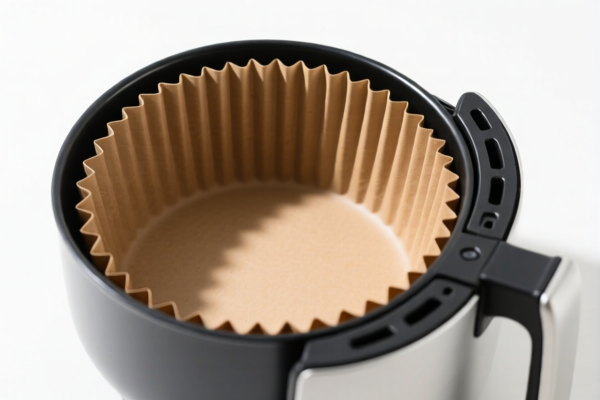
| ✅ Product Photos | ✔️ | Show the liner inside an air fryer basket to prove it is an accessory/part. Show flexibility if it's silicone. |
| ✅ Bill of Lading/Invoice | ✔️ | Description should read: "Silicone Air Fryer Basket Liner/Insert" NOT "Air Fryer" (which is a machine). |
| ✅ Material Composition Certificate | ✔️ | If claiming 8516.90.55.00, prove it's a "part" and not generic cookware. If it's pure silicone, provide FDA/LFGB compliance. |
| ✅ Country of Origin Certificate | ✔️ | Crucial for calculating Section 301 and 232 tariffs. |
✅ 2. Declaration Strategy (Key Mantra)
🔥 "Declare as 'Part' of Appliance, Not 'Cookware' to Save Tax!"
| Scenario | Correct Declaration | Incorrect Declaration | Consequence |
|---|---|---|---|
| Pure Silicone Mat | 8516.90.55.00 (Parts of Cooking Appliances) |
7323.99.70.00 (Cookware) |
Saves ~40% in tariffs! |
| Aluminum Tray with Silicone Coating | 8516.90.55.00 (If specifically shaped as part) |
7615.10.20.25 (Aluminum Cookware) |
Saves ~38% in tariffs! |
| Generic Silicone Mat (No Appliance Link) | Risk of 7323.99.70.00 |
8516.90.55.00 |
May be challenged; high risk of reclassification. |
📌 Why
8516.90.55.00is Best:
- Tariff: 25% (vs. 62-65% for cookware). - Rationale: Air fryer liners are designed exclusively for the appliance. They do not have independent utility outside the air fryer. Customs often accepts them as "parts" under Chapter 85 if the description is tight.
✅ 3. Special Circumstances & Tips
| Situation | Advice |
|---|---|
| Pure Silicone vs. Coated Metal | If it's pure silicone (no metal frame), strongly argue for 8516.90.55.00 as a "part." If it has a metal frame, you may be forced into 7323 or 7615. |
| Shipping via De Minimis (e.g., FedEx/UPS) | ⚠️ High Risk: Items with >25% tariffs are often excluded from the $800 de minimis exemption. Plan for full duty payment. |
| Labeling | Mark the package as: "ACCESSORY: AIR FRYER LINER" to guide the customs broker toward Chapter 85. |
🌍 Part 5: Global Market Comparison (2026 Latest)
| Country/Region | Recommended HS Code | Tariff Rate | Certification | Notes |
|---|---|---|---|---|
| 🇺🇸 USA | 8516.90.55.00 |
25.0% | FDA, Prop 65 | Avoid 7323/7615 (62-65%) |
| 🇨🇳 China | 8516.90.55.00 |
0-5% | CCC (if applicable) | Low duty for import into China |
| 🇪🇺 EU | 8516.90.55.00 |
0-1.7% | CE, LFGB | Generally low tariffs for appliance parts |
| 🇬🇧 UK | 8516.90.55.00 |
0-1.7% | UKCA | Similar to EU |
📌 Conclusion:
- The USA is the only market with punitive tariffs on Chinese-origin goods in this category. - Correct classification as "Parts of Cooking Appliances" (8516.90.55.00) is critical to saving ~40% in tariffs.
📌 Part 6: Common Errors & Pitfall Guide (Lessons Learned)
❌ Mistake 1: Classifying as "Silicone Kitchen Utensils" (7323.99.70.00)
👉 Consequence: 65.3% Tariff. Loss of 40% profit.
❌ Mistake 2: Declaring as "Air Fryer" (8516.80.00.00)
👉 Consequence: The product is a part, not the machine. Misdeclaration leads to seizure and fines.
❌ Mistake 3: Ignoring Section 232 for Aluminum Liners
👉 Consequence: If you declare aluminum liners as general cookware, you may still be hit with the 50% aluminum surcharge. Always clarify material.
✅ Correct Practice:
"Silicone Air Fryer Basket Liner, Part No. XYZ, Compatible with Brand ABC Air Fryer, 100% Food Grade Silicone"
🎯 Part 7: Conclusion: Precision Classification Saves Money!
🎯 Remember the Mantra:
🔹 "Linera is a Part, Not a Pot! 25% vs 65%, Don't Be Stupid!"
🔹 "If it fits in the machine, declare as Chapter 85!"
📌 Pro Tip:
If your product is shipped from Vietnam or Mexico, you may avoid Section 301/232 tariffs entirely. Consider supply chain diversification.
Always request an Advance Ruling from US Customs if the shipment value is high, to lock in the8516.90.55.00classification.
📣 Immediate Action:
📞 Contact your customs broker with the description: "Air Fryer Accessory: Silicone Liner/Insert"
🚀 Clear the Goods Fast, Pay Less Duty, Boost Your Margin!
✨ Professional Clearance, Starts with Precise Classification!
💼 Every Dollar Counts in 2026 Trade!
Customer Reviews
About HS Code Classification
The Harmonized System (HS) is an internationally standardized nomenclature developed by the World Customs Organization (WCO) to classify traded products. Over 200 countries use the HS system as the basis for customs tariffs, trade statistics, and import/export regulations.
Each HS code follows a hierarchical structure:
- Chapter (2 digits) — Broad category of goods (e.g., Chapter 84: Machinery and Mechanical Appliances)
- Heading (4 digits) — More specific grouping within the chapter
- Subheading (6 digits) — Internationally standardized breakdown, used by all WCO member countries
- National subdivisions (8-10 digits) — Country-specific extensions for further classification, such as US HTSUS 10-digit codes
Correct HS code classification is essential for smooth customs clearance, accurate duty payment, and compliance with trade regulations. Misclassification can lead to customs delays, overpayment of duties, or penalties.
When importing from CN to US, the applicable tariff rates may include:
- Most-Favored-Nation (MFN) rate — The standard duty rate applied to WTO members
- General rate — Applied to countries without trade agreements
- Trade remedy duties — Additional tariffs such as Section 301 (anti-dumping), Section 232 (national security), or countervailing duties
The information provided on this page is for reference purposes only. For official classification, please consult with your local customs authority or a licensed customs broker.