Row Insert Fasteners
CN → US| HS Code | Tariff Rate | Origin | Destination | Doc |
|---|---|---|---|---|
| 7318210090 | 90.8% | CN | US | Official Doc |
| 7318290000 | 87.8% | CN | US | Official Doc |
| 3926908500 | 24.0% | CN | US | Official Doc |
| 3926909989 | 22.8% | CN | US | Official Doc |
Product Images
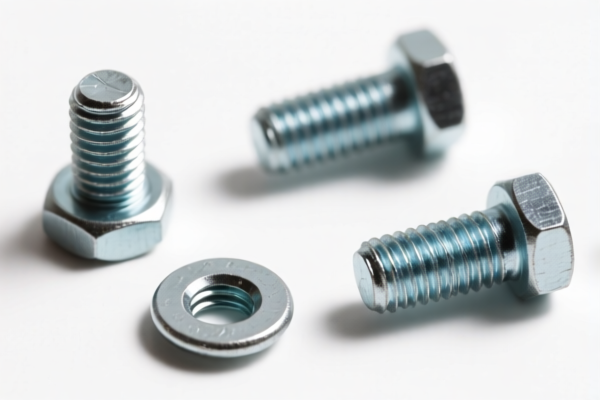
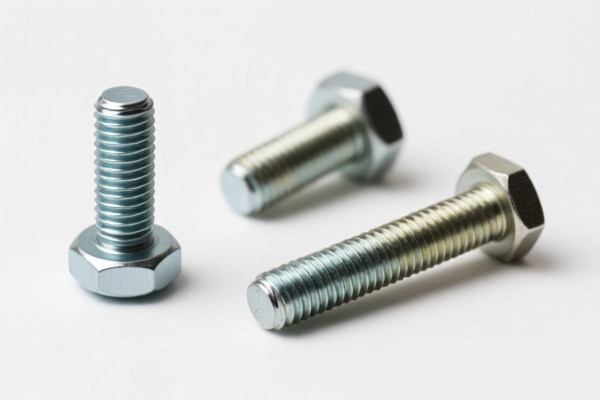
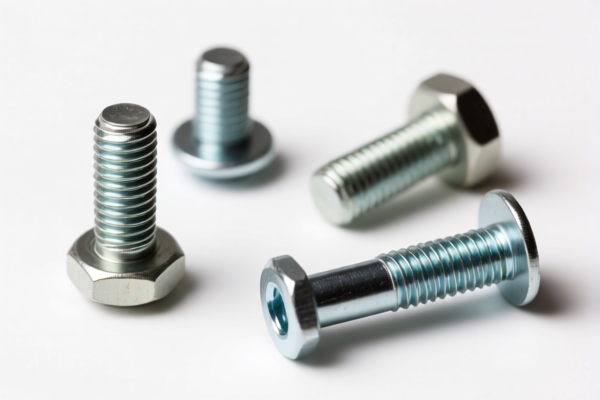
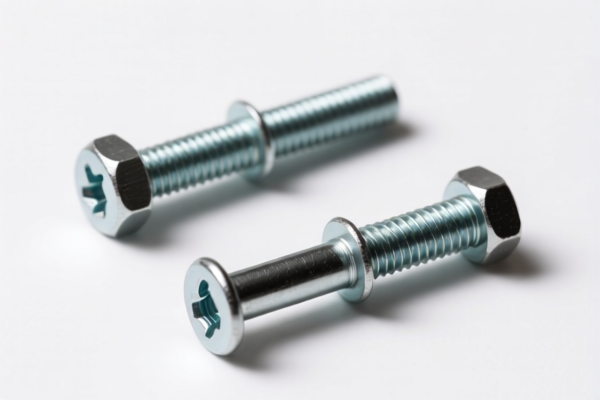
AI Analysis
🚚 Row Insert Fasteners (Plastic/Steel)
🌐 HS Code Reference & Customs Clearance Guide | 2024-2025 Latest Tariff Analysis | Professional Customs Strategy
📌 1. Product Definition & Classification: Do You Really Understand "Row Insert Fasteners"?
Row Insert Fasteners are specialized fastening components used primarily in sheet metal assembly, automotive manufacturing, and industrial framing. They are designed to be inserted into pre-drilled holes in a row (often via a tool) to provide a secure, threaded, or non-threaded connection point without welding or riveting.
They are generally categorized into two main material types for HS Code purposes: * Plastic/Polymer Inserts: Often used in lightweight applications, electronics enclosures, or where corrosion resistance is key. * Steel/Iron Inserts: Used for high-strength applications, automotive chassis, or heavy machinery.
⚠️ Key Distinction Point:
- If the fastener is made of plastic and is a specific "clip" type for mechanical attachment → It falls under Chapter 39.
- If the fastener is made of steel/iron and is a washer, rivet, or similar non-threaded article → It falls under Chapter 73.
- Crucial Note: The term "Fastener" in plastic is often grouped under "Other articles" unless it is a specific clip. Steel washers/rivets have their own specific headings.
📦 2. HS Code Classification Details (Based on Provided Data)
Below are the precise HS Codes and descriptions derived from your data. Note that the classification depends heavily on the material and the specific form (clip vs. washer/rivet).
| HS Code | Product Description | Material | Key Feature |
|---|---|---|---|
3926.90.85.00 |
Other articles of plastics...: Fasteners, in clips suitable for use in a mechanical attaching device | Plastics | Plastic clips/inserts for mechanical attachment |
3926.90.99.89 |
Other articles of plastics...: Other | Plastics | Other plastic articles (catch-all if not a clip) |
7318.21.00.90 |
Screws, bolts, nuts... of iron or steel: Non-threaded articles: Spring washers and other lock washers Other | Steel/Iron | Steel washers/lock washers (non-threaded) |
7318.29.00.00 |
Screws, bolts, nuts... of iron or steel: Non-threaded articles: Other | Steel/Iron | Other steel fasteners (rivets, cotters, pins, etc.) |
🔍 Critical Analysis:
- Plastic Row Inserts: If they are clip-style fasteners, use3926.90.85.00. If they are generic plastic inserts not fitting the "clip" definition, use3926.90.99.89.
- Steel Row Inserts: If they are washers (spring/lock), use7318.21.00.90. If they are rivets, pins, or other non-threaded steel fasteners, use7318.29.00.00.
- DO NOT misclassify steel fasteners as plastic or vice versa. The tariff impact is massive.
💰 3. Tariff Rate Breakdown (Detailed Tax Structure)
✅ Applicable Jurisdiction: United States (US)
✅ Origin: China (CN)
✅ Status: High Tariff Exposure (Section 301 & Steel/Aluminum/ Copper Measures)
🎯 1. Plastic Row Insert Fasteners
A. HS Code 3926.90.85.00 (Plastic Clips/Fasteners)
| Item | Detail |
|---|---|
| Base Duty Rate | 6.5% (General Rate) |
| Additional Duty (Section 301) | 7.5% |
| Total Tariff Rate | 14.0% |
| Calculation Basis | CIF Value × 14.0% |
| De Minimis Exemption | ❌ Not Available (De minimis threshold does not apply to these goods if deemed subject to Section 301) |
| Legal Reference Path | HTSUS:3926.90.85.00 → Section 301 Footnote: 7.5% |
📌 Explanation:
- Plastic articles from China are subject to a 6.5% base duty.
- An additional 7.5% is applied under Section 301 tariffs.
- Total: 14.0%. This is moderate but significant for high-volume shipments.
B. HS Code 3926.90.99.89 (Other Plastic Articles)
| Item | Detail |
|---|---|
| Base Duty Rate | 5.3% (General Rate) |
| Additional Duty (Section 301) | 7.5% |
| Total Tariff Rate | 12.8% |
| Calculation Basis | CIF Value × 12.8% |
| De Minimis Exemption | ❌ Not Available |
| Legal Reference Path | HTSUS:3926.90.99.89 → Section 301 Footnote: 7.5% |
📌 Explanation:
- If the plastic insert is not a "clip" but a generic plastic article, the base duty is slightly lower at 5.3%.
- The 7.5% Section 301 duty still applies.
- Total: 12.8%. Slightly cheaper than the clip category, but ensure it doesn’t fit the "clip" definition to avoid misclassification penalties.
🎯 2. Steel Row Insert Fasteners (Steel, Aluminum, Copper Measures)
⚠️ WARNING: Steel products from China are subject to Section 232 measures (Steel/Aluminum/Copper), which impose a 50% additional duty on top of base rates. This is far more severe than plastic tariffs.
A. HS Code 7318.21.00.90 (Steel Washers/Lock Washers)
| Item | Detail |
|---|---|
| Base Duty Rate | 0.0% (Free for washers under general rules) |
| Additional Duty (Section 301) | 0.0% |
| Additional Duty (Section 232) | 50% (Steel/Aluminum/Copper Measure) |
| Total Tariff Rate | 50.0% |
| Calculation Basis | CIF Value × 50.0% |
| De Minimis Exemption | ❌ Not Available |
| Legal Reference Path | HTSUS:7318.21.00.90 → Section 232 Footnote: 50% |
📌 Explanation:
- Base duty for steel washers is often 0%.
- However, under Section 232, all steel products from China incur a 50% additional duty.
- Total: 50.0%. This is a very high tariff.
B. HS Code 7318.29.00.00 (Other Steel Fasteners: Rivets, Pins, etc.)
| Item | Detail |
|---|---|
| Base Duty Rate | 2.8% |
| Additional Duty (Section 301) | 25.0% |
| Additional Duty (Section 232) | 50% (Steel/Aluminum/Copper Measure) |
| Total Tariff Rate | 77.8% |
| Calculation Basis | CIF Value × 77.8% |
| De Minimis Exemption | ❌ Not Available |
| Legal Reference Path | HTSUS:7318.29.00.00 → Section 301: 25% + Section 232: 50% |
📌 Explanation:
- Base duty: 2.8%.
- Section 301 Duty: 25% (for many steel fasteners).
- Section 232 Duty: 50% (mandatory for steel).
- Total: 77.8%. This is an extremely prohibitive tariff.
- Note: The tax data indicates "Total Tax: 77.8%", which is the sum of 2.8% + 25% + 50%. This confirms the stacking of Section 301 and Section 232 tariffs.
🛠️ 4. Customs Clearance Practical Advice (Avoid Pitfalls)
✅ 1. Preparation Checklist (Non-Negotiable)
| Document | Required? | Purpose |
|---|---|---|
| ✅ Product Specification Sheet | ✔️ | Must clearly state material (Plastic vs. Steel), dimensions, and function. |
| ✅ Material Declaration | ✔️ | Explicitly state "Plastic: [Type]" or "Steel: [Grade]". |
| ✅ Photos (Clear View) | ✔️ | Show the item in use or isolated. Highlight if it’s a "clip" or "washer". |
| ✅ Commercial Invoice | ✔️ | Must list HS Code, description, and country of origin (China). |
| ✅ Country of Origin Certificate | ✔️ | To prove Chinese origin (which triggers Section 232/301). |
✅ 2. Classification Strategy (Key Tips)
🔥 "Material First, Then Form, Then Tax!"
| Scenario | Correct HS Code | Risk if Wrong |
|---|---|---|
| Plastic Clip Fastener | 3926.90.85.00 (14.0%) |
If misclassified as "Other Plastic" (3926.90.99.89), rate drops to 12.8%. If misclassified as Steel, rate jumps to 50-77.8%. |
| Generic Plastic Insert | 3926.90.99.89 (12.8%) |
Ensure it’s NOT a "clip" for mechanical attachment. |
| Steel Washer | 7318.21.00.90 (50.0%) |
If misclassified as "Other Steel Fasteners" (7318.29.00.00), rate jumps to 77.8%. |
| Steel Rivet/Pin | 7318.29.00.00 (77.8%) |
Highest risk item. Justify classification with technical specs. |
📌 Critical Warning for Steel Products:
- Section 232 (50%) applies to ALL steel products from China, regardless of the base duty.
- Section 301 (25%) may also apply depending on the specific subheading.
- Total tax can reach 77.8%. Plan your pricing and margins accordingly.
- Consider Supply Chain Diversification: If possible, source steel fasteners from non-China origins (e.g., Vietnam, India, Turkey) to avoid Section 232/301 tariffs.
✅ 3. Special Case Handling
| Situation | Recommendation |
|---|---|
| Mixed Shipments (Plastic + Steel) | Declare separately. Do not combine under one HS Code. |
| Plastic Coated Steel | If the coating is significant, it may still be classified as steel. Consult a customs broker. |
| De Minimis (Section 321) | ❌ Not applicable. Section 232 and 301 tariffs apply even to de minimis shipments. |
| Advance Ruling | ✅ Strongly Recommended. If uncertain between 7318.21.00.90 and 7318.29.00.00, request a CBP Advance Ruling to avoid penalties. |
🌍 5. Global Market Comparison (2024-2025)
| Country/Region | Recommended HS Code | Estimated Tariff (China Origin) | Notes |
|---|---|---|---|
| 🇺🇸 USA | 3926.90.85.00 / 7318.29.00.00 |
14.0% (Plastic) / 77.8% (Steel) | Section 232 & 301 hit hard. |
| 🇨🇳 China | 3926.90.85.00 / 7318.29.00.00 |
~0-6% (Export) | Low export tax, but high import tax elsewhere. |
| 🇪🇺 EU | 3926.90.85.00 / 7318.29.00.00 |
~5-10% | No Section 232/301. Anti-dumping may apply to steel. |
| 🇬🇧 UK | 3926.90.85.00 / 7318.29.00.00 |
~5-10% | Similar to EU post-Brexit. |
| 🇮🇳 India | 3926.90.85.00 / 7318.29.00.00 |
~7.5-15% | BIS certification may be required for steel. |
📌 Conclusion:
- USA is the most hostile market for Chinese steel fasteners due to Section 232 (50%) and Section 301 (25%).
- Plastic fasteners are more manageable at 14.0% total duty.
- Steel fasteners are economically challenging at 77.8%. Consider shifting supply chain or increasing product value to absorb costs.
📌 6. Common Mistakes & Pitfalls (Lessons Learned)
❌ Mistake 1: Classifying steel washers as "Plastic"
👉 Consequence: Tariff drops from 50% to 14%, but if detected, fraud penalties + back taxes + seizure.
❌ Mistake 2: Ignoring Section 232 for steel products
👉 Consequence: Paying only 2.8% base duty instead of 52.8% (2.8% + 50%). Huge understatement.
❌ Mistake 3: Misclassifying "Other Steel Fasteners" (7318.29.00.00) as "Washers" (7318.21.00.90)
👉 Consequence: Tariff drops from 77.8% to 50%. However, if goods are clearly not washers, misclassification penalties apply.
❌ Mistake 4: Assuming De Minimis ($800) exemption applies
👉 Consequence: CBP will assess Section 232/301 duties even on small parcels. No exemption.
✅ Correct Approach:
"Steel from China = 50% Section 232 + 25% Section 301. Plastic from China = 6.5-5.3% Base + 7.5% Section 301."
🎯 7. Final Recommendations: Optimize, Declare, Defend
🎯 Remember the Golden Rules:
🔹 "Steel Suffers: 50% + 25% = 75%+ Duty."
🔹 "Plastic is Easier: ~14% Duty."
🔹 "Always Verify Material: Plastic vs. Steel Changes Everything."
🔹 "No De Minimis for Section 232/301."
📌 Pro Tip:
If you are shipping steel row insert fasteners from China to the US:
1. Calculate Cost Impact: A $10,000 shipment could incur $7,780 in duties.
2. Consider Alternatives: Source from Vietnam, India, or Mexico to avoid Section 232/301.
3. Get an Advance Ruling: For complex steel fasteners (e.g., are they washers or other fasteners?), get a CBP ruling to ensure correct classification.
📣 Immediate Action:
📞 Consult a licensed customs broker.
📋 Prepare material declarations.
📉 Review supply chain for steel components.
✨ Accurate Classification Saves Money!
💼 Don't Let 77.8% Tariffs Wipe Out Your Margins!
Customer Reviews
About HS Code Classification
The Harmonized System (HS) is an internationally standardized nomenclature developed by the World Customs Organization (WCO) to classify traded products. Over 200 countries use the HS system as the basis for customs tariffs, trade statistics, and import/export regulations.
Each HS code follows a hierarchical structure:
- Chapter (2 digits) — Broad category of goods (e.g., Chapter 84: Machinery and Mechanical Appliances)
- Heading (4 digits) — More specific grouping within the chapter
- Subheading (6 digits) — Internationally standardized breakdown, used by all WCO member countries
- National subdivisions (8-10 digits) — Country-specific extensions for further classification, such as US HTSUS 10-digit codes
Correct HS code classification is essential for smooth customs clearance, accurate duty payment, and compliance with trade regulations. Misclassification can lead to customs delays, overpayment of duties, or penalties.
When importing from CN to US, the applicable tariff rates may include:
- Most-Favored-Nation (MFN) rate — The standard duty rate applied to WTO members
- General rate — Applied to countries without trade agreements
- Trade remedy duties — Additional tariffs such as Section 301 (anti-dumping), Section 232 (national security), or countervailing duties
The information provided on this page is for reference purposes only. For official classification, please consult with your local customs authority or a licensed customs broker.