Rubber Accelerator for Sealing Parts
CN → US| HS Code | Tariff Rate | Origin | Destination | Doc |
|---|---|---|---|---|
| 3824992900 | 41.5% | CN | US | Official Doc |
| 3824999330 | 40.0% | CN | US | Official Doc |
| 4005990000 | 35.0% | CN | US | Official Doc |
| 3824992900 | 41.5% | CN | US | Official Doc |
| 3824999330 | 40.0% | CN | US | Official Doc |
Product Images
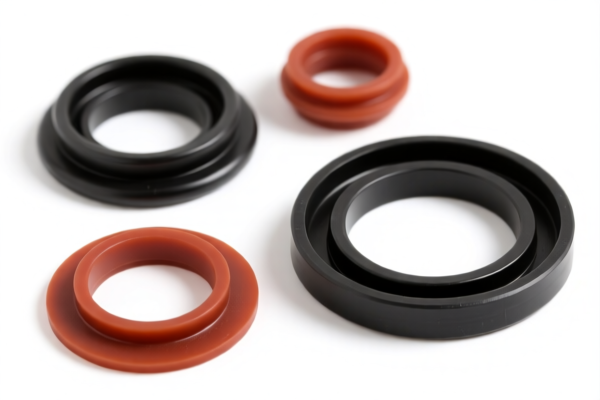
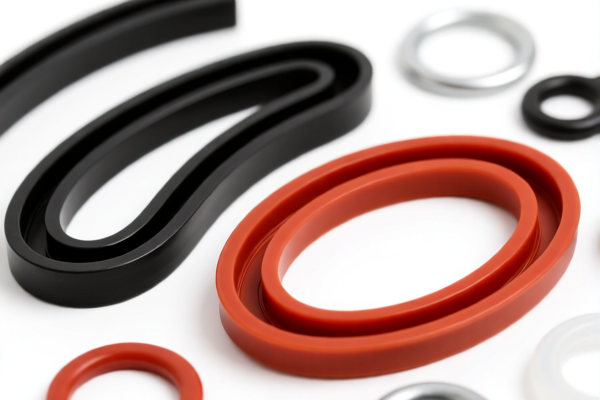
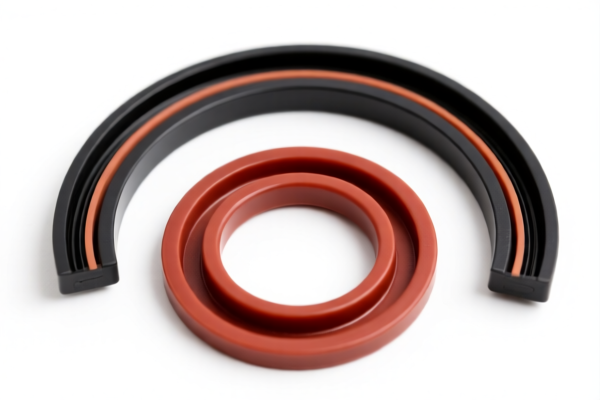
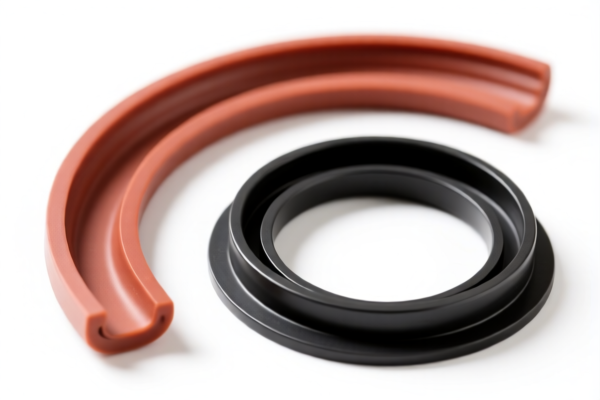
AI Analysis
⚙️ Rubber Accelerators for Sealing Parts: HS Code Classification & Tariff Deep Dive (2026)
🌐 HS Code Reference & Customs Clearance Guide | 2026 Latest Tariff Analysis | Professional Clearance Strategy
📌 1. Product Definition & Classification: Do You Really Understand "Rubber Accelerators"?
Rubber accelerators are critical chemical additives used in the vulcanization process of rubber compounds. They significantly speed up the reaction between sulfur and rubber polymers, ensuring efficient cross-linking. For sealing parts (O-rings, gaskets, seals), these accelerators determine durability, elasticity, and heat resistance.
In international trade, classification depends heavily on the physical state (liquid vs. solid/powder) and the chemical composition of the product. Misclassification can lead to significant tariff discrepancies and customs delays.
⚠️ Key Distinction Point:
- Solid/Mixed Chemical Preparations: Generally fall under 3824.99.29.00 (Other chemical products/preparations).
- Liquid Mixtures/Organic Chemicals: May fall under 3824.99.93.30 (Specific organic chemical mixtures) or 4005.99.00.00 (Unvulcanized rubber compounds containing additives).
📦 2. HS Code Classification Details (2026 Latest Tariff Authority Comparison)
| HS Code | Product Description | Application Scenario | Tax Rate (Total) |
|---|---|---|---|
3824.99.29.00 |
Rubber accelerators as chemical preparations; mixtures in the chemical industry; other chemical products/preparations. | General solid accelerators, standard chemical mixtures. | 41.5% |
3824.99.93.30 |
Rubber accelerator dispersions/liquids; liquid mixtures fitting characteristics of non-cyclic, mono-hydroxyl, unsubstituted alcohol mixtures or similar organic chemical categories. | Liquid accelerator dispersions, specific organic chemical mixtures. | 40.0% |
4005.99.00.00 |
Rubber accelerators as additives in unvulcanized mixed rubber processing; chemical assistants used during rubber compound processing. | Accelerators directly mixed into unvulcanized rubber stocks for sealing part manufacturing. | 35.0% |
🔍 Important Reminder:
-3824.99.29.00is the most common classification for general-purpose rubber accelerators classified as "chemical preparations."
-3824.99.93.30applies if the product is explicitly a liquid dispersion or fits specific organic chemical mixture criteria (e.g., alcohol-based solvents with accelerators).
-4005.99.00.00is the lowest tax rate option but requires proof that the accelerators are used as additives in unvulcanized rubber compounds (i.e., part of the rubber mix, not a standalone chemical product).
💰 3. 2026 Latest Tariff Rate Breakdown (Including Additional Taxes, Policy Surcharges)
✅ Applicable Country: United States (US)
✅ Country of Origin: China (CN)
✅ Effective Date: From November 10, 2025 (including subsequent imports)
🎯 1. 3824.99.29.00 —— Rubber Accelerators (Chemical Preparations)
| Item | Content |
|---|---|
| Base Tariff | 6.5% (ad valorem) |
| Section 301 Additional Tariff | +25% (under USITC Footnote 9903.88.01) |
| Section 122 Tariff | +10% (Specific surcharge for certain chemical products) |
| Total Tariff Rate | 41.5% |
| Tax Calculation | CIF Value × 41.5% |
| De Minimis Exemption Eligible? | ❌ No (deny_de_minimis) |
| Legal Basis Path | USITC:3824.99.29.00 → Footnote:9903.88.01 → Section 122 |
📌 Explanation:
- The 25% Section 301 tariff is applied due to the product's origin (China) and its classification as a chemical preparation.
- The 10% Section 122 tariff is a specific surcharge for certain chemical products imported from China.
- Total 41.5% represents a high tariff burden, requiring careful cost calculation.
🎯 2. 3824.99.93.30 —— Liquid Rubber Accelerator Dispersions
| Item | Content |
|---|---|
| Base Tariff | 5.0% (ad valorem) |
| Section 301 Additional Tariff | +25% |
| Section 122 Tariff | +10% |
| Total Tariff Rate | 40.0% |
| Tax Calculation | CIF Value × 40.0% |
| De Minimis Exemption Eligible? | ❌ No |
| Legal Basis Path | USITC:3824.99.93.30 → Footnote:9903.88.01 → Section 122 |
📌 Note:
- Slightly lower than the previous code due to a 1.5% lower base tariff (5.0% vs. 6.5%).
- Applies specifically to liquid mixtures that fit organic chemical characteristics.
- Still subject to the same 35% additional tariffs (25% + 10%).
🎯 3. 4005.99.00.00 —— Rubber Accelerators as Rubber Compound Additives
| Item | Content |
|---|---|
| Base Tariff | 0.0% (ad valorem) |
| Section 301 Additional Tariff | +25% |
| Section 122 Tariff | +10% |
| Total Tariff Rate | 35.0% |
| Tax Calculation | CIF Value × 35.0% |
| De Minimis Exemption Eligible? | ❌ No |
| Legal Basis Path | USITC:4005.99.00.00 → Footnote:9903.88.01 → Section 122 |
📌 Key Advantage:
- Lowest total tariff (35%) among the three options.
- Requires proof that the accelerators are integral additives in unvulcanized rubber compounds (not standalone chemicals).
- Ideal if you are importing rubber compounds that already contain accelerators, or if you can demonstrate the product is a rubber additive rather than a pure chemical preparation.
🛠️ 4. Customs Clearance Practical Advice (Avoid Pitfalls Guide)
✅ 1. Required Documentation Checklist (Non-negotiable)
| Document | Mandatory? | Description |
|---|---|---|
| ✅ Product Specification Sheet | ✔️ | Must include physical state (liquid/solid), chemical composition, CAS numbers, and usage (e.g., "for vulcanization of rubber sealing parts"). |
| ✅ Technical Data Sheet (TDS) | ✔️ | Detailed chemical structure, molecular weight, and application instructions. |
| ✅ Product Photos (with Label) | ✔️ | Clear image of the container, label, and any safety data labels (SDS). |
| ✅ Safety Data Sheet (SDS) | ✔️ | Required for chemical imports; must align with HS Code classification. |
| ✅ Commercial Invoice | ✔️ | Must clearly state: "Rubber Accelerator for Sealing Parts" or "Additive for Unvulcanized Rubber." |
| ✅ Certificate of Origin (CO) | ✔️ | If not from China, may qualify for preferential rates. For China origin, confirms Section 301 applicability. |
| ✅ Packing List | ✔️ | Details net/gross weight, number of packages, and container type. |
✅ 2. Declaration Tips (Key Mnemonics)
🔥 "State Matters: Liquid vs. Solid, Name Matters, Rate Drops!"
| Scenario | Correct Declaration | Wrong Approach |
|---|---|---|
| Solid/Powder Accelerator | 3824.99.29.00 (Chemical Preparation) |
Misdeclaring as liquid → Audit risk |
| Liquid Dispersion | 3824.99.93.30 (Organic Mixture) |
Calling it "solid chemical" → Wrong code |
| Additive in Rubber Mix | 4005.99.00.00 (Rubber Additive) |
Declaring as standalone chemical → Higher tax |
| Pure Chemical Product | 3824.99.29.00 |
Misdeclaring as rubber compound → Customs penalty |
✅ 3. Special Case Handling
| Scenario | Handling Advice |
|---|---|
| OEM Rubber Accelerator for Specific Sealer | Provide customer order + formula sheet to prove it's a custom chemical preparation under 3824.99.29.00. |
| Accelerator Pre-mixed with Rubber | Declare as Unvulcanized Rubber Compound (4005.99.00.00) for 35% total tariff. Ensure SDS reflects rubber additive status. |
| Liquid Accelerator in Solvent | If solvent is alcohol-based and fits organic mixture criteria, use 3824.99.93.30 (40% total tariff). |
| High-Performance Accelerator for Oil Seals | Provide MSDS and technical justification to avoid being classified as a general chemical if possible. |
🌍 5. Global Main Market Customs Clearance Comparison (2026 Latest)
| Country/Region | Recommended HS Code | Tariff | Certification Requirements | Notes |
|---|---|---|---|---|
| 🇺🇸 United States | 4005.99.00.00 (if applicable) |
35% (China origin) | SDS, MSDS, REACH (if EU transshipped) | Highest tariff burden; try 4005 for savings. |
| 🇨🇳 China (Import) | 3824.99.29.00 |
6.5% | CCC (if applicable), SDS | No Section 301/122 tariffs. |
| 🇪🇺 European Union | 3824.99.89 (varies) |
0-6.5% | REACH, CLP | No Section 301; focus on REACH compliance. |
| 🇦🇺 Australia | 3824.99.29.00 |
5% | TGA (if medical seals) | Lower base tariff, no US-style surcharges. |
| 🇯🇵 Japan | 3824.99.90 |
0-6% | JIS Standards | Competitive rates; focus on quality certification. |
📌 Conclusion:
- The US is the only market imposing Section 301 and Section 122 surcharges on Chinese-origin rubber accelerators.
- Chinese-origin accelerators in the US face 35-41.5% total tariffs, significantly impacting profitability.
- Strategy: If possible, structure imports as rubber additives (4005.99.00.00) to save 6.5-11.5% in tariffs.
📌 6. Common Mistakes & Pitfall Guide (Lessons Learned)
❌ Mistake 1: Declaring liquid accelerators as "solid chemicals"
👉 Consequence: Customs audit, potential penalty, or reclassification to 3824.99.93.30 with back-tariffs.
❌ Mistake 2: Using "Rubber Accelerator" without specifying state or use
👉 Consequence: Customs cannot determine if it's a standalone chemical or rubber additive → Delay in clearance.
❌ Mistake 3: Failing to provide SDS/MSDS
👉 Consequence: Cargo held at port; potential refusal of entry if chemical safety data is missing.
❌ Mistake 4: Assuming all rubber-related items qualify for 4005.99.00.00
👉 Consequence: If accelerators are standalone chemical products (not pre-mixed with rubber), they must be classified under 3824, leading to higher taxes.
✅ Correct Practice:
"Rubber Accelerator (Solid/Powder/Liquid), CAS No. XXXXX, Used in Vulcanization of Unvulcanized Rubber for Sealing Parts, SDS Provided, For Industrial Use Only."
🎯 7. Conclusion: Professional Declaration, Save Time, Reduce Costs!
🎯 Remember the Mnemonic:
🔹 "State Defines Code: Liquid 40, Solid 41.5, Rubber Additive 35!"
🔹 "SDS is Key, Name is Precise, Tax Difference is Huge!"
📌 Pro Tip:
If your rubber accelerators are shipped pre-mixed with unvulcanized rubber, declare under
4005.99.00.00for the lowest 35% total tariff.
If they are standalone chemical preparations, expect 41.5% (3824.99.29.00) or 40.0% (3824.99.93.30if liquid).
Apply for a Pre-Ruling with US Customs (CBP) to confirm your specific product's classification before shipment.
📣 Immediate Action:
📞 Consult with a licensed customs broker.
📄 Provide full SDS and technical data sheets.
🚀 Ensure accurate HS Code classification to avoid 40%+ tariffs and customs delays!
✨ Professional Customs Clearance Starts with Precise Classification!
💼 Every Percentage Point of Tariff Matters – Optimize Your Supply Chain Today!
Customer Reviews
About HS Code Classification
The Harmonized System (HS) is an internationally standardized nomenclature developed by the World Customs Organization (WCO) to classify traded products. Over 200 countries use the HS system as the basis for customs tariffs, trade statistics, and import/export regulations.
Each HS code follows a hierarchical structure:
- Chapter (2 digits) — Broad category of goods (e.g., Chapter 84: Machinery and Mechanical Appliances)
- Heading (4 digits) — More specific grouping within the chapter
- Subheading (6 digits) — Internationally standardized breakdown, used by all WCO member countries
- National subdivisions (8-10 digits) — Country-specific extensions for further classification, such as US HTSUS 10-digit codes
Correct HS code classification is essential for smooth customs clearance, accurate duty payment, and compliance with trade regulations. Misclassification can lead to customs delays, overpayment of duties, or penalties.
When importing from CN to US, the applicable tariff rates may include:
- Most-Favored-Nation (MFN) rate — The standard duty rate applied to WTO members
- General rate — Applied to countries without trade agreements
- Trade remedy duties — Additional tariffs such as Section 301 (anti-dumping), Section 232 (national security), or countervailing duties
The information provided on this page is for reference purposes only. For official classification, please consult with your local customs authority or a licensed customs broker.