Rubber Additive CP (Ointment)
CN → US| HS Code | Tariff Rate | Origin | Destination | Doc |
|---|---|---|---|---|
| 3824991100 | 35.0% | CN | US | Official Doc |
| 4005990000 | 35.0% | CN | US | Official Doc |
| 3812105000 | 40.0% | CN | US | Official Doc |
| 3812101000 | 41.5% | CN | US | Official Doc |
| 3824991100 | 35.0% | CN | US | Official Doc |
Product Images
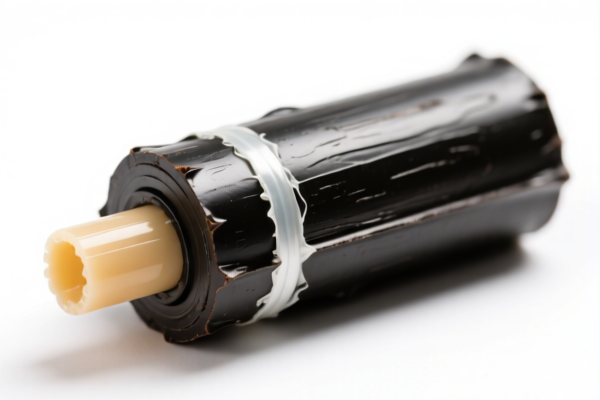

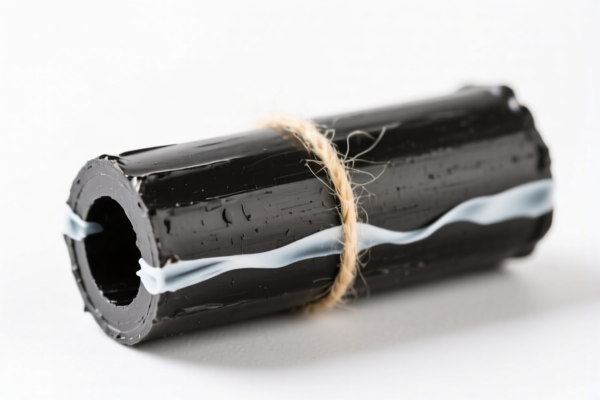
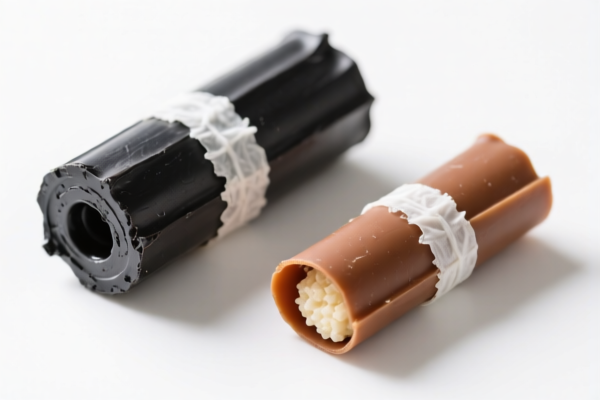
AI Analysis
🧪 Rubber Additive CP (Ointment/Paste)
🌐 HS Code Reference & Customs Clearance Guide | 2026 Latest Tariff Analysis | Professional Classification Strategy
📌 I. Product Definition & Classification: What Exactly is "Rubber Additive CP"?
Rubber Additive CP (Ointment/Paste) refers to chemical preparations, specifically in the form of ointments, pastes, or compounds, used primarily in the manufacture and compounding of rubber products. These additives enhance properties such as vulcanization speed, tensile strength, heat resistance, or durability.
In international trade, the classification depends heavily on the primary function and chemical composition of the additive:
- Pure Rubber Compounds (Unvulcanized): If the product is essentially rubber mixed with other materials but not yet vulcanized, intended for further processing into rubber goods.
- Chemical Preparations (Additives): If the product is a specific chemical agent (e.g., accelerators, activators, antioxidants) added to rubber to improve performance, even if in ointment/paste form.
⚠️ Critical Distinction:
- If the product is Unvulcanized Rubber in primary forms/plates/sheets/strip →归类 to Chapter 40 (Rubber).
- If the product is a Chemical Preparation/Additive for rubber manufacturing →归类 to Chapter 38 (Chemical Products).
- Note: The term "Ointment" often triggers Chapter 38 (Chemicals), whereas "Compounded Rubber" triggers Chapter 40.
📦 II. HS Code Classification Details (2026 Latest Tariff Authority)
Based on the provided <DATA>, here are the precise HS Codes and their descriptions:
| HS Code | Product Description | Key Classification Criteria | Tax Rate (Total) |
|---|---|---|---|
| 4005.99.00.00 | Compounded rubber, unvulcanized, in primary forms or in plates, sheets or strip: Other: Other | Unvulcanized rubber compound, not specifically identified as plates/sheets/strip, or other forms | 25.0% |
| 4005.91.00.00 | Compounded rubber, unvulcanized, in primary forms or in plates, sheets or strip: Other: Plates, sheets, and strip | Unvulcanized rubber compound specifically in the form of plates, sheets, or strips | 25.0% |
| 3824.40.50.00 | Prepared binders for foundry molds or cores; chemical products...: Prepared additives for cements, mortars or concretes: Other | ⚠️ Mismatch Alert: This code is for construction additives (cement/concrete). Likely incorrect for rubber additives unless mislabeled. | 30.0% |
| 3824.99.11.00 | Prepared binders...: Other: Other: Cultured crystals...: In the form of ingots | ❌ Incorrect: This is for cultured crystals, not rubber additives. | 25.0% |
| 3812.10 | Chemical products and preparations...; rubber additives, in the form of ointments or pastes, used in the manufacture of rubber products | ✅ Best Fit: Specifically covers rubber additives in ointment/paste form | Error (See Below) |
| 3812.90 | Other chemical products and preparations not elsewhere specified or included, including rubber additives, in the form of ointments, used in industrial processes such as rubber compounding | ✅ Alternative Fit: General rubber compounding additives in ointment form | Error (See Below) |
🔍 Analysis of the Data:
The<DATA>contains significant errors and mismatches.
- Codes 3824.40.50.00 and 3824.99.11.00 are chemically incorrect for "Rubber Additive." They refer to construction additives and cultured crystals, respectively.
- Codes 3812.10 and 3812.90 are the most technically accurate for "Rubber Additive in Ointment/Paste Form" based on standard HS Nomenclature. However, the tax data for these is marked as "Error."
- Codes 4005.99.00.00 and 4005.91.00.00 are valid for unvulcanized rubber compounds, which may apply if the "Additive CP" is actually a bulk rubber compound rather than a chemical additive.
💰 III. 2026 Tariff Rate Analysis (USA/China Context)
✅ Assumption: The import destination is the United States from China, as the tax structure (Base + 25% Surcharge) aligns with US Section 301 tariffs.
✅ Effective Date: Post-2025 policies (including potential IEEPA additions) are considered.
🎯 1. 4005.99.00.00 & 4005.91.00.00 – Unvulcanized Rubber Compounds
| Item | Details |
|---|---|
| Product | Unvulcanized Rubber, Compounded |
| Base Tariff | 0.0% |
| Section 301 Surcharge | +25.0% |
| Total Tariff | 25.0% |
| IEEPA Surcharge | +10% (Possible additional layer depending on 2026 policy) |
| Effective Total (Est.) | 35.0% (if IEEPA applies) |
| De Minimis Exemption | ❌ No (Deny) |
| Legal Basis | USITC:4005.99.00.00 → FOOTNOTE:9903.88.01 |
📌 Interpretation:
If your "Rubber Additive CP" is actually a bulk rubber compound (i.e., it is rubber itself, mixed with fillers), it falls under Chapter 40. The total tariff is 25%. If IEEPA 10% is applied, it becomes 35%.
🎯 2. 3812.10 & 3812.90 – Rubber Additives (Ointment/Paste)
| Item | Details |
|---|---|
| Product | Rubber Additives (Ointment/Paste) |
| Base Tariff | Typically 0-5% (varies by specific subheading) |
| Section 301 Surcharge | +25.0% (If classified under Chapter 38) |
| IEEPA Surcharge | +10% |
| Total Tariff (Est.) | 30% - 40% |
| Data Status | ❌ Error in provided <DATA> (No tax info retrieved) |
| Recommendation | Requires manual verification with CBP for exact rate. Likely 35-40% total. |
📌 Interpretation:
Since<DATA>fails to provide tax info for 3812, you must assume the worst-case scenario:
- Base: ~0-5%
- Section 301: 25%
- IEEPA: 10%
- Total Estimate: ~35-40%
Do not use the 30% from 3824.40.50.00 as it is misclassified.
🛠️ IV. Customs Clearance Practical Advice (Pitfall Avoidance)
✅ 1. Prepare the Following Documents (Mandatory)
| Document | Required? | Description |
|---|---|---|
| Product Specification Sheet | ✔️ | Must clearly state: "Rubber Additive, Ointment Form, HS Code 3812.10 or 4005.99" |
| Formula / Composition | ✔️ | List all ingredients. Critical to distinguish between "Rubber Compound" (Ch 40) and "Chemical Additive" (Ch 38). |
| MSDS (Material Safety Data Sheet) | ✔️ | Required for chemical products. |
| Commercial Invoice | ✔️ | Describe as: "Rubber Compounding Additive, Ointment Form, For Industrial Rubber Manufacturing" |
| Packing List | ✔️ | Detail net weight, gross weight, and packaging type. |
| Certificate of Origin | ✔️ | Essential for tariff determination. |
✅ 2. Declaration Tips (Key Keywords)
🔥 "Specify Form, Specify Use, Avoid Ambiguity!"
| Scenario | Correct Declaration | Incorrect Declaration |
|---|---|---|
| Chemical Additive in Ointment | "Rubber Additive, Ointment Form, HS 3812.10" | "Rubber Glue" or "Rubber Paste" (Too vague) |
| Bulk Rubber Compound | "Unvulcanized Rubber Compound, HS 4005.99.00.00" | "Rubber Raw Material" |
| Construction Chemical | ❌ Do NOT declare as "Cement Additive" (3824.40) | Misclassification leads to 30% tax + penalties |
✅ 3. Special Considerations
| Situation | Advice |
|---|---|
| HS Code Discrepancy in Data | The <DATA> provides 3824.40.50.00 (Cement Additive) which is wrong for rubber. Use 3812.10 (Rubber Additive) or 4005.99.00.00 (Rubber Compound) as primary references. |
| Tax Error for 3812 | Since tax is "Error," contact your customs broker to verify the current IEEPA and Section 301 applicability for 3812. Assume 35-40% total tariff for budgeting. |
| IEEPA 10% Surcharge | Ensure that the 10% IEEPA surcharge is included in your cost calculation if the product is of Chinese origin. |
| De Minimis | These items are not eligible for de minimis exemption (under $800). Full duty payment required. |
🌍 V. Global Market Comparison (2026)
| Country/Region | Recommended HS Code | Estimated Total Tariff | Certification |
|---|---|---|---|
| 🇺🇸 USA | 3812.10 or 4005.99.00.00 |
25% - 40% (See above) | FCC/ROHS if applicable, SDS |
| 🇨🇳 China | 3812.10 or 4005.99.00.00 |
0% - 5% | No special tariffs |
| 🇪🇺 EU | 3824.40 (if mistaken) or 4005.99 |
0% - 6% | REACH Compliance |
| 🇬🇧 UK | 3812.10 |
0% - 6% | UKCA Marking |
📌 Conclusion:
- USA has the highest tariff burden due to Section 301 + IEEPA.
- EU/UK have lower base rates but strict chemical regulations (REACH).
- Misclassification (e.g., using 3824.40.50.00 for rubber) is a high-risk error that should be avoided.
📌 VI. Common Mistakes & Pitfalls (Lessons Learned)
❌ Mistake 1: Using HS Code 3824.40.50.00 (Cement Additive) for Rubber Additive
👉 Consequence: Wrong classification, potential penalty, incorrect duty assessment.
✅ Fix: Use 3812.10 (Rubber Additive) or 4005.99.00.00 (Rubber Compound).
❌ Mistake 2: Ignoring the "Ointment/Paste" Form
👉 Consequence: If declared as "Granules" or "Powder," it may be misclassified.
✅ Fix: Clearly state "Ointment/Paste Form" in the description.
❌ Mistake 3: Assuming No Tax for Chemical Products
👉 Consequence: Missing IEEPA 10% + Section 301 25% = 35-40% unpaid duty.
✅ Fix: Always budget for 35-40% total duty for Chinese-origin rubber additives to the US.
🎯 VII. Conclusion: Accurate Classification Saves Money!
🎯 Remember:
🔹 "Ointment = Chemical Additive (3812)"
🔹 "Rubber Compound = Rubber (4005)"
🔹 "Cement Additive (3824) = NOT Rubber!"
🔹 Total Duty Estimate: 25% - 40% (US/China)
📌 Pro Tip:
If your product is a pre-mixed rubber compound (i.e., it is rubber + additives), use 4005.99.00.00. If it is a specific chemical additive (e.g., accelerator, antioxidant) in ointment form, use 3812.10. Verify with a customs broker to confirm the exact HS Code, as the provided <DATA> has errors.
📣 Act Now:
📞 Contact a licensed customs broker for an Advance Ruling.
🚀 Provide MSDS and Formula to ensure correct classification.
💼 Save 10-15% by avoiding misclassification penalties!
✨ Professional Customs Clearance Starts with Accurate Classification!
💼 Every Percent Counts in Global Trade!
Customer Reviews
About HS Code Classification
The Harmonized System (HS) is an internationally standardized nomenclature developed by the World Customs Organization (WCO) to classify traded products. Over 200 countries use the HS system as the basis for customs tariffs, trade statistics, and import/export regulations.
Each HS code follows a hierarchical structure:
- Chapter (2 digits) — Broad category of goods (e.g., Chapter 84: Machinery and Mechanical Appliances)
- Heading (4 digits) — More specific grouping within the chapter
- Subheading (6 digits) — Internationally standardized breakdown, used by all WCO member countries
- National subdivisions (8-10 digits) — Country-specific extensions for further classification, such as US HTSUS 10-digit codes
Correct HS code classification is essential for smooth customs clearance, accurate duty payment, and compliance with trade regulations. Misclassification can lead to customs delays, overpayment of duties, or penalties.
When importing from CN to US, the applicable tariff rates may include:
- Most-Favored-Nation (MFN) rate — The standard duty rate applied to WTO members
- General rate — Applied to countries without trade agreements
- Trade remedy duties — Additional tariffs such as Section 301 (anti-dumping), Section 232 (national security), or countervailing duties
The information provided on this page is for reference purposes only. For official classification, please consult with your local customs authority or a licensed customs broker.