Rubber Additive DBS (Ointment)
CN → US| HS Code | Tariff Rate | Origin | Destination | Doc |
|---|---|---|---|---|
| 3812101000 | 41.5% | CN | US | Official Doc |
| 3812105000 | 40.0% | CN | US | Official Doc |
| 3812101000 | 41.5% | CN | US | Official Doc |
| 3812105000 | 40.0% | CN | US | Official Doc |
| 3812101000 | 41.5% | CN | US | Official Doc |
Product Images
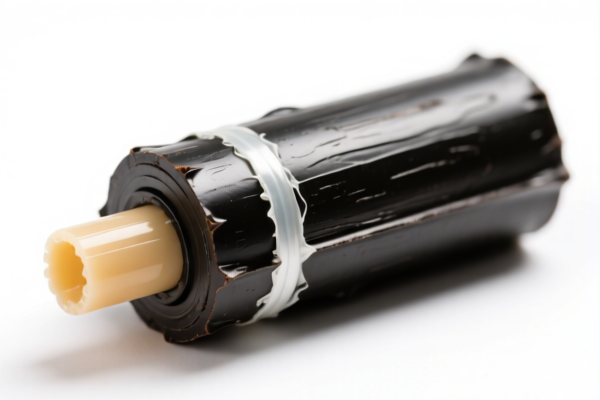
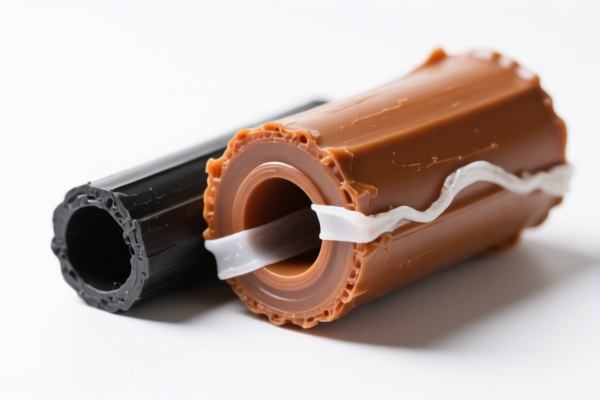
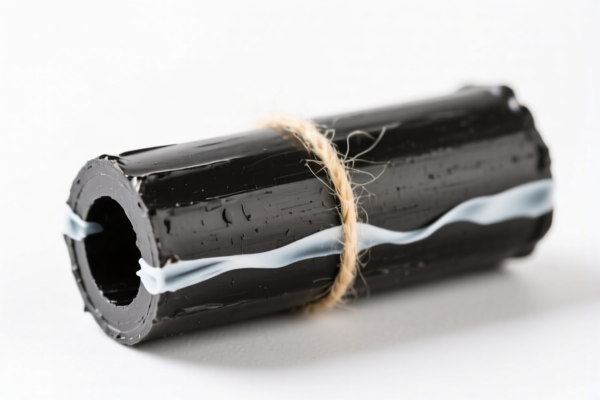
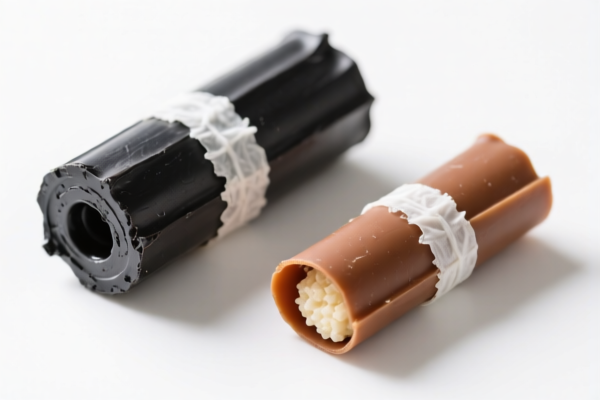
AI Analysis
🧪 Rubber Additive DBS (Ointment) — Precision Classification & 2026 Tariff Deep Dive
🌐 HS Code Reference & Customs Clearance Guide | 2026 Latest Tariff Analysis | Professional通关 Strategy
📌 1. Product Definition & Classification: What is "Rubber Additive DBS Ointment"?
Rubber Additive DBS (Ointment) refers to a semi-solid rubber processing aid, typically in ointment or paste form, used to enhance the dispersion and mixing efficiency of other rubber additives (like accelerators, zinc oxide, stearic acid) in the rubber compound. The "Ointment" form indicates it is a chemical preparation/mixture designed for industrial rubber manufacturing.
In international trade, this product is classified under Chapter 38: Miscellaneous Chemical Products, specifically as a Rubber Accelerator or Rubber Processing Aid.
⚠️ Critical Classification Note:
- The product is not a raw chemical substance but a preparation/formulation.
- The form "Ointment" confirms it is a chemical mixture intended for specific industrial use (rubber processing).
- It falls under HS Code 3812: "Preparations anti-gelling or anti-hardening of rubber or plastic..." or more broadly "Rubber Accelerators and other rubber additives."
📦 2. HS Code Classification Details (2026 Latest Tariff Authority)
Based on the provided data, there are two possible HS Codes for Rubber Additive DBS (Ointment), depending on the specific chemical composition and whether it is considered a "special" or "other" rubber additive.
| HS Code | Product Description | Application Scenario | Form | Tax Rate |
|---|---|---|---|---|
3812.10.10.00 |
Rubber Additive AA/DBS, Special Type (Ointment) | High-purity or specialized rubber accelerators; ointment form for precise dosing | Ointment | 41.5% |
3812.10.50.00 |
Rubber Additive AA/DBS, Other Type (Ointment) | Standard or general-purpose rubber additives; common ointment form | Ointment | 40.0% |
🔍 Key Distinction:
-3812.10.10.00is for "Special" rubber additives (e.g., those with specific accelerated effects or proprietary formulations).
-3812.10.50.00is for "Other" rubber additives (general-purpose, standard formulations).
- Both are for Ointment/Paste forms.
- The difference in tax rate (41.5% vs. 40.0%) is driven by the base tariff (6.5% vs. 5.0%), while the additional tariffs remain the same.
💰 3. 2026 Latest Tariff Rate Breakdown (Including Surtaxes & Policy Add-ons)
✅ Applicable Country: United States (US)
✅ Origin: China (CN)
✅ Effective Date: From November 10, 2025 (and subsequent imports)
🎯 1. 3812.10.10.00 — Rubber Additive AA/DBS (Ointment), Special Type
| Item | Content |
|---|---|
| Base Tariff | 6.5% (ad valorem) |
| Section 301 Surtax | +25.0% |
| Section 122 Tariff | +10.0% (Specific to certain chemical preparations from China) |
| Total Tariff Rate | 41.5% |
| Tax Calculation | CIF Value × 41.5% |
| De Minimis Exemption? | ❌ No (denied for chemical preparations under these sections) |
| Legal Basis Path | Section 301: Footnote 9903.88.01 → Section 122: 9903.01.25 → USITC: 3812.10.10.00 |
📌 Explanation:
- 6.5% Base: Standard MFN tariff for special rubber additives.
- 25% Section 301: Trump-era tariff, maintained and expanded under current trade policy for Chinese goods in this category.
- 10% Section 122: Additional tariff on specific chemical preparations from China.
- Total: 41.5% — This is a high-cost import, requiring careful cost allocation.
🎯 2. 3812.10.50.00 — Rubber Additive AA/DBS (Ointment), Other Type
| Item | Content |
|---|---|
| Base Tariff | 5.0% (ad valorem) |
| Section 301 Surtax | +25.0% |
| Section 122 Tariff | +10.0% |
| Total Tariff Rate | 40.0% |
| Tax Calculation | CIF Value × 40.0% |
| De Minimis Exemption? | ❌ No (denied for chemical preparations under these sections) |
| Legal Basis Path | Section 301: Footnote 9903.88.01 → Section 122: 9903.01.24 → USITC: 3812.10.50.00 |
📌 Note:
- 5.0% Base: Standard MFN tariff for other rubber additives.
- 35% Surtaxes: Same 25% + 10% as above.
- Total: 40.0% — Slightly lower than the "Special" type, but still significant.
🛠️ 4. Customs Clearance Practical Advice (Real-World Pitfall Avoidance)
✅ 1. Documentation Checklist (Mandatory)
| Document | Required? | Explanation |
|---|---|---|
| ✅ Product Technical Data Sheet (TDS) | ✔️ | Must specify "Rubber Additive," "Ointment/Paste Form," and active ingredients. |
| ✅ Safety Data Sheet (SDS) | ✔️ | Required for chemical imports. Must show no hazardous classification that restricts import. |
| ✅ Commercial Invoice | ✔️ | Clearly state: "Rubber Additive DBS Ointment, Chemical Preparation for Rubber Processing." |
| ✅ Certificate of Origin (CO) | ✔️ | Must confirm Made in China to apply correct tariffs. |
| ✅ Packing List | ✔️ | Detail net weight, gross weight, and packaging type (e.g., 25kg drums, plastic containers). |
| ✅ HS Code Pre-Ruling (Optional but Recommended) | ✔️ | Confirm with CBP whether your specific formulation fits 3812.10.10.00 or 3812.10.50.00. |
✅ 2. Classification Strategy (Key Tips)
🔥 “Know Your Form, Know Your Rate, Avoid the 41.5% Trap!”
| Scenario | Correct HS Code | Incorrect HS Code | Consequence |
|---|---|---|---|
| Standard DBS Ointment | 3812.10.50.00 (40.0%) |
3812.10.10.00 (41.5%) |
Overpay by 1.5% on CIF value. |
| Specialized/Patented DBS | 3812.10.10.00 (41.5%) |
3812.10.50.00 (40.0%) |
Underpayment risk if audited. |
| Misclassified as Raw Chemical (e.g., 2930) | ❌ | 3812.10.xxxx |
Severe Penalty: Retrospective tax + fines. |
| Misclassified as Rubber Part (e.g., 4016) | ❌ | 3812.10.xxxx |
Severe Penalty: Retrospective tax + fines. |
📌 Important:
- Do not classify as "Raw Chemical" (Chapter 29) because it is a preparation/mixture.
- Do not classify as "Rubber Product" (Chapter 40) because it is an additive, not the rubber itself.
✅ 3. Special Cases & Handling
| Case | Handling Advice |
|---|---|
| OEM/Private Label | Same HS code applies. Provide invoice showing brand, but ensure chemical identity is clear. |
| Mixed Shipment (with other additives) | Declare separately. Do not bundle with non-subject goods to avoid misclassification. |
| Samples for Testing | Still subject to tariffs. No de minimis exemption for chemical preparations from China. |
| Re-export to Third Country | Ensure original US import duties are accounted for. May need bond for warehouse entry. |
🌍 5. Global Market Comparison (2026 Latest)
| Country/Region | Recommended HS Code | Tariff (China Origin) | Certification Required | Notes |
|---|---|---|---|---|
| 🇺🇸 United States | 3812.10.50.00 / 3812.10.10.00 |
40.0% / 41.5% | No special certs | High tariff due to 301 + 122 clauses. |
| 🇨🇳 China | 3812.10.50.00 |
5.0% | No special certs | Low import duty. |
| 🇪🇺 EU | 3812.10.00 |
0% - 4.7% | REACH Registration | REACH is critical. No 301 tariffs. |
| 🇯🇵 Japan | 3812.10.00 |
5.0% - 6.0% | None | Moderate tariff. |
| 🇦🇺 Australia | 3812.10.00 |
5.0% | None | Low tariff. |
📌 Conclusion:
- The US has the highest effective tariff (40-41.5%) due to Section 301 and Section 122.
- EU, Japan, and Australia are significantly cheaper (0-6%).
- Strategic Recommendation: If possible, consider supply chain diversification (e.g., sourcing from Vietnam or Thailand) to avoid US tariffs, but verify origin rules carefully.
📌 6. Common Mistakes & Pitfall Guide (Lessons Learned)
❌ Mistake 1: Classifying as "Raw Chemical" (e.g., 2930.xxxx)
👉 Consequence:海关 will reclassify to 3812, apply 40%+ tax, and issue a penalty for misdeclaration.
❌ Mistake 2: Assuming "Ointment" form exempts from surtaxes
👉 Consequence: No exemption. Section 301 and 122 apply to all chemical preparations from China in this category.
❌ Mistake 3: Using vague descriptions like "Rubber Chemical"
👉 Consequence: Customs may delay shipment for additional classification review, leading to storage fees and delays.
❌ Mistake 4: Ignoring Section 122
👉 Consequence: Missing the 10% additional tariff, leading to underpayment and audit risk.
✅ Correct Approach:
"Rubber Additive DBS Ointment, Chemical Preparation for Rubber Processing, HS Code 3812.10.50.00, Origin: China, Subject to 25% Section 301 + 10% Section 122 Surtaxes."
🎯 7. Conclusion: Precision Classification, Cost Control, and Efficient Clearance
🎯 Remember the Key Takeaways:
🔹 “Form Matters: Ointment = Chemical Preparation (Chapter 38).”
🔹 “Rate Difference: Special (41.5%) vs. Other (40.0%).”
🔹 “Surtaxes Apply: 25% (301) + 10% (122) = 35% on top of base.”
🔹 “No De Minimis: All shipments subject to full tariff.”
📌 Pro Tip:
If your Rubber Additive DBS Ointment is not made in China (e.g., from Germany, Japan, or the US), tariffs will be significantly lower (often 0-5%).
Verify Origin Carefully!
📣 Immediate Action:
📞 Consult a Customs Broker for pre-classification ruling.
📄 Prepare SDS and TDS before shipment.
📊 Calculate Landed Cost including 40-41.5% tariffs.
🚀 Plan for Compliance to avoid delays and penalties.
✨ Professional Customs Clearance Starts with Accurate Classification!
💼 Your Bottom Line Depends on Precision!
Customer Reviews
About HS Code Classification
The Harmonized System (HS) is an internationally standardized nomenclature developed by the World Customs Organization (WCO) to classify traded products. Over 200 countries use the HS system as the basis for customs tariffs, trade statistics, and import/export regulations.
Each HS code follows a hierarchical structure:
- Chapter (2 digits) — Broad category of goods (e.g., Chapter 84: Machinery and Mechanical Appliances)
- Heading (4 digits) — More specific grouping within the chapter
- Subheading (6 digits) — Internationally standardized breakdown, used by all WCO member countries
- National subdivisions (8-10 digits) — Country-specific extensions for further classification, such as US HTSUS 10-digit codes
Correct HS code classification is essential for smooth customs clearance, accurate duty payment, and compliance with trade regulations. Misclassification can lead to customs delays, overpayment of duties, or penalties.
When importing from CN to US, the applicable tariff rates may include:
- Most-Favored-Nation (MFN) rate — The standard duty rate applied to WTO members
- General rate — Applied to countries without trade agreements
- Trade remedy duties — Additional tariffs such as Section 301 (anti-dumping), Section 232 (national security), or countervailing duties
The information provided on this page is for reference purposes only. For official classification, please consult with your local customs authority or a licensed customs broker.