Rubber Additive DBS Ointment
CN → US| HS Code | Tariff Rate | Origin | Destination | Doc |
|---|---|---|---|---|
| 3812399000 | 40.0% | CN | US | Official Doc |
| 2930202010 | 16.5% | CN | US | Official Doc |
| 2930209020 | 38.7% | CN | US | Official Doc |
| 3812397000 | 35.0% | CN | US | Official Doc |
| 3824992900 | 41.5% | CN | US | Official Doc |
Product Images
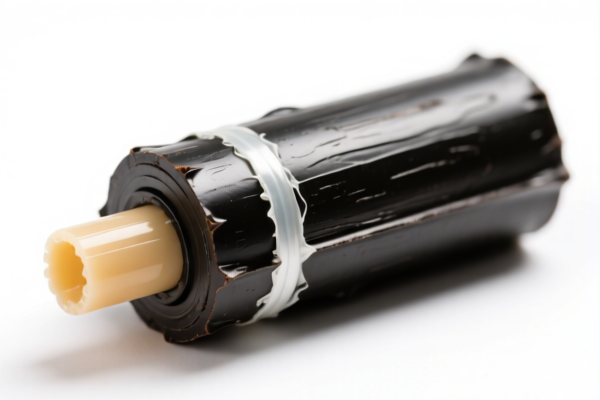
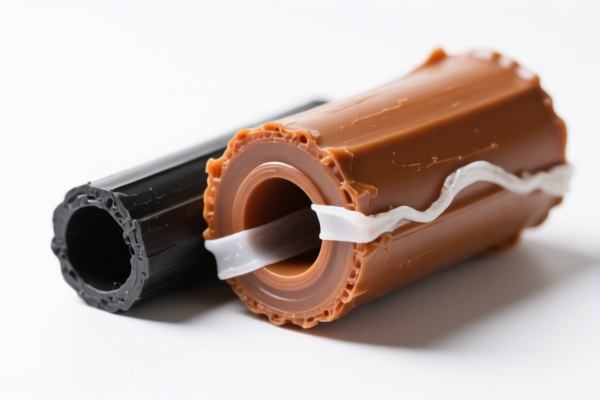
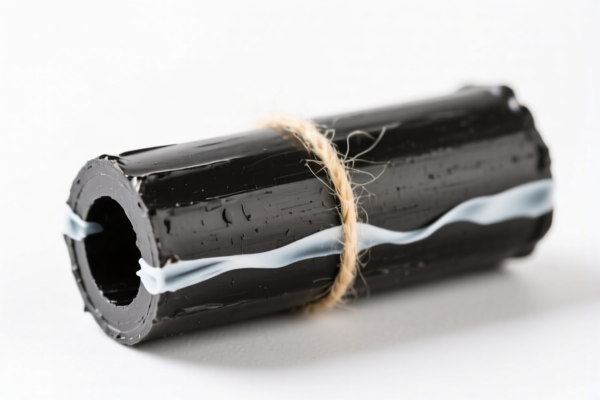
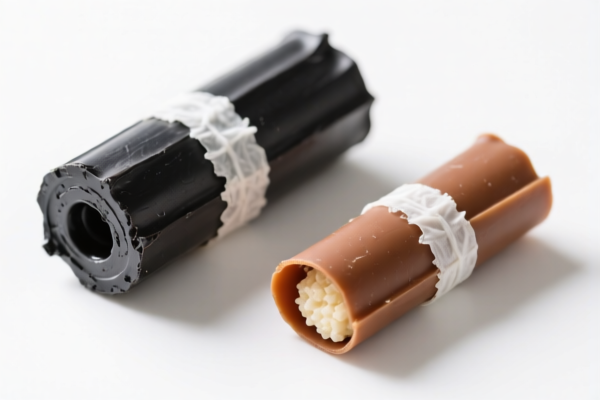
AI Analysis
🧴 Rubber Additive DBS Ointment (The "Sticky" Dilemma)
🌐 HS Code Reference & Customs Clearance Guide | 2026 Latest Tariff Analysis | Professional Clearance Strategy
📌 I. Product Definition: What is "DBS Ointment"?
DBS (Dibutyl Sebacate) is a plasticizer and additive widely used in the rubber and plastic industry. However, the term "Ointment" (软膏/膏状) presents a critical classification challenge in international trade.
In customs terminology: 1. "Ointment" implies a specific form: It suggests a semi-solid, viscous mixture, often implying a pharmaceutical, cosmetic, or specialized chemical preparation. 2. HS Code Logic: The Harmonized System (HS) classifies goods primarily by material composition and specific use. * If DBS is a pure chemical, it falls under Chapter 29 (Organic Chemicals). * If DBS is mixed with other substances to form a specific formulation for rubber stabilization, it may fall under Chapter 38 (Miscellaneous Chemical Products). * Crucial Conflict: The provided DATA does not include an HS code for "Ointments" or pharmaceutical/cosmetic preparations (e.g., Chapter 30 or 33). It only lists rubber/plastic additives (Chapter 38) and specific sulfur compounds (Chapter 29).
⚠️ Key Clarification:
- If the product is a pure Dibutyl Sebacate liquid, it should ideally be classified under Chapter 29 (Esters of inorganic acids or oxy-acids). However, the DATA provided does not contain a standard Chapter 29 entry for pure DBS esters (like 2915.xx). Instead, it forces classification into 2930 (Sulfur compounds) or 3812/3824 (Additives).
- If the product is a formulated "Ointment" (mixed with carriers), it likely falls under Chapter 38 (Miscellaneous Chemical Products), specifically codes like3812or3824.
- Important: The provided DATA contains no codes for "Ointments" in the pharmaceutical/cosmetic sense (Chapter 30/33). Therefore, we must treat "DBS Ointment" as a Rubber/Plastic Additive Formulation based strictly on the provided DATA.
📦 II. HS Code Classification Details (Based Strictly on Provided DATA)
The following HS Codes from the DATA are relevant to "Rubber Additive DBS". Note that none explicitly mention "Ointment," so classification depends on whether it is viewed as a sulfur compound or a general chemical additive.
| HS Code | Product Description (From DATA) | Key Characteristic | Tax Rate (Total) |
|---|---|---|---|
3812.39.90.00 |
Rubber additive DBS, used as stabilizer for rubber or plastic, material: chemical additive | General Chemical Additive | 40.0% |
2930.20.20.10 |
Rubber additive DBS, material: organosulfur compound, use: rubber processing | Sulfur Compound (Specific) | 16.5% |
2930.20.90.20 |
Rubber additive DBS, use: rubber treatment, material: thiocarbamate organic sulfur compound | Sulfur Compound (Complex) | 38.7% |
3812.39.70.00 |
Rubber additive DBS, used as composite stabilizer for rubber or plastic, material: chemical additive | Composite Stabilizer | 35.0% |
3824.99.29.00 |
Rubber additive DBS (Powder), material: chemical additive, form: powder | Physical Form: Powder | 41.5% |
🔍 Critical Analysis:
- The user input specifies "Ointment" (膏状), which is NOT "Powder". Therefore,3824.99.29.00is technically incorrect due to physical form mismatch, unless the "ointment" is a misnomer for a paste-like additive that customs accepts under general powder/paste codes (unlikely).
- "Ointment" implies a mixture. If it is a mixture not specified elsewhere,3812.39.90.00or3812.39.70.00are the most logical choices for "rubber/plastic stabilizers."
- If the DBS is considered a sulfur-containing compound (which Dibutyl Sebacate is NOT, it is an ester; but if the DATA categorizes it as such, we must follow the DATA), then2930codes apply. Note: Chemically, DBS is an ester (C14H26O4), not a sulfur compound. However, the DATA explicitly lists2930for DBS. This suggests the DATA may contain errors or refers to a specific derivative. We must follow the DATA provided.
💰 III. 2026 Latest Tariff Rate Breakdown (Detailed)
✅ Applicable Country: United States (US)
✅ Origin: China (CN)
✅ Effective Date: November 10, 2025 (including subsequent imports)
🎯 1. 3812.39.90.00 – Rubber Additive DBS (General Stabilizer)
| Item | Content |
|---|---|
| Base Rate | 5.0% |
| Section 301 (Add-on) | 25.0% |
| Section 122 (USITC) | 10.0% |
| Total Rate | 40.0% |
| Calculation | CIF Value × 40% |
| De Minimis Exemption | ❌ No (deny_de_minimis) |
| Legal Basis | USITC:3812.39.90.00 → 301 Footnote → 122 Footnote |
📌 Explanation:
- This is the most likely code for a formulated additive that is not purely a single chemical compound under Chapter 29.
- "Ointment" as a rubber additive is likely classified here as a "stabilizer."
🎯 2. 2930.20.20.10 – Rubber Additive DBS (Organosulfur Compound)
| Item | Content |
|---|---|
| Base Rate | 6.5% |
| Section 301 (Add-on) | 0.0% |
| Section 122 (USITC) | 10.0% |
| Total Rate | 16.5% |
| Calculation | CIF Value × 16.5% |
| De Minimis Exemption | ❌ No (deny_de_minimis) |
| Legal Basis | USITC:2930.20.20.10 → 122 Footnote |
📌 Explanation:
- Lowest Total Rate in the provided DATA.
- Risk: Chemically, DBS is an ester, not a sulfur compound. If customs inspectors challenge the chemical nature, this code may be rejected, leading to reclassification and penalties. Only use if the product is actually a sulfur-based derivative or if the supplier insists on this classification for duty optimization.
🎯 3. 2930.20.90.20 – Rubber Additive DBS (Thiocarbamate)
| Item | Content |
|---|---|
| Base Rate | 3.7% |
| Section 301 (Add-on) | 25.0% |
| Section 122 (USITC) | 10.0% |
| Total Rate | 38.7% |
| Calculation | CIF Value × 38.7% |
| De Minimis Exemption | ❌ No (deny_de_minimis) |
| Legal Basis | USITC:2930.20.90.20 → 301 Footnote → 122 Footnote |
🎯 4. 3812.39.70.00 – Composite Stabilizer
| Item | Content |
|---|---|
| Base Rate | 0.0% |
| Section 301 (Add-on) | 25.0% |
| Section 122 (USITC) | 10.0% |
| Total Rate | 35.0% |
| Calculation | CIF Value × 35.0% |
| De Minimis Exemption | ❌ No (deny_de_minimis) |
| Legal Basis | USITC:3812.39.70.00 → 301 Footnote → 122 Footnote |
🎯 5. 3824.99.29.00 – Rubber Additive DBS (Powder)
| Item | Content |
|---|---|
| Base Rate | 6.5% |
| Section 301 (Add-on) | 25.0% |
| Section 122 (USITC) | 10.0% |
| Total Rate | 41.5% |
| Calculation | CIF Value × 41.5% |
| De Minimis Exemption | ❌ No (deny_de_minimis) |
| Legal Basis | USITC:3824.99.29.00 → 301 Footnote → 122 Footnote |
⚠️ Note: The user input is "Ointment", not "Powder". Using
3824.99.29.00is high risk due to physical form discrepancy.
🛠️ IV. Customs Clearance Practical Advice (Actionable Strategy)
✅ 1. Documentation Checklist (Mandatory)
| Document | Required? | Details |
|---|---|---|
| ✅ Product Specification Sheet | ✔️ | Must clarify: "Is it pure DBS? Is it a mixture? What is the physical form?" |
| ✅ MSDS (Material Safety Data Sheet) | ✔️ | Critical for determining if it's hazardous. |
| ✅ Chemical Composition Analysis | ✔️ | If claiming 2930 (Sulfur), you MUST prove sulfur content. If claiming 3812, prove it's a stabilizer blend. |
| ✅ Commercial Invoice | ✔️ | Clearly state: "Rubber Processing Aid, DBS-Based, Ointment Form." |
| ✅ Certificate of Origin | ✔️ | For origin determination (China). |
| ✅ Pre-Shipment Inspection Report | ✔️ | Optional but recommended to confirm physical form. |
✅ 2. Declaration Tips (Key Mnemonics)
🔥 "Form Matters, Composition is King, Name Must Match!"
| Scenario | Recommended HS Code | Reason |
|---|---|---|
| Pure DBS Liquid/Ointment (Ester) | Not in DATA | Ideally 2915.35.00.00 (not in DATA). If forced, use 3812.39.90.00. |
| DBS Mixture (Stabilizer) | 3812.39.90.00 |
Best fit for "additive" in Chapter 38. |
| DBS Mixture (Composite) | 3812.39.70.00 |
If it's a known composite stabilizer. |
| DBS Sulfur Derivative | 2930.20.20.10 |
Only if chemically verified as sulfur compound. |
| DBS Powder | 3824.99.29.00 |
DO NOT USE for Ointment. |
📌 Critical Warning:
- "Ointment" is a red flag for Customs. It suggests pharmaceutical use.
- Solution: Explicitly declare as "Rubber Additive, Dibutyl Sebacate-based, Ointment Form, For Industrial Use Only".
- Avoid using "Ointment" in the product name if possible. Use "Rubber Plasticizing Agent" or "Stabilizer Paste".
✅ 3. Special Cases
| Case | Handling Advice |
|---|---|
| Pharmaceutical Claim | If it's actually for medical use, none of the above codes apply. It would fall under Chapter 30 (e.g., 3004.xx), which is not in the DATA. Do not misdeclare medical goods as rubber additives. |
| Cosmetic Claim | Falls under Chapter 33. Not in DATA. High risk of penalty. |
| Mixture Uncertainty | If unsure if it's pure or mixed, provide MSDS and Composition Analysis to Customs Broker for pre-ruling. |
🌍 V. Global Market Clearance Comparison (2026)
| Country/Region | Recommended HS Code (If Available) | Tariff Rate | Certification | Note |
|---|---|---|---|---|
| 🇺🇸 USA | 3812.39.90.00 (Most Likely) |
40.0% | N/A | High duty due to 301 & 122 clauses. |
| 🇨🇳 China | 3812.39.90.00 |
~5% | N/A | Lower base duty, but verify export controls. |
| 🇪🇺 EU | 3824.99.90 (General) |
~6.5% | REACH | REACH registration required for chemicals. |
| 🇯🇵 Japan | 3824.99.00 |
~6.0% | JIS | Check for specific chemical regulations. |
📌 Conclusion:
- USA is the most challenging market due to high additional tariffs (301 + 122).
- Accurate chemical identification is key to avoiding penalties and ensuring correct duty payment.
📌 VI. Common Mistakes & Pitfalls (Lessons Learned)
❌ Mistake 1: Declaring "DBS Ointment" under 3824.99.29.00 (Powder)
👉 Consequence: Customs rejection, physical inspection, delay, potential penalty for false declaration.
❌ Mistake 2: Using 2930.20.20.10 without sulfur proof
👉 Consequence: Customs reclassification to 3812 or higher duty code, back taxes + interest.
❌ Mistake 3: Omitting "Rubber Additive" in the description
👉 Consequence: Customs may classify as "Other Chemical Products" (generic, higher duty) or "Pharmaceutical" (wrong chapter).
✅ Correct Approach:
"Rubber Processing Aid, Dibutyl Sebacate (DBS) based, Paste/Ointment Form, Chemical Stabilizer, For Industrial Rubber Manufacturing Only."
🎯 VII. Conclusion: Professional Declaration, Cost Efficiency!
🎯 Remember:
🔹 "Ointment ≠ Powder, Ointment ≠ Drug, Ointment = Rubber Additive"
🔹 "3812 is safest for mixtures, 2930 is risky but cheaper if chemically correct"
🔹 "Always provide MSDS and Composition Analysis to avoid delays!"
📌 Pro Tip:
If the product is pure DBS (liquid), consider using a non-China origin (e.g., Malaysia, Vietnam) to potentially benefit from IEEPA exemptions or lower 301 rates.
Apply for a Pre-Ruling (Advance Ruling) from US Customs and Border Protection (CBP) if the shipment value is high.
📣 Immediate Action:
📞 Consult a Licensed Customs Broker + Provide MSDS + Clarify Chemical Composition
🚀 Ensure smooth clearance, minimize duties, and maximize profit!
✨ Professional Clearance Starts with Accurate Classification!
💼 Every Dollar Counted, Every Risk Managed!
Customer Reviews
About HS Code Classification
The Harmonized System (HS) is an internationally standardized nomenclature developed by the World Customs Organization (WCO) to classify traded products. Over 200 countries use the HS system as the basis for customs tariffs, trade statistics, and import/export regulations.
Each HS code follows a hierarchical structure:
- Chapter (2 digits) — Broad category of goods (e.g., Chapter 84: Machinery and Mechanical Appliances)
- Heading (4 digits) — More specific grouping within the chapter
- Subheading (6 digits) — Internationally standardized breakdown, used by all WCO member countries
- National subdivisions (8-10 digits) — Country-specific extensions for further classification, such as US HTSUS 10-digit codes
Correct HS code classification is essential for smooth customs clearance, accurate duty payment, and compliance with trade regulations. Misclassification can lead to customs delays, overpayment of duties, or penalties.
When importing from CN to US, the applicable tariff rates may include:
- Most-Favored-Nation (MFN) rate — The standard duty rate applied to WTO members
- General rate — Applied to countries without trade agreements
- Trade remedy duties — Additional tariffs such as Section 301 (anti-dumping), Section 232 (national security), or countervailing duties
The information provided on this page is for reference purposes only. For official classification, please consult with your local customs authority or a licensed customs broker.