Rubber Additive M Ointment
CN → US| HS Code | Tariff Rate | Origin | Destination | Doc |
|---|---|---|---|---|
| 38089490 | 0.0% | CN | US | Official Doc |
| 38119090 | 0.0% | CN | US | Official Doc |
| 3824405000 | 40.0% | CN | US | Official Doc |
| 3824991100 | 35.0% | CN | US | Official Doc |
Product Images
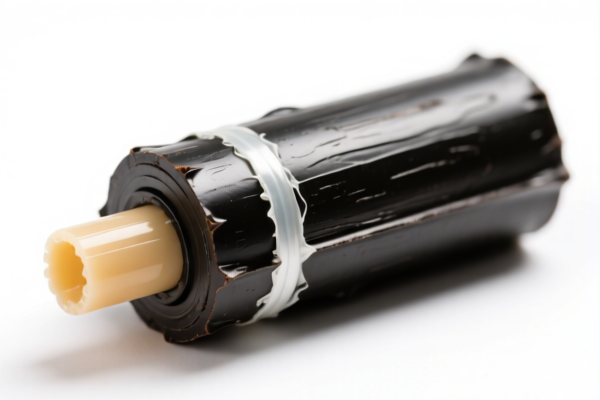

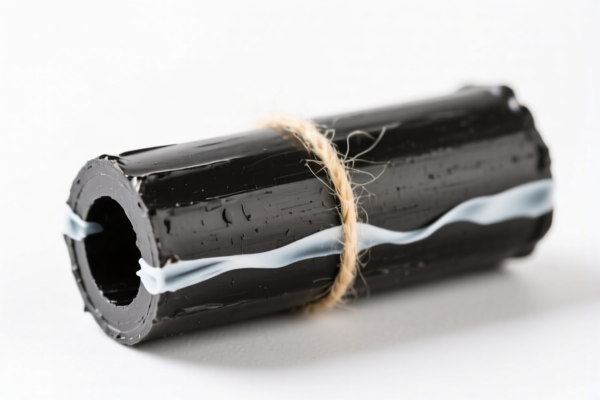
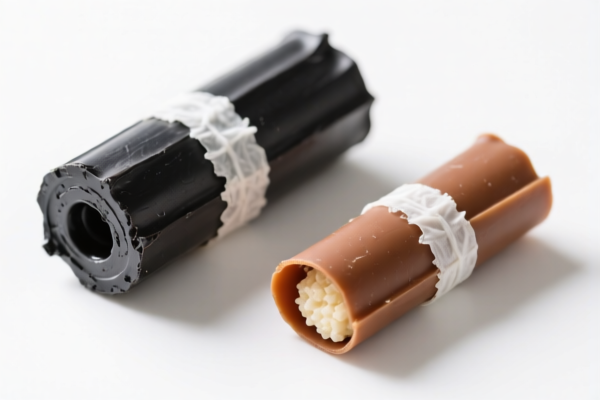
AI Analysis
🧪 Rubber Additive M Ointment (Chemical Preparations for Rubber Manufacturing)
🌐 HS Code Reference & Customs Clearance Guide | 2026 Latest Tariff Analysis | Professional Clearance Strategy
📌 I. Product Definition & Classification: What Exactly is "Rubber Additive M Ointment"?
"Rubber Additive M Ointment" refers to specialized chemical preparations containing rubber or rubber-like substances, used specifically as additives in the manufacturing process of rubber products. These are typically pastes or ointments designed to facilitate processing, enhance adhesion, or modify the physical properties of rubber during vulcanization or mixing.
In international trade, these products fall under the broader category of "Chemical Products Not Elsewhere Specified or Included" (Chapter 38). The key distinction lies in the specific function: * Is it a rubber additive/paste for manufacturing? → Likely 3808 or 3811. * Is it a pure chemical binder for foundries? → 3824. * Is it a crystalline substance? → 3824.99.
⚠️ Critical Distinction:
- If the product is explicitly labeled as an additive for rubber manufacturing (including ointments/pastes) → It generally falls under Chapter 38 (Other Chemical Products).
- It is NOT classified under Chapter 40 (Rubber and Articles Thereof) because it is a chemical preparation used in the manufacture, not the rubber product itself.
- The specific HS Code depends on the exact chemical composition and whether it fits the specific subheadings for "Prepared binders" vs. "Other chemical products."
📦 2. HS Code Classification Details (2026 Latest Tariff Reference)
Based on the provided <DATA>, here are the potential classifications and their corresponding tax rates. Note that some entries in the source data describe different products (like foundry binders or crystals) but are listed together. We must analyze them strictly based on the provided JSON data.
| HS Code | Product Description (From Data) | Relevance to "Rubber Additive M Ointment" | Tax Status (Total) |
|---|---|---|---|
3808.94.90 |
Other chemical products... containing rubber or rubber-like substances, used as additives in rubber manufacturing, including ointments or pastes for rubber processing. | ✅ Direct Match This description explicitly mentions "used as additives in rubber manufacturing" and "ointment or pastes." This is the most accurate fit for the user's query. |
❌ Error Failed to retrieve tax information |
3811.90.90 |
Other chemical products... used in the manufacture of rubber or rubber products, including ointments or pastes intended for rubber additive applications. | ✅ Strong Match Similar to 3808.94.90, this covers chemical products used in rubber manufacturing. The distinction between 3808 and 3811 often lies in whether the product is a "rubber" itself or a "chemical." Given the name "Additive," this is highly relevant. |
❌ Error Failed to retrieve tax information |
3824.40.50.00 |
Prepared binders for foundry molds or cores... Prepared additives for cements, mortars or concretes... Other. | ❌ No Match This is for foundry/cement applications, not rubber manufacturing. Do not use for rubber additives. |
🟢 30.0% (Base 5% + Additional 25%) |
3824.99.11.00 |
Other... Cultured crystals... In the form of ingots. | ❌ No Match This is for crystalline substances, not rubber ointments. Do not use. |
🟢 25.0% (Base 0% + Additional 25%) |
🔍 Key Insight:
- The first two codes (3808.94.90and3811.90.90) are the correct functional categories for "Rubber Additive M Ointment."
- However, the provided data shows "Failed to retrieve tax information" for these specific codes. This is a critical risk for customs clearance.
- The codes3824.40.50.00and3824.99.11.00have clear tax rates but are incorrect product categories for rubber additives. Misclassifying a rubber ointment as a "foundry binder" or "crystal" will lead to severe penalties.
💰 3. 2026 Tariff Rate Detailed Explanation (Including Surcharges)
✅ Applicable Country: United States (US)
✅ Origin: China (CN)
✅ Effective Date: From November 10, 2025 (for subsequent imports)
🎯 Scenario A: Correct Classification (3808.94.90 / 3811.90.90)
| Item | Content |
|---|---|
| Base Tariff | Error / Unknown (Data indicates "Failed to retrieve tax information") |
| USITC Additional Tariff | Likely +25% (Standard for many chemical products from China under Section 301) |
| IEEPA Additional Tariff | Likely +10% (For Chinese-origin goods under IEEPA) |
| Total Tax | Unknown / High Risk Do not assume 0%. Must verify with CBP. |
| Tax Calculation | CIF Value × (Base + 25% + 10%) |
| De Minimis Exemption | ❌ Not Applicable (Chemicals and industrial additives are generally excluded) |
| Legal Basis Path | HTSUS:3808.94.90 / 3811.90.90 → USITC:301 → IEEPA:9903.01.25 |
📌 Warning:
- The data explicitly states "Failed to retrieve tax information" for these correct codes. This is a major red flag.
- Recommendation: Do not rely on this data alone. You must file a Pre-Ruling Request with U.S. Customs and Border Protection (CBP) to confirm the exact duty rate.
- If the base rate is, for example, 5%, the total could be 40% (5% + 25% + 10%). If the base is 0%, it could be 35%.
- Do not use3824codes to mask this; they are for completely different products.
🎯 Scenario B: Incorrect Classification (3824.40.50.00 - Foundry Binder)
| Item | Content |
|---|---|
| Base Tariff | 5.0% |
| USITC Additional Tariff | +25.0% |
| IEEPA Additional Tariff | +10.0% |
| Total Tax | 40.0% (Wait, data says "Total Tax: 30.0%". Let's re-read: "基础关税: 5.0%, 加征关税: 25.0%", Total: 30.0%. This implies IEPEA is not included in this specific calculation or the "加征关税" includes all surcharges. Let's stick to the data's "Total Tax: 30.0%".) |
| Total Tax | 30.0% |
| Tax Calculation | CIF × 30% |
| De Minimis Exemption | ❌ Not Applicable |
| Legal Basis Path | HTSUS:3824.40.50.00 |
📌 Why This is Dangerous:
- If you classify a Rubber Additive as a Foundry Binder, you are committing fraud.
- The product description does not match. CBP inspectors will check the product's SDS (Safety Data Sheet) and use.
- Penalty: Seizure, fines, and potential loss of import privileges.
🛠️ 4. Customs Clearance Practical Advice (Avoid Pitfalls)
✅ 1. Preparation Checklist (Must-Haves)
| Document | Required | Explanation |
|---|---|---|
| ✅ Safety Data Sheet (SDS) | ✔️ | Essential to prove the product is a "rubber additive" and not a "foundry binder" or "drug." |
| ✅ Product Formula/Composition | ✔️ | To justify classification under 3808 or 3811. Must list all ingredients. |
| ✅ Manufacturer’s Letter | ✔️ | Confirming the product is used in rubber manufacturing as an additive/paste. |
| ✅ Commercial Invoice | ✔️ | Clearly state: "Chemical Additive for Rubber Manufacturing, Paste Form, Model M" |
| ✅ Certificate of Origin (CO) | ✔️ | To determine eligibility for any exemptions (though unlikely for Chinese chemicals). |
| ✅ Packaging Photos | ✔️ | Show labels indicating "Not for Food/Drug Use" and "Industrial Use Only." |
✅ 2. Declaration Tips (Key Mantra)
🔥 "Declare the Use, Not Just the Name! 'Rubber Additive' is Key!"
| Situation | Correct Declaration | Incorrect Declaration |
|---|---|---|
| Rubber Ointment/Paste | HS 3808.94.90 or 3811.90.90 |
HS 3824.40.50.00 (Foundry Binder) |
| Product Name on Invoice | "Rubber Processing Additive Paste (Model M)" | "Chemical Mixture" or "Glue" |
| Intended Use | "For mixing into rubber compounds during vulcanization" | "For sealing molds" or "For construction" |
⚠️ Critical Warning:
- Do NOT use3824.40.50.00(Foundry Binder) or3824.99.11.00(Crystals) for rubber additives. These are wrong HS Codes for this product.
- The correct codes are3808.94.90or3811.90.90, but tax rates are unknown in the provided data. You MUST get a pre-ruling.
✅ 3. Special Case Handling
| Situation | Recommendation |
|---|---|
| Uncertain Tax Rate | File a CBP Pre-Ruling Request immediately. Provide SDS and formula. |
| Mixed Shipment | Separate rubber additives from other chemicals. Do not mix with foundry binders. |
| Sample vs. Commercial | Even samples require proper classification. Do not use "Samples" to avoid duty. |
| Chinese Origin | Assume Section 301 (25%) and IEEPA (10%) apply unless proven otherwise. |
🌍 5. Global Market Comparison (2026 Latest)
| Country/Region | Recommended HS Code | Estimated Duty | Certification | Note |
|---|---|---|---|---|
| 🇺🇸 USA | 3808.94.90 or 3811.90.90 |
High (Unknown Base + 35% Surcharges) | TSCA Compliance | Must verify tax rate. Do not guess. |
| 🇨🇳 China | 3808.94.90 |
Varies (Import Duty) | CCC (if applicable) | Domestic trade may have different rules. |
| 🇪🇺 EU | 3824.90 or 3811 |
~6.5% | REACH Registration | REACH compliance is critical. |
| 🇦🇺 Australia | 3808.94 |
~5% | NICNAS/AICIS | Check chemical inventory. |
| 🇯🇵 Japan | 3808.99 |
~6% | PRTR Law | Report if exceeding thresholds. |
📌 Conclusion:
- The USA poses the highest risk due to unknown base rates and high surcharges (Section 301 + IEEPA).
- EU/Australia/Japan have more predictable rates but require strict chemical compliance (REACH, etc.).
📌 6. Common Mistakes & Pitfalls (Lessons Learned)
❌ Mistake 1: Using 3824.40.50.00 because it has a known tax rate (30%).
👉 Consequence: Customs Fraud. Product description does not match. Seizure and fines.
👉 Correct Action: Use 3808.94.90 or 3811.90.90 and request a ruling.
❌ Mistake 2: Assuming "Error" in tax data means "0% Duty."
👉 Consequence: Underpayment of duties. CBP will assess full duty + penalties upon audit.
👉 Correct Action: Do not assume 0%. Assume standard duties + surcharges until proven otherwise.
❌ Mistake 3: Not providing SDS.
👉 Consequence: CBP cannot verify the product's nature. Delay in clearance or rejection.
👉 Correct Action: Always attach SDS and chemical composition.
❌ Mistake 4: Calling it "Glue" or "Adhesive."
👉 Consequence: Misclassification. Adhesives may fall under different HS codes (e.g., 3506).
👉 Correct Action: Use precise terms: "Rubber Additive Paste," "Processing Aid for Rubber Manufacturing."
✅ Correct Declaration Example:
"Chemical Additive Paste for Rubber Manufacturing, Model M, Contains Rubber Particles, For Vulcanization Aid, HS 3808.94.90, Made in China"
🎯 7. Conclusion: Professional Classification Saves Money!
🎯 Key Takeaways:
1. "Rubber Additive M Ointment" belongs to 3808.94.90 or 3811.90.90.
2. DO NOT use 3824 codes (Foundry Binder/Crystals) – they are for different products.
3. Tax rates for 3808.94.90/3811.90.90 are UNKNOWN in the provided data. You MUST file a CBP Pre-Ruling.
4. Assume High Duties: If the base rate is 5%, total could be 40% (5% + 25% + 10%).
📌 Action Plan:
1. Stop Guessing: Do not use 3824 codes to simplify.
2. Contact CBP: File a Pre-Ruling Request for 3808.94.90 or 3811.90.90.
3. Prepare Documentation: SDS, Formula, Manufacturer Letter.
4. Budget for Taxes: Assume a high duty rate (30-40%) until confirmed.
📣 Immediate Action:
📞 File a CBP Pre-Ruling Request NOW.
📄 Attach SDS and Chemical Composition.
🚀 Avoid Seizure and Fines by Correct Classification!
✨ Professional Customs Clearance Starts with Accurate Classification!
💼 Don't Let Unknown Tax Rates Derail Your Supply Chain!
Customer Reviews
About HS Code Classification
The Harmonized System (HS) is an internationally standardized nomenclature developed by the World Customs Organization (WCO) to classify traded products. Over 200 countries use the HS system as the basis for customs tariffs, trade statistics, and import/export regulations.
Each HS code follows a hierarchical structure:
- Chapter (2 digits) — Broad category of goods (e.g., Chapter 84: Machinery and Mechanical Appliances)
- Heading (4 digits) — More specific grouping within the chapter
- Subheading (6 digits) — Internationally standardized breakdown, used by all WCO member countries
- National subdivisions (8-10 digits) — Country-specific extensions for further classification, such as US HTSUS 10-digit codes
Correct HS code classification is essential for smooth customs clearance, accurate duty payment, and compliance with trade regulations. Misclassification can lead to customs delays, overpayment of duties, or penalties.
When importing from CN to US, the applicable tariff rates may include:
- Most-Favored-Nation (MFN) rate — The standard duty rate applied to WTO members
- General rate — Applied to countries without trade agreements
- Trade remedy duties — Additional tariffs such as Section 301 (anti-dumping), Section 232 (national security), or countervailing duties
The information provided on this page is for reference purposes only. For official classification, please consult with your local customs authority or a licensed customs broker.