Rubber Additive MBTD Paste
CN → US| HS Code | Tariff Rate | Origin | Destination | Doc |
|---|---|---|---|---|
| 2930909231 | 13.7% | CN | US | Official Doc |
| 3812101000 | 41.5% | CN | US | Official Doc |
| 3812105000 | 40.0% | CN | US | Official Doc |
| 2930306000 | 38.7% | CN | US | Official Doc |
| 3812105000 | 40.0% | CN | US | Official Doc |
Product Images
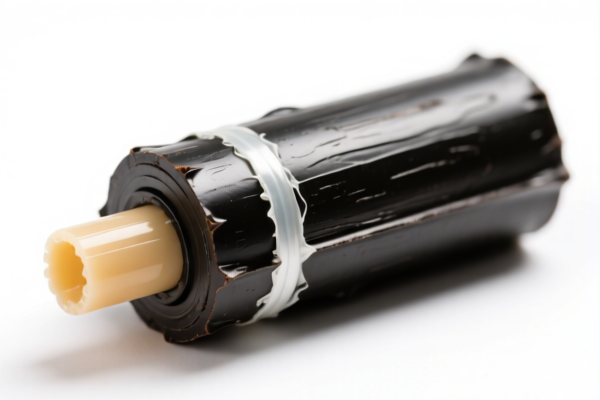
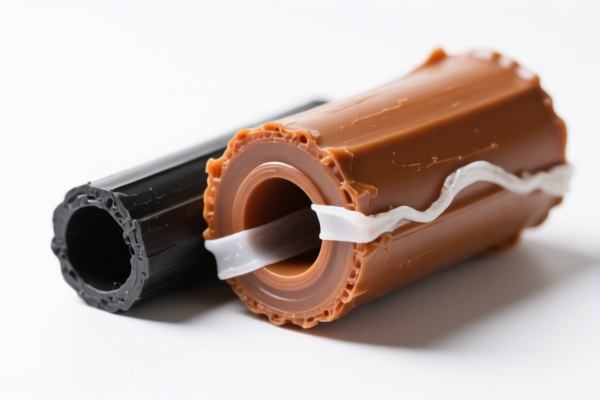
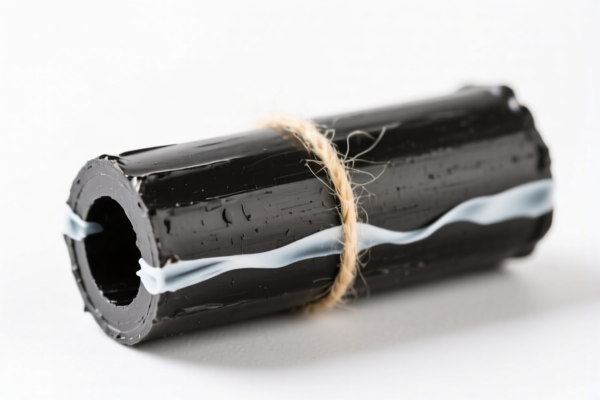
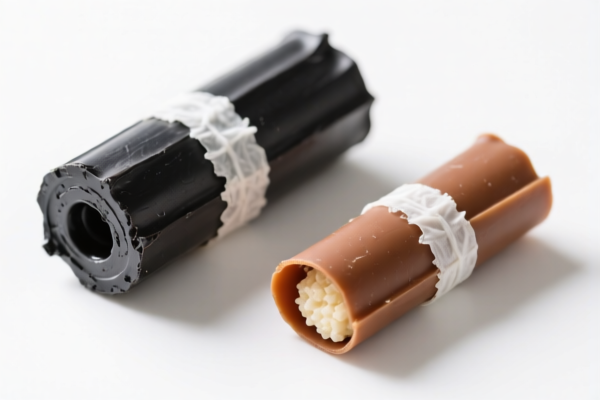
AI Analysis
🧪 Rubber Additive MBTS Paste (2,2'-Dithiobis(benzothiazole))
🌐 HS Code Reference & Customs Clearance Guide | 2026 Latest Tariff Analysis | Professional Clearance Strategy
📌 Part 1: Product Definition & Classification: Do You Really Understand "MBTS Paste"?
MBTS Paste is a critical intermediate vulcanization accelerator (promoter) used in the rubber industry. It is essentially 2,2'-Dithiobis(benzothiazole), a sulfur-containing organic compound, mixed with an oil or carrier to form a paste.
In international trade, it falls into two main classification buckets depending on whether it is viewed strictly as a chemical intermediate or as a formulated industrial additive:
1. Chemical Category (Sulfur Derivatives): If classified by its chemical structure (organic sulfur compound), it may fall under Heading 2930.
2. Industrial Formulation Category (Rubber Accelerators): If classified by its functional use (as a rubber processing aid), it falls under Heading 3812 ("Rubber Accelerators").
⚠️ Key Distinction Point:
- If the product is a pure chemical substance with minimal formulation → Often linked to 2930.30.60.00 (Sulfur urea/sulfur compounds).
- If the product is a formulated paste specifically for rubber processing → Linked to 3812.10.50.00 or 3812.10.10.00 (Rubber Accelerators).
- Note: "MBTS" is explicitly recognized as a rubber accelerator. The "Paste" form does not change its primary function.
📦 Part 2: HS Code Classification Details (2026 Latest Tariff Authority Comparison)
| HS Code | Product Description | Application Scenario | Material/Use Match |
|---|---|---|---|
2930.90.92.31 |
Other Organic Sulfur Compounds (General) | General chemical use; generic "rubber additive" labeling without specifying "accelerator" | ✅ Partial Match: Matches "rubber additive" and "organic sulfur" (MBTS is an organosulfur compound). |
3812.10.10.00 |
Rubber Accelerators (Aromatic Class) | Rubber processing aids; aromatic sulfur compounds like MBTS | ✅ Strong Match: "Rubber additive" = "Rubber accelerator"; MBTS is aromatic. Paste form fits chemical category. |
3812.10.50.00 |
Other Rubber Accelerators | General rubber processing; common accelerators like MBTS in paste form | ✅ Best Match: "Rubber additive" aligns with "accelerator"; MBTS is a common accelerator; paste form fits "other accelerators". |
2930.30.60.00 |
Sulfur Urea Compounds / Sulfur Compounds | Chemical intermediates; sulfur-based organic compounds | ⚠️ Inferred Match: MBTS is a sulfur-containing organic compound. Although it's a paste, it's a chemical component. No material conflict. |
🔍 Key Reminder:
-3812.10.50.00is often the most accurate for formulated pastes because it explicitly covers "Rubber Accelerators" in non-specific forms.
-2930.90.92.31applies if the documentation emphasizes "Organic Sulfur Compound" over "Rubber Accelerator".
-3812.10.10.00is valid if the importer insists on "Aromatic" classification, but3812.10.50.00is broader and safer for pastes.
💰 Part 3: 2026 Latest Tariff Rate Breakdown (Including Surcharges & Policy Add-ons)
✅ Applicable Country: United States (US)
✅ Origin: China (CN)
✅ Effective Date: Post-November 2025 (Current Trade War Context)
🎯 1. 2930.90.92.31 —— Organic Sulfur Compounds (General)
| Item | Detail |
|---|---|
| Base Tariff | 3.7% |
| Section 301 Surtax | 0.0% |
| Section 122 Tariff | 10% (If applicable under specific emergency provisions) |
| Total Tax Rate | 13.7% |
| Tax Calculation | CIF Value × 13.7% |
| De Minimis Eligibility | ❌ No (Section 301/122 goods generally excluded) |
| Legal Basis Path | HS:2930.90.92.31 → Tariff: 3.7% + Section 122: 10% |
📌 Explanation:
- This is the lowest tariff option (13.7%) among the four.
- It relies on classifying MBTS as a general "Organic Sulfur Compound" rather than a specialized "Rubber Accelerator."
- Risk: Customs may challenge this if the product is clearly labeled as a "Rubber Accelerator."
🎯 2. 3812.10.10.00 —— Rubber Accelerators (Aromatic Class)
| Item | Detail |
|---|---|
| Base Tariff | 6.5% |
| Section 301 Surtax | 25.0% |
| Section 122 Tariff | 10% |
| Total Tax Rate | 41.5% |
| Tax Calculation | CIF Value × 41.5% |
| De Minimis Eligibility | ❌ No |
| Legal Basis Path | HS:3812.10.10.00 → Base: 6.5% + Section 301: 25% + Section 122: 10% |
📌 Explanation:
- High tariff due to Section 301 (25%).
- Applies if customs strictly classify MBTS as an "Aromatic" rubber accelerator.
🎯 3. 3812.10.50.00 —— Other Rubber Accelerators
| Item | Detail |
|---|---|
| Base Tariff | 5.0% |
| Section 301 Surtax | 25.0% |
| Section 122 Tariff | 10% |
| Total Tax Rate | 40.0% |
| Tax Calculation | CIF Value × 40.0% |
| De Minimis Eligibility | ❌ No |
| Legal Basis Path | HS:3812.10.50.00 → Base: 5.0% + Section 301: 25% + Section 122: 10% |
📌 Explanation:
- This is the most common correct classification for functional rubber additives.
- Despite being the "correct" use-based code, it incurs high surcharges (Section 301 + 122).
- Savings vs. 3812.10.10.00: Saves 1.5% (6.5% vs 5.0% base), but still significantly higher than 2930.90.92.31.
🎯 4. 2930.30.60.00 —— Sulfur Compounds (Sulfur Urea Category)
| Item | Detail |
|---|---|
| Base Tariff | 3.7% |
| Section 301 Surtax | 25.0% |
| Section 122 Tariff | 10% |
| Total Tax Rate | 38.7% |
| Tax Calculation | CIF Value × 38.7% |
| De Minimis Eligibility | ❌ No |
| Legal Basis Path | HS:2930.30.60.00 → Base: 3.7% + Section 301: 25% + Section 122: 10% |
📌 Explanation:
- Intermediate rate (38.7%).
- Based on the inference that MBTS is a "Sulfur Compound."
- Less common than 3812 codes for finished pastes but valid if chemical composition is emphasized.
🛠️ Part 4: Customs Clearance Practical Advice (Pitfall Avoidance Guide)
✅ 1. Documentation Checklist (Non-Negotiable)
| Document | Required? | Note |
|---|---|---|
| ✅ Product Specification Sheet | ✔️ | Must clearly state "MBTS" (2,2'-Dithiobis(benzothiazole)) and "Paste" form. |
| ✅ Chemical Safety Data Sheet (SDS) | ✔️ | Confirm chemical composition and CAS number. |
| ✅ Declaration of Use | ✔️ | Explicitly state: "Used as a rubber accelerator in tire manufacturing." |
| ✅ Commercial Invoice | ✔️ | Description should match HS code (e.g., "Rubber Accelerator MBTS Paste" for 3812). |
| ✅ Certificate of Origin | ✔️ | Essential for determining Section 301 applicability. |
✅ 2. Declaration Strategy (Key Tips)
🔥 “Use Defines Code: Accelerator vs. Chemical”
| Scenario | Correct Declaration | Wrong Practice |
|---|---|---|
| Product is clearly a rubber accelerator | 3812.10.50.00 |
Classify as 2930 to save tax → Audit Risk! |
| Product is a generic sulfur chemical | 2930.90.92.31 |
Label as "Rubber Accelerator" → Misclassification |
| OEM Rubber Additive | 3812.10.50.00 with proof of use |
Split shipment (Chemical + Oil) → Higher Tariff |
| Pure MBTS Powder (not paste) | Consider 2930.30.60.00 |
Declare as "Paste" → Discrepancy |
✅ 3. Special Handling
| Situation | Advice |
|---|---|
| High-Value Shipments | Apply for Pre-Ruling from CBP to confirm if 3812 or 2930 is safer. |
| Section 122 Concerns | Verify if Section 122 (10%) is still active for your specific entry date. Some provisions may have expired or changed. |
| De Minimis (Section 321) | ❌ Do Not Rely: Section 301 and 122 goods are excluded from de minimis ($800 exemption). |
| Chemical Compatibility | Ensure SDS matches HS code. If SDS says "Organic Sulfur Compound," 2930 is stronger. If it says "Vulcanization Accelerator," 3812 is stronger. |
🌍 Part 5: Global Market Comparison (2026 Context)
| Country/Region | Recommended HS Code | Estimated Duty | Key Certification | Notes |
|---|---|---|---|---|
| 🇺🇸 USA | 3812.10.50.00 |
40.0% | No specific chem cert | High surcharges (301 + 122) |
| 🇨🇳 China | 2930.30.60.00 |
3.7% | None | Low import duty for chemicals |
| 🇪🇺 EU | 2930.90.99 |
~6.5% | REACH Registration | REACH registration is mandatory |
| 🇯🇵 Japan | 2930.30.60 |
~4.0% | None | Lower tariffs than US |
📌 Conclusion:
- USA: Highest duty burden due to Section 301/122.
- EU/Japan: Prefer chemical classification (2930) with lower base rates but require REACH/chemical compliance.
- China: Imports as raw chemicals at low rates.
📌 Part 6: Common Mistakes & Pitfalls (Blood Lessons)
❌ Mistake 1: Classifying "Rubber Accelerator Paste" as 2930.90.92.31 to save tax.
👉 Consequence: If customs verify the Use (Rubber Accelerator), they may reclassify to 3812, leading to back taxes + penalties for misdeclaration.
❌ Mistake 2: Ignoring Section 122.
👉 Consequence: Unexpected 10% charge if the provision is active for the shipment date. Always check the current tariff schedule.
❌ Mistake 3: Splitting shipments (e.g., shipping MBTS powder and oil separately).
👉 Consequence: May be deemed as "assembled product" upon import, still classified as accelerators, but with higher handling costs and complexity.
✅ Correct Action:
"MBTS Rubber Accelerator Paste, 20% active content, CAS # 95-33-4, Formulated for Vulcanization in Rubber Industry."
🎯 Part 7: Conclusion: Precise Classification, Cost Efficiency
🎯 Remember the Golden Rule:
🔹 "Use Determines Code: Accelerator = 3812; Chemical = 2930."
🔹 "USA Tariff Shock: 13.7% (2930) vs. 40% (3812) – Choose wisely, but declare truthfully."
🔹 "Don't risk audit for 27% savings – Provide proof of use."
📌 Pro Tip:
If your MBTS paste is not primarily for rubber (e.g., used in adhesives or plastics), you may argue for 2930.90.92.31 (13.7%).
However, if it is specifically for rubber vulcanization, 3812.10.50.00 (40.0%) is the legally safer choice despite the cost.
📣 Immediate Action:
📞 Consult a Customs Broker to review your SDS and commercial invoice.
🚀 File for Pre-Ruling if the shipment value is significant.
💼 Accurate Declaration Saves More Than Tariff Shopping.
✨ Professional Customs Clearance Starts with Accurate Classification!
💼 Every Dollar Saved Counts, But Every Penalty Costs More!
Customer Reviews
About HS Code Classification
The Harmonized System (HS) is an internationally standardized nomenclature developed by the World Customs Organization (WCO) to classify traded products. Over 200 countries use the HS system as the basis for customs tariffs, trade statistics, and import/export regulations.
Each HS code follows a hierarchical structure:
- Chapter (2 digits) — Broad category of goods (e.g., Chapter 84: Machinery and Mechanical Appliances)
- Heading (4 digits) — More specific grouping within the chapter
- Subheading (6 digits) — Internationally standardized breakdown, used by all WCO member countries
- National subdivisions (8-10 digits) — Country-specific extensions for further classification, such as US HTSUS 10-digit codes
Correct HS code classification is essential for smooth customs clearance, accurate duty payment, and compliance with trade regulations. Misclassification can lead to customs delays, overpayment of duties, or penalties.
When importing from CN to US, the applicable tariff rates may include:
- Most-Favored-Nation (MFN) rate — The standard duty rate applied to WTO members
- General rate — Applied to countries without trade agreements
- Trade remedy duties — Additional tariffs such as Section 301 (anti-dumping), Section 232 (national security), or countervailing duties
The information provided on this page is for reference purposes only. For official classification, please consult with your local customs authority or a licensed customs broker.