Rubber Additive Powder
CN → US| HS Code | Tariff Rate | Origin | Destination | Doc |
|---|---|---|---|---|
| 2930209020 | 38.7% | CN | US | Official Doc |
| 2930202010 | 16.5% | CN | US | Official Doc |
| 3824999397 | 40.0% | CN | US | Official Doc |
| 3824992900 | 41.5% | CN | US | Official Doc |
Product Images
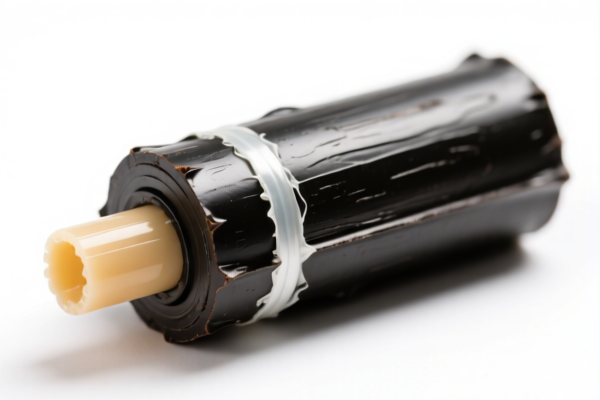
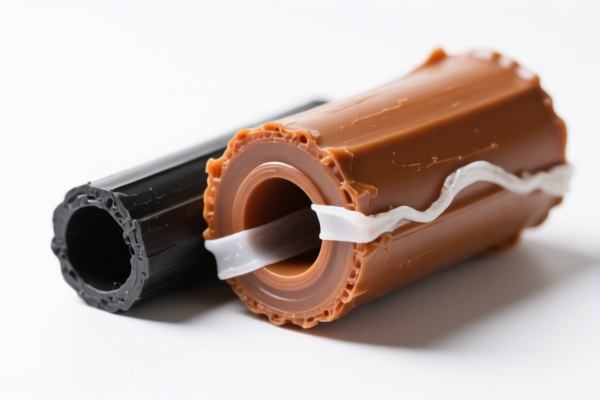
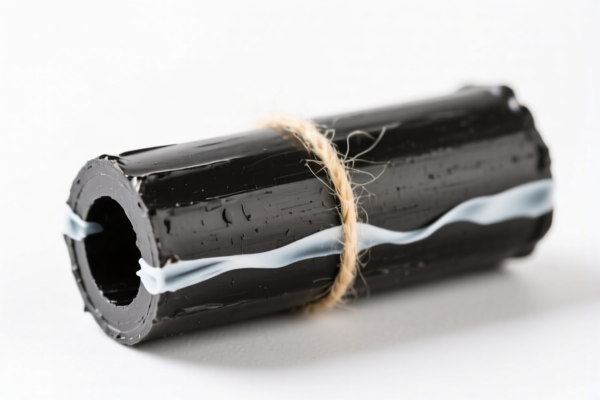
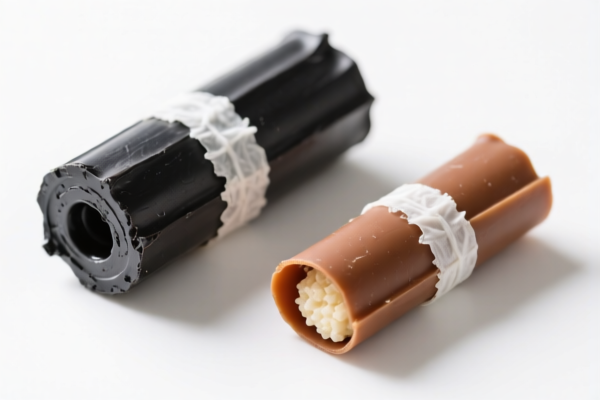
AI Analysis
🧪 Rubber Additive DBS Powder (Thioureido-based)
🌐 HS Code Reference & Customs Clearance Guide | 2026 Latest Tariff Analysis | Professional Clearance Strategy
📌 I. Product Definition & Classification: Do You Really Understand "Rubber Additive DBS"?
Rubber Additive DBS (Dibenzylidene Sorbitol) is a crystalline high-molecular-weight organic compound primarily used as a nucleating agent and gelling agent in rubber processing. It improves transparency, thermal stability, and processing efficiency.
In international trade, its classification varies significantly based on: * Chemical Composition: Thiocarbamate (Sulfhydryl urethane) vs. Other chemical additives. * Physical Form: Powder. * Intended Use: Rubber treatment vs. General chemical制剂.
⚠️ Key Classification Distinction:
- If classified under Chapter 29 (Organic Chemicals): It is treated as a specific chemical compound (Thiocarbamate).
- If classified under Chapter 38 (Miscellaneous Chemical Products): It is treated as a mixed preparation or additive not specified elsewhere.
- Critical Risk: Incorrect classification can lead to massive tariff differences (from 16.5% to 41.5%).
📦 II. HS Code Classification Details (2026 Latest Tariff Authority Comparison)
Based on the provided data, here are the four possible HS Code classifications for Rubber Additive DBS (Powder). Note that while the summary text is similar, the HS Code determines the Tax Rate.
| HS Code | Product Description (Summary) | Chemical Category | Total Tax Rate |
|---|---|---|---|
2930.20.90.20 |
Rubber additive DBS (powder), material is thiocarbamate, form is powder, used for rubber treatment. | Organic Chemicals (Ch. 29) | 38.7% |
2930.20.20.10 |
Rubber additive DBS (powder), mainly for rubber processing, material is thiocarbamate, form is powder. | Organic Chemicals (Ch. 29) | 16.5% |
3824.99.93.97 |
Rubber additive DBS (powder), belongs to chemical products and preparations, form is powder, fits "other chemical" category. | Chemical Preparations (Ch. 38) | 40.0% |
3824.99.29.00 |
Rubber additive DBS (powder), material is chemical additive, form is powder, fits chemical products and preparations. | Chemical Preparations (Ch. 38) | 41.5% |
🔍 Important Note:
- The primary difference between2930.20.90.20and2930.20.20.10lies in the specific subheading nuance within Chapter 29, resulting in a 22.2% tax difference (38.7% vs 16.5%).
- Classifying under Chapter 38 (3824...) generally incurs higher base tariffs and is often applied when the product is viewed as a "preparation" rather than a pure chemical.
💰 III. 2026 Latest Tariff Rate Breakdown (Including Surtaxes & Policy Additions)
✅ Applicable Country: United States (US)
✅ Origin: China (CN)
✅ Effective Time: Current policies including Section 301 & Section 122 tariffs.
🎯 1. 2930.20.20.10 —— Best Case Scenario (Lowest Tax)
| Item | Content |
|---|---|
| Base Tariff | 6.5% |
| Section 301 Surcharge | 0.0% |
| Section 122 Tariff | +10% |
| Total Tax Rate | 16.5% |
| Tax Calculation | CIF Value × 16.5% |
| De Minimis Eligibility | ❌ No (Usually de minimis does not apply to high-tariff chemical categories from China) |
| Legal Basis Path | USITC:2930.20.20.10 → Section 122: +10% |
📌 Explanation:
- This is the most favorable classification if the product can be proven as a specific thiocarbamate under this precise subheading.
- No Section 301 tariff applies here, significantly lowering costs compared to other Chapter 29 codes.
- Section 122 Tariff (+10%) is mandatory for all imports from China under this code.
🎯 2. 2930.20.90.20 —— Standard Chapter 29 Classification
| Item | Content |
|---|---|
| Base Tariff | 3.7% |
| Section 301 Surcharge | +25.0% |
| Section 122 Tariff | +10% |
| Total Tax Rate | 38.7% |
| Tax Calculation | CIF Value × 38.7% |
| De Minimis Eligibility | ❌ No |
| Legal Basis Path | IEEPA:9903.01.25 → USITC:2930.20.90.20 → FOOTNOTE:Section 301 → Section 122 |
📌 Explanation:
- Although the base tariff is lower (3.7%), the +25% Section 301 surcharge drastically increases the total cost.
- This classification is used when the product falls under "Other" thiocarbamates not specifically listed in2930.20.20.10.
🎯 3. 3824.99.93.97 —— Chapter 38 "Other Chemicals"
| Item | Content |
|---|---|
| Base Tariff | 5.0% |
| Section 301 Surcharge | +25.0% |
| Section 122 Tariff | +10% |
| Total Tax Rate | 40.0% |
| Tax Calculation | CIF Value × 40.0% |
| De Minimis Eligibility | ❌ No |
| Legal Basis Path | IEEPA:9903.01.25 → USITC:3824.99.93.97 → FOOTNOTE:Section 301 → Section 122 |
📌 Explanation:
- Classified under Chapter 38 as a "chemical product and preparation."
- Subject to both Section 301 (+25%) and Section 122 (+10%).
- Higher total tax than the preferred2930.20.20.10.
🎯 4. 3824.99.29.00 —— Highest Tax Scenario
| Item | Content |
|---|---|
| Base Tariff | 6.5% |
| Section 301 Surcharge | +25.0% |
| Section 122 Tariff | +10% |
| Total Tax Rate | 41.5% |
| Tax Calculation | CIF Value × 41.5% |
| De Minimis Eligibility | ❌ No |
| Legal Basis Path | IEEPA:9903.01.25 → USITC:3824.99.29.00 → FOOTNOTE:Section 301 → Section 122 |
📌 Explanation:
- This is the most expensive classification.
- Like3824.99.93.97, it attracts Section 301 (+25%) and Section 122 (+10%) surcharges on top of a higher base rate.
- Avoid this classification unless no other option fits.
🛠️ IV. Customs Clearance Practical Advice (Real-World Pitfall Avoidance Guide)
✅ 1. Documentation Checklist (Essential)
| Document | Required | Explanation |
|---|---|---|
| ✅ Chemical Structure Diagram | ✔️ | Must show Thiocarbamate structure to support Chapter 29 classification. |
| ✅ Technical Data Sheet (TDS) | ✔️ | Confirm it is DBS (Dibenzylidene Sorbitol) and not a mixture. |
| ✅ Certificate of Analysis (COA) | ✔️ | Purity level and physical form (Powder). |
| ✅ Statement of Composition | ✔️ | Explicitly state "100% Thiocarbamate-based DBS" to argue against Chapter 38. |
| ✅ Commercial Invoice | ✔️ | Clearly describe as "Rubber Additive DBS Powder, Thiocarbamate Class". |
| ✅ Packing List | ✔️ | Detail net/gross weight accurately. |
✅ 2. Declaration Strategy (Key Mantras)
🔥 "Pure Chemical, Chapter 29! Mixture, Chapter 38! 16.5% vs 41.5%!"
| Situation | Correct Declaration | Wrong Practice |
|---|---|---|
| Pure DBS Powder (Thiocarbamate) | 2930.20.20.10 (16.5%) |
Misdeclare as 3824... → 41.5% |
| DBS Mixture/Blend | 3824.99... (40-41.5%) |
Claim as pure chemical → Penalty |
| Non-China Origin | Check for IEEPA Exclusions | Assume same tariffs as China |
✅ 3. Special Handling
| Scenario | Handling Advice |
|---|---|
| OEM Private Label | Ensure the chemical composition is identical to the generic DBS. Provide same TDS. |
| Powder Form Hazmat | DBS is generally non-hazardous, but provide MSDS to confirm no flammability/explosive risk for air/sea freight. |
| Pre-Ruling Application | Highly Recommended: Submit an Advance Ruling to CBP with chemical structure to secure 2930.20.20.10 status. |
🌍 V. Global Market Comparison (2026 Latest)
| Country/Region | Recommended HS Code | Tariff (China Origin) | Certification | Notes |
|---|---|---|---|---|
| 🇺🇸 USA | 2930.20.20.10 |
16.5% (Best Case) | No specific US certification | Avoid 3824 codes due to 40%+ rates |
| 🇨🇳 China | 2930.20.20.10 |
~6.5% - 10% | CCC (if applicable) | Standard import tax |
| 🇪🇺 EU | 2930.20.90 |
~6.5% | REACH Registration | Section 301/122 do not apply |
| 🇯🇵 Japan | 2930.20.20 |
~6.1% | FSCC/ISO | Lower base tariffs |
📌 Conclusion:
- USA is the most challenging market due to Section 301 and Section 122 tariffs.
- Correct HS Code selection is critical:2930.20.20.10saves 25% in taxes compared to most Chapter 38 codes.
- Chapter 29 is preferred for pure thiocarbamates to avoid the +25% surcharge if possible.
📌 VI. Common Errors & Pitfall Guide (Lessons Learned)
❌ Error 1: Classifying pure DBS as 3824.99.29.00
👉 Consequence: Tax jumps from 16.5% to 41.5% → 25% extra cost!
❌ Error 2: Ignoring Section 122 Tariff
👉 Consequence: All 2930 and 3824 codes from China are subject to +10%. Forgetting this leads to underpayment and penalties.
❌ Error 3: Using "Rubber Additive" as the only description
👉 Consequence: Customs may assign a default Chapter 38 code (3824) due to lack of chemical specificity → Higher tax.
❌ Error 4: Not providing Chemical Structure
👉 Consequence: Unable to prove Chapter 29 classification → Forced into Chapter 38.
✅ Correct Practice:
"Dibenzylidene Sorbitol (DBS) Powder, 99% Purity, Thiocarbamate Class, Nucleating Agent for Rubber, Model XYZ, SDS Attached"
🎯 VII. Conclusion: Professional Declaration, Cost Savings, Risk Reduction
🎯 Remember the Mantra:
🔹 "Chapter 29, Subheading .20.10: The 16.5% Sweet Spot!"
🔹 "Section 301 Hits 29.20.90 and 3824: Avoid the 25% Penalty!"
🔹 "Section 122 is Always There: Don't Forget the +10%!"
📌 Pro Tip:
If your DBS is sourced from Vietnam, Malaysia, or Thailand, check for IEEPA Exclusions or FTAs (like RCEP/USMCA equivalents) to potentially reduce or eliminate surcharges.
Apply for an Advance Ruling before shipping to secure the 2930.20.20.10 classification and avoid costly disputes.
📣 Immediate Action:
📞 Consult a Customs Broker + Provide Chemical Structure + Apply for HS Code Advance Ruling
🚀 Ensure smooth clearance, minimize tax burden, and maximize profit margins!
✨ Professional Clearance Starts with Precise Classification!
💼 Every Dollar Saved in Tariffs is Pure Profit!
Customer Reviews
About HS Code Classification
The Harmonized System (HS) is an internationally standardized nomenclature developed by the World Customs Organization (WCO) to classify traded products. Over 200 countries use the HS system as the basis for customs tariffs, trade statistics, and import/export regulations.
Each HS code follows a hierarchical structure:
- Chapter (2 digits) — Broad category of goods (e.g., Chapter 84: Machinery and Mechanical Appliances)
- Heading (4 digits) — More specific grouping within the chapter
- Subheading (6 digits) — Internationally standardized breakdown, used by all WCO member countries
- National subdivisions (8-10 digits) — Country-specific extensions for further classification, such as US HTSUS 10-digit codes
Correct HS code classification is essential for smooth customs clearance, accurate duty payment, and compliance with trade regulations. Misclassification can lead to customs delays, overpayment of duties, or penalties.
When importing from CN to US, the applicable tariff rates may include:
- Most-Favored-Nation (MFN) rate — The standard duty rate applied to WTO members
- General rate — Applied to countries without trade agreements
- Trade remedy duties — Additional tariffs such as Section 301 (anti-dumping), Section 232 (national security), or countervailing duties
The information provided on this page is for reference purposes only. For official classification, please consult with your local customs authority or a licensed customs broker.