Rubber Additive TTD (Powder)
CN → US| HS Code | Tariff Rate | Origin | Destination | Doc |
|---|---|---|---|---|
| 4005200000 | 35.0% | CN | US | Official Doc |
| 3815110000 | 35.0% | CN | US | Official Doc |
| 4005990000 | 35.0% | CN | US | Official Doc |
Product Images
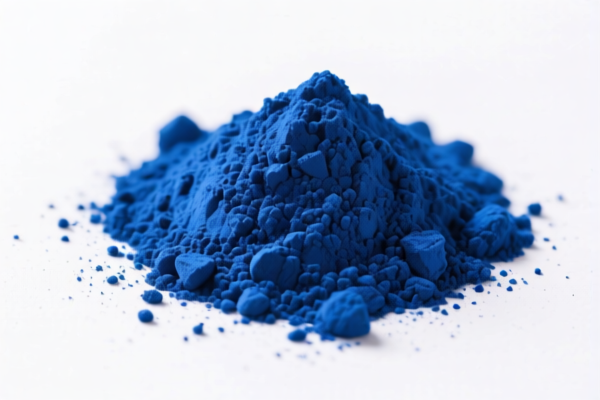


AI Analysis
🧪 Rubber Additive TTD (Powder)
🌐 HS Code Reference & Customs Clearance Guide | 2026 Latest Tariff Analysis | Professional Clearance Strategy
📌 I. Product Definition & Classification: What Exactly is "Rubber Additive TTD"?
TTD (Tetramethyl Thiuram Disulfide) is a critical chemical auxiliary agent in the rubber industry. It serves primarily as a vulcanization accelerator and, in some cases, as a rubber processing additive or anti-reversion agent.
In international trade, its classification is complex because it straddles the line between "Chemical Products" and "Processed Rubber Products." The key distinction lies in its form (powder) and function (additive vs. final rubber product).
⚠️ Critical Distinction:
- Is it a pre-mixed rubber compound (semi-finished rubber product)? → Chapter 40
- Is it a chemical catalyst/additive used to process rubber? → Chapter 38
📦 II. HS Code Classification Details (2026 Latest Tariff Authority Comparison)
Based on the provided data, three potential HS Codes are identified. The choice depends on the specific formulation and intended declaration basis.
| HS Code | Product Description | Application Scenario | Conflict Analysis |
|---|---|---|---|
4005.20.00.00 |
Other formed semi-finished rubber products | Pre-mixed rubber compounds, unvulcanized rubber lumps | No Conflict: 'Rubber' in name matches material. Considered a primary form/additive in rubber processing. |
3815.11.00.00 |
Catalysts prepared | Chemical additives, vulcanization accelerators, TTD powder | No Conflict: 'Additive' matches catalyst form. 'Rubber' indicates application field, not material composition. |
4005.99.00.00 |
Other unvulcanized rubber compounds, other | Catch-all for other rubber mixes not specified elsewhere | No Conflict: Based on 'other' category principle. Fits the physical form of mixed rubber additives without material conflict. |
🔍 Key Reminder:
-3815.11.00.00is the most precise classification for pure chemical accelerators like TTD powder, as TTD is chemically defined as a sulfur-containing organic compound used as a catalyst/accelerator.
-4005.20.00.00or4005.99.00.00may be used if the product is sold as a pre-blended rubber masterbatch or compound rather than a pure chemical additive.
- Do not misclassify pure chemical powder as "Finished Rubber Goods" (Chapter 40 Part B) if it is clearly a chemical additive.
💰 III. 2026 Latest Tariff Rate Breakdown (Including Surcharges & Policy Add-ons)
✅ Applicable Country: United States (US)
✅ Origin: China (CN)
✅ Effective Date: From November 10, 2025 (including subsequent imports)
🎯 1. 4005.20.00.00 —— Other Formed Semi-Finished Rubber Products
| Item | Details |
|---|---|
| Base Tariff | 0.0% (Ad Valorem) |
| Section 301 Tariff | +25.0% (USITC Footnote) |
| Section 122 Tariff | +10.0% (Specific to certain chemical/rubber inputs under specific provisions) |
| Total Tariff Rate | 35.0% |
| Tax Calculation | CIF Value × 35% |
| De Minimis Eligibility | ❌ Not Eligible (High tariff rates exclude de minimis exemption) |
| Legal Basis Path | USITC:4005.20.00.00 → Section 301: 25% → Section 122: 10% |
📌 Explanation:
- The 0% base rate applies to most semi-finished rubber products.
- The 25% surcharge is the standard Section 301 tariff on Chinese goods.
- The 10% Section 122 tariff applies specifically to this category under certain regulatory interpretations for rubber-related inputs.
- Total 35% is a significant cost driver.
🎯 2. 3815.11.00.00 —— Prepared Catalysts
| Item | Details |
|---|---|
| Base Tariff | 0.0% (Ad Valorem) |
| Section 301 Tariff | +25.0% |
| Section 122 Tariff | +10.0% |
| Total Tariff Rate | 35.0% |
| Tax Calculation | CIF Value × 35% |
| De Minimis Eligibility | ❌ Not Eligible |
| Legal Basis Path | USITC:3815.11.00.00 → Section 301: 25% → Section 122: 10% |
📌 Note:
- Despite being a chemical product (Chapter 38), the tariff structure is identical to the rubber semi-finished goods in this specific data set.
- TTD, as a vulcanization accelerator, fits perfectly under "Prepared Catalysts."
- No difference in total duty (35%) between classifying as rubber compound vs. chemical catalyst in this specific scenario.
🎯 3. 4005.99.00.00 —— Other Unvulcanized Rubber Compounds
| Item | Details |
|---|---|
| Base Tariff | 0.0% |
| Section 301 Tariff | +25.0% |
| Section 122 Tariff | +10.0% |
| Total Tariff Rate | 35.0% |
| Tax Calculation | CIF Value × 35% |
| De Minimis Eligibility | ❌ Not Eligible |
| Legal Basis Path | USITC:4005.99.00.00 → Section 301: 25% → Section 122: 10% |
📌 Attention:
- This is a catch-all category for rubber additives not specifically listed elsewhere.
- The tariff burden remains 35%, consistent with the other two codes.
- Use this only if the product does not fit the specific definition of4005.20(formed semi-finished) or3815.11(catalyst).
🛠️ IV. Customs Clearance Practical Advice (Battle-Tested Pitfall Avoidance Guide)
✅ 1. Required Documentation Checklist (Non-Negotiable)
| Document | Must Provide | Explanation |
|---|---|---|
| ✅ Product Specification Sheet | ✔️ | Must detail chemical composition (e.g., TTD ≥ 98%), physical form (powder), and usage (vulcanization accelerator). |
| ✅ MSDS (Material Safety Data Sheet) | ✔️ | Essential for chemical products. Must confirm no hazardous classification conflicts. |
| ✅ Commercial Invoice | ✔️ | Must clearly state "Rubber Additive, TTD Powder, HS Code: [Insert Code]" |
| ✅ Certificate of Origin (CO) | ✔️ | If not from China, may affect tariff eligibility. For China origin, standard CO applies. |
| ✅ Packing List | ✔️ | Detail net/gross weight, packaging type (e.g., 25kg bags). |
| ✅ Formula/Composition Analysis | ✔️ | To prove it is a pure additive (HS 3815) vs. pre-mixed rubber (HS 4005). |
✅ 2. Declaration Tips (Key Mantra)
🔥 "Pure Chemical = Catalyst (3815); Pre-Mix = Rubber (4005); Name Matters, Tax is 35%!"
| Scenario | Correct Declaration | Incorrect Practice |
|---|---|---|
| Pure TTD Powder | 3815.11.00.00 (Catalyst) |
Mislabel as "Rubber Lumps" → Risk of penalty |
| TTD mixed with rubber powder | 4005.20.00.00 or 4005.99.00.00 |
Mislabel as "Chemical Powder" → May trigger chemical import restrictions |
| Bulk Shipment | Declare total CIF value clearly | Split shipments to avoid detection → High Risk of Audit |
| Small Sample | Still declare correctly | Assume small quantity = no tax → De Minimis Excluded |
✅ 3. Special Situations Handling
| Situation | Handling Advice |
|---|---|
| Is TTD Regulated? | TTD is a vulcanization accelerator. It is not a controlled substance but is subject to chemical import regulations. Ensure MSDS is accurate. |
| Customs Query on "Rubber" in Name | If declaring 3815.11.00.00, explain that "Rubber" refers to the application field, not the material. Provide technical data sheet. |
| Section 122 Applicability | Verify with your customs broker if Section 122 applies to your specific supplier code. It is not always automatic. |
| Anti-Dumping/Countervailing Duties (AD/CVD) | Check if TTD falls under any AD/CVD orders. (Usually, rubber chemicals are not subject to AD/CVD, but verify). |
🌍 V. Global Main Market Clearance Comparison (2026 Latest)
| Country/Region | Recommended HS Code | Tariff | Certification Requirements | Remarks |
|---|---|---|---|---|
| 🇺🇸 USA | 3815.11.00.00 or 4005.20.00.00 |
35% | MSDS, No special FDA/UL needed | High tariff due to 301 + 122. No de minimis. |
| 🇨🇳 China | 3815.11.00.00 |
~5-6% | CCC (if applicable, usually not for raw chemicals) | Lower base tariff, no US-style surcharges. |
| 🇪🇺 EU | 3815.11.00.00 |
0-4% | REACH Registration | TTD requires REACH compliance. No Section 301 equivalent. |
| 🇬🇧 UK | 3815.11.00.00 |
0-5% | UK REACH | Post-Brexit rules apply. |
| 🇻🇳 Vietnam | 3815.11.00.00 |
0-5% | VCL (if applicable) | Potential for lower tariffs if origin is Vietnam. |
📌 Conclusion:
- USA is the most expensive market for Rubber Additives due to the 35% cumulative tariff.
- EU and China are more cost-effective, but REACH compliance in the EU is a major hurdle.
- Diversify supply chain to Vietnam/Mexico to potentially avoid Section 301/122 tariffs if possible.
📌 VI. Common Errors & Pitfall Guide (Lessons Learned)
❌ Error 1: Declaring TTD Powder as "Rubber Scrap"
👉 Consequence: Tariff mismatch, potential anti-dumping investigations, seizure of goods.
❌ Error 2: Ignoring Section 122 Tariff
👉 Consequence: Underpayment of duties, back taxes + interest + penalties. 10% is not optional if applicable.
❌ Error 3: Missing MSDS
👉 Consequence: Customs hold for chemical safety review. Delay of 2-4 weeks.
❌ Error 4: Assuming De Minimis Applies
👉 Consequence: 35% tax is due on every shipment, no matter how small. Do not rely on $800 exemption.
✅ Correct Practice:
"TTD Powder (Tetramethyl Thiuram Disulfide), Chemical Catalyst for Rubber Vulcanization, Purity 98%, HS Code 3815.11.00.00, MSDS Attached, Origin China."
🎯 VII. Conclusion: Precision Classification Saves Money!
🎯 Remember the Mantra:
🔹 "Powder is Chemical (3815), Mix is Rubber (4005), Tax is 35%, De Minimis is Dead!"
🔹 "Section 301 + 122 = 35%, Pay Up or Risk It!"
🔹 "MSDS is Mandatory, No MSDS = No Clearance!"
📌 Pro Tip:
If your TTD is sourced from Vietnam, Thailand, or India, you may avoid the Section 301 (25%) tariff, reducing the total to 10% (Section 122 only) or lower, depending on the HS code and FTA eligibility.
Recommendation: Apply for an Advance Ruling from US Customs and Border Protection (CBP) to confirm the exact HS Code and tariff liability before shipment.
📣 Immediate Action:
📞 Contact your customs broker + Provide MSDS + Confirm HS Code with CBP
🚀 Ensure smooth clearance, avoid 35% shocks, and protect your margins!
✨ Professional Clearance Starts with Accurate Classification!
💼 Every Percent Counts in the Rubber Industry!
Customer Reviews
About HS Code Classification
The Harmonized System (HS) is an internationally standardized nomenclature developed by the World Customs Organization (WCO) to classify traded products. Over 200 countries use the HS system as the basis for customs tariffs, trade statistics, and import/export regulations.
Each HS code follows a hierarchical structure:
- Chapter (2 digits) — Broad category of goods (e.g., Chapter 84: Machinery and Mechanical Appliances)
- Heading (4 digits) — More specific grouping within the chapter
- Subheading (6 digits) — Internationally standardized breakdown, used by all WCO member countries
- National subdivisions (8-10 digits) — Country-specific extensions for further classification, such as US HTSUS 10-digit codes
Correct HS code classification is essential for smooth customs clearance, accurate duty payment, and compliance with trade regulations. Misclassification can lead to customs delays, overpayment of duties, or penalties.
When importing from CN to US, the applicable tariff rates may include:
- Most-Favored-Nation (MFN) rate — The standard duty rate applied to WTO members
- General rate — Applied to countries without trade agreements
- Trade remedy duties — Additional tariffs such as Section 301 (anti-dumping), Section 232 (national security), or countervailing duties
The information provided on this page is for reference purposes only. For official classification, please consult with your local customs authority or a licensed customs broker.