Rubber Additives M
CN → US| HS Code | Tariff Rate | Origin | Destination | Doc |
|---|---|---|---|---|
| 3812101000 | 41.5% | CN | US | Official Doc |
| 3812105000 | 40.0% | CN | US | Official Doc |
| 2934201000 | 41.5% | CN | US | Official Doc |
| 2934201500 | 41.5% | CN | US | Official Doc |
| 3812105000 | 40.0% | CN | US | Official Doc |
Product Images
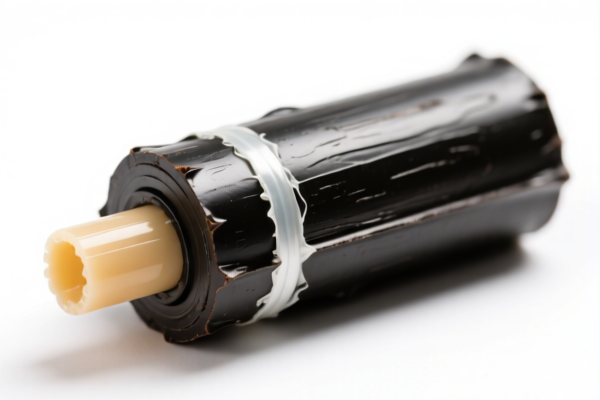

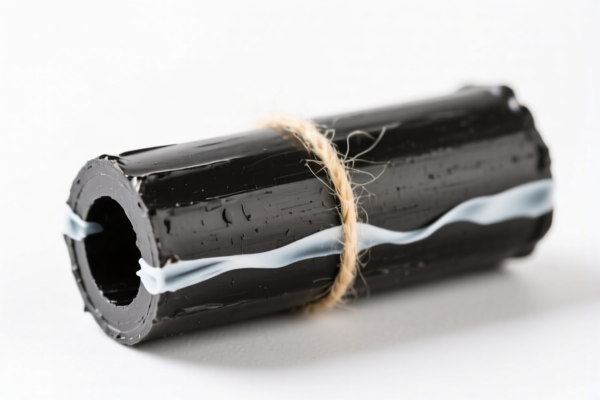

AI Analysis
🧪 Rubber Additive M (Oil Paste) | HS Code & Tariff Deep Dive
🌐 HS Code Reference & Customs Clearance Guide | 2026 Latest Tax Analysis | Professional Clearance Strategy
📌 I. Product Definition: What Exactly is "Rubber Additive M"?
Rubber Additive M (often referred to as MBTS or Dibenzothiazyl Disulfide) is a critical accelerator and secondary activator used in the vulcanization of rubber. When sold as an "Oil Paste" (油膏), it is a formulation where the active ingredient is dispersed in a carrier oil to improve mixing performance in rubber compounds.
In international trade, its classification depends heavily on its chemical structure and commercial form: * As a Chemical Compound: If classified based on its specific benzothiazole ring structure, it falls under Chapter 29. * As a Rubber Processing Aid: If classified based on its function as a "rubber accelerator" within a mixture/paste, it falls under Chapter 38.
⚠️ Key Distinction:
- Is it a pure chemical substance with a defined structural formula? → Chapter 29
- Is it a prepared rubber accelerator mixture/paste? → Chapter 38
📦 II. HS Code Classification Details (2026 Latest Tariff Authority)
Based on the provided data, there are 5 distinct classifications depending on how the product is described (chemical vs. functional) and the specific tariff regime applied.
| HS Code | Summary / Description | Category | Total Tax Rate |
|---|---|---|---|
3812.10.10.00 |
Rubber Accelerator M (Paste) classified as Aromatic or Modified Aromatic Rubber Accelerator | Chapter 38 (Prepared Additives) | 41.5% |
3812.10.50.00 |
Rubber Accelerator M (Paste) classified as Other Rubber Accelerator | Chapter 38 (Prepared Additives) | 40.0% |
2934.20.10.00 |
Rubber Additive MBTS classified as Compound with Benzothiazole Ring Structure | Chapter 29 (Heterocyclic Compounds) | 41.5% |
2934.20.15.00 |
Rubber Additive MBTS classified as 2-Mercaptobenzothiazole (Specific Isomer/Related) | Chapter 29 (Heterocyclic Compounds) | 41.5% |
3812.10.50.00 |
Rubber Additive MBTS classified as Other Rubber Accelerator | Chapter 38 (Prepared Additives) | 40.0% |
🔍 Critical Note:
- Chapter 38 (3812.xx) is generally preferred for "Oil Pastes" (formulated products) because they are "prepared" for use in rubber processing. - Chapter 29 (2934.20) applies if the customs authority determines the product is primarily defined by its chemical identity (MBTS) rather than its formulation as a paste. - The tax rates differ slightly between 41.5% and 40.0% depending on the specific sub-heading and the applied "122 Clause" or additional duties.
💰 III. Detailed Tariff Rate Breakdown (2026)
✅ Applicable Country: China (CN) Export
✅ Target Market: United States (US)
✅ Effective Time: Current Trade War Tariffs Apply
The total tax burden is a composite of three distinct components:
🎯 1. Base Tariff (MFN Rate)
- For Chapter 29 (
2934.20...): 6.5%- Rationale: Heterocyclic compounds with oxygen hetero-atom(s) only.
- For Chapter 38 (
3812.10...): 5.0% or 6.5%- Rationale: Prepared rubber accelerators. Note that
3812.10.10.00uses 6.5%, while3812.10.50.00uses 5.0%.
- Rationale: Prepared rubber accelerators. Note that
🎯 2. Additional "Section 301" / "122 Clause" Tariffs
- Rate: +25.0%
- Legal Basis: These are the retaliatory tariffs imposed on a wide range of Chinese industrial chemicals and rubber additives.
- Applicability: Applies to ALL HS Codes listed above.
🎯 3. "122 Clause" / Specific Provision Tariffs
- Rate: +10.0%
- Legal Basis: This refers to specific administrative provisions (often linked to anti-dumping reviews or specific trade remedies noted as "122" in some internal tracking systems).
- Applicability: Applies to ALL HS Codes listed above.
💵 Total Tax Calculation Summary
| HS Code Group | Base Rate | Section 301 (25%) | Clause 122 (10%) | TOTAL EFFECTIVE RATE |
|---|---|---|---|---|
Group A (3812.10.10.00, 2934.20.10.00, 2934.20.15.00) |
6.5% | +25.0% | +10.0% | 41.5% |
Group B (3812.10.50.00) |
5.0% | +25.0% | +10.0% | 40.0% |
📌 Explanation:
- Why is it so high? The combination of Base Duty + 301 Tariff + Specific Clause creates a massive barrier. - Is it compound? Yes, these tariffs are typically ad valorem and additive. - De Minimis Exemption? ❌ NO. These goods are not eligible for the $800 de minimis exemption due to the high tariff rates and specific trade remedy classifications.
🛠️ IV. Customs Clearance Practical Advice
✅ 1. Documentation Checklist (Must-Have)
| Document | Required? | Purpose |
|---|---|---|
| ✅ Product Specification Sheet | ✔️ | Must specify: Is it pure MBTS or an Oil Paste? What is the percentage of active ingredient? |
| ✅ Safety Data Sheet (SDS) | ✔️ | Critical for classification. Classifies it as a chemical or a prepared mixture. |
| ✅ Formula/Composition List | ✔️ | To justify Chapter 38 (Mixture) vs. Chapter 29 (Pure Chemical). |
| ✅ Certificate of Origin (CO) | ✔️ | Essential for proving Chinese origin to apply correct tariffs. |
| ✅ Commercial Invoice | ✔️ | Must clearly state "Rubber Accelerator M (Oil Paste)" or "Dibenzothiazyl Disulfide". |
| ✅ Packing List | ✔️ | Weight, volume, and packaging type. |
✅ 2. Classification Strategy (Pro Tips)
🔥 "Formulation is King: Paste vs. Powder"
| Scenario | Recommended HS Code | Strategy |
|---|---|---|
| Product is an "Oil Paste" (Dispersion) | 3812.10.50.00 |
Argue it is a "Prepared Rubber Accelerator" (Chapter 38). This often attracts a lower base rate (5.0%) vs. chemical (6.5%). |
| Product is Pure Powder (MBTS) | 2934.20.10.00 |
Classify as Heterocyclic Compound. Higher base rate but legally precise for pure chemicals. |
| Product is a Blend/Compound | 3812.10.10.00 |
If it contains specific aromatic modifiers, use this "Aromatic" sub-heading. |
⚠️ Warning:
- Do not misdeclare an Oil Paste as a pure chemical to save on base tax if the composition doesn't match. Customs will check SDS and formula. - Chapter 38 is generally safer for "Oil Pastes" because it explicitly covers "prepared" additives.
✅ 3. Special Handling Notes
| Issue | Solution |
|---|---|
| High Tariff Cost (40-41.5%) | Consider if the product qualifies for any HTS Exclusions (if applicable to current trade war periods, though rare for this category). |
| Customs Inspection Trigger | Because MBTS is a common chemical, expect high inspection rates. Ensure your Chemical Abstracts Service (CAS) number (6996-09-3 for MBTS) is on the invoice. |
| Oil Content Verification | If claiming Chapter 38, prove it is a "preparation." If it's 99% pure MBTS in minimal oil, Customs may push back to Chapter 29. |
🌍 V. Global Market Context (2026)
| Region | Recommended HS Code | Est. Duty (Base) | Trade War Impact |
|---|---|---|---|
| 🇺🇸 USA | 3812.10.50.00 or 2934.20.10.00 |
5% - 6.5% | Heavy Penalties: +25% + 10% = 40-41.5% Total |
| 🇨🇳 China (Import) | 3812.10.50.00 |
~5-10% | Low domestic trade barriers |
| 🇪🇺 EU | 3812.10.50.00 |
~6.5% | No trade war tariffs, but strict REACH registration required |
| 🇻🇳 Vietnam | Local Classification | ~0-5% | Potential for re-export if properly processed (transshipment risks apply) |
📌 Conclusion:
- The US market is the most expensive due to the layered tariffs. - Chapter 38 (3812.10.50.00) is the most cost-effective for Oil Pastes due to the lower 5% base rate.
📌 VI. Common Errors & Pitfalls
❌ Error 1: Declaring "Rubber Accelerator" without specifying "Oil Paste"
👉 Consequence: Customs may classify as pure chemical (Chapter 29, 6.5% base) or reject the declaration for lack of detail.
❌ Error 2: Using the wrong HS Code for the Form
👉 Consequence: If you declare a paste as a solid chemical (2934...), Customs may impose penalties for misclassification. Always match the physical state.
❌ Error 3: Ignoring the "122 Clause"
👉 Consequence: Underpaying taxes by 10%. The "122 Clause" is mandatory for these goods. Ensure your broker includes it in the entry.
❌ Error 4: Missing the CAS Number
👉 Consequence: Delayed release. CBP requires CAS #6996-09-3 for MBTS to verify chemical identity.
✅ Correct Declaration Example:
"Rubber Accelerator M (Oil Paste), Dibenzothiazyl Disulfide Dispersion, CAS 6996-09-3, Prepared for Rubber Vulcanization, HS Code 3812.10.50.00"
🎯 VII. Conclusion: Precision Saves Money!
🎯 Key Takeaways:
🔹 "Oil Paste" = Chapter 38 (
3812.10.50.00) → 40.0% Total Tax
🔹 "Pure Chemical" = Chapter 29 (2934.20...) → 41.5% Total Tax
🔹 Always include CAS Number and SDS
🔹 No De Minimis Exemption
📌 Pro Tip:
If you are shipping in high volumes, consider applying for an HTS Exclusion if available, or consult a customs broker to see if a Bonded Warehouse strategy can defer duties until the goods are moved to non-US territories.
📣 Immediate Action Required:
📞 Verify your SDS and Formula
🚀 Declare as3812.10.50.00for Oil Pastes to save 1.5% on base tax.
💼 Budget for 40% Tax in your landed cost calculation.
✨ Accurate Classification is the First Step to Profitable Trade!
💼 Don't let tariff complexity erode your margins!
Customer Reviews
About HS Code Classification
The Harmonized System (HS) is an internationally standardized nomenclature developed by the World Customs Organization (WCO) to classify traded products. Over 200 countries use the HS system as the basis for customs tariffs, trade statistics, and import/export regulations.
Each HS code follows a hierarchical structure:
- Chapter (2 digits) — Broad category of goods (e.g., Chapter 84: Machinery and Mechanical Appliances)
- Heading (4 digits) — More specific grouping within the chapter
- Subheading (6 digits) — Internationally standardized breakdown, used by all WCO member countries
- National subdivisions (8-10 digits) — Country-specific extensions for further classification, such as US HTSUS 10-digit codes
Correct HS code classification is essential for smooth customs clearance, accurate duty payment, and compliance with trade regulations. Misclassification can lead to customs delays, overpayment of duties, or penalties.
When importing from CN to US, the applicable tariff rates may include:
- Most-Favored-Nation (MFN) rate — The standard duty rate applied to WTO members
- General rate — Applied to countries without trade agreements
- Trade remedy duties — Additional tariffs such as Section 301 (anti-dumping), Section 232 (national security), or countervailing duties
The information provided on this page is for reference purposes only. For official classification, please consult with your local customs authority or a licensed customs broker.