Rubber Aging Inhibitor Mixture
CN → US| HS Code | Tariff Rate | Origin | Destination | Doc |
|---|---|---|---|---|
| 3403990000 | 41.5% | CN | US | Official Doc |
| 3403195000 | 40.8% | CN | US | Official Doc |
| 3824992900 | 41.5% | CN | US | Official Doc |
| 3824994900 | 41.5% | CN | US | Official Doc |
| 2904995000 | 38.7% | CN | US | Official Doc |
Product Images
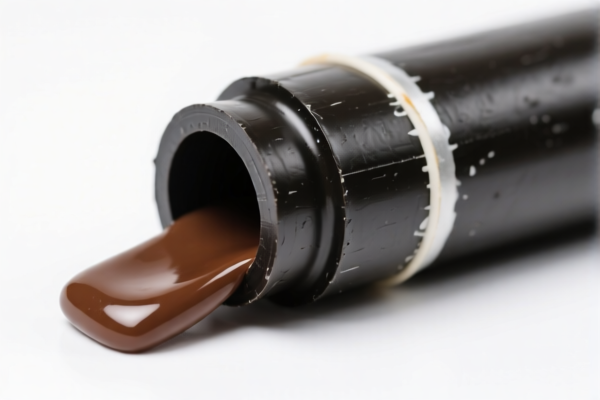
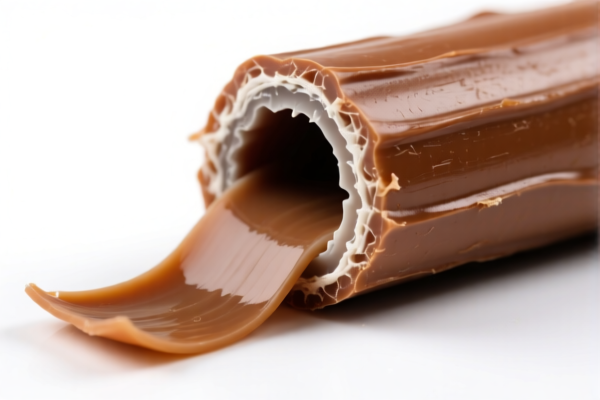
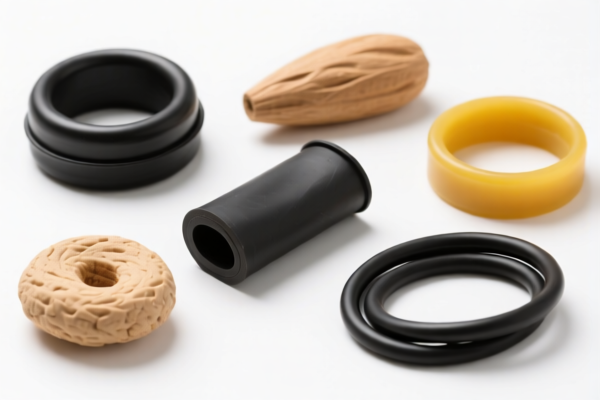
AI Analysis
🧪 Rubber Aging Inhibitor Mixture (HS Code Classification & Customs Clearance Guide)
🌐 HS Code Reference & Customs Strategy | 2026 Tax Tariff Analysis | Professional Clearance Strategy
📌 Product Definition & Classification: What is a "Rubber Aging Inhibitor"?
A Rubber Aging Inhibitor Mixture (also known as anti-aging agents, stabilizers, or protective compounds) is a chemical preparation designed to extend the lifespan of rubber and plastic products by preventing degradation caused by oxygen, ozone, heat, and light.
In international trade, these products are generally categorized under Chapter 38 (Miscellaneous Chemical Products) or Chapter 29 (Organic Chemicals), depending on their chemical composition and specific function. The key to accurate classification lies in distinguishing between generic chemical mixtures and specific organic compounds.
⚠️ Critical Distinction:
- If the product is a complex mixture of various stabilizers, antioxidants, and carriers intended for general material protection → It falls under Chapter 38 (Chemical Preparations).
- If the product is a single, pure organic compound (e.g., a specific derivative) → It falls under Chapter 29 (Organic Chemicals).
📦 HS Code Classification Details (2026 Latest Tariff Reference)
Based on the provided data, here are the five possible HS Code classifications for "Rubber Aging Inhibitor Mixture," along with the reasoning for each:
| HS Code | Product Description | Classification Logic | Total Tax Rate |
|---|---|---|---|
| 3403.99.00.00 | Rubber Anti-Aging Agent | Classified as oils or chemical preparations for protecting/ treating materials. Fits the category of lubricants and anti-corrosion agents. | 41.5% |
| 3403.19.50.00 | Rubber Anti-Aging Agent | Classified as a chemical treatment preparation for materials (rubber). Fits the purpose of lubrication/treatment agents. | 40.8% |
| 3824.99.29.00 | Rubber & Plastic Anti-Aging Agent | Classified as a chemical preparation. Its function (aging protection) fits the definition of "Chemical Products and Preparations". | 41.5% |
| 3824.99.49.00 | Rubber & Plastic Anti-Aging Agent | Classified as a chemical product for industrial use. Fits "Other chemical products and preparations for chemical or allied industries". | 41.5% |
| 2904.99.50.00 | Natural Rubber Anti-Aging Agent | Classified as a chemical synthetic or processed organic compound. Fits the material category of "Derivatives of Hydrocarbons". | 38.7% |
🔍 Key Insight:
- The lowest tax rate (38.7%) applies if the product can be definitively proven as a specific organic compound (Chapter 29).
- The higher tax rates (40.8% - 41.5%) apply if the product is a mixture/preparation (Chapter 34 or 38).
- 3403 is often used for lubrication/treatment contexts, while 3824 is the broader catch-all for industrial chemical preparations.
💰 2026 Latest Tariff Rate Breakdown (Including Surtaxes & Policy Add-ons)
✅ Applicable Country: USA (US)
✅ Origin: China (CN)
✅ Effective Date: November 10, 2025 (for subsequent imports)
🎯 1. HS Code 3403.99.00.00 —— Rubber Anti-Aging Agent (Lubrication/Protection)
| Item | Content |
|---|---|
| Base Tariff | 6.5% (Ad Valorem) |
| Section 301 Surtax | +25% (USITC Footnote 9903.88.01) |
| Section 122 Surtax | +10% (Targeting Chinese Products) |
| Total Rate | 41.5% |
| Calculation | CIF Value × 41.5% |
| De Minimis Exemption | ❌ Not Eligible (deny_de_minimis) |
| Legal Basis Path | IEEPA:9903.01.25 → USITC:3403.99.00.00 → FOOTNOTE:9903.88.01 |
📌 Explanation:
- The 6.5% base rate is for Chapter 34 products.
- The 25% is the standard Section 301 surcharge for Chinese imports.
- The 10% is the additional Section 122 tariff.
- Total: 41.5%. This is a high-cost classification.
🎯 2. HS Code 3403.19.50.00 —— Rubber Anti-Aging Agent (Treatment Preparation)
| Item | Content |
|---|---|
| Base Tariff | 5.8% (Ad Valorem) |
| Section 301 Surtax | +25% |
| Section 122 Surtax | +10% |
| Total Rate | 40.8% |
| Calculation | CIF Value × 40.8% |
| De Minimis Exemption | ❌ Not Eligible |
| Legal Basis Path | IEEPA:9903.01.24 → USITC:3403.19.50.00 → FOOTNOTE:9903.88.01 |
📌 Note:
- Slightly lower base rate (5.8%) than 3403.99.00.00.
- Total rate is 40.8%, still very high.
- Applies if the product is explicitly marketed as a treatment/lubricant preparation.
🎯 3. HS Code 3824.99.29.00 & 3824.99.49.00 —— Rubber & Plastic Anti-Aging Agents (Chemical Preparations)
| Item | Content |
|---|---|
| Base Tariff | 6.5% (Ad Valorem) |
| Section 301 Surtax | +25% |
| Section 122 Surtax | +10% |
| Total Rate | 41.5% |
| Calculation | CIF Value × 41.5% |
| De Minimis Exemption | ❌ Not Eligible |
| Legal Basis Path | IEEPA:9903.01.25 → USITC:3824.99.29.00 / 3824.99.49.00 |
📌 Note:
- Both 3824 codes share the same total rate of 41.5%.
- 3824.99.29.00: Focuses on the functional definition (aging protection).
- 3824.99.49.00: Focuses on the industrial application (unlisted chemical preparations for allied industries).
- Choose based on technical data sheets: Does it emphasize function or industrial use?
🎯 4. HS Code 2904.99.50.00 —— Natural Rubber Anti-Aging Agent (Organic Compound)
| Item | Content |
|---|---|
| Base Tariff | 3.7% (Ad Valorem) |
| Section 301 Surtax | +25% |
| Section 122 Surtax | +10% |
| Total Rate | 38.7% |
| Calculation | CIF Value × 38.7% |
| De Minimis Exemption | ❌ Not Eligible |
| Legal Basis Path | IEEPA:9903.01.24 → USITC:2904.99.50.00 |
📌 Key Advantage:
- Lowest Total Rate: 38.7%.
- Requirement: The product must be a specific organic compound (e.g., a specific hydrocarbon derivative) and not a generic mixture.
- Risk: If customs determines it is a mixture, they may reclassify it to Chapter 38 (41.5%), leading to back taxes and penalties.
🛠️ Customs Clearance Practical Advice (Avoiding Pitfalls)
✅ 1. Required Documentation Checklist
| Document | Required? | Description |
|---|---|---|
| ✅ Technical Data Sheet (TDS) | ✔️ | Must specify if it's a single compound (for 2904) or a mixture (for 3403/3824). |
| ✅ Ingredient List | ✔️ | Exact chemical names and CAS numbers. |
| ✅ Product Photos | ✔️ | Clear labels showing "Anti-Aging Agent" and composition type. |
| ✅ Safety Data Sheet (SDS) | ✔️ | For hazardous chemical declarations. |
| ✅ Commercial Invoice | ✔️ | Must accurately describe the product as "Rubber Aging Inhibitor Mixture" or "Organic Compound." |
| ✅ Certificate of Origin (CO) | ✔️ | If not Chinese origin, may reduce tariffs. |
✅ 2. Declaration Strategy
🔥 "Mixture vs. Compound: Define Clearly to Save Money!"
| Scenario | Correct Declaration | Error to Avoid |
|---|---|---|
| Single Organic Compound | 2904.99.50.00 (38.7%) |
Misdeclaring as "Mixture" → 41.5% |
| General Chemical Mixture | 3824.99.29.00 or 3824.99.49.00 (41.5%) |
Misdeclaring as "Compound" → Rejection/Fine |
| Lubricant/Treatment Focus | 3403.19.50.00 (40.8%) |
Ignoring "treatment" function → 41.5% |
| Protective Oil/Preparation | 3403.99.00.00 (41.5%) |
None (standard fallback) |
✅ 3. Special Considerations
| Case | Recommendation |
|---|---|
| OEM Custom Mix | Provide formula breakdown. If >50% is one compound, argue for 2904. |
| Blended with Carrier | If carrier is major component, likely Chapter 38 (41.5%). |
| Intended Use | Emphasize "Rubber Protection" in description to support 3824 classification. |
| Origin Change | If produced in Vietnam/Mexico, apply for IEEPA Exemption → Tax drops to 0-5%. |
🌍 Global Market Comparison (2026)
| Country/Region | Recommended HS Code | Tariff (China Origin) | Certification | Notes |
|---|---|---|---|---|
| 🇺🇸 USA | 2904.99.50.00 |
38.7% | No specific | Lowest rate if pure compound. |
| 🇺🇸 USA | 3824.99.29.00 |
41.5% | No specific | Higher if mixture. |
| 🇨🇳 China | 3824.99.29.00 |
6.5% | No | No 301/122 tariffs. |
| 🇪🇺 EU | 3824.99.29.00 |
0-6% | REACH | No surtaxes. |
| 🇯🇵 Japan | 3824.99.29.00 |
0-5% | JIS | No surtaxes. |
📌 Conclusion:
- USA is the most expensive market due to 301 and 122 tariffs.
- Chapter 29 (2904) offers the best rate (38.7%) in the US, but requires strict proof of being a single organic compound.
- Chapter 38 (3824) is the safer, albeit more expensive, route (41.5%) for general mixtures.
📌 Common Errors & Pitfalls (Lessons Learned)
❌ Error 1: Declaring a mixture as a pure compound (2904)
👉 Consequence: Customs reclassifies to 3824 → Back taxes + penalties.
❌ Error 2: Ignoring Section 122 tariff
👉 Consequence: Underpayment by 10% → Seizure or audit.
❌ Error 3: Vague product description ("Rubber Additive")
👉 Consequence: Customs assigns worst-case HS Code → Highest tariff.
❌ Error 4: Assuming de minimis exemption applies
👉 Consequence: Packages under $800 are NOT exempt for China-origin goods under Section 301/122.
✅ Correct Action:
Provide CAS Numbers, Technical Data Sheets, and Clear Composition Statements.
Use precise language: "Organic Anti-Oxidant, CAS 123-45-6" vs. "Rubber Chemical Mixture."
🎯 Conclusion: Professional Declaration, Cost Optimization!
🎯 Remember the Motto:
🔹 "Pure Compound? Go 2904 (38.7%). Mixture? Accept 3824 (41.5%). Don't Risk 41.5% with 38.7% Claims!"
🔹 "HS Code Determines Tariff. 10% Difference = 100,000 USD on 1M Shipment!"
📌 Pro Tip:
If your product is produced in Vietnam, Mexico, or Thailand, apply for IEEPA Exemption → Tariff drops to 0-5%.
Consider applying for an Advance Ruling from US Customs (CBP) to lock in the HS Code and avoid post-clearance audits.
📣 Immediate Action:
📞 Consult a Customs Broker + Provide TDS + Apply for Advance Ruling
🚀 Ensure Smooth Clearance, Cost Efficiency, and Profit Maximization!
✨ Professional Clearance Starts with Accurate Classification!
💼 Every Cent of Tax Saved is Profit Earned!
Customer Reviews
About HS Code Classification
The Harmonized System (HS) is an internationally standardized nomenclature developed by the World Customs Organization (WCO) to classify traded products. Over 200 countries use the HS system as the basis for customs tariffs, trade statistics, and import/export regulations.
Each HS code follows a hierarchical structure:
- Chapter (2 digits) — Broad category of goods (e.g., Chapter 84: Machinery and Mechanical Appliances)
- Heading (4 digits) — More specific grouping within the chapter
- Subheading (6 digits) — Internationally standardized breakdown, used by all WCO member countries
- National subdivisions (8-10 digits) — Country-specific extensions for further classification, such as US HTSUS 10-digit codes
Correct HS code classification is essential for smooth customs clearance, accurate duty payment, and compliance with trade regulations. Misclassification can lead to customs delays, overpayment of duties, or penalties.
When importing from CN to US, the applicable tariff rates may include:
- Most-Favored-Nation (MFN) rate — The standard duty rate applied to WTO members
- General rate — Applied to countries without trade agreements
- Trade remedy duties — Additional tariffs such as Section 301 (anti-dumping), Section 232 (national security), or countervailing duties
The information provided on this page is for reference purposes only. For official classification, please consult with your local customs authority or a licensed customs broker.