Rubber Anti aging Compound
CN → US| HS Code | Tariff Rate | Origin | Destination | Doc |
|---|---|---|---|---|
| 3403990000 | 41.5% | CN | US | Official Doc |
| 3403195000 | 40.8% | CN | US | Official Doc |
| 2904995000 | 38.7% | CN | US | Official Doc |
| 2904994700 | 40.5% | CN | US | Official Doc |
Product Images
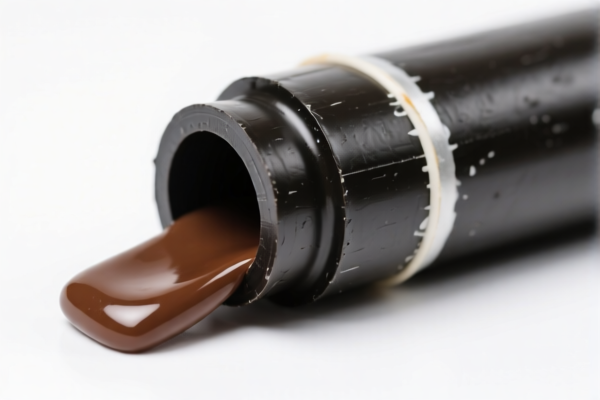

AI Analysis
🛡️ Rubber Anti-Aging Compound: HS Code Classification & Tariff Breakdown (2026 Edition)
🌐 HS Code Reference & Customs Clearance Guide | 2026 Latest Tariff Analysis | Professional Compliance Strategy
📌 I. Product Definition: What Exactly is a "Rubber Anti-Aging Compound"?
Rubber Anti-Aging Compounds are specialized chemical additives designed to inhibit or delay the deterioration of rubber materials caused by oxidative, thermal, or ozone exposure. In international trade, these products are classified based on their chemical nature and primary function.
The key distinction lies in whether they are classified as: * Preparations for treating materials (Chapter 34): If the product is a formulated mixture intended specifically as a protective or lubricating agent for rubber. * Organic Chemical Compounds (Chapter 29): If the product consists of specific synthetic organic compounds (such as sulfonated, nitrated, or nitrosated derivatives of hydrocarbons) used for their chemical properties.
⚠️ Critical Classification Point:
- If the product is a formulated preparation specifically marketed as a "protective agent" or "lubricant for rubber," it leans towards HS 3403.
- If the product is a pure or specific organic derivative (e.g., specific aromatic derivatives, sulfonated compounds) used as an anti-aging agent, it leans towards HS 2904.
📦 II. HS Code Classification Details (2026 Official Tariff Cross-Reference)
| HS Code | Product Description | Application Scenario | Chemical Nature |
|---|---|---|---|
3403.99.00.00 |
Rubber anti-aging agent; falls under oils or chemical preparations for protecting/treating materials, fitting the category of lubricating and anti-corrosive preparations. | General rubber treatment, protective coatings, industrial lubricants containing anti-aging agents. | Formulated preparation for material protection. |
3403.19.50.00 |
Chemical treatment preparations for materials (rubber); classified as chemical preparations, fitting the use of lubricants/treatment agents. | Specific chemical treatments for rubber surfaces or bulk rubber processing. | Chemical preparation for material handling. |
2904.99.50.00 |
Natural rubber anti-aging agent; belongs to synthetic or processed organic compounds, fitting the category of hydrocarbon derivatives. | High-purity anti-aging agents based on specific hydrocarbon structures. | Synthetic organic compound (Hydrocarbon derivative). |
2904.99.47.00 |
Natural rubber anti-aging agent; belongs to sulfonated, nitrated, or nitrosated derivatives of hydrocarbons, fitting the attribute of aromatic derivatives. | Specialized anti-aging agents based on aromatic derivatives, sulfonated/nitrated compounds. | Specific organic derivative (Aromatic/Sulfonated). |
🔍 Key Reminder:
- HS 3403 is used when the product is a preparation (mixture) for protection/lubrication.
- HS 2904 is used when the product is a specific organic compound (chemical structure focus), particularly derivatives like sulfonated or nitrated aromatics.
💰 III. 2026 Latest Tariff Rate Breakdown (Including Surcharges & Policy Additions)
✅ Applicable Country: United States (US)
✅ Origin: China (CN)
✅ Effective Time: Including imports after November 10, 2025
🎯 1. 3403.99.00.00 —— Rubber Anti-Aging Agent (Preparation for Material Protection)
| Item | Content |
|---|---|
| Basic Tariff | 6.5% (ad valorem) |
| Section 301 Surcharge | +25.0% |
| Section 122 Tariff | +10.0% |
| Total Tax Rate | 41.5% |
| Tax Calculation | CIF Value × 41.5% |
| De Minimis Exemption | ❌ Not Eligible (deny_de_minimis) |
| Legal Basis Path | USITC:3403.99.00.00 → SECTION301 → SECTION122 |
📌 Explanation:
- "Basic Tariff 6.5%": Standard MFN rate for chemical preparations for lubricating or protecting materials.
- "Section 301 Surcharge 25%": Additional tariff imposed on Chinese goods under U.S. Trade Law Section 301.
- "Section 122 Tariff 10%": Additional tariff imposed under Section 122 of the Trade Expansion Act of 1962 (national security/import relief).
- Total 41.5%: High tariff burden requires careful cost planning.
🎯 2. 3403.19.50.00 —— Chemical Treatment Preparations for Materials (Rubber)
| Item | Content |
|---|---|
| Basic Tariff | 5.8% |
| Section 301 Surcharge | +25.0% |
| Section 122 Tariff | +10.0% |
| Total Tax Rate | 40.8% |
| Tax Calculation | CIF Value × 40.8% |
| De Minimis Exemption | ❌ Not Eligible |
| Legal Basis Path | USITC:3403.19.50.00 → SECTION301 → SECTION122 |
📌 Note:
- Slightly lower basic rate (5.8%) compared to3403.99.00.00, but surcharges remain identical.
- Applies to specific chemical treatment preparations for rubber, not general lubricants.
🎯 3. 2904.99.50.00 —— Natural Rubber Anti-Aging Agent (Organic Compound)
| Item | Content |
|---|---|
| Basic Tariff | 3.7% |
| Section 301 Surcharge | +25.0% |
| Section 122 Tariff | +10.0% |
| Total Tax Rate | 38.7% |
| Tax Calculation | CIF Value × 38.7% |
| De Minimis Exemption | ❌ Not Eligible |
| Legal Basis Path | USITC:2904.99.50.00 → SECTION301 → SECTION122 |
📌 Explanation:
- Lower basic tariff (3.7%) because it is classified as an organic compound rather than a preparation.
- Still subject to high surcharges due to origin (China).
🎯 4. 2904.99.47.00 —— Natural Rubber Anti-Aging Agent (Aromatic Derivative)
| Item | Content |
|---|---|
| Basic Tariff | 5.5% |
| Section 301 Surcharge | +25.0% |
| Section 122 Tariff | +10.0% |
| Total Tax Rate | 40.5% |
| Tax Calculation | CIF Value × 40.5% |
| De Minimis Exemption | ❌ Not Eligible |
| Legal Basis Path | USITC:2904.99.47.00 → SECTION301 → SECTION122 |
📌 Note:
- Applies to specific aromatic derivatives (sulfonated, nitrated, nitrosated).
- Basic rate (5.5%) is higher than2904.99.50.00due to specific chemical subclass.
🛠️ IV. Customs Clearance Practical Advice (Real-World Pitfall Avoidance)
✅ 1. Documentation Checklist (Non-Negotiable)
| Document | Required | Explanation |
|---|---|---|
| ✅ Product Specification Sheet | ✔️ | Must detail chemical composition, CAS numbers, and primary function (anti-aging vs. lubrication). |
| ✅ Certificate of Analysis (COA) | ✔️ | Proves chemical identity and purity, critical for HS 2904 vs. 3403 distinction. |
| ✅ Product Photos (with Label) | ✔️ | Clear label showing product name, model, and intended use. |
| ✅ Third-Party Test Report | ✔️ | TDS (Technical Data Sheet) confirming anti-aging properties. |
| ✅ Commercial Invoice | ✔️ | Must accurately describe product as "Chemical Preparation for Rubber Protection" or "Organic Compound," not just "Rubber Additive." |
| ✅ Certificate of Origin (CO) | ✔️ | If not originating from China, may qualify for different tariffs (but Section 301/122 may still apply depending on origin rules). |
✅ 2. Declaration Tips (Key Mnemonics)
🔥 "Function Defines Code, Chemistry Defines Tax, Don't Mislabel, Save the Cash!"
| Scenario | Correct Declaration | Wrong Practice |
|---|---|---|
| Formulated mixture for protection | 3403.99.00.00 or 3403.19.50.00 |
Calling it "Chemical Compound" → Risk of misclassification penalty. |
| Pure Organic Derivative (e.g., sulfonated) | 2904.99.47.00 |
Calling it "Preparation" → Incorrect HS, potential audit. |
| Generic "Rubber Anti-Aging Agent" | Specify HS Code based on composition | Vague description → Customs delay, potential reclassification to highest duty. |
| Lubricant containing anti-aging agents | 3403.99.00.00 |
Separating components → Complex declaration, higher risk. |
✅ 3. Special Handling Cases
| Case | Handling Advice |
|---|---|
| OEM Custom Formulations | Provide detailed formula sheets to justify HS 3403 (preparation) vs. 2904 (compound). |
| Mixed Shipments | Separate shipments by HS Code; do not combine 3403 and 2904 in one line item if they have different tax treatments. |
| Small Samples | Even small quantities are subject to full tariffs (no de minimis exemption for these HS codes from China). |
| Chemical Safety Data Sheet (SDS) | Ensure SDS is provided to demonstrate compliance with U.S. chemical regulations (TSCA). |
🌍 V. Global Market Customs Comparison (2026 Latest)
| Country/Region | Recommended HS Code | Tariff | Certification Requirements | Notes |
|---|---|---|---|---|
| 🇺🇸 United States | 3403.99.00.00 / 2904.99.50.00 |
38.7% - 41.5% (China Origin) | TSCA Compliance | High tariffs due to Section 301 & 122. |
| 🇨🇳 China | 3403.99.00.00 / 2904.99.50.00 |
~1-5% | No special surcharges | Lower duty, but check domestic regulations. |
| 🇪🇺 European Union | 3403.99.00 / 2904.99.00 |
~6.5% | REACH Registration | No Section 301/122 equivalents, but REACH is strict. |
| 🇦🇺 Australia | 3403.99.00 / 2904.99.00 |
~5-10% | NICNAS/AIIC | Lower tariffs than US, but chemical safety docs required. |
| 🇯🇵 Japan | 3403.99.00 / 2904.99.00 |
~0-5% | CSCL Compliance | Low tariffs, strict chemical management laws. |
📌 Conclusion:
- The US market is the most challenging due to the cumulative effect of Section 301 (25%) and Section 122 (10%) surcharges on top of basic tariffs.
- China-origin products face significant cost penalties in the US compared to other major markets.
- Alternative Sourcing: Consider sourcing from non-China origins (e.g., Vietnam, Thailand) if eligible for tariff exemptions, though Section 122 may still apply depending on specific rules.
📌 VI. Common Mistakes & Pitfall Avoidance (Lessons Learned)
❌ Mistake 1: Classifying a formulated preparation as a pure chemical compound (2904) to lower the basic tariff.
👉 Consequence: Customs audit may reclassify to 3403 with penalties, or demand additional documentation proving chemical purity.
❌ Mistake 2: Using vague descriptions like "Rubber Additive" without specifying HS Code.
👉 Consequence: Customs may select the highest possible duty rate or hold the shipment for further review.
❌ Mistake 3: Ignoring Section 122 Tariffs.
👉 Consequence: Unexpected 10% surcharge on top of known 301 tariffs, leading to cash flow issues.
❌ Mistake 4: Assuming De Minimis applies for small samples.
👉 Consequence: False. These HS codes are not eligible for de minimis exemption from China.
✅ Correct Approach:
"Chemical Preparation for Protecting Rubber Materials, Anti-Aging Function, Formulated Mixture, Model XYZ, CAS No. XXX, TSCA Compliant"
🎯 VII. Conclusion: Professional Declaration for Cost Efficiency & Compliance
🎯 Remember the Mnemonic:
🔹 "Preparation = 3403, Compound = 2904, Check Origin, Watch Out for 122!"
🔹 "Total Tax = Basic + 25% (301) + 10% (122), De Minimis Doesn't Apply!"
📌 Pro Tip:
- If your product is a formulated mixture for protection, use HS 3403.
- If it is a specific organic derivative, use HS 2904.
- Always verify Section 122 applicability, as it adds an extra 10% on top of Section 301.
- Consider Advance Ruling from US Customs and Border Protection (CBP) to confirm classification and avoid post-clearance liabilities.
📣 Take Action Now:
📞 Contact a licensed customs broker + Provide full product specs + Request HS Code Advance Ruling
🚀 Ensure smooth clearance, accurate cost calculation, and compliant importation of Rubber Anti-Aging Compounds.
✨ Professional Customs Clearance Starts with Accurate Classification!
💼 Every Percentage Point Matters in Your Supply Chain Cost!
Customer Reviews
About HS Code Classification
The Harmonized System (HS) is an internationally standardized nomenclature developed by the World Customs Organization (WCO) to classify traded products. Over 200 countries use the HS system as the basis for customs tariffs, trade statistics, and import/export regulations.
Each HS code follows a hierarchical structure:
- Chapter (2 digits) — Broad category of goods (e.g., Chapter 84: Machinery and Mechanical Appliances)
- Heading (4 digits) — More specific grouping within the chapter
- Subheading (6 digits) — Internationally standardized breakdown, used by all WCO member countries
- National subdivisions (8-10 digits) — Country-specific extensions for further classification, such as US HTSUS 10-digit codes
Correct HS code classification is essential for smooth customs clearance, accurate duty payment, and compliance with trade regulations. Misclassification can lead to customs delays, overpayment of duties, or penalties.
When importing from CN to US, the applicable tariff rates may include:
- Most-Favored-Nation (MFN) rate — The standard duty rate applied to WTO members
- General rate — Applied to countries without trade agreements
- Trade remedy duties — Additional tariffs such as Section 301 (anti-dumping), Section 232 (national security), or countervailing duties
The information provided on this page is for reference purposes only. For official classification, please consult with your local customs authority or a licensed customs broker.