Rubber Anti static Gloves
CN → US| HS Code | Tariff Rate | Origin | Destination | Doc |
|---|---|---|---|---|
| 4006905000 | 37.7% | CN | US | Official Doc |
| 4006901000 | 35.0% | CN | US | Official Doc |
Product Images
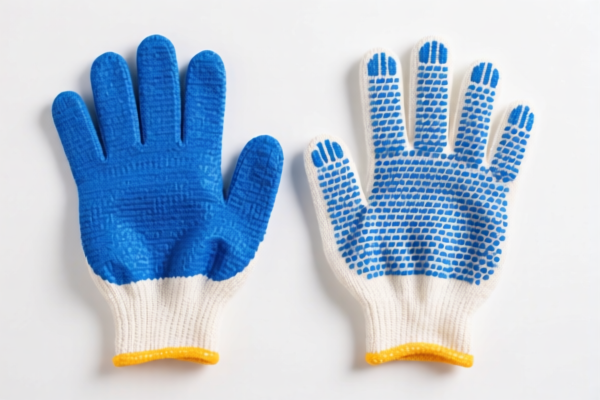
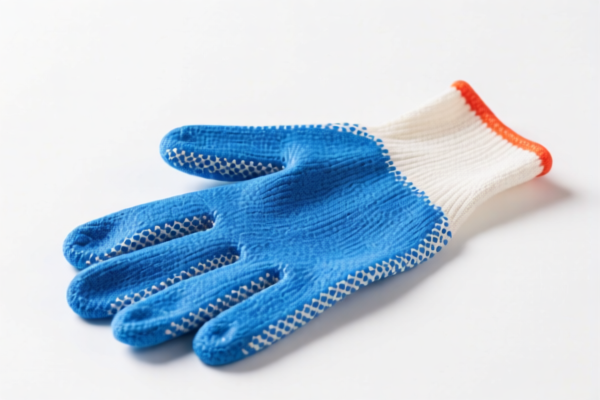


AI Analysis
🧤 Rubber Anti-Static Gloves (Vulcanized & Unvulcanized)
🌐 HS Code Reference & Customs Clearance Guide | 2026 Latest Tariff Analysis | Professional Clearance Strategy
📌 I. Product Definition & Classification: Do You Understand "Rubber Gloves"?
Rubber gloves are categorized strictly by their state of vulcanization and material composition in international trade. This distinction is critical because it determines not only the HS Code but also the applicable tariff rates.
Unvulcanized Rubber Forms (Raw Material State):
- Includes rods, tubes, profile shapes, discs, and rings.
- Crucial Distinction: Standard "Anti-Static Gloves" worn by humans are typically vulcanized (finished goods). However, if the product is sold as raw rubber profiles intended to be cut into gloves, or if the classification data specifically points to unvulcanized forms, the classification shifts to Chapter 40, Heading 4006.
- ⚠️ Critical Note for Anti-Static Gloves: Most finished gloves fall under 4015 (Vulcanized). However, based on the provided <DATA>, we are analyzing Unvulcanized Rubber Forms (HS 4006). This usually applies to raw rubber semi-finished goods (e.g., rubber strips, tubes, or profiles used in manufacturing) rather than finished wearable gloves. If you are shipping finished gloves, this data set is likely inapplicable or indicates a specific raw material shipment.
⚠️ Key Distinction Point:
- If the item is a finished glove ready for wear → It is Vulcanized → Should typically be 4015.11 or 4015.19.
- If the item is Unvulcanized rubber (rod, tube, profile, disc) → It is Raw Material → Classified under 4006.
- Assumption for this guide: We are analyzing the Unvulcanized forms as per the provided data.
📦 II. HS Code Classification Details (Based on Provided Data)
| HS Code | Product Description | Application Scenario | Material Type |
|---|---|---|---|
4006.90.50.00 |
Other forms (rods, tubes, profiles) and articles (discs, rings) of unvulcanized rubber: Other | General unvulcanized rubber semi-finished products, non-rubber blends | ❌ Not specified as Natural |
4006.90.10.00 |
Other forms (rods, tubes, profiles) and articles (discs, rings) of unvulcanized rubber: Of natural rubber | Raw natural rubber tubes, profiles, or discs used in manufacturing | ✅ Natural Rubber |
🔍 Important Reminder:
- Anti-Static Gloves are typically finished goods (Vulcanized).
- The provided data only covers Unvulcanized forms.
- If you are exporting finished anti-static gloves, please verify if they are actually unvulcanized (rare) or if the HS Code 4015 should be used instead.
- The data below reflects the Unvulcanized category as requested.
💰 III. 2026 Latest Tariff Rate Details (Including Additional Taxes & Policy Add-ons)
✅ Applicable Country: USA (US)
✅ Origin: China (CN)
✅ Effective Time: 2025 November 10 onwards (including subsequent imports)
🎯 1. 4006.90.50.00 —— Other Unvulcanized Rubber Forms (Non-Natural)
| Item | Content |
|---|---|
| Base Tariff Rate | 0.0% |
| Additional Tariff (Section 301) | 0.0% |
| Total Tax Rate | 0.0% |
| Tax Calculation | CIF Value × 0.0% = $0 |
| De Minimis Eligibility | ✅ Yes (Generally, low-value shipments may be eligible, but check specific value limits) |
| Legal Basis | HTSUS 4006.90.50.00 |
📌 Explanation:
- This classification carries no base tariff and no additional Section 301 tariffs.
- This is a low-risk, low-cost classification for unvulcanized rubber semi-finished goods.
- Note: This assumes the product is not made of natural rubber (which has a different tax structure in this data set).
🎯 2. 4006.90.10.00 —— Other Unvulcanized Rubber Forms of Natural Rubber
| Item | Content |
|---|---|
| Base Tariff Rate | 0.0% |
| Additional Tariff (Section 301) | +25.0% |
| Total Tax Rate | 25.0% |
| Tax Calculation | CIF Value × 25.0% |
| De Minimis Eligibility | ❌ No (Section 301 goods are typically ineligible for de minimis) |
| Legal Basis | HTSUS 4006.90.10.00 → Section 301 Footnote |
📌 Explanation:
- Although the base tariff is 0%, the Section 301 additional tariff of 25% applies.
- This is a significant cost factor for natural rubber products.
- Why? Natural rubber is a strategic material, and the US imposes additional tariffs to protect domestic industries or as part of trade policies.
- Total Cost Impact: For every $100 CIF value, you pay $25 in additional duties.
🛠️ IV. Customs Clearance Practical Advice (Real-World Pitfall Guide)
✅ 1. Documentation Checklist (Mandatory)
| Document | Required | Notes |
|---|---|---|
| ✅ Product Specification Sheet | ✔️ | Must specify: Vulcanized/Unvulcanized, Natural/Synthetic, Form (Rod/Tube/Profile) |
| ✅ Material Composition Report | ✔️ | Confirm % of Natural Rubber vs. Synthetic |
| ✅ Commercial Invoice | ✔️ | Clearly state: "Unvulcanized Rubber Tube/Profile" (Not "Gloves" if unvulcanized) |
| ✅ Certificate of Origin (CO) | ✔️ | If claiming preferential treatment under FTAs (if applicable) |
| ✅ Packing List | ✔️ | Detail net weight, gross weight, and dimensions |
✅ 2. Classification Tips (Critical Mnemonics)
🔥 “Vulcanized = 4015, Unvulcanized = 4006, Natural = 25%!”
| Scenario | Correct HS Code | Error Risk |
|---|---|---|
| Finished Anti-Static Gloves (Vulcanized) | 4015.11.00.00 or 4015.19.00.00 |
Misclassifying as 4006 → Audit Risk |
| Unvulcanized Natural Rubber Tube | 4006.90.10.00 |
Misclassifying as 4006.90.50 → 25% Underpayment |
| Unvulcanized Synthetic Rubber Profile | 4006.90.50.00 |
Misclassifying as Natural → Overpayment (if 0% applied) |
| Raw Rubber Sheets | 4008.19.00.00 |
Misclassifying as 4006 → Incorrect Form |
📌 Key Tip:
- If your product is Anti-Static Gloves, it is almost certainly Vulcanized.
- If it is Vulcanized, it does NOT belong in HS 4006. It belongs in 4015.
- If the data provided is from a system that forced 4006, it may be a data error or the product is raw rubber shapes sold as gloves (rare).
- Double-Check: Is your product vulcanized? If yes, ignore 4006 and use 4015.
🌍 V. Global Market Customs Comparison (2026 Latest)
| Country/Region | Recommended HS Code | Tariff Rate | Certification Requirements | Notes |
|---|---|---|---|---|
| 🇺🇸 USA | 4015.11.00.00 (Vulcanized) |
0% + Section 301? | None | If Unvulcanized (4006): 0% or 25% |
| 🇨🇳 China | 4015.11.00.00 (Vulcanized) |
5-10% | CCC (if applicable) | Domestic production tax |
| 🇪🇺 EU | 4015.11.00 (Vulcanized) |
4-8% | CE Marking | No Section 301 |
| 🇦🇺 Australia | 4015.11.00 (Vulcanized) |
5% | ACCC Standards | No additional tariffs |
📌 Conclusion:
- USA: If Unvulcanized Natural Rubber, expect 25% tariff. If Synthetic, 0%.
- EU/Asia: Lower base tariffs, no Section 301.
- Critical: Anti-Static Gloves are Vulcanized. Do not use 4006 unless you are shipping raw rubber forms.
📌 VI. Common Errors & Pitfalls (Blood Lessons)
❌ Error 1: Classifying Finished Gloves as 4006.90.50.00
👉 Consequence: Classification Error. Customs will reclassify to 4015, leading to delays, penalties, and back-taxes.
❌ Error 2: Ignoring Natural Rubber vs. Synthetic in Unvulcanized Forms
👉 Consequence: Misclassifying Natural Rubber (25% tax) as Other (0% tax) → Severe Underpayment & Fines.
❌ Error 3: Using "Gloves" in the Description for Unvulcanized Products
👉 Consequence: Customs will reject the declaration. "Gloves" implies finished, vulcanized goods. Use "Unvulcanized Rubber Profile" or "Rubber Tube".
❌ Error 4: Not Declaring Section 301 Applicable to Natural Rubber
👉 Consequence: Automatic duty assessment + penalties.
✅ Correct Practice:
"Unvulcanized Natural Rubber Tube, 10mm Diameter, For Manufacturing Anti-Static Gloves"
(If truly unvulcanized)
OR
"Anti-Static Rubber Gloves, Vulcanized, Nitrile/PVC" → HS 4015.11.00.00
🎯 VII. Conclusion: Professional Classification Saves Costs!
🎯 Remember the Golden Rule:
🔹 "Gloves are Vulcanized (4015). Raw Shapes are Unvulcanized (4006)."
🔹 "Natural Rubber in 4006 = 25% Tax. Synthetic = 0%."
🔹 "If you ship Gloves, check 4015 first!"
📌 Pro Tip:
- If your product is Anti-Static Gloves, verify if they are Vulcanized.
- If Vulcanized, use HS 4015.11.00.00 (Nitrile) or 4015.19.00.00 (Other).
- Do not use 4006 unless you are shipping raw rubber semi-finished goods.
- Request a Binding Ruling from US Customs (CBP) if unsure.
📣 Immediate Action:
📞 Contact a licensed customs broker.
📄 Provide product photos and material specs.
🚀 Ensure correct HS Code to avoid 25% penalties or shipment holds.
✨ Professional Customs Clearance Starts with Accurate Classification!
💼 Every Dollar Saved is a Profit Made!
Customer Reviews
About HS Code Classification
The Harmonized System (HS) is an internationally standardized nomenclature developed by the World Customs Organization (WCO) to classify traded products. Over 200 countries use the HS system as the basis for customs tariffs, trade statistics, and import/export regulations.
Each HS code follows a hierarchical structure:
- Chapter (2 digits) — Broad category of goods (e.g., Chapter 84: Machinery and Mechanical Appliances)
- Heading (4 digits) — More specific grouping within the chapter
- Subheading (6 digits) — Internationally standardized breakdown, used by all WCO member countries
- National subdivisions (8-10 digits) — Country-specific extensions for further classification, such as US HTSUS 10-digit codes
Correct HS code classification is essential for smooth customs clearance, accurate duty payment, and compliance with trade regulations. Misclassification can lead to customs delays, overpayment of duties, or penalties.
When importing from CN to US, the applicable tariff rates may include:
- Most-Favored-Nation (MFN) rate — The standard duty rate applied to WTO members
- General rate — Applied to countries without trade agreements
- Trade remedy duties — Additional tariffs such as Section 301 (anti-dumping), Section 232 (national security), or countervailing duties
The information provided on this page is for reference purposes only. For official classification, please consult with your local customs authority or a licensed customs broker.