Rubber Antioxidant
CN → US| HS Code | Tariff Rate | Origin | Destination | Doc |
|---|---|---|---|---|
| 3812396000 | 41.5% | CN | US | Official Doc |
| 2942005000 | 38.7% | CN | US | Official Doc |
| 3812101000 | 41.5% | CN | US | Official Doc |
| 3403990000 | 41.5% | CN | US | Official Doc |
| 3403195000 | 40.8% | CN | US | Official Doc |
Product Images
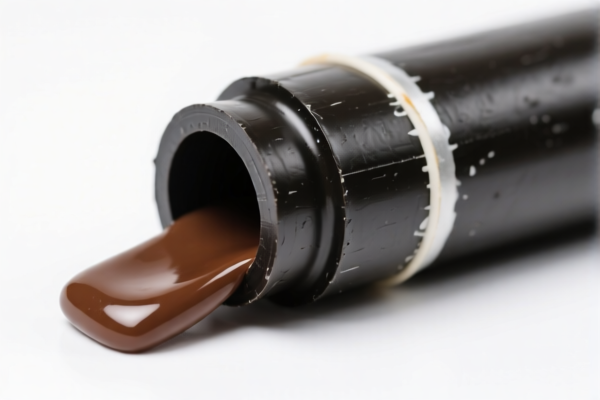

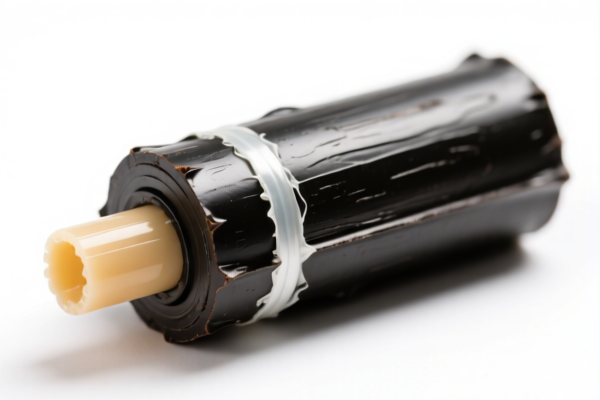
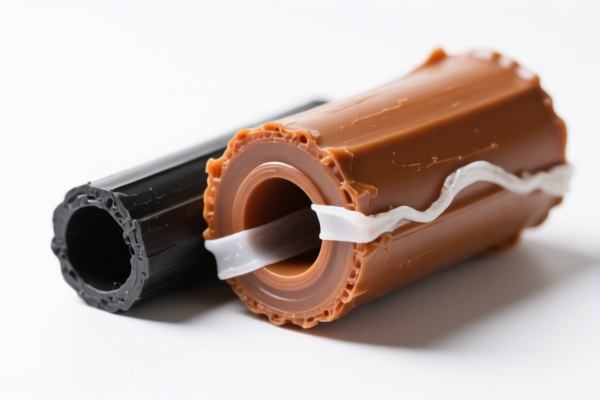
AI Analysis
🧪 Rubber Antioxidant & Vulcanization Accelerators (Chemical Additives)
🌐 HS Code Reference & Customs Clearance Guide | 2026 Latest Tariff Analysis | Professional Entry Strategy
📌 I. Product Definition: What Exactly Is "Rubber Antioxidant"?
Rubber Antioxidants are specialized chemical additives used in the rubber industry to prevent or slow down degradation caused by oxygen, ozone, and heat. They are critical for extending the lifespan of rubber products (tires, seals, hoses).
In international trade, these chemicals are often confused with Vulcanization Accelerators (硫化促进剂) or generic Organic Compounds. The correct classification depends heavily on the primary function stated in the commercial invoice and product specifications: * Primary Function: Anti-aging/Oxidation Protection → Falls under Chapter 38 (Miscellaneous Chemical Products). * Primary Function: Speeding up Vulcanization → Also falls under Chapter 38 (Rubber Processing Agents). * Primary Function: Generic Organic Compound → Falls under Chapter 29 (Organic Chemicals) if no specific rubber-industry function is declared.
⚠️ Key Distinction Point:
- If the product is explicitly labeled as "Antioxidant" or "Anti-aging agent" for rubber → HS 3812.
- If the product is labeled as "Vulcanization Accelerator" → HS 3812 (as a rubber processing agent).
- If the product is a generic chemical with no specific rubber-industry claim → HS 2942.
📦 II. HS Code Classification Details (2026 Latest Tariff Authority Mapping)
The data provided analyzes 5 potential HS Codes. Below is the detailed breakdown of why each applies and the associated tax implications for imports from China to the US (including 301/122 tariffs).
| HS Code | Product Description | Application Scenario | Tax Rate (US from CN) |
|---|---|---|---|
3812.39.60.00 |
Rubber/Plastic Antioxidant Preparations | Explicitly named "Rubber Antioxidant"; matches "Anti-oxidant preparations for rubber." | 41.5% |
2942.00.50.00 |
Other Organic Compounds | Generic organic compound; "Antioxidant" treated as a general chemical without specific rubber classification. | 38.7% |
3812.10.10.00 |
Rubber Vulcanization Accelerators | Named "Rubber Vulcanization Accelerator"; includes antioxidant functions as part of stabilizer mix. | 41.5% |
3403.99.00.00 |
Lubricating/Corrosion Protection Preparations | Inferred as chemical protective agent for rubber; less common but possible if labeled as "protective lubricant." | 41.5% |
3403.19.50.00 |
Other Lubricating Preparations (Petroleum <70%) | Chemical treatment for rubber materials; falls under general lubricants if not strictly defined as antioxidant. | 40.8% |
🔍 Key Insight:
- HS 3812 (Codes.39.60and.10.10) is the most accurate and common classification for rubber antioxidants and accelerators. - HS 2942 offers a slightly lower base rate but carries a higher risk of customs review due to lack of specific functional description. - HS 3403 codes are generally incorrect for pure antioxidants unless the product is explicitly formulated as a lubricant or protective coating.
💰 III. 2026 Latest Tariff Rate Breakdown (Including Surtaxes)
✅ Applicable Country: United States (US)
✅ Origin: China (CN)
✅ Effective Date: November 10, 2025 onwards
🎯 1. 3812.39.60.00 —— Rubber/Plastic Antioxidant Preparations (Most Accurate)
| Item | Detail |
|---|---|
| Base MFN Rate | 6.5% (ad valorem) |
| Section 301 Surcharge | +25.0% (USITC Footnote 9903.88.01) |
| Section 122 Surchare | +10.0% (IEEPA) |
| Total Tax Rate | 41.5% |
| Calculation | CIF Value × 41.5% |
| De Minimis Exemption | ❌ NOT Eligible (deny_de_minimis) |
| Legal Path | IEEPA:9903.01.25 → IEEPA:9903.01.24 → USITC:3812.39.60.00 → FOOTNOTE:9903.88.01 |
📌 Explanation:
- Base 6.5%: Standard Most Favored Nation (MFN) duty for chemical preparations.
- 25% Surcharge: Applied under Section 301 of the Trade Act against Chinese goods.
- 10% Surcharge: Applied under Section 122/IEEPA for specific Chinese imports.
- Total 41.5%: This is a high-cost item for importers. Cost optimization strategies are essential.
🎯 2. 2942.00.50.00 —— Other Organic Compounds (Alternative)
| Item | Detail |
|---|---|
| Base MFN Rate | 3.7% (ad valorem) |
| Section 301 Surcharge | +25.0% |
| Section 122 Surchare | +10.0% |
| Total Tax Rate | 38.7% |
| Calculation | CIF Value × 38.7% |
| De Minimis Exemption | ❌ NOT Eligible |
| Legal Path | IEEPA:9901.25 → IEEPA:9903.01.24 → USITC:2942.00.50.00 |
📌 Note:
- While 2.8% cheaper than HS 3812, this classification is riskier.
- If Customs determines the product is specifically for rubber, they may reclassify it to3812.39.60.00, leading to back taxes and penalties.
- Use only if the product has no specific rubber-industry claim on the invoice.
🎯 3. 3812.10.10.00 —— Rubber Vulcanization Accelerators
| Item | Detail |
|---|---|
| Base MFN Rate | 6.5% |
| Section 301 Surcharge | +25.0% |
| Section 122 Surchare | +10.0% |
| Total Tax Rate | 41.5% |
| Calculation | CIF Value × 41.5% |
| De Minimis Exemption | ❌ NOT Eligible |
📌 Note:
- If the product is labeled as "Vulcanization Accelerator", this is the correct code.
- Tax rate is identical to3812.39.60.00.
🛠️ IV. Customs Clearance Practical Advice (Pitfall Avoidance)
✅ 1. Required Documentation Checklist
| Document | Mandatory? | Notes |
|---|---|---|
| ✅ Commercial Invoice | ✔️ | Must clearly state: "Rubber Antioxidant" or "Vulcanization Accelerator". Do NOT use vague terms like "Chemical Additive". |
| ✅ Product Spec Sheet | ✔️ | Must detail chemical composition, CAS number, and primary function (e.g., "Anti-aging for SBR rubber"). |
| ✅ Safety Data Sheet (SDS) | ✔️ | Required for chemical classification verification. |
| ✅ Certificate of Origin (CO) | ✔️ | Critical for proving Chinese origin (triggers 301/122 tariffs). |
| ✅ Third-Party Lab Test | ✔️ | Confirms active ingredients and function. |
✅ 2. Declaration Strategy (Key Tips)
🔥 "Function Defines Code, Function Defines Tax!"
| Scenario | Correct Declaration | Risk |
|---|---|---|
| Product labeled "Antioxidant" | Declare as HS 3812.39.60.00 Description: "Rubber Antioxidant, Chemical Additive for Prevention of Oxidation" |
✅ Low Risk ✅ Accurate Tax (41.5%) |
| Product labeled "Accelerator" | Declare as HS 3812.10.10.00 Description: "Vulcanization Accelerator for Rubber Processing" |
✅ Low Risk ✅ Accurate Tax (41.5%) |
| Vague Label "Chemical" | Declare as HS 2942.00.50.00 | ⚠️ High Risk If Customs audits and finds rubber use, they will reclassify → Back Taxes + Penalties. |
| Labeled as "Lubricant" | Declare as HS 3403.99.00.00 | ⚠️ Medium Risk If not truly a lubricant, customs may reject or reclassify. |
✅ 3. Special Circumstances
| Situation | Handling Advice |
|---|---|
| OEM Private Label | Ensure the invoice from the supplier matches the description. If the supplier calls it "Accelerator" but you call it "Antioxidant," ensure technical data supports the claim. |
| Mixed Shipments | If shipping both Antioxidants (3812) and general Organics (2942), separate lines on the invoice. Do not bundle. |
| Small Quantity (< $800) | ❌ NO De Minimis: These items are subject to Section 301/122 tariffs and cannot use the $800 de minimis exemption. Full duties apply. |
🌍 V. Global Market Comparison (2026 Latest)
| Country/Region | Recommended HS Code | Total Tariff (from CN) | Certification Required | Notes |
|---|---|---|---|---|
| 🇺🇸 USA | 3812.39.60.00 |
41.5% | None (General) | High tariff due to 301/122. |
| 🇨🇳 China | 3812.39.60.00 |
~6.5% (Import Duty) | None | Low import duty, no 301 tariffs. |
| 🇪🇺 EU | 3812.90 |
~6.5% | REACH Registration | REACH registration is mandatory for chemicals. |
| 🇬🇧 UK | 3812.39 |
~6.5% | UK REACH | Post-Brexit REACH registration required. |
| 🇦🇺 Australia | 3812.39 |
~5% | NICNAS/AICIS | Import permit may be needed for certain chemicals. |
📌 Conclusion:
- USA is the most expensive market due to layered tariffs (Base + 301 + 122).
- EU/UK require REACH compliance, which is a significant regulatory hurdle but not a tariff issue.
- China has low import duties but strict environmental controls on production.
📌 VI. Common Mistakes & Pitfall Guide (Lessons Learned)
❌ Mistake 1: Vague Description "Chemical Additive"
👉 Consequence: Customs may classify under 2942.00.50.00 (38.7%) but later audit and demand 3812 (41.5%). Penalty for misdeclaration.
❌ Mistake 2: Using "Lubricant" for Antioxidants
👉 Consequence: If the product does not have lubricating properties, it may be rejected or reclassified. HS 3403 is for lubricants, not anti-oxidants.
❌ Mistake 3: Assuming De Minimis Applies
👉 Consequence: Chemicals classified under 3812/2942 are explicitly excluded from the $800 de minimis exemption for China-origin goods. Full 41.5% tax applies even for small samples.
❌ Mistake 4: Confusing "Accelerator" with "Antioxidant"
👉 Consequence: While both are in Chapter 38, different subheadings have different legal descriptions. Ensure the invoice matches the technical function.
✅ Correct Practice:
"Rubber Antioxidant [CAS Number], Chemical Additive for Prevention of Oxidation in SBR/BR Rubber, for Industrial Use Only."
🎯 VII. Conclusion: Precise Classification Saves Money!
🎯 Remember the Key Takeaway:
🔹 "Function Over Form: If it’s for Rubber, it’s HS 3812."
🔹 "USA Tax is 41.5%: Plan for the High Cost."
🔹 "No De Minimis: Small Shipments Pay Full Tax."
📌 Pro Tip:
If you are importing large volumes, consider:
1. Supply Chain Diversification: Source from Vietnam or Thailand (if eligible for lower tariffs, though rubber chemicals are often China-centric).
2. Advance Ruling: Apply for a CBP Advance Ruling for your specific product formulation to get binding certainty on the HS Code before shipping.
3. REACH Compliance: For EU/UK, start REACH registration early to avoid delays.
📣 Immediate Action:
📞 Contact a Licensed Customs Broker
📄 Provide CAS Number + Technical Data Sheet
🚀 Get a Binding Ruling Before Shipment
✨ Professional Clearance Starts with Accurate Classification!
💼 Your Profit Margin Depends on This 41.5% Calculation!
Customer Reviews
About HS Code Classification
The Harmonized System (HS) is an internationally standardized nomenclature developed by the World Customs Organization (WCO) to classify traded products. Over 200 countries use the HS system as the basis for customs tariffs, trade statistics, and import/export regulations.
Each HS code follows a hierarchical structure:
- Chapter (2 digits) — Broad category of goods (e.g., Chapter 84: Machinery and Mechanical Appliances)
- Heading (4 digits) — More specific grouping within the chapter
- Subheading (6 digits) — Internationally standardized breakdown, used by all WCO member countries
- National subdivisions (8-10 digits) — Country-specific extensions for further classification, such as US HTSUS 10-digit codes
Correct HS code classification is essential for smooth customs clearance, accurate duty payment, and compliance with trade regulations. Misclassification can lead to customs delays, overpayment of duties, or penalties.
When importing from CN to US, the applicable tariff rates may include:
- Most-Favored-Nation (MFN) rate — The standard duty rate applied to WTO members
- General rate — Applied to countries without trade agreements
- Trade remedy duties — Additional tariffs such as Section 301 (anti-dumping), Section 232 (national security), or countervailing duties
The information provided on this page is for reference purposes only. For official classification, please consult with your local customs authority or a licensed customs broker.