Rubber Antioxidant Compound
CN → US| HS Code | Tariff Rate | Origin | Destination | Doc |
|---|---|---|---|---|
| 3824992900 | 41.5% | CN | US | Official Doc |
| 3824999361 | 40.0% | CN | US | Official Doc |
| 3403112000 | 35.2% | CN | US | Official Doc |
| 3403115000 | 36.4% | CN | US | Official Doc |
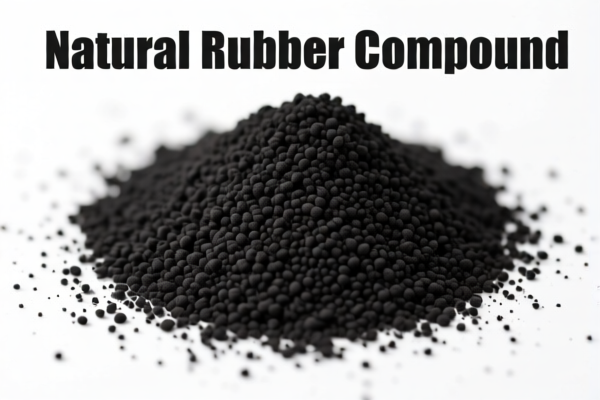
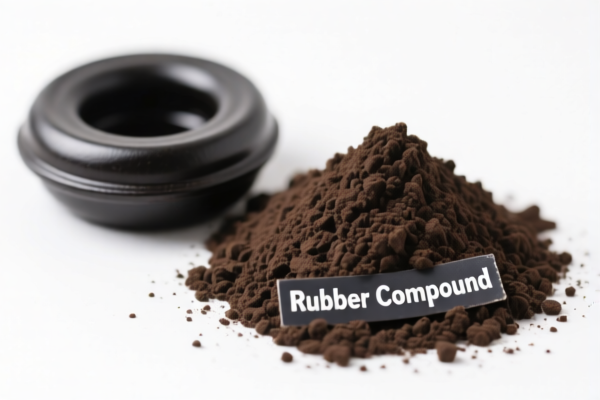
Product Images
AI Analysis
🧪 Rubber Antioxidant Compound & Lubricant Additives
🌐 HS Code Reference & Customs Clearance Guide | 2026 Latest Tariff Analysis | Professional Clearance Strategy for US Market
📌 I. Product Definition & Classification: What Exactly Are You Importing?
Rubber Antioxidant Compounds and Lubricant Additives are critical chemical formulations used in the rubber industry to enhance durability, processability, and lifespan. In international trade, these products are typically classified under Chapter 38 (Miscellaneous Chemical Products) or Chapter 34 (Soap, Organic Surface-Active Agents, Washing Preparations, Lubricating Preparations).
Key Distinction: * Antioxidant/Stabilizer Mixtures: Primarily classified under 3824.99 (Miscellaneous chemical products). These are complex mixtures designed to prevent degradation. * Lubricating Preparations: Classified under 3403.11 (Lubricating preparations containing petroleum oils). These are used to facilitate processing or release.
⚠️ Critical Classification Point:
- If the product is a mixture of stabilizers/antioxidants without significant lubricating oil base → HS 3824
- If the product is a lubricant compound specifically for rubber processing → HS 3403
- Do not mix these categories; customs will scrutinize the chemical composition and primary function.
📦 II. HS Code Classification Details (2026 Latest Tariff Authority Comparison)
| HS Code | Product Description | Application Scenario | Tax Rate Breakdown | Total Tax |
|---|---|---|---|---|
3824.99.29.00 |
Rubber Heat Stabilizers & Antioxidant Mixtures | Chemical mixtures for rubber processing | Base: 6.5%, Sec 301: 25%, 122 Clause: 10% | 41.5% |
3824.99.93.61 |
Rubber Heat Stabilizers & Antioxidant Mixtures | Chemical preparations, material/func. consistent | Base: 5.0%, Sec 301: 25%, 122 Clause: 10% | 40.0% |
3403.11.20.00 |
Rubber Lubricant Compounds | Lubricating preparations for rubber materials | Base: 0.2%, Sec 301: 25%, 122 Clause: 10% | 35.2% |
3403.11.50.00 |
Rubber Lubricant Compounds | Lubricating preparations for other materials | Base: 1.4%, Sec 301: 25%, 122 Clause: 10% | 36.4% |
3824.99.29.00 |
Rubber Antioxidant Compounds | Chemical mixtures, fits "chemical products" definition | Base: 6.5%, Sec 301: 25%, 122 Clause: 10% | 41.5% |
🔍 Key Insight:
- HS 3403 generally offers a lower total tax burden (35.2%-36.4%) compared to HS 3824 (40.0%-41.5%).
- However, classification must match the primary function: Is it a lubricant (3403) or a chemical stabilizer/antioxidant (3824)? Misclassification can lead to audits.
💰 III. 2026 Latest Tariff Rate Details (Including Surtaxes & Policy Add-ons)
✅ Applicable Country: United States (US)
✅ Country of Origin: China (CN)
✅ Effective Time: Post-2025 Imports (Including 2026)
🎯 1. 3824.99.29.00 — Rubber Heat Stabilizers & Antioxidant Mixtures / Antioxidant Compounds
| Item | Details |
|---|---|
| Base Duty Rate | 6.5% (ad valorem) |
| USITC Surtax (Section 301) | +25.0% |
| 122 Clause Surtax | +10.0% |
| Total Tax Rate | 41.5% |
| Tax Calculation | CIF Value × 41.5% |
| De Minimis Eligibility | ❌ Not Eligible (High tariff threshold exceeds $800 exemption limits for commercial shipments) |
| Legal Basis Path | HTSUS:3824.99.29.00 → Section 301: Footnote 9903.88.01 → 122 Clause: USTR Designation |
📌 Explanation:
- Base 6.5%: Standard Most Favored Nation (MFN) rate for miscellaneous chemical products.
- Section 301 (25%): Retaliatory tariff on Chinese chemical goods.
- 122 Clause (10%): Additional surtax on specific Chinese chemical imports under recent trade enforcement actions.
- Total 41.5%: This is a high-cost category. Importers must account for this in pricing.
🎯 2. 3824.99.93.61 — Rubber Heat Stabilizers & Antioxidant Mixtures (Specific Sub-category)
| Item | Details |
|---|---|
| Base Duty Rate | 5.0% |
| USITC Surtax (Section 301) | +25.0% |
| 122 Clause Surtax | +10.0% |
| Total Tax Rate | 40.0% |
| Tax Calculation | CIF Value × 40.0% |
| De Minimis Eligibility | ❌ Not Eligible |
| Legal Basis Path | HTSUS:3824.99.93.61 → Section 301: Footnote 9903.88.01 → 122 Clause |
📌 Note:
- Slightly lower base rate (5.0% vs 6.5%) due to specific sub-heading precision.
- Still subject to full Section 301 and 122 Clause surtaxes.
- Savings: 1.5% compared to3824.99.29.00.
🎯 3. 3403.11.20.00 — Rubber Lubricant Compounds (Petroleum-based)
| Item | Details |
|---|---|
| Base Duty Rate | 0.2% |
| USITC Surtax (Section 301) | +25.0% |
| 122 Clause Surtax | +10.0% |
| Total Tax Rate | 35.2% |
| Tax Calculation | CIF Value × 35.2% |
| De Minimis Eligibility | ❌ Not Eligible |
| Legal Basis Path | HTSUS:3403.11.20.00 → Section 301: Footnote 9903.88.01 → 122 Clause |
📌 Advantage:
- Lowest Base Rate (0.2%) among all options.
- Total tax 35.2% is significantly lower than antioxidant mixtures.
- Prerequisite: Product must be clearly defined as a lubricating preparation with a petroleum oil base, used for rubber processing.
🎯 4. 3403.11.50.00 — Rubber Lubricant Compounds (Other Materials)
| Item | Details |
|---|---|
| Base Duty Rate | 1.4% |
| USITC Surtax (Section 301) | +25.0% |
| 122 Clause Surtax | +10.0% |
| Total Tax Rate | 36.4% |
| Tax Calculation | CIF Value × 36.4% |
| De Minimis Eligibility | ❌ Not Eligible |
| Legal Basis Path | HTSUS:3403.11.50.00 → Section 301 → 122 Clause |
📌 Note:
- Slightly higher base rate (1.4%) than3403.11.20.00.
- Suitable if the lubricant is intended for non-petroleum-based or mixed-material applications.
🛠️ IV. Customs Clearance Practical Advice (Battle-Tested Pitfall Guide)
✅ 1. Required Documentation Checklist (Missing = Delay/Seizure)
| Document | Mandatory? | Explanation |
|---|---|---|
| ✅ Product Specification Sheet | ✔️ | Must detail chemical composition, active ingredients, and intended use (Antioxidant vs. Lubricant). |
| ✅ Material Safety Data Sheet (MSDS/SDS) | ✔️ | Critical for chemical imports; confirms hazard classification and composition. |
| ✅ Technical Data Sheet (TDS) | ✔️ | Explains function: Does it act as a stabilizer or a lubricant? |
| ✅ Commercial Invoice | ✔️ | Must match HS Code description exactly (e.g., "Rubber Lubricant Compound" not just "Chemical"). |
| ✅ Packing List | ✔️ | Net/gross weight, packaging type. |
| ✅ Certificate of Origin (CO) | ✔️ | Proof of Chinese origin triggers Section 301/122 Clause. |
| ✅ EPA/REACH Compliance Docs | ✔️ | If applicable, for chemical safety regulations. |
✅ 2. Declaration Strategy (Key Mnemonic)
🔥 “Function First, Label Exact, Oil Base Matters, Tax Drops Fast!”
| Scenario | Correct Declaration | Wrong Approach |
|---|---|---|
| Product is primarily for lubrication | Use HS 3403.11.20.00 (35.2%) | Call it "Chemical Mix" → 41.5% |
| Product is primarily for oxidation prevention | Use HS 3824.99.29.00 (41.5%) | Call it "Lubricant" → Risk of audit/fines |
| Mixed Function Product | Provide TDS proving primary use | Vague description → Customs ambiguity |
| Petroleum Oil Base Present | Emphasize in description → HS 3403 | Ignore base oil → Misclassification risk |
✅ 3. Special Handling Scenarios
| Situation | Recommendation |
|---|---|
| OEM Custom Compounds | Provide client order + technical formula. Proves specific industrial use. |
| Product Contains Both Antioxidant & Lubricant | Determine primary function. If lubrication is key for processing, argue for 3403. If stability is key, argue for 3824. |
| High-Value Shipments | Consider Advance Ruling (Pre-Ruling) from CBP to lock in HS Code and avoid future disputes. |
| 122 Clause Impact | Be aware that 122 Clause (10%) is additive and specific to certain Chinese chemical imports. No exemption. |
🌍 V. Global Market Clearance Comparison (2026 Latest)
| Country/Region | Recommended HS Code | Tariff Rate | Certification Req. | Notes |
|---|---|---|---|---|
| 🇺🇸 USA | 3403.11.20.00 (if lubricant) |
35.2% | SDS, EPA | High surtax (35% total). |
| 🇺🇸 USA | 3824.99.29.00 (if antioxidant) |
41.5% | SDS | Highest tax bracket. |
| 🇨🇳 China | 3403.11.20.00 |
0-2% | RoHS | No US-style surtaxes. |
| 🇪🇺 EU | 3824.99 / 3403.11 |
0-2% | REACH | No Section 301. REACH compliance critical. |
| 🇦🇺 Australia | 3403.11.20.00 |
5% | AICIS | Moderate tariffs. |
📌 Conclusion:
- USA is the most challenging market due to Section 301 + 122 Clause combined with base tariffs.
- Optimization Strategy: If the product can technically be classified as a Lubricant (3403) rather than a Chemical Mix (3824), you can save 3.8% - 6.3% in total duties.
📌 VI. Common Errors & Pitfall Guide (Lessons Learned)
❌ Mistake 1: Calling a Lubricant an "Antioxidant Mixture"
👉 Result: Pay 41.5% instead of 35.2%. Overpayment!
❌ Mistake 2: Calling an Antioxidant a "Lubricant" without evidence
👉 Result: Customs audit, potential penalty, and forced reclassification to 3824.
❌ Mistake 3: Ignoring the 122 Clause
👉 Result: Underestimating costs by 10%. The total tax is not just Base + 301.
❌ Mistake 4: Vague Description ("Chemical Additive")
👉 Result: Customs assigns highest possible rate (41.5%) due to ambiguity.
✅ Correct Practice:
"Rubber Processing Lubricant Compound, Petroleum Oil Base, for Mold Release, Contains XX% Active Ingredients, SDS Provided, HS 3403.11.20.00"
🎯 VII. Conclusion: Precise Classification Saves Money!
🎯 Remember the Mnemonic:
🔹 “Lubricant is 3403, 35% is sweet. Antioxidant is 3824, 41% is steep. 122 Clause adds 10%, always count it deep!”
🔹 “HS Code dictates cost, 6% difference matters, misclassify costs dearly!”
📌 Pro Tip:
If your product contains petroleum oils and is used for processing/lubrication, aggressively pursue HS 3403.11.20.00 to save ~6% in taxes. Ensure your Technical Data Sheet highlights lubricating properties.
For pure antioxidants/stabilizers, prepare for 41.5% total tax cost.
📣 Immediate Action:
📞 Engage a licensed customs broker
📄 Submit SDS + TDS for pre-classification
🚀 Clear goods faster, pay less, and stay compliant!
✨ Professional Clearance Starts with Accurate Classification!
💼 Every percentage point in duty is profit lost!
Customer Reviews
About HS Code Classification
The Harmonized System (HS) is an internationally standardized nomenclature developed by the World Customs Organization (WCO) to classify traded products. Over 200 countries use the HS system as the basis for customs tariffs, trade statistics, and import/export regulations.
Each HS code follows a hierarchical structure:
- Chapter (2 digits) — Broad category of goods (e.g., Chapter 84: Machinery and Mechanical Appliances)
- Heading (4 digits) — More specific grouping within the chapter
- Subheading (6 digits) — Internationally standardized breakdown, used by all WCO member countries
- National subdivisions (8-10 digits) — Country-specific extensions for further classification, such as US HTSUS 10-digit codes
Correct HS code classification is essential for smooth customs clearance, accurate duty payment, and compliance with trade regulations. Misclassification can lead to customs delays, overpayment of duties, or penalties.
When importing from CN to US, the applicable tariff rates may include:
- Most-Favored-Nation (MFN) rate — The standard duty rate applied to WTO members
- General rate — Applied to countries without trade agreements
- Trade remedy duties — Additional tariffs such as Section 301 (anti-dumping), Section 232 (national security), or countervailing duties
The information provided on this page is for reference purposes only. For official classification, please consult with your local customs authority or a licensed customs broker.