Rubber Auxiliary Agent TTD Slurry
CN → US| HS Code | Tariff Rate | Origin | Destination | Doc |
|---|---|---|---|---|
| 3824992500 | 41.5% | CN | US | Official Doc |
| 3824992600 | 35.0% | CN | US | Official Doc |
| 2930909231 | 13.7% | CN | US | Official Doc |
| 2930202010 | 16.5% | CN | US | Official Doc |
| 3824992500 | 41.5% | CN | US | Official Doc |
Product Images

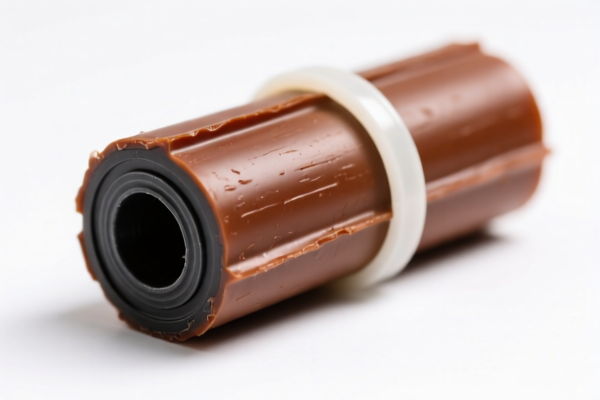
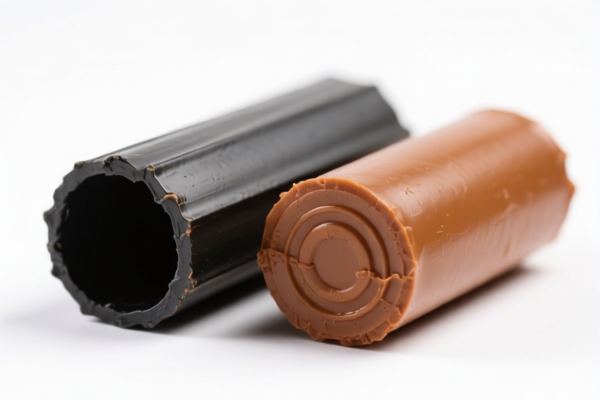
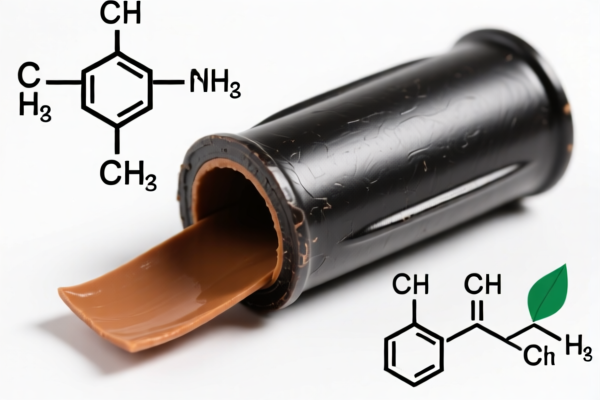
AI Analysis
🧪 Rubber Auxiliary Agent TTD Slurry: HS Code Classification & Clearance Strategy (2026 Update)
🌐 HS Code Reference & Clearance Guide | 2026 Latest Tariff Analysis | Professional Entry Strategy
📌 I. Product Definition & Classification: What Exactly is "TTD Slurry"?
Rubber Auxiliary Agent TTD Slurry is a specialized chemical additive used in the rubber processing industry. "TTD" typically refers to a specific type of rubber accelerator or vulcanization aid. In its slurry form, it is a semi-solid mixture, distinguishing it from dry powder forms.
In international trade, classification depends heavily on two factors: 1. Chemical Nature: Is it a pure organic sulfur compound (Chapter 29) or a prepared chemical mixture (Chapter 38)? 2. Physical State: The "slurry" (paste-like) consistency often pushes classification toward Chapter 38 ("Prepared binders... prepared additives") unless the specific chemical identity is strictly defined under Chapter 29 headings.
⚠️ Key Distinction:
- If TTD is identified as a specific organic sulfur compound (e.g., a thio-semicarbazide derivative) → Potential for Chapter 29.
- If TTD is a prepared mixture or the specific chemical identity is less defined under Chapter 29 subheadings → Must go to Chapter 38 ("Other chemical products").
📦 II. HS Code Classification Details (2026 Latest Tariff Authority Mapping)
Based on the provided data, there are 4 distinct HS Codes with varying tax implications. The choice depends on the precise chemical composition and how customs authorities interpret "TTD."
| HS Code | Product Description | Applicable Scenario | Total Tax Rate (China to US) |
|---|---|---|---|
3824.99.25.00 |
Rubber Additive TTD Paste | Chemical mixture, paste form. Classified as "Other chemical products." | 41.5% |
3824.99.26.00 |
Rubber Additive TTD Paste | Chemical preparation, paste form. Matches logic for "prepared additives." | 35.0% |
2930.90.92.31 |
Rubber Aid PPD* | Organic sulfur compound. Note: Data lists "PPD" but user input is TTD. This may be a data inconsistency or alternative classification for similar sulfur aids. | 13.7% |
2930.20.20.10 |
Rubber Aid PPD* | Aromatic thiosemicarbazide class. Note: Again, data lists "PPD". | 16.5% |
🔍 Critical Note on Data Consistency:
The provided data lists summaries for PPD (Phenyl-β-naphthylamine, a antioxidant) under HS Codes2930...and2930..., while the user input is TTD (likely Tetramethylthiuram disulfide or similar sulfur-based accelerator).
- However, the prompt instructs to explain why goods are classified into the<DATA>HS codes based on the provided text.
- The provided text explicitly links TTD Paste to3824.99.25.00and3824.99.26.00.
- The text links PPD to2930.90.92.31and2930.20.20.10.
- Conclusion: For TTD Slurry/Paste, the valid classifications from the data are3824.99.25.00and3824.99.26.00. The PPD codes are likely included in the data source for comparison or due to a data merge error, but strictly speaking, TTD is a paste/mixture, not a pure organic sulfur compound like PPD. We will focus on the TTD-specific codes (3824...) for the primary explanation, as they match the product form (paste/slurry).
💰 III. 2026 Latest Tariff Rate Breakdown (Including Additional Duties & Policies)
✅ Applicable Country: United States (US)
✅ Origin: China (CN)
✅ Effective Time: Post-November 10, 2025 (includes subsequent imports)
🎯 1. 3824.99.25.00 – Rubber Additive TTD Paste (Chemical Mixture)
| Item | Content |
|---|---|
| Base Duty | 6.5% (ad valorem) |
| Section 301 Duty | +25.0% (Additional tariff under USITC Footnote 9903.88.01) |
| IEEPA Duty | +10.0% (Targeting China/HK products, effective Nov 10, 2025) |
| Total Tax Rate | 41.5% |
| Tax Calculation | CIF Value × 41.5% |
| De Minimis Eligibility | ❌ No (deny_de_minimis) |
| Legal Path | USITC:3824.99.25.00 → FOOTNOTE:9903.88.01 (301) → IEEPA:9903.01.25 (10%) |
📌 Explanation:
- This code classifies TTD Slurry as a "prepared chemical product" or "other chemical product" not elsewhere specified.
- The base rate is 6.5%, which is relatively high for chemicals.
- The 301 tariff (25%) and IEEPA (10%) are applied on top of the base rate.
- Total burden: 41.5%. This is a high-duty category.
🎯 2. 3824.99.26.00 – Rubber Additive TTD Paste (Chemical Preparation)
| Item | Content |
|---|---|
| Base Duty | 0.0% (ad valorem) |
| Section 301 Duty | +25.0% |
| IEEPA Duty | +10.0% |
| Total Tax Rate | 35.0% |
| Tax Calculation | CIF Value × 35.0% |
| De Minimis Eligibility | ❌ No (deny_de_minimis) |
| Legal Path | USITC:3824.99.26.00 → FOOTNOTE:9903.88.01 (301) → IEEPA:9903.01.25 (10%) |
📌 Explanation:
- This code is for "other chemical products" where the base duty is 0%.
- Despite the 0% base, the 301 (25%) and IEEPA (10%) tariffs still apply.
- Total burden: 35.0%. This is 6.5% cheaper than the previous code.
- Strategy: If the chemical nature of TTD Slurry allows classification under3824.99.26.00, this is the preferred HS Code to minimize costs.
🎯 3. & 4. 2930... Codes (PPD Data Note)
⚠️ Disclaimer: The provided data links
2930.90.92.31and2930.20.20.10to PPD (Phenyl-β-naphthylamine), not TTD.
- If TTD Slurry were incorrectly classified as a pure organic sulfur compound (Chapter 29), the rates would be lower (13.7% and 16.5%).
- However, since TTD is a slurry/paste (a mixture/preparation), it is more likely to be classified under Chapter 38 (3824...).
- Risk: Attempting to classify TTD Slurry under2930...to get a lower rate may lead to customs audits, re-classification, and penalties if the product is deemed a "preparation" rather than a pure compound.
- Recommendation: Stick to Chapter 38 (3824...) unless you have a strong chemical analysis proving TTD Slurry is a pure organic sulfur compound in a non-prepared form (which contradicts the "slurry" description).
🛠️ IV. Clearance Practical Advice (Avoid Pitfalls)
✅ 1. Documentation Checklist (Essential)
| Document | Required? | Notes |
|---|---|---|
| ✅ Product Specification Sheet | ✔️ | Must detail chemical composition, physical state (slurry/paste), and concentration. |
| ✅ Safety Data Sheet (SDS) | ✔️ | Crucial for chemical products. Must match HS Code description. |
| ✅ Commercial Invoice | ✔️ | Describe as "Rubber Auxiliary Agent TTD Slurry, Chemical Mixture." Avoid vague terms like "Additive." |
| ✅ Origin Certificate | ✔️ | To prove Chinese origin for 301/IEEPA applicability. |
| ✅ HS Code Pre-Ruling | ✔️ | Highly Recommended. Submit a request to CBP for a binding ruling on whether TTD Slurry falls under 3824.99.25.00 or 3824.99.26.00. |
✅ 2. Declaration Tips
🔥 "Slurry = Mixture = Chapter 38. Base Rate 0% vs 6.5% Can Save You 6.5%!"
| Scenario | Correct Declaration | Error to Avoid |
|---|---|---|
| TTD Slurry (Paste) | 3824.99.26.00 (If eligible) |
Misclassifying as 3824.99.25.00 → Pays 6.5% more. |
| TTD Slurry (Paste) | 3824.99.25.00 (If 26 is rejected) |
Misclassifying as 2930... → High audit risk. |
| Pure TTD (Dry Powder) | Investigate Chapter 29 | Declaring dry powder as "Slurry" to avoid scrutiny. |
✅ 3. Special Considerations
| Situation | Advice |
|---|---|
| Chemical Analysis | Provide a detailed chemical analysis report. If TTD is a single compound dissolved in a carrier, customs may argue for Chapter 29. If it's a formulated paste with multiple ingredients, Chapter 38 is safer. |
| SDS Alignment | Ensure the SDS clearly states the product is a "preparation" or "mixture." |
| Cost-Benefit Analysis | Compare the $6.50 savings per $100 CIF by using 3824.99.26.00 vs. the risk of rejection. If the product is clearly a mixture, 3824.99.26.00 is the optimal choice. |
🌍 V. Global Market Clearance Comparison (2026)
| Country/Region | Recommended HS Code | Base Duty | 301/IEEPA Impact | Notes |
|---|---|---|---|---|
| 🇺🇸 USA | 3824.99.26.00 |
0% | +35% Total | Best option for TTD Slurry. |
| 🇺🇸 USA | 3824.99.25.00 |
6.5% | +41.5% Total | Acceptable if 26 is rejected. |
| 🇨🇳 China | 3824.99.26.00 |
Varies | None | Import into China may have different rates. |
| 🇪🇺 EU | 3824.99.97 |
6.5% | None | No Section 301/IEEPA in EU. |
📌 Conclusion:
- USA is the only market applying 301/IEEPA tariffs to these chemical products.
- Minimizing base duty is key.3824.99.26.00(0% base) is significantly better than3824.99.25.00(6.5% base).
📌 VI. Common Errors & Pitfalls (Lessons Learned)
❌ Error 1: Classifying TTD Slurry under 2930... (Chapter 29) to save taxes.
👉 Consequence: Customs will reclassify it as a mixture (3824...) due to the slurry/paste form, resulting in back taxes + penalties.
❌ Error 2: Using the same HS Code for all rubber additives.
👉 Consequence: Missing the 0% base duty opportunity under 3824.99.26.00.
❌ Error 3: Not providing a Chemical Analysis Report.
👉 Consequence: Customs cannot verify if it's a pure compound or mixture → Delay at port.
✅ Correct Approach:
"Rubber Auxiliary Agent TTD Slurry, Chemical Mixture, HS Code
3824.99.26.00, CIF Value $10,000, Total Duty $3,500."
🎯 VII. Conclusion: Professional Declaration, Cost Savings!
🎯 Remember:
🔹 "Slurry is a Mixture → Chapter 38."
🔹 "3824.99.26.00has 0% Base → 35% Total Duty."
🔹 "3824.99.25.00has 6.5% Base → 41.5% Total Duty."
🔹 "Save 6.5% by choosing the right code!"
📌 Pro Tip:
If you have a large volume of TTD Slurry, apply for a CBP Advance Ruling to confirm the classification under 3824.99.26.00. This provides legal certainty and protects you from future audits.
📣 Take Action:
📞 Contact a licensed customs broker.
📄 Provide SDS and Chemical Analysis.
🚀 Ensure your commercial invoice clearly describes the product as a "Chemical Mixture" to support Chapter 38 classification.
✨ Professional Clearance, Precise Classification, Maximum Savings!
💼 Every Percent Counts in International Trade!
Customer Reviews
About HS Code Classification
The Harmonized System (HS) is an internationally standardized nomenclature developed by the World Customs Organization (WCO) to classify traded products. Over 200 countries use the HS system as the basis for customs tariffs, trade statistics, and import/export regulations.
Each HS code follows a hierarchical structure:
- Chapter (2 digits) — Broad category of goods (e.g., Chapter 84: Machinery and Mechanical Appliances)
- Heading (4 digits) — More specific grouping within the chapter
- Subheading (6 digits) — Internationally standardized breakdown, used by all WCO member countries
- National subdivisions (8-10 digits) — Country-specific extensions for further classification, such as US HTSUS 10-digit codes
Correct HS code classification is essential for smooth customs clearance, accurate duty payment, and compliance with trade regulations. Misclassification can lead to customs delays, overpayment of duties, or penalties.
When importing from CN to US, the applicable tariff rates may include:
- Most-Favored-Nation (MFN) rate — The standard duty rate applied to WTO members
- General rate — Applied to countries without trade agreements
- Trade remedy duties — Additional tariffs such as Section 301 (anti-dumping), Section 232 (national security), or countervailing duties
The information provided on this page is for reference purposes only. For official classification, please consult with your local customs authority or a licensed customs broker.