Rubber Auxiliary Emulsion
CN → US| HS Code | Tariff Rate | Origin | Destination | Doc |
|---|---|---|---|---|
| 3812105000 | 40.0% | CN | US | Official Doc |
| 3812399000 | 40.0% | CN | US | Official Doc |
| 3901901000 | 35.0% | CN | US | Official Doc |
| 3901909000 | 41.5% | CN | US | Official Doc |
| 3402901000 | 38.8% | CN | US | Official Doc |
Product Images
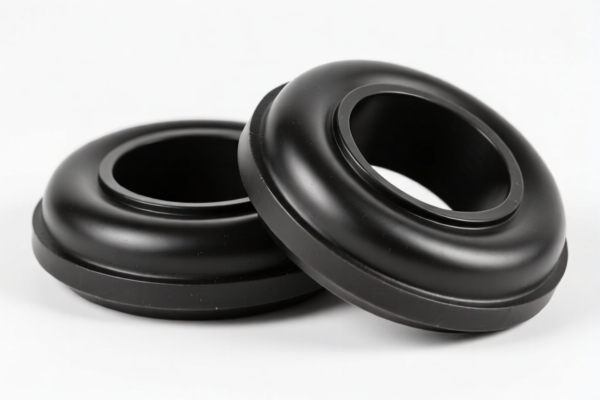
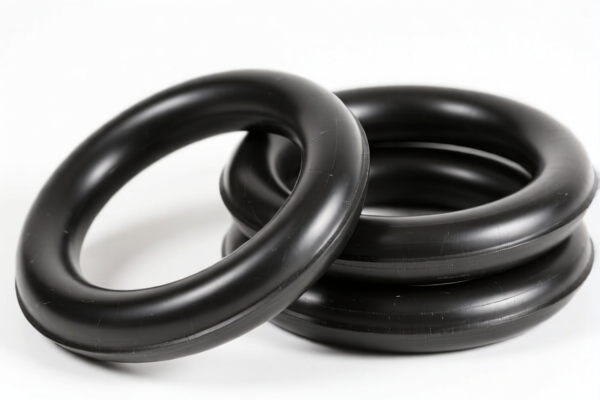
AI Analysis
🧪 Rubber Auxiliary Emulsion (Rubber Thickening/Additive Agents)
🌐 HS Code Reference & Customs Clearance Guide | 2026 Latest Tariff Structure | Professional Compliance Strategy
📌 I. Product Definition & Classification: What Exactly Is "Rubber Auxiliary Emulsion"?
"Rubber Auxiliary Emulsion" is a broad term in the rubber industry referring to chemical additives used to modify the physical properties of rubber compounds. These additives typically serve as thickening agents, stabilizers, or compatibilizers.
Because the final HS Code depends heavily on the chemical composition and the primary function of the specific emulsion, this product family spans multiple chapters (34, 38, 39). Misclassification can lead to significant tariff discrepancies.
⚠️ Critical Distinction:
- Is it primarily a surfactant/detergent type? → Chapter 34
- Is it primarily a prepared rubber additive (thickener/anti-oxidant)? → Chapter 38
- Is it primarily a polymer/raw material itself? → Chapter 39
📦 II. HS Code Classification Matrix (2026 Official Reference)
Based on the provided data, here are the five specific classifications for "Rubber Auxiliary Emulsion" variants, along with their tax implications.
| HS Code | Product Description & Functional Match | Key Characteristic | Total Tax Rate |
|---|---|---|---|
3812.10.50.00 |
Rubber Thickener, matching rubber material & chemical additives | Matches rubber matrix; chemical additive function | 40.0% |
3812.39.90.00 |
Rubber Thickener, matching rubber material & antioxidant/stabilizer functions | Includes anti-aging/stabilizing properties | 40.0% |
3901.90.10.00 |
Rubber Thickener, matching polymer raw materials & elastomer attributes | Primary composition is polymer/elastomer | 35.0% |
3901.90.90.00 |
Rubber Thickener, matching ethylene polymers & residual category | Ethylene-based polymers or general rubber-like polymers | 41.5% |
3402.90.10.00 |
Rubber Thickener, matching surfactant or functional additives | Acts primarily as a surfactant or wetting agent | 38.8% |
🔍 Key Takeaway:
The tax rate ranges from 35.0% to 41.5%. The difference lies in whether the product is classified as a prepared chemical additive (Ch 38), a polymer (Ch 39), or a surfactant (Ch 34). You must identify the primary ingredient and primary function to select the correct code.
💰 III. Detailed Tax Structure Analysis (2026 Tariff Rules)
✅ Applicable Jurisdiction: United States (US)
✅ Origin: China (CN)
✅ Effective Date: Post-November 2025 (Current Active Rules)
All codes below include the following surcharges on top of the Base MFN Rate:
1. Section 301 Tariff: +25.0%
2. Section 122 Tariff (IEEPA): +10.0%
🎯 1. 3812.10.50.00 & 3812.39.90.00 — Prepared Rubber Additives (Thickeners)
| Item | Details |
|---|---|
| Base Tariff | 5.0% |
| Section 301 Surcharge | +25.0% |
| Section 122 Surcharge | +10.0% |
| Total Tax Rate | 40.0% |
| Calculation Base | CIF Value × 40.0% |
| De Minimis Exemption? | ❌ No (High value threshold; de minimis does not apply to Section 301/122 goods) |
📌 Explanation:
These codes fall under Chapter 38 (Miscellaneous Chemical Products). They are specifically "prepared additives for rubber" used to modify viscosity or stability.
- 3812.10.50.00: General thickening/chelating additives.
- 3812.39.90.00: Additives specifically containing antioxidants or stabilizers.
- Total 40%: This is a high-cost entry for standard rubber chemicals.
🎯 2. 3901.90.10.00 — Polymer-Based Thickener (Elastomer Focus)
| Item | Details |
|---|---|
| Base Tariff | 0.0% |
| Section 301 Surcharge | +25.0% |
| Section 122 Surcharge | +10.0% |
| Total Tax Rate | 35.0% |
| Calculation Base | CIF Value × 35.0% |
| De Minimis Exemption? | ❌ No |
📌 Explanation:
This code falls under Chapter 39 (Plastics and Articles Thereof). It is used when the "rubber thickener" is actually a synthetic polymer or elastomer used primarily as a raw material thickener.
- Benefit: Lower base rate (0%) makes this 5% cheaper than Chapter 38 classifications.
- Condition: Must be primarily composed of polymers/elastomers, not just a chemical preparation.
🎯 3. 3901.90.90.00 — Ethylene Polymer / Other Polymers
| Item | Details |
|---|---|
| Base Tariff | 6.5% |
| Section 301 Surcharge | +25.0% |
| Section 122 Surcharge | +10.0% |
| Total Tax Rate | 41.5% |
| Calculation Base | CIF Value × 41.5% |
| De Minimis Exemption? | ❌ No |
📌 Explanation:
Also under Chapter 39, but for ethylene polymers or other unspecified polymers.
- Cost: This is the most expensive classification at 41.5%.
- Use Case: Only use if the product is definitively an ethylene-based polymer thickener and does not fit the "elastomer" definition of 3901.90.10.
🎯 4. 3402.90.10.00 — Surfactant-Based Additive
| Item | Details |
|---|---|
| Base Tariff | 3.8% |
| Section 301 Surcharge | +25.0% |
| Section 122 Surcharge | +10.0% |
| Total Tax Rate | 38.8% |
| Calculation Base | CIF Value × 38.8% |
| De Minimis Exemption? | ❌ No |
📌 Explanation:
Falls under Chapter 34 (Soap, Organic Surface-Active Agents).
- Use Case: If the "rubber auxiliary" acts primarily as a surfactant (emulsifier, wetting agent) rather than a polymer or thickener.
- Cost: 38.8% is mid-range. Lower than 3812 but higher than 3901.90.10.
🛠️ IV. Customs Clearance Practical Advice (Pitfall Avoidance Guide)
✅ 1. Documentation Checklist (Mandatory)
| Document | Required | Purpose |
|---|---|---|
| ✅ Technical Data Sheet (TDS) | ✔️ | Must clearly state: Chemical composition, Primary Function (Thickener vs. Surfactant vs. Polymer), CAS Numbers. |
| ✅ Certificate of Analysis (COA) | ✔️ | To prove concentration and active ingredients. |
| ✅ Formula/Composition Breakdown | ✔️ | Critical for distinguishing between Ch 38 (Prepared Chemicals) and Ch 39 (Polymers). |
| ✅ Commercial Invoice | ✔️ | Must specify "Rubber Auxiliary Emulsion" with precise functional description. Avoid vague terms like "Chemical Mix." |
| ✅ Bill of Lading | ✔️ | Ensure packaging details match invoice. |
✅ 2. Declaration Strategy (Key Tips)
🔥 Golden Rule: "Function Dictates Chapter, Composition Dictates Subheading."
| Scenario | Recommended HS Code | Risk if Misclassified |
|---|---|---|
| Product is a chemical blend added to rubber to thicken/stabilize | 3812.10.50.00 or 3812.39.90.00 |
If declared as polymer (Ch 39), may face penalty for false declaration. |
| Product is a synthetic polymer used as a thickener | 3901.90.10.00 |
If declared as Ch 38, you overpay by 5%. If declared as Ch 39.90.90, you overpay by 6.5%. |
| Product is primarily a surfactant/emulsifier | 3402.90.10.00 |
If declared as Ch 38, you overpay by 1.2%. |
| Product is ethylene-based polymer | 3901.90.90.00 |
Highest tax; only use if strictly ethylene-based. |
✅ 3. Special Considerations
| Situation | Advice |
|---|---|
| Hybrid Products | If the product contains both polymer and chemical additives, consult a customs broker. Often, the principal character (what gives it its main utility) determines the classification. |
| Sample Imports | Even small samples are subject to the 40%+ tariff. De minimis (under $800) does NOT apply to these HS codes due to Section 301/122 restrictions. |
| Origin Marking | Ensure "Made in China" is clearly marked on the product/packaging to avoid additional penalties. |
🌍 V. Market Comparison & Cost Impact (2026)
| Destination | HS Code Range | Total Tax Rate | Key Constraint |
|---|---|---|---|
| 🇺🇸 USA | 3402-3901 | 35.0% - 41.5% | Section 301 + 122 tariffs apply. No de minimis exemption. |
| 🇨🇳 China (Import) | Similar codes | ~5-13% | Lower base rates. No Section 301. |
| 🇪🇺 EU | 3812, 3901 | ~0-6% | No Section 301. Standard MFN rates apply. |
📌 Strategic Insight:
- USA is the most expensive market due to 35-41.5% total taxes.
- Optimization Tip: If your product is a synthetic polymer (not just a chemical blend), strive for3901.90.10.00(35%) to save 5% compared to standard rubber additives (3812).
- If it is a surfactant,3402.90.10.00(38.8%) is a competitive middle ground.
📌 VI. Common Mistakes & Lessons Learned
❌ Mistake 1: Using vague terms like "Chemical for Rubber" on the invoice.
👉 Consequence: Customs may classify under the highest general rate or demand a formal ruling, causing delayed clearance.
❌ Mistake 2: Assuming "De Minimis" ($800) applies.
👉 Consequence: Seizure or forced return. Section 301/122 goods are explicitly excluded from de minimis treatment.
❌ Mistake 3: Misclassifying a polymer as a chemical additive (or vice versa).
👉 Consequence: Underpayment or Overpayment.
- If you pay 40% but should have paid 35%, you waste profit.
- If you pay 35% but should have paid 41.5%, you face back taxes + penalties.
✅ Best Practice:
Provide a Technical Data Sheet (TDS) explicitly stating:
"Primary Ingredient: [Polymer/Surfactant/Chemical Blend]"
"Primary Function: [Thickening/Stabilizing/Emulsifying]"
"CAS Number: [XXX-XXX-X]"
🎯 VII. Conclusion: Precision Saves Money!
🎯 Summary Rule of Thumb:
🔹 Polymer/Elstomer →
3901.90.10.00(35% - Best Rate)
🔹 Surfactant →3402.90.10.00(38.8%)
🔹 Chemical Additive →3812.10.50.00(40%)
🔹 Ethylene Polymer →3901.90.90.00(41.5% - Worst Rate)
📌 Pro Tip:
If you are importing into the US, do not rely on de minimis. Budget for 35-41.5% duties.
Consider applying for a Section 301 Exclusion if applicable (though rare for generic rubber auxiliaries).
Pre-clearance ruling is highly recommended for large shipments.
📣 Next Steps:
📞 Consult a licensed customs broker with your Technical Data Sheet.
📝 Confirm the primary ingredient to lock in the lowest HS Code.
🚀 Optimize your landed cost from day one!
✨ Accurate Classification = Maximized Profit!
💼 Don't let tariff complexity derail your supply chain!
Customer Reviews
About HS Code Classification
The Harmonized System (HS) is an internationally standardized nomenclature developed by the World Customs Organization (WCO) to classify traded products. Over 200 countries use the HS system as the basis for customs tariffs, trade statistics, and import/export regulations.
Each HS code follows a hierarchical structure:
- Chapter (2 digits) — Broad category of goods (e.g., Chapter 84: Machinery and Mechanical Appliances)
- Heading (4 digits) — More specific grouping within the chapter
- Subheading (6 digits) — Internationally standardized breakdown, used by all WCO member countries
- National subdivisions (8-10 digits) — Country-specific extensions for further classification, such as US HTSUS 10-digit codes
Correct HS code classification is essential for smooth customs clearance, accurate duty payment, and compliance with trade regulations. Misclassification can lead to customs delays, overpayment of duties, or penalties.
When importing from CN to US, the applicable tariff rates may include:
- Most-Favored-Nation (MFN) rate — The standard duty rate applied to WTO members
- General rate — Applied to countries without trade agreements
- Trade remedy duties — Additional tariffs such as Section 301 (anti-dumping), Section 232 (national security), or countervailing duties
The information provided on this page is for reference purposes only. For official classification, please consult with your local customs authority or a licensed customs broker.