Rubber Auxiliary TTD Powder
CN → US| HS Code | Tariff Rate | Origin | Destination | Doc |
|---|---|---|---|---|
| 3812392000 | 41.5% | CN | US | Official Doc |
| 3812396000 | 41.5% | CN | US | Official Doc |
| 3824992900 | 41.5% | CN | US | Official Doc |
| 3824994900 | 41.5% | CN | US | Official Doc |
Product Images
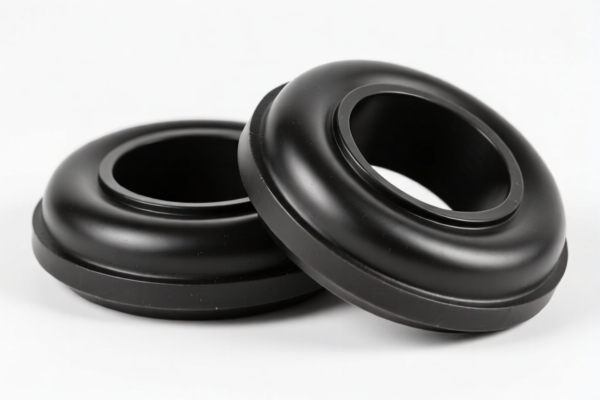
AI Analysis
🛢️ Rubber Auxiliary PPD Powder (Thiophenylene Diamine Derivative)
🌐 HS Code Reference & Customs Clearance Guide | 2026 Latest Tariff Analysis | Professional Level Customs Strategy
📌 I. Product Definition and Classification: What is "PPD Powder"?
PPD (N,N'-Diphenyl-p-phenylenediamine) is a classic and widely used antioxidant and antiozonant in the rubber industry. It is a primary aromatic amine derivative. The "powder" form is the most common commercial state for industrial use.
In international trade, PPD is classified based on its specific chemical function (antioxidant/rubber stabilizer) and physical state (powder).
⚠️ Key Classification Distinction:
- If it is strictly a rubber antioxidant/stabilizer (primary use in rubber processing) → It falls under Chapter 38, Heading 3812.
- If it is a general chemical preparation not specifically for rubber or without a specific named function → It may fall under Chapter 38, Heading 3824 (General Chemical Products).
- Note: While PPD has other industrial uses, its dominant trade classification for "Rubber Auxiliary" is under 3812.39 (Rubber vulcanization accelerators; compound plasticizers; anti-foaming agents; antioxidants; other compound stabilizers for rubber or plastics).
📦 II. HS Code Classification Details (2026 Latest Tariff Reference)
Based on the provided data, there are four potential HS Codes, with two being specific to rubber antioxidants and two being general catch-all categories.
| HS Code | Product Description | Application Scenario | Classification Logic |
|---|---|---|---|
3812.39.20.00 |
Rubber Antioxidant PPD Powder (N,N'-Diphenyl-p-phenylenediamine powder) |
Specific antioxidant for rubber stabilization | ✅ Highly Specific: Matches "Rubber vulcanization accelerators; compound plasticizers... antioxidants...". PPD is a classic antioxidant. |
3812.39.60.00 |
Aromatic Antioxidant for Rubber (PPD Powder) (Fits rubber use and chemical preparation form) |
General aromatic antioxidant category | ✅ Specific: Falls under "Other antioxidants" within heading 3812. Fits the "aromatic" nature of PPD. |
3824.99.29.00 |
Other Chemical Preparations, not elsewhere specified (Powder chemical auxiliary for rubber industry) |
Unlisted chemical products | ⚠️ Catch-All: If the specific rubber antioxidant subheading is deemed inapplicable by some customs authorities, this becomes the fallback for "other chemical preparations." |
3824.99.49.00 |
Chemical Preparations, Rubber Additives (General) (Fits the "other chemical products" bucket) |
General chemical industry product | ⚠️ Catch-All: Another fallback category for rubber additives not specifically named in 3812. |
🔍 Key Distinction:
-3812.39.x0.00is the correct and preferred classification for PPD because it is a specific antioxidant for rubber.
-3824.99.x0.00should only be used if customs authorities reject the specific antioxidant classification or if the product is a complex mixture where PPD is not the defining feature.
- Risk: Using 3824 instead of 3812 may lead to queries from customs regarding the specific function.
💰 III. 2026 Latest Tariff Rate Details (Including Surcharge Tariffs & Policy Surcharges)
✅ Applicable Country: United States (US)
✅ Origin: China (CN)
✅ Effective Time: From November 10, 2025 (and subsequent imports)
🎯 1. HS Code 3812.39.20.00 / 3812.39.60.00 — Rubber Antioxidants (PPD)
| Item | Details |
|---|---|
| Base Tariff Rate | 6.5% (Ad Valorem) |
| Section 301 Surcharge | +25.0% |
| Section 122 Tariff | +10.0% |
| Total Effective Tariff Rate | 41.5% |
| Tax Calculation | CIF Value × 41.5% |
| De Minimis Exemption | ❌ Not Eligible (deny_de_minimis) |
| Legal Basis Path | Section 301: 9903.01.25 → Section 122: 9903.01.10 → USITC: 3812.39.20.00 / 3812.39.60.00 |
📌 Explanation:
- The 6.5% base rate is the standard Most Favored Nation (MFN) rate for rubber antioxidants.
- The 25% Section 301 tariff applies to a wide range of Chinese goods, including chemical products.
- The 10% Section 122 tariff (often related to national security or specific trade remedy measures) is also applied.
- Total Tax Burden: 41.5%. This is a high tariff rate. Importers must account for this in cost structures.
- De Minimis: These goods are explicitly excluded from the $800 de minimis exemption, meaning every shipment, regardless of value, is subject to full customs clearance and duty payment.
🎯 2. HS Code 3824.99.29.00 / 3824.99.49.00 — General Chemical Preparations
| Item | Details |
|---|---|
| Base Tariff Rate | 6.5% (Ad Valorem) |
| Section 301 Surcharge | +25.0% |
| Section 122 Tariff | +10.0% |
| Total Effective Tariff Rate | 41.5% |
| Tax Calculation | CIF Value × 41.5% |
| De Minimis Exemption | ❌ Not Eligible (deny_de_minimis) |
| Legal Basis Path | Section 301: 9903.01.25 → Section 122: 9903.01.10 → USITC: 3824.99.29.00 / 3824.99.49.00 |
📌 Note:
- Even if classified under the general 3824 heading, the surcharge rates remain identical (6.5% + 25% + 10% = 41.5%).
- There is no tariff advantage to misclassifying PPD as a general chemical product.
- Risk: Misclassification can lead to penalties, audits, and delays. It is safer to classify correctly under 3812.
🛠️ IV. Customs Clearance Practical Advice (Real-World Pitfall Avoidance Guide)
✅ 1. Document Checklist (Mandatory)
| Document | Required | Notes |
|---|---|---|
| ✅ Product Specification Sheet | ✔️ | Must clearly state: "Antioxidant for Rubber," "N,N'-Diphenyl-p-phenylenediamine (PPD)," CAS Number: 119-93-1. |
| ✅ Certificate of Analysis (COA) | ✔️ | Purity level, physical state (Powder), and intended use (Rubber Industry). |
| ✅ Safety Data Sheet (SDS) | ✔️ | Required for chemical imports. Must comply with OSHA/GHS standards. |
| ✅ Commercial Invoice | ✔️ | Must include HS Code, description, and value. Avoid vague terms like "Chemical Powder." Use "Rubber Antioxidant PPD Powder." |
| ✅ Bill of Lading/Air Waybill | ✔️ | Ensure goods are marked as "Chemical" if required, but do not misdeclare hazardous materials if they are not. |
| ✅ Import License/Permits | ✔️ | Check if any special permits are needed for chemical imports in your destination country. |
✅ 2. Declaration Tips (Key Mantra)
🔥 "Specify Function, Declare CAS, Powder State, Avoid General Codes!"
| Scenario | Correct Declaration | Incorrect Practice |
|---|---|---|
| Pure PPD Powder | "Rubber Antioxidant, N,N'-Diphenyl-p-phenylenediamine (PPD), Powder" → 3812.39.20.00 |
"Chemical Powder" → 3824.99.49.00 (Higher risk of query) |
| PPD in a Mixture | "Rubber Compound with Antioxidant PPD" → Declare based on principal function. If PPD is the main antioxidant, use 3812. | "Rubber Additive Mixture" → 3824.99.29.00 (Less precise) |
| Non-Rubber Use | If PPD is used only for other purposes (e.g., electronics, dyes), declare accordingly. However, for "Rubber Auxiliary," use 3812. | Using 3812 for non-rubber use → Misclassification |
⚠️ Critical Point:
- Do NOT use "De Minimis" for PPD powder shipments from China. The value of the goods + taxes will likely exceed $800, and even if under, it is explicitly excluded.
- Always provide the CAS Number (119-93-1) in the declaration. This helps customs quickly verify the chemical identity and assign the correct HS Code.
✅ 3. Special Circumstances Handling
| Situation | Handling Advice |
|---|---|
| Small Sample Shipments | Even for samples < $800, do not use de minimis. Declare as "Commercial Sample" with full documentation, but expect 41.5% duty. |
| Mixed Container | If PPD powder is mixed with other goods, ensure the separate value of PPD is clearly stated on the invoice to avoid over-taxing other items. |
| Packaging | If packaged in large drums vs. small bags, ensure the net weight is declared correctly. Tariffs are ad valorem, but weight affects shipping costs. |
| Customs Inquiry | If customs questions the classification, provide the SDS and Application Letter from the manufacturer stating "Used as an antioxidant in rubber compounding." |
🌍 V. Global Market Comparison (2026 Latest)
| Country/Region | Recommended HS Code | Tariff Rate | Notes |
|---|---|---|---|
| 🇺🇸 United States | 3812.39.20.00 |
41.5% | Includes Base 6.5% + Sec 301 (25%) + Sec 122 (10%). |
| 🇪🇺 European Union | 3812.39.00 |
3.5% | No Section 301/122. Standard MFN rate. |
| 🇨🇳 China (Import) | 3812.39.00 |
0% | Many chemical products have 0% import duty to encourage raw material import. |
| 🇮🇳 India | 3812.39.00 |
5%-10% | Varies by specific notification. Check current CBIC rates. |
| 🇯🇵 Japan | 3812.39.00 |
0% | Generally low duty for rubber additives. |
📌 Conclusion:
- The US is the most expensive market for PPD powder imports from China due to multiple layers of surtaxes.
- EU, Japan, and China have significantly lower or zero tariffs.
- Strategy: If targeting the US market, factor in the 41.5% tariff in your pricing model. Consider supply chain adjustments if margins are thin.
📌 VI. Common Errors & Pitfall Guide (Lessons Learned)
❌ Error 1: Using "Chemical Powder" or "Auxiliary" without specifying "Rubber Antioxidant"
👉 Consequence: Customs may assign a generic HS Code (3824) with the same 41.5% rate but delay clearance for verification.
❌ Error 2: Attempting to use De Minimis for shipments under $800
👉 Consequence: Shipment seized or returned. PPD powder is explicitly excluded from the $800 exemption.
❌ Error 3: Misdeclaring the Chemical Name
👉 Consequence: If "PPD" is not declared, customs may suspect a different chemical (e.g., hazardous substances) and apply stricter inspections or higher duties.
❌ Error 4: Not providing CAS Number
👉 Consequence: Customs cannot verify the product identity, leading to delays, storage fees, and potential fines.
✅ Correct Practice:
"Rubber Antioxidant, N,N'-Diphenyl-p-phenylenediamine (PPD), Powder, CAS: 119-93-1, HS: 3812.39.20.00"
🎯 VII. Conclusion: Precise Classification, Smooth Clearance, Cost Optimization!
🎯 Remember the Mantra:
🔹 "PPD is Rubber Antioxidant, Not General Chemical."
🔹 "41.5% Total Tax in US, No De Minimis, Declare CAS."
🔹 "Correct HS Code Saves Time, Misclassification Costs Dollars."
📌 Pro Tip:
- If your PPD powder is originating from Vietnam, Malaysia, or Thailand, you may be eligible for lower or zero US tariffs under various FTAs (Free Trade Agreements).
- Recommendation: Apply for a Pre-Ruling (Advance Ruling) from US Customs and Border Protection (CBP) before large shipments. This provides legal certainty and avoids disputes.
📣 Immediate Action:
📞 Contact a Licensed Customs Broker + Provide SDS & COA + Request Pre-Ruling
🚀 Ensure your PPD powder clears US customs smoothly, efficiently, and cost-effectively!
✨ Professional Customs Clearance Starts with Accurate Classification!
💼 Every Percent of Tariff Matters in the Rubber Supply Chain!
Customer Reviews
About HS Code Classification
The Harmonized System (HS) is an internationally standardized nomenclature developed by the World Customs Organization (WCO) to classify traded products. Over 200 countries use the HS system as the basis for customs tariffs, trade statistics, and import/export regulations.
Each HS code follows a hierarchical structure:
- Chapter (2 digits) — Broad category of goods (e.g., Chapter 84: Machinery and Mechanical Appliances)
- Heading (4 digits) — More specific grouping within the chapter
- Subheading (6 digits) — Internationally standardized breakdown, used by all WCO member countries
- National subdivisions (8-10 digits) — Country-specific extensions for further classification, such as US HTSUS 10-digit codes
Correct HS code classification is essential for smooth customs clearance, accurate duty payment, and compliance with trade regulations. Misclassification can lead to customs delays, overpayment of duties, or penalties.
When importing from CN to US, the applicable tariff rates may include:
- Most-Favored-Nation (MFN) rate — The standard duty rate applied to WTO members
- General rate — Applied to countries without trade agreements
- Trade remedy duties — Additional tariffs such as Section 301 (anti-dumping), Section 232 (national security), or countervailing duties
The information provided on this page is for reference purposes only. For official classification, please consult with your local customs authority or a licensed customs broker.