Rubber Buffers
CN → US| HS Code | Tariff Rate | Origin | Destination | Doc |
|---|---|---|---|---|
| 4016996010 | 37.5% | CN | US | Official Doc |
| 4006901000 | 35.0% | CN | US | Official Doc |
| 4016995500 | 37.5% | CN | US | Official Doc |
| 4006905000 | 37.7% | CN | US | Official Doc |
| 4016993000 | 35.0% | CN | US | Official Doc |
Product Images
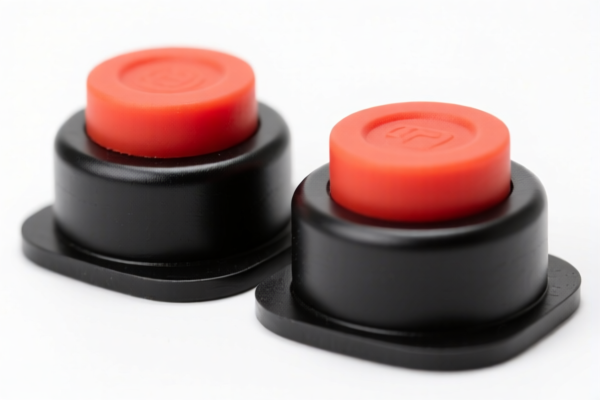
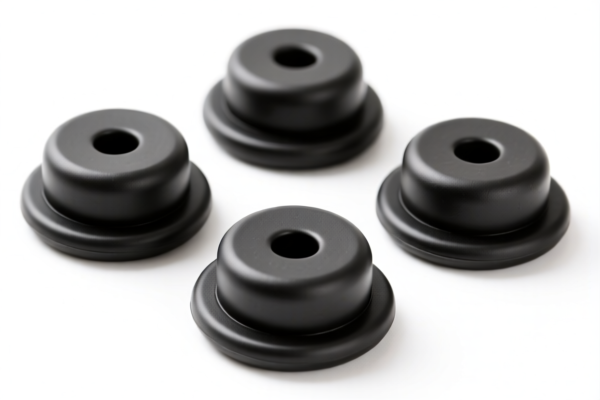
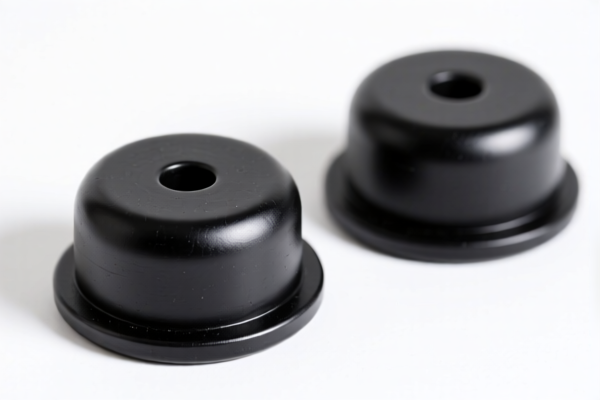
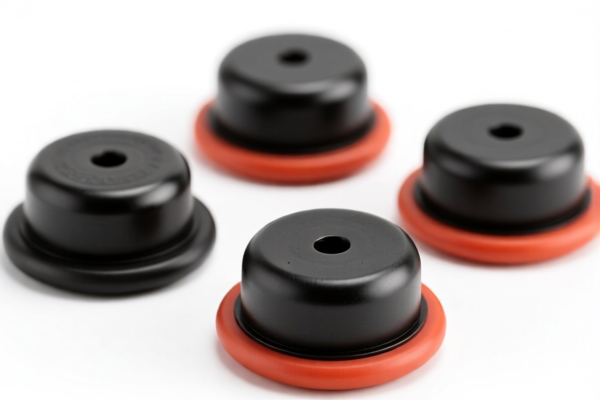
AI Analysis
🛡️ Rubber Buffers (Unvulcanized/Semi-Finished)
🌐 HS Code Reference & Customs Clearance Guide | 2026 Latest Tariff Analysis | Professional Clearance Strategy
📌 I. Product Definition & Classification: What Are "Rubber Buffers"?
Rubber Buffers are mechanical components designed to absorb shock, vibration, or impact energy. In international trade, their classification hinges critically on their processing state (Vulcanized vs. Unvulcanized) and physical form.
Key Distinction for this Dataset:
All items in the provided data are explicitly identified as "Unvulcanized Rubber" (未硫化橡胶). This is a crucial legal and technical status.
- Unvulcanized Rubber: Raw rubber that has not undergone the vulcanization process (cross-linking). It is sticky, soft, and lacks final mechanical strength. It is often treated as a semi-finished good or a specific shape of raw material.
- Vulcanized Rubber: The final, durable product. Most standard "buffers" are vulcanized. However, if declared as "unvulcanized," they fall under different HS chapters (typically Chapter 40 raw materials/semi-finished goods rather than Chapter 40 finished articles, or specific subheadings for unvulcanized shapes).
⚠️ Critical Classification Point:
- If the buffer is unvulcanized and has a specific shape (e.g., pre-formed pads, strips, or blocks), it may fall under 4006 (Other unvulcanized rubber articles).
- If the buffer is unvulcanized but considered a "part" or "accessory" to a machine, or if the material is classified differently, it may fall under 4016 (Other vulcanized rubber articles) if the customs authority infers it is effectively a semi-finished vulcanized part, or if the "unvulcanized" label is contested.
- Natural Rubber vs. Synthetic: Specific subheadings differ based on whether the rubber is natural or synthetic.
📦 II. HS Code Classification Details (Based on Provided Data)
| HS Code | Product Description | Key Characteristics | Tax Rate Breakdown |
|---|---|---|---|
4016.99.60.10 |
Unvulcanized Rubber Buffer, Material matches vulcanized rubber category, Form: Mechanical Part | Conflict Note: Described as "Unvulcanized" but classified under 4016 (Vulcanized). Implies material inference or specific duty rules for mechanical parts. | 37.5% |
4006.90.10.00 |
Unvulcanized Rubber Buffer, Material: Unvulcanized Rubber, Form: Other Shapes/Articles | Standard Unvulcanized: Pure "other" unvulcanized rubber shape. No specific name. | 35.0% |
4016.99.55.00 |
Unvulcanized Rubber Buffer, Material Inferred as Pre-Vulcanized, Use: Shock/Vibration Control | Conflict Note: Classified under 4016 (Vulcanized) due to use as "shock control item," despite "unvulcanized" input. | 37.5% |
4006.90.50.00 |
Unvulcanized Rubber Buffer, Material: Unvulcanized, Form: Article, Matched as Spare Part/Component | Conflict Note: Classified under 4006 (Unvulcanized) but specified as "Spare Part/Component." Higher base tariff. | 37.7% |
4016.99.30.00 |
Natural Rubber Buffer Pad, Material: Natural Rubber, Form: Shock/Buffer Product | Natural Rubber Specific: Explicitly natural rubber. Classified under 4016 (Vulcanized category in data, likely due to final use inference). | 35.0% |
🔍 Important Clarification:
- HS 4006 covers "Other unvulcanized rubber articles." This is the most logical fit for "Unvulcanized Rubber Buffers."
- HS 4016 covers "Other articles of vulcanized rubber." The presence of unvulcanized buffers in 4016 codes in the data suggests a customs interpretation conflict or that the goods are treated as semi-finished vulcanized parts for duty purposes.
- Natural Rubber buffers often have different base duties (0% vs 2.5%) compared to synthetic rubber.
💰 III. 2026 Latest Tariff Rate Details (US Market)
✅ Applicable Country: United States (US)
✅ Country of Origin: China (CN)
✅ Effective Date: From Nov 10, 2025 (including subsequent imports)
🎯 1. 4006.90.10.00 & 4016.99.30.00 —— 35.0% Total Rate
| Item | Detail |
|---|---|
| Base Duty | 0.0% (for 4006.90.10.00) or 0.0% (for 4016.99.30.00, Natural Rubber) |
| Section 301 Duty (USITC) | +25% |
| IEEPA Duty | +10% (Section 1221, China-specific) |
| Total Rate | 35.0% |
| Calculation | CIF Value × 35% |
| De Minimis Exemption | ❌ Not Eligible (Denied de minimis) |
| Legal Path | USITC:4006.90.10.00 → FOOTNOTE:9903.88.01 + IEEPA:9903.01.25 |
📌 Explanation:
- Base duty is 0% for these specific subheadings.
- However, Section 301 (25%) and IEEPA 1221 (10%) apply in full.
- Total: 35%. This is a moderate-high tariff for rubber goods.
🎯 2. 4016.99.60.10 & 4016.99.55.00 —— 37.5% Total Rate
| Item | Detail |
|---|---|
| Base Duty | 2.5% |
| Section 301 Duty (USITC) | +25% |
| IEEPA Duty | +10% |
| Total Rate | 37.5% |
| Calculation | CIF Value × 37.5% |
| De Minimis Exemption | ❌ Not Eligible |
| Legal Path | USITC:4016.99.60.10 → FOOTNOTE:9903.88.01 + IEEPA:9903.01.25 |
📌 Explanation:
- Base duty is higher (2.5%) for these vulcanized-style codes.
- Total: 37.5%. Slightly higher than the 35% options.
🎯 3. 4006.90.50.00 —— 37.7% Total Rate
| Item | Detail |
|---|---|
| Base Duty | 2.7% |
| Section 301 Duty (USITC) | +25% |
| IEEPA Duty | +10% |
| Total Rate | 37.7% |
| Calculation | CIF Value × 37.7% |
| De Minimis Exemption | ❌ Not Eligible |
| Legal Path | USITC:4006.90.50.00 → FOOTNOTE:9903.88.01 + IEEPA:9903.01.25 |
📌 Explanation:
- Highest base duty (2.7%) among unvulcanized categories.
- Total: 37.7%. Avoid this code if possible due to higher base rate.
🛠️ IV. Customs Clearance Practical Advice (Avoid Pitfalls)
✅ 1. Preparation Checklist (Mandatory)
| Document | Required | Notes |
|---|---|---|
| ✅ Product Specification Sheet | ✔️ | Must state: "Unvulcanized," Material Type (Natural/Synthetic), Shape, Hardness (if measurable). |
| ✅ Photos | ✔️ | Clear images showing the rubber is sticky/tack, not hard/flexible like vulcanized rubber. |
| ✅ Commercial Invoice | ✔️ | Clearly describe as "Unvulcanized Rubber Buffer/Bushing" – do NOT use "Finished Rubber Part" if unvulcanized. |
| ✅ Packing List | ✔️ | Detail quantity and weight. |
| ✅ Origin Certificate | ✔️ | If not CN, may qualify for lower IEEPA (but CN is assumed here). |
✅ 2. Declaration Strategy (Key Rules)
🔥 "Unvulcanized is Semi-Finished, Not Finished Part!"
| Scenario | Correct HS Code | Incorrect HS Code | Consequence |
|---|---|---|---|
| Unvulcanized, No Specific Machine Part ID | 4006.90.10.00 (35%) |
4016.99.xxxx (37.5%) |
Overpayment of 2.5% |
| Unvulcanized, Natural Rubber, Shape Pad | 4016.99.30.00 (35%) |
4006.90.xxxx (35.0%) |
Same rate, but 4016 may be safer if natural |
| Unvulcanized, Claimed as Spare Part | 4006.90.50.00 (37.7%) |
4006.90.10.00 (35.0%) |
Overpayment of 2.7% |
| Vulcanized Buffer (Hard/Flexible) | Different HS (e.g., 4016.99.80) | 4006.xxxx |
Severe Penalty for misdeclaration |
📌 Critical Warning:
- Do not declare unvulcanized rubber as a "finished mechanical part" (e.g., under 84 or 85) because rubber is primarily classified in Chapter 40.
- Do not mix unvulcanized and vulcanized items in one shipment without clear separation.
- Section 1221 (10%) applies to all these codes for China-origin goods.
✅ 3. Special Situations
| Situation | Advice |
|---|---|
| OEM Custom Shapes | Provide drawings showing the shape is "pre-vulcanized" or "semi-finished." |
| Natural Rubber Content >50% | Ensure HS code reflects natural rubber (e.g., 4016.99.30.00) for potential 0% base duty. |
| Combined Shipment | If shipping with vulcanized buffers, declare separately. Do not blend. |
| Value Declaration | Declare actual transaction value. Duties are ad valorem (percentage of value). |
🌍 V. Global Market Comparison (2026)
| Country/Region | Recommended HS Code | Total Duty (China Origin) | Key Certifications | Notes |
|---|---|---|---|---|
| 🇺🇸 USA | 4006.90.10.00 |
35.0% | None typically for raw rubber | High tariff due to Section 301 + IEEPA |
| 🇨🇳 China | 4006.90.10.00 |
0% - 5% | None | Low import duty for raw materials |
| 🇪🇺 EU | 4006.90.10.00 |
0% - 3% | REACH | No Section 301 equivalent |
| 🇬🇧 UK | 4006.90.10.00 |
0% - 3% | UKCA | Post-Brexit tariff remains low |
| 🇯🇵 Japan | 4006.90.10.00 |
0% - 2.5% | JIS | Low duty |
📌 Conclusion:
- USA is the most expensive market for rubber buffers due to Section 301 (25%) and IEEPA (10%).
- China, EU, Japan, UK have significantly lower duties.
- Cost Optimization: If exporting to the US, consider transshipment or substantial transformation in a third country (e.g., Vietnam, Mexico) to avoid IEEPA/301 duties, if legal and compliant.
📌 VI. Common Mistakes & Pitfalls (Blood Lessons)
❌ Mistake 1: Declaring "Unvulcanized Rubber" as "Vulcanized Rubber Buffer"
👉 Result: Under-declaration of duty if base rate is lower, but high risk of penalty for misclassification. Also, 4016 may have different base rates.
❌ Mistake 2: Ignoring the 10% IEEPA 1221 duty
👉 Result: Underpayment by 10%. CBP will audit and demand back payment + interest.
❌ Mistake 3: Using "Rubber Part" instead of "Unvulcanized Rubber Article"
👉 Result: Customs may reclassify to a higher-tariff "finished part" code.
❌ Mistake 4: Not distinguishing Natural vs. Synthetic Rubber
👉 Result: Incorrect base duty (0% vs 2.5%). Natural rubber buffers (4016.99.30.00) are 35%, while some synthetic ones (4016.99.60.10) are 37.5%.
✅ Correct Approach:
"Unvulcanized Rubber Buffer, Shape: Pad, Material: Natural Rubber, For Shock Absorption, Model: XYZ"
🎯 VII. Conclusion: Professional Declaration Saves Money!
🎯 Remember the Mantra:
🔹 "Unvulcanized is 4006, Not 4016 (unless inferred)."
🔹 "Base 0% + 301 25% + IEEPA 10% = 35% Minimum."
🔹 "Natural Rubber = 0% Base, Synthetic = 2.5% Base."
🔹 "Never Declare Unvulcanized as Finished Part!"
📌 Pro Tip:
- If your rubber buffers are natural, prioritize
4016.99.30.00or4006.90.10.00for the 35% total rate.- If synthetic,
4006.90.10.00is the cheapest at 35% (vs 37.5% or 37.7%).- Always provide photos to prove "unvulcanized" state (tacky, soft) to avoid being classified as a finished product.
- Consult a customs broker for pre-classification ruling if values are high.
📣 Immediate Action:
📞 Contact your customs broker + Provide product photos + Apply for Pre-Ruling
🚀 Ensure your rubber buffers pass US customs smoothly and efficiently!
✨ Professional clearance starts with accurate classification!
💼 Every 2.5% saves money on every shipment!
Customer Reviews
About HS Code Classification
The Harmonized System (HS) is an internationally standardized nomenclature developed by the World Customs Organization (WCO) to classify traded products. Over 200 countries use the HS system as the basis for customs tariffs, trade statistics, and import/export regulations.
Each HS code follows a hierarchical structure:
- Chapter (2 digits) — Broad category of goods (e.g., Chapter 84: Machinery and Mechanical Appliances)
- Heading (4 digits) — More specific grouping within the chapter
- Subheading (6 digits) — Internationally standardized breakdown, used by all WCO member countries
- National subdivisions (8-10 digits) — Country-specific extensions for further classification, such as US HTSUS 10-digit codes
Correct HS code classification is essential for smooth customs clearance, accurate duty payment, and compliance with trade regulations. Misclassification can lead to customs delays, overpayment of duties, or penalties.
When importing from CN to US, the applicable tariff rates may include:
- Most-Favored-Nation (MFN) rate — The standard duty rate applied to WTO members
- General rate — Applied to countries without trade agreements
- Trade remedy duties — Additional tariffs such as Section 301 (anti-dumping), Section 232 (national security), or countervailing duties
The information provided on this page is for reference purposes only. For official classification, please consult with your local customs authority or a licensed customs broker.