Rubber Clothing
CN → US| HS Code | Tariff Rate | Origin | Destination | Doc |
|---|---|---|---|---|
| 6210203000 | 13.8% | CN | US | Official Doc |
| 4015900010 | 39.0% | CN | US | Official Doc |
| 6210207000 | 13.3% | CN | US | Official Doc |
| 4015900050 | 39.0% | CN | US | Official Doc |
| 4203104085 | 16.0% | CN | US | Official Doc |
Product Images
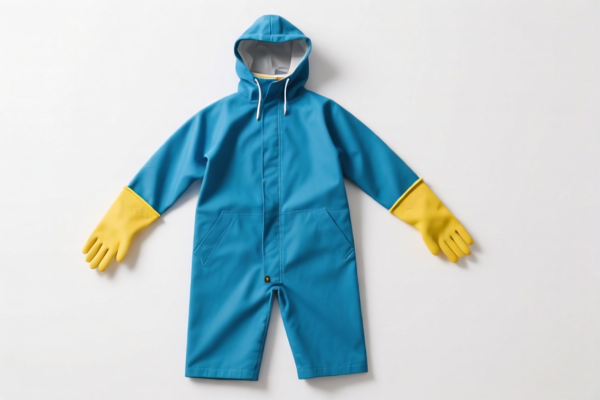


AI Analysis
🧥 Rubber Clothing: Global HS Code Classification & Customs Clearance Guide (2026 Update)
🌐 HS Code Reference & Clearance Strategy | Comprehensive Tariff Analysis | Expert Import Strategies
📌 One: Product Definition & Classification: Do You Really Understand "Rubber Clothing"?
"Rubber Clothing" is a broad term used internationally to describe protective gear made from synthetic or natural rubber. In international trade, it is not a single classification. Its HS Code and tariff rate depend entirely on: 1. Material Composition: Is it 100% rubber, or fabric coated with rubber? 2. Manufacturing Process: Is it dipped, coated, or laminated? 3. End Use: Is it a general protective suit, a specific vulcanized item, or leather-based?
⚠️ Critical Distinction: * "Fabric + Rubber Coating": Falls under Chapter 62 (Apparel) → Lower Tariff (~13%). * "100% Rubber / Vulcanized": Falls under Chapter 40 (Rubber) → Higher Tariff (~39%) due to trade restrictions. * "Leather-based": Falls under Chapter 42 → Medium Tariff (~16%).
📦 Two: Detailed HS Code Breakdown (2026 Tariff Authority)
Based on current international trade data, here is the authoritative mapping for "Rubber Clothing":
| HS Code | Product Description | Material/Feature | Total Tax Rate |
|---|---|---|---|
| 6210.20.30.00 | Rubber Protective Clothing (Apparel form) | Synthetic Fiber fabric coated with rubber | 13.8% |
| 6210.20.70.00 | Rubber Protective Clothing (Apparel form) | Exterior dipped/coated/covered/laminated with rubber | 13.3% |
| 4015.90.00.10 | Rubber Protective Clothing | 100% Rubber material; similar to aprons; specific rubber gear | 39.0% |
| 4015.90.00.50 | Rubber Protective Clothing | Vulcanized Rubber apparel & accessories (100% rubber) | 39.0% |
| 4203.10.40.85 | Leather Clothing (Rubber/Leather Mix) | Leather based (often mislabeled as rubber if leather-backed) | 16.0% |
🔍 Key Insight: * Group A (Chapter 62 - ~13%): If the base is fabric (cotton/polyester) and rubber is applied as a coating/dip, the product is classified as "Apparel made from textiles". This is the most tax-efficient route. * Group B (Chapter 40 - 39%): If the product is pure rubber or heavily vulcanized rubber (often called "Vulcanized Rubber Clothing"), it faces high tariffs due to Section 301/122 restrictions on rubber goods. * Group C (Chapter 42 - 16%): If the outer layer is genuine leather (even if lined with rubber), it falls here.
💰 Three: 2026 Tariff Rate Breakdown (Detailed Tax Terms)
✅ Context: Analysis of Standard Import + Section 122 Tariff (10%) + Base Tariff + Supplementary Tariff (e.g., Section 301).
🎯 1. Textile-Based Rubber Clothing (Chapter 62)
Best for: Protective suits with fabric backs, dipped rain gear.
A. 6210.20.30.00
| Item | Details |
|---|---|
| Product | Rubber Protective Clothing (Apparel) |
| Material | Synthetic Fiber + Rubber Coating |
| Base Tariff | 3.8% |
| Supplementary Tariff | 0.0% (No Section 301/301 penalty on textiles) |
| Section 122 Tariff | +10.0% (Specific trade measure) |
| Total Tax | 13.8% |
| Calculation | CIF Value × 13.8% |
| Legal Path | Base: 6210.20.30 + Sec122: 10% |
B. 6210.20.70.00
| Item | Details |
|---|---|
| Product | Rubber Protective Clothing (Apparel) |
| Material | Exterior dipped/coated/laminated |
| Base Tariff | 3.3% |
| Supplementary Tariff | 0.0% |
| Section 122 Tariff | +10.0% |
| Total Tax | 13.3% |
| Calculation | CIF Value × 13.3% |
| Legal Path | Base: 6210.20.70 + Sec122: 10% |
🎯 2. Vulcanized Rubber Clothing (Chapter 40)
Warning: High Tariff Zone. Applies to pure rubber suits, heavy-duty vulcanized gear.
C. 4015.90.00.10 & 4015.90.00.50
| Item | Details |
|---|---|
| Product | Rubber Protective Clothing (Vulcanized/100% Rubber) |
| Material | 100% Rubber / Vulcanized Rubber |
| Base Tariff | 4.0% |
| Supplementary Tariff | +25.0% (Section 301 / Trade War Penalty) |
| Section 122 Tariff | +10.0% (Additional trade restriction) |
| Total Tax | 39.0% |
| Calculation | CIF Value × 39.0% |
| Legal Path | Base: 4015.90.00 + Sec301: 25% + Sec122: 10% |
| Risk Level | 🔴 HIGH (Cost increases significantly) |
🎯 3. Leather-Based Clothing (Chapter 42)
Note: Often confused with rubber if the leather is treated.
D. 4203.10.40.85
| Item | Details |
|---|---|
| Product | Leather Clothing |
| Material | Leather (not 100% rubber) |
| Base Tariff | 6.0% |
| Supplementary Tariff | 0.0% |
| Section 122 Tariff | +10.0% |
| Total Tax | 16.0% |
| Calculation | CIF Value × 16.0% |
| Legal Path | Base: 4203.10.40 + Sec122: 10% |
🛠️ Four: Customs Clearance Practical Advice (Pitfall Avoidance)
✅ 1. Material Verification (The Most Critical Step)
Before declaring, you MUST verify the physical composition: * Fabric Base? If the suit has a cotton/polyester inner layer and the rubber is just a coating, declare under 6210. This saves 25% in tax! * Pure Rubber? If the suit is 100% rubber (like a diving suit or heavy chemical suit with no fabric), you are stuck with 39.0%. * Leather? If it's leather treated with rubber, ensure the description matches 4203.
🔥 Strategy: If possible, redesign the product to use a textile base with rubber coating rather than 100% vulcanized rubber to reduce tax from 39% to ~13%.
✅ 2. Declaration Tips (Crucial Keywords)
| Scenario | Correct Declaration Phrase | Incorrect Phrase (Risk) |
|---|---|---|
| Textile + Rubber | "Protective Suit, Fabric Core, Rubber Coated, 6210" | "Rubber Suit" (May trigger 4015 audit) |
| Pure Rubber | "Vulcanized Rubber Clothing, 100% Rubber, 4015" | "Apparel" (May trigger misclassification) |
| Leather | "Leather Protective Clothing" | "Rubber Clothing" (Wrong material) |
✅ 3. Special Handling for Section 122 (10%)
- Universal Application: The 10% Section 122 tariff applies to ALL the HS Codes listed above (6210, 4015, 4203).
- Strategy: This 10% is unavoidable for China-origin goods in many major markets. Focus on minimizing the Base Tariff and avoiding the 25% Supplementary Tariff (by avoiding Chapter 40 if possible).
✅ 4. Documentation Checklist
| Document | Requirement |
|---|---|
| Material Composition Certificate | Must explicitly state % of Fabric vs. Rubber vs. Leather. |
| Technical Specification | Describe the coating process (Dipped, Coated, Laminated) to prove Chapter 62 eligibility. |
| Photographs | Show the fabric texture on the inside of the garment. |
| Declaration Form | Clearly state "Textile based protective garment" if applicable. |
📌 Five: Summary & Final Recommendation
🏆 Best Case Scenario (Low Tax)
- Product: Fabric protective suit with rubber coating.
- HS Code:
6210.20.30.00or6210.20.70.00. - Total Tax: 13.3% - 13.8%.
- Why: Avoids the 25% Section 301 penalty.
⚠️ Worst Case Scenario (High Tax)
- Product: 100% Vulcanized Rubber Suit (No fabric).
- HS Code:
4015.90.00.10/4015.90.00.50. - Total Tax: 39.0%.
- Why: Hits Base (4%) + Section 301 (25%) + Section 122 (10%).
🚀 Action Plan
- Audit your product design: Can you switch to a fabric-reinforced rubber suit?
- Verify the "Rubber" content: If >50% rubber by weight without fabric backing, prepare for 39% tax.
- Prepare for Section 122: Always budget for the extra 10% regardless of the HS Code.
- Pre-classification: Request a Binding Tariff Information (BTI) or Advance Ruling from customs if the material mix is complex.
✨ Professional Clearance Starts with Precise Classification! 💼 Every percentage point of tax difference is pure profit or loss!
Contact your customs broker today with a material breakdown to ensure you are not overpaying the 25% Section 301 penalty unnecessarily.
Customer Reviews
About HS Code Classification
The Harmonized System (HS) is an internationally standardized nomenclature developed by the World Customs Organization (WCO) to classify traded products. Over 200 countries use the HS system as the basis for customs tariffs, trade statistics, and import/export regulations.
Each HS code follows a hierarchical structure:
- Chapter (2 digits) — Broad category of goods (e.g., Chapter 84: Machinery and Mechanical Appliances)
- Heading (4 digits) — More specific grouping within the chapter
- Subheading (6 digits) — Internationally standardized breakdown, used by all WCO member countries
- National subdivisions (8-10 digits) — Country-specific extensions for further classification, such as US HTSUS 10-digit codes
Correct HS code classification is essential for smooth customs clearance, accurate duty payment, and compliance with trade regulations. Misclassification can lead to customs delays, overpayment of duties, or penalties.
When importing from CN to US, the applicable tariff rates may include:
- Most-Favored-Nation (MFN) rate — The standard duty rate applied to WTO members
- General rate — Applied to countries without trade agreements
- Trade remedy duties — Additional tariffs such as Section 301 (anti-dumping), Section 232 (national security), or countervailing duties
The information provided on this page is for reference purposes only. For official classification, please consult with your local customs authority or a licensed customs broker.