Rubber Composite Four Finger Insertion Gloves
CN → US| HS Code | Tariff Rate | Origin | Destination | Doc |
|---|---|---|---|---|
| 4006905000 | 37.7% | CN | US | Official Doc |
| 3926201020 | 10.0% | CN | US | Official Doc |
| 3926204010 | 16.5% | CN | US | Official Doc |
Product Images

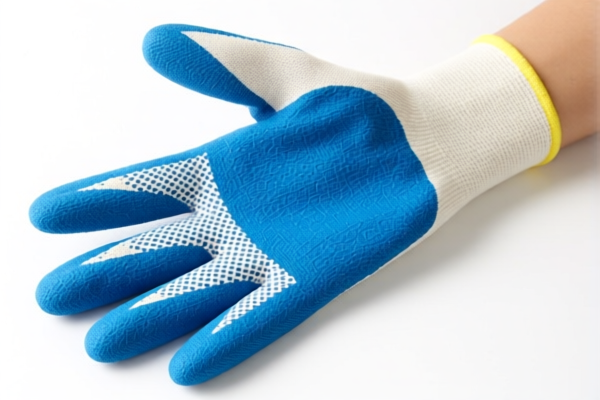
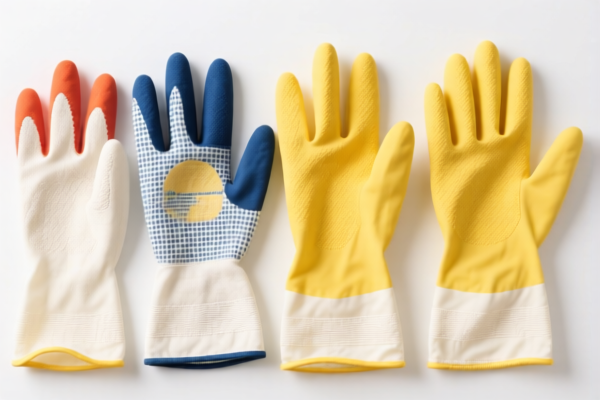
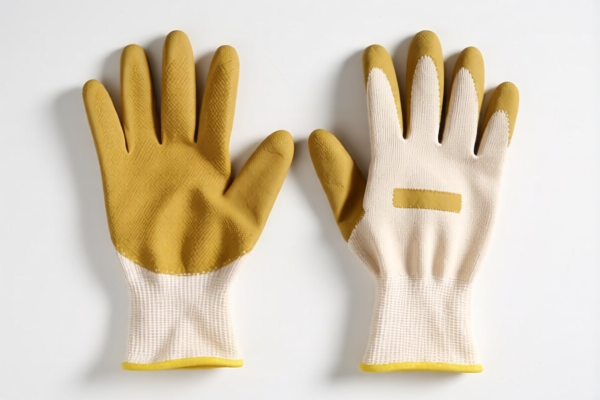
AI Analysis
🧤 Rubber Composite Four Finger Insertion Gloves: HS Code Classification & Customs Clearance Guide (2026)
🌐 HS Code Reference & Customs Strategy | 2026 Latest Tariff Analysis | Professional Clearance Protocol
📌 I. Product Definition & Classification: Are You Classifying "Gloves" Correctly?
Rubber Composite Four Finger Insertion Gloves (often referred to as "Four-Finger" or "Gloveless" hand protectors) are specialized industrial safety equipment. Unlike standard gloves, they feature a unique design with four distinct finger compartments and an open thumb or integrated thumb sleeve, allowing for enhanced dexterity and tactile sensitivity while maintaining protection.
In international trade, the classification hinges on two critical factors: 1. Material Composition: Is it pure rubber, or a composite material (e.g., rubber coated on fabric)? 2. Functional Category: Is it classified as a "Rubber Article" or as an "Apparel/Accessory"?
⚠️ Critical Distinction:
- If the product is primarily defined by its material properties (uncured rubber shaping), it falls under Chapter 40.
- If it is defined by its use as protective apparel/accessory and uses composite materials, it may fall under Chapter 39 (Plastics/Rubber Articles) or specific apparel headings, depending on the exact composition and USITC interpretations.
📦 II. HS Code Classification Details (2026 Latest Tariff Authority)
Based on the provided data, here are the three specific HS Code options for these gloves, along with their tax implications.
| HS Code | Product Description | Key Characteristics | Applicable Tax Rate (Total) |
|---|---|---|---|
4006.90.50.00 |
Uncured Rubber Shapes & Articles: Rubber composite gloves not inserted with four fingers (Note: Description implies classification under uncured rubber articles). | - Material: Rubber - Status: Uncured rubber shapes/articles - Excludes standard "inserted" glove classification in some contexts. |
37.7% |
3926.20.10.20 |
Apparel & Accessories: Rubber composite material gloves (clothing accessories). | - Material: Rubber Composite - Category: Clothing/Accessories - Designed for wear as apparel. |
10.0% |
3926.20.40.10 |
Headings 3926.20: Clothing accessories and apparel under heading 3926.20. | - Material: Rubber Composite - Category: Specific sub-heading for apparel accessories. - Higher base duty than 3926.20.10.20. |
16.5% |
🔍 Key Insight:
- HS 4006.90.50.00 treats the item largely as a raw material form or uncured rubber article, resulting in the highest tax burden (37.7%) due to significant additional tariffs.
- HS 3926.20.10.20 offers the lowest tax burden (10.0%) by classifying it as an apparel accessory, but requires strong justification that it is a "composite material" used as "clothing/attachment."
- HS 3926.20.40.10 is a middle ground, with a moderate tax rate of 16.5%.
💰 III. 2026 Latest Tariff Rate Breakdown (Including Additional Duties & Policy Surcharges)
✅ Applicable Country: United States (US)
✅ Origin: China (CN)
✅ Effective Time: Current trade policy (Section 301, Section 122, IEEPA implications)
🎯 1. 4006.90.50.00 — Uncured Rubber Shapes/Articles
| Item | Detail |
|---|---|
| Base Duty | 2.7% |
| Section 301 Surcharge | +25.0% |
| Section 122 Surcharge | +10.0% |
| Total Tax Rate | 37.7% |
| Tax Calculation | CIF Value × 37.7% |
| Legal Basis | USITC:4006.90.50.00 + Section 301 Footnote + Section 122 |
📌 Explanation:
- This classification attracts all major punitive tariffs: Base (2.7%) + Section 301 (25%) + Section 122 (10%).
- Total: 37.7%. This is a high-cost classification.
- Warning: If you can legally justify an alternative classification (e.g., under 3926), you may save significant costs.
🎯 2. 3926.20.10.20 — Apparel & Accessories (Rubber Composite)
| Item | Detail |
|---|---|
| Base Duty | 0.0% |
| Section 301 Surcharge | 0.0% |
| Section 122 Surcharge | +10.0% |
| Total Tax Rate | 10.0% |
| Tax Calculation | CIF Value × 10.0% |
| Legal Basis | USITC:3926.20.10.20 + Section 122 |
📌 Explanation:
- Most Cost-Effective Option.
- Base Duty: 0%. No Section 301 surcharge applies (likely due to specific exclusion or classification under "apparel accessories" which may have different treatment than raw rubber articles).
- Only Section 122 (10%) applies.
- Total: 10.0%.
- Requirement: Must prove the item is a "composite material" and functions as an "apparel accessory."
🎯 3. 3926.20.40.10 — Heading 3926.20 Apparel Accessories
| Item | Detail |
|---|---|
| Base Duty | 6.5% |
| Section 301 Surcharge | 0.0% |
| Section 122 Surcharge | +10.0% |
| Total Tax Rate | 16.5% |
| Tax Calculation | CIF Value × 16.5% |
| Legal Basis | USITC:3926.20.40.10 + Section 122 |
📌 Explanation:
- Moderate Cost Option.
- Base Duty: 6.5%.
- No Section 301 surcharge (similar to above).
- Section 122 (10%) applies.
- Total: 16.5%.
- Requirement: Must fit the specific sub-heading for "apparel accessories" under 3926.20.
🛠️ IV. Customs Clearance Practical Advice (Real-World Pitfall Avoidance)
✅ 1. Documentation Checklist (Non-Negotiable)
| Document | Required | Purpose |
|---|---|---|
| ✅ Product Specification Sheet | ✔️ | Must detail: Material composition (rubber vs. composite), construction method, and explicitly state "Four-Finger Insertion Design". |
| ✅ Material Composition Report | ✔️ | Prove if it is "Rubber Composite" (for 3926) or "Uncured Rubber" (for 4006). |
| ✅ Product Photos (Front/Back/Side) | ✔️ | Show the unique 4-finger opening. Proof of "Apparel" fit. |
| ✅ Commercial Invoice | ✔️ | Description must match HS Code exactly. Use terms like "Rubber Composite Safety Gloves, 4-Finger Design." |
| ✅ Origin Certificate | ✔️ | For Section 122 application. |
✅ 2. Classification Strategy (Key Mantra)
🔥 “Composite Apparel, Zero Section 301! Pure Rubber, Pay All Three!”
| Scenario | Recommended HS Code | Total Tax | Why? |
|---|---|---|---|
| High-Grade Composite Gloves (Rubber + Fabric/Other) | 3926.20.10.20 |
10.0% | Lowest tax. No Section 301. Best for cost-saving. |
| Mid-Tier Composite Gloves (Specific Sub-heading) | 3926.20.40.10 |
16.5% | Safe middle ground. No Section 301. |
| Uncured Rubber Shapes (Raw Material Form) | 4006.90.50.00 |
37.7% | Avoid if possible. Highest tax (Base + Sec 301 + Sec 122). |
📌 Critical Note:
- Do NOT automatically classify as4006.90.50.00unless the product is truly "uncured" or lacks composite features.
- If the gloves are finished, ready-to-wear protective apparel, strongly consider3926.20.10.20.
- Section 301 Exemption: Note that3926classifications appear to exclude Section 301 (25%) surcharges in this data, which is a major advantage.
✅ 3. Special Handling Tips
| Situation | Recommendation |
|---|---|
| OEM Custom Gloves | Provide design blueprints showing the "four-finger" cut. Proves it is not a standard glove but a specialized accessory. |
| Mixed Shipments | If shipping both pure rubber and composite gloves, separate them clearly in the invoice and packaging to avoid misclassification of the whole batch. |
| USITC Ruling | If uncertain, apply for a Binding Ruling with US Customs before shipment. Cost of ruling is low compared to 27% tax difference (37.7% vs 10.0%). |
| Section 122 | Be aware that Section 122 (10%) applies to ALL three classifications. It is unavoidable. |
🌍 V. Global Market Comparison (2026)
| Country/Region | Recommended HS Code | Tariff (China Origin) | Key Certification | Notes |
|---|---|---|---|---|
| 🇺🇸 USA | 3926.20.10.20 |
10.0% (Optimal) | No specific tech cert needed | Avoid 4006 (37.7%). |
| 🇨🇳 China | 3926.20.10.20 |
~5-7% (Import Duty) | CCC (if applicable) | Lower base duty, no US punitive tariffs. |
| 🇪🇺 EU | 3926.90.97 |
4.2% | REACH, CE (if PPE) | Different HS structure. Check EC PPE Reg. |
| 🇬🇧 UK | 3926.90.97 |
4.2% | UKCA (if PPE) | Post-Brexit rules apply. |
📌 Conclusion:
- USA is the most critical market due to punitive tariffs.
- Classification is everything: A shift from4006to3926saves 27.7% in taxes.
- Section 122 is the only universal surcharge for Chinese goods in this category.
📌 VI. Common Errors & Pitfall Guide (Lessons Learned)
❌ Error 1: Classifying composite gloves as "Uncured Rubber" (4006)
👉 Consequence: Pay 37.7% tax instead of 10%. Loss of 27.7% margin.
❌ Error 2: Ignoring "Four-Finger" design in description
👉 Consequence: Customs may reclassify as standard gloves (4015), leading to different tax rates and regulatory requirements (e.g., PPE standards).
❌ Error 3: Assuming "Rubber Gloves" always fall under Chapter 40
👉 Consequence: Missed opportunity for Chapter 39 (Plastics/Rubber Articles) which may have lower or zero Section 301 rates.
❌ Error 4: Not declaring Section 122 correctly
👉 Consequence: Penalties for undervaluation or incorrect duty calculation.
✅ Correct Approach:
"Rubber Composite Safety Gloves, Four-Finger Insertion Design, for Industrial Use, Model XYZ, Certified for PPE Standards"
🎯 VII. Conclusion: Precision Classification Saves Millions!
🎯 Remember the Mantra:
🔹 "Composite Apparel, Zero Sec 301! Pure Rubber, Pay All Three!"
🔹 "HS Code determines destiny! 27% difference can make or break your profit!"
📌 Pro Tip:
If your product is made of rubber composites and functions as protective apparel, always advocate for 3926.20.10.20 (10% total tax) unless you have a compelling reason to do otherwise.
Apply for a Pre-Ruling from US Customs if the classification is ambiguous.
📣 Immediate Action:
📞 Contact a licensed customs broker + Provide material specs + Request HS Code Pre-Ruling
🚀 Ensure your gloves, smooth clearance, low cost, high efficiency!
✨ Professional clearance starts with accurate classification!
💼 Every dollar of tax saved is pure profit!
Customer Reviews
About HS Code Classification
The Harmonized System (HS) is an internationally standardized nomenclature developed by the World Customs Organization (WCO) to classify traded products. Over 200 countries use the HS system as the basis for customs tariffs, trade statistics, and import/export regulations.
Each HS code follows a hierarchical structure:
- Chapter (2 digits) — Broad category of goods (e.g., Chapter 84: Machinery and Mechanical Appliances)
- Heading (4 digits) — More specific grouping within the chapter
- Subheading (6 digits) — Internationally standardized breakdown, used by all WCO member countries
- National subdivisions (8-10 digits) — Country-specific extensions for further classification, such as US HTSUS 10-digit codes
Correct HS code classification is essential for smooth customs clearance, accurate duty payment, and compliance with trade regulations. Misclassification can lead to customs delays, overpayment of duties, or penalties.
When importing from CN to US, the applicable tariff rates may include:
- Most-Favored-Nation (MFN) rate — The standard duty rate applied to WTO members
- General rate — Applied to countries without trade agreements
- Trade remedy duties — Additional tariffs such as Section 301 (anti-dumping), Section 232 (national security), or countervailing duties
The information provided on this page is for reference purposes only. For official classification, please consult with your local customs authority or a licensed customs broker.