Rubber Composite Paper Gasket
CN → US| HS Code | Tariff Rate | Origin | Destination | Doc |
|---|---|---|---|---|
| 8484900000 | 37.5% | CN | US | Official Doc |
| 4823908000 | 35.0% | CN | US | Official Doc |
| 4823906000 | 35.0% | CN | US | Official Doc |
Product Images
AI Analysis
🛠️ Rubber Composite Paper Gasket: HS Code Classification & U.S. Customs Clearance Guide (2026)
🌐 HS Code Reference & Customs Clearance Guide | 2026 Latest Tariff Analysis | Professional Entry Strategy
📌 1. Product Definition & Classification: What is a "Rubber Composite Paper Gasket"?
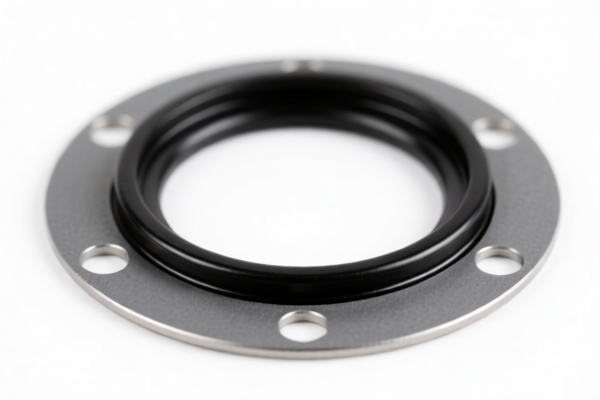
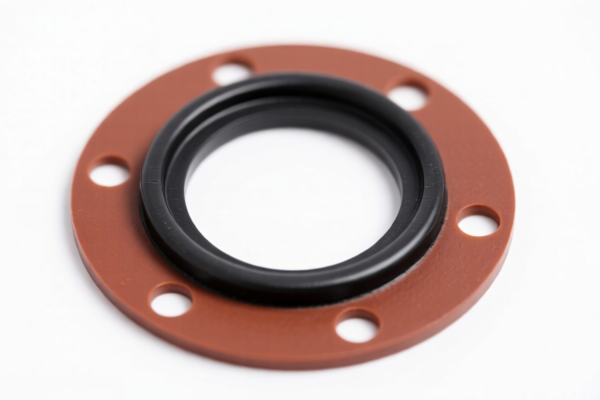
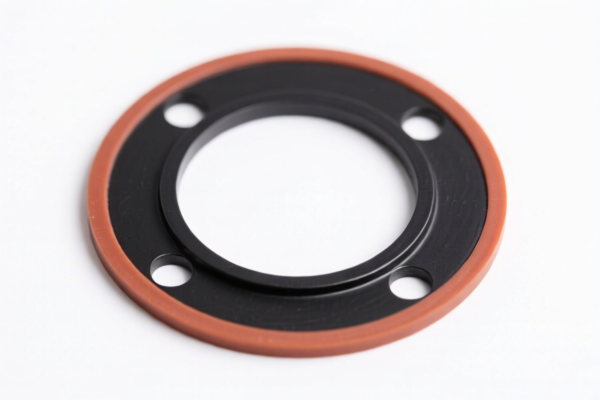
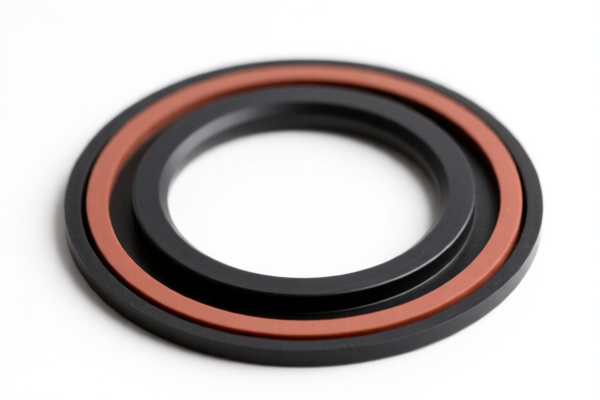
A Rubber Composite Paper Gasket is a sealing component used in industrial, automotive, or mechanical assemblies to prevent leakage of fluids or gases between two mating surfaces. It is not made entirely of rubber or paper, but rather a composite material where paper serves as the base or core layer, bonded with or coated by rubber for enhanced sealing, elasticity, and chemical resistance.
In international trade, this product is classified based on its primary material composition and function. According to the Harmonized System (HS), gaskets and similar joints are primarily classified under Chapter 84 (Machinery and Mechanical Appliances) if they are specifically designed as parts of machinery, or under Chapter 48 (Paper and Paperboard) if the paper content is dominant and the item fits the descriptive criteria for paper articles.
⚠️ Key Classification Distinction:
- If the gasket is a composite where the paper base is predominant and the rubber is a surface treatment or bonding layer, it may fall under Chapter 48 (Paper Articles).
- If the rubber component defines the essential character (e.g., thick rubber coating, rubber core), it might be considered under Chapter 40 (Rubber) or Chapter 84 (Parts of Machinery).
- However, based on the provided data, the classification leans towards Chapter 48 due to the explicit mention of "paper" as the primary structural material in the summary, or Chapter 84 if considered a "gasket" part.
📦 2. HS Code Classification Details (2026 Latest Tariff Authority Match)
Based on the provided JSON data, here are the three matched HS Codes with their tax details and summaries:
| HS Code | Summary from Data | Total Tax Rate | Tax Breakdown |
|---|---|---|---|
| 8484.90.00.00 | "The product is a paper gasket, matching the form of 'gaskets and similar joints'. Since 'ref' belongs to the 'Other' category, and paper is a reasonable component of non-metallic layered or multi-layer structures, there is no material conflict with metal sheet composites, so it is judged as compliant." | 37.5% | Base Tariff: 2.5% Additional Tariff: 25.0% Section 122 Tariff: 10% |
| 4823.90.80.00 | "Match Successful. The product name explicitly contains material (paper) and function (gasket), fully conforming to the material and functional description required by the classification." | 35.0% | Base Tariff: 0.0% Additional Tariff: 25.0% Section 122 Tariff: 10% |
| 4823.90.60.00 | "Match Successful. Product material is 'paper', form is 'gasket', fully conforming to the classification explanation’s material (paper/board) and use (gaskets, washers)." | 35.0% | Base Tariff: 0.0% Additional Tariff: 25.0% Section 122 Tariff: 10% |
🔍 Key Insight:
- The difference between 8484.90.00.00 and the 4823 series is primarily driven by the base tariff (2.5% vs. 0.0%).
- Both paths incur the same Additional Tariff (25%) and Section 122 Tariff (10%), resulting in a total rate of 35% or 37.5%.
- The 4823 codes are strongly supported by the explicit mention of "paper" as the defining material in the product name.
💰 3. 2026 Latest Tariff Rate Detailed Breakdown (Including Surcharge & Policy Surcharges)
✅ Applicable Country: United States (US)
✅ Country of Origin: China (CN)
✅ Effective Date: November 10, 2025 onwards (including subsequent imports)
🎯 1. HS Code 8484.90.00.00 — Gaskets and Similar Joints (Other)
| Item | Content |
|---|---|
| Base Tariff | 2.5% (ad valorem) |
| USITC Surcharge (Section 301) | +25% (From USITC Footnote 9903.88.01) |
| IEEPA Surcharge (Section 122) | +10% (For China/Hong Kong products, effective from Nov 10, 2025) |
| Total Tariff Rate | 37.5% |
| Tax Calculation | CIF Value × 37.5% |
| De Minimis Exemption Available? | ❌ No (deny_de_minimis) |
| Legal Basis Path | IEEPA:9903.01.25 → IEEPA:9903.01.24 → USITC:8484.90.00.00 → FOOTNOTE:9903.88.01 |
📌 Explanation:
- The 25% USITC surcharge is imposed under Section 301 of the Trade Act for Chinese goods.
- The 10% IEEPA surcharge is a new/additional duty under the International Emergency Economic Powers Act, targeting specific Chinese imports.
- Total 37.5% is a high tariff rate. Must be factored into cost calculations.
🎯 2. HS Code 4823.90.80.00 — Other Paper/Paperboard Articles (Not Specified Elsewhere)
| Item | Content |
|---|---|
| Base Tariff | 0% |
| USITC Surcharge (Section 301) | +25% |
| IEEPA Surcharge (Section 122) | +10% |
| Total Tariff Rate | 35.0% |
| Tax Calculation | CIF Value × 35.0% |
| De Minimis Exemption Available? | ❌ No (deny_de_minimis) |
| Legal Basis Path | IEEPA:9901.25 → IEEPA:9903.01.24 → USITC:4823.90.80.00 → FOOTNOTE:9903.88.01 |
📌 Note:
- Same surcharges as above, but 0% base tariff makes it 2.5% cheaper than8484.90.00.00.
- This code is appropriate if the gasket is primarily classified as a paper article due to the composite structure where paper is the main body.
🎯 3. HS Code 4823.90.60.00 — Paper/Paperboard Gaskets & Washers
| Item | Content |
|---|---|
| Base Tariff | 0% |
| USITC Surcharge (Section 301) | +25% |
| IEEPA Surcharge (Section 122) | +10% |
| Total Tariff Rate | 35.0% |
| Tax Calculation | CIF Value × 35.0% |
| De Minimis Exemption Available? | ❌ No (deny_de_minimis) |
| Legal Basis Path | IEEPA:9901.25 → IEEPA:9903.01.24 → USITC:4823.90.60.00 → FOOTNOTE:9903.88.01 |
📌 Note:
- This code is the most specific for "gaskets" made of paper or paperboard.
- If the product description explicitly states "paper gasket," this is the preferred classification due to specificity.
🛠️ 4. Customs Clearance Practical Advice (Avoid Pitfalls)
✅ 1. Required Documentation Checklist
| Document | Mandatory? | Description |
|---|---|---|
| ✅ Product Specification Sheet | ✔️ | Must include material composition (e.g., "Paper core with rubber coating"), dimensions, and sealing performance. |
| ✅ Product Photos (Including Nameplate) | ✔️ | Clear images showing the composite structure, edges, and any labeling. |
| ✅ Commercial Invoice | ✔️ | Must clearly state "Rubber Composite Paper Gasket" and the HS Code. |
| ✅ Packing List | ✔️ | Detail the quantity, weight, and packaging type. |
| ✅ Certificate of Origin (CO) | ✔️ | If not China-origin, may qualify for preferential rates (though unlikely for China). |
| ✅ Third-Party Test Report | ✔️ | If available, include material composition analysis to prove paper dominance. |
✅ 2. Declaration Tips (Key Rules)
🔥 "Specify Material, Declare Gasket, Avoid Vague Terms!"
| Scenario | Correct Declaration | Wrong Approach |
|---|---|---|
| Composite Gasket (Paper + Rubber) | 4823.90.60.00 (if paper is primary) or 8484.90.00.00 |
Vague terms like "Sealing Part" → Risk of higher tariff or detention |
| Gasket with Metal Reinforcement | May need reclassification to Chapter 84 or 73 | Do not declare as "paper" if metal is structural |
| Large Quantity (B2B) | Full declaration with HS Code | Do not rely on de minimis (under $800) — not allowed for these HS codes |
✅ 3. Special Handling
| Scenario | Recommendation |
|---|---|
| OEM Custom Gaskets | Provide customer orders and design drawings to prove intended use. |
| Gaskets for Automotive | Still classified under 4823 or 8484; do not misdeclare as "auto parts" unless specific auto part codes apply. |
| Gaskets for Industrial Machinery | Ensure the description matches the machine part if using 8484.90.00.00. |
🌍 5. Global Market Clearance Comparison (2026 Latest)
| Country/Region | Recommended HS Code | Tariff Rate (China Origin) | Certification Required | Notes |
|---|---|---|---|---|
| 🇺🇸 USA | 4823.90.60.00 or 8484.90.00.00 |
35% or 37.5% | None typically | High tariffs due to 301 & Section 122. |
| 🇨🇳 China | 4823.90.60.00 |
5% (approx.) | CCC (if applicable) | Lower import duty, no US surcharges. |
| 🇪🇺 EU | 4823.90.80.00 |
0% (if FTA) | CE (if machinery) | No Section 122 or 301 tariffs. |
| 🇬🇧 UK | 4823.90.80.00 |
0% | UKCA | Post-Brexit rules apply. |
| 🇯🇵 Japan | 4823.90.80.00 |
0% | PSE (if electrical) | No major surcharges. |
📌 Conclusion:
- The US market imposes the highest cost due to additional tariffs.
- China-origin gaskets face 35–37.5% total duty, significantly higher than other markets.
- Consider supply chain diversification if shipping to the US is cost-prohibitive.
📌 6. Common Mistakes & Pitfalls (Lessons Learned)
❌ Mistake 1: Declaring as "Rubber Gasket" when paper is dominant
👉 Result: Misclassification → Potential penalty or higher duty if reclassified.
❌ Mistake 2: Using "Gasket" without material specification
👉 Result: Customs may assign a default higher tariff code.
❌ Mistake 3: Assuming de minimis ($800) applies
👉 Result: Denial of entry — these HS codes are excluded from de minimis relief for China-origin goods.
❌ Mistake 4: Mixing metal-reinforced gaskets with paper-only classification
👉 Result: Detention for inspection, possible reclassification to Chapter 84 or 73.
✅ Correct Approach:
"Rubber Composite Paper Gasket, 100mm Diameter, Paper Core with Rubber Coating, For Industrial Use, Model XYZ"
🎯 7. Conclusion: Accurate Classification Saves Money!
🎯 Remember:
🔹 "Paper Dominant? Use 4823. Rubber Dominant? Use 40 or 84."
🔹 "US Import? Prepare for 35–37.5% Duty. No De Minimis!"
🔹 "Specify Material, Declare Clearly, Avoid Penalties."
📌 Pro Tip:
If your gaskets are originating from Vietnam, Mexico, or Malaysia, you may qualify for IEEPA exemptions or lower tariffs.
Recommend applying for a Pre-Ruling from U.S. Customs to confirm the correct HS Code and avoid clearance delays.
📣 Immediate Action Required:
📞 Contact a licensed customs broker + Provide product specs + Apply for HS Code Pre-Ruling
🚀 Ensure smooth clearance, minimize costs, and protect your profit margins!
✨ Professional clearance starts with precise classification!
💼 Every dollar of duty matters!
Customer Reviews
About HS Code Classification
The Harmonized System (HS) is an internationally standardized nomenclature developed by the World Customs Organization (WCO) to classify traded products. Over 200 countries use the HS system as the basis for customs tariffs, trade statistics, and import/export regulations.
Each HS code follows a hierarchical structure:
- Chapter (2 digits) — Broad category of goods (e.g., Chapter 84: Machinery and Mechanical Appliances)
- Heading (4 digits) — More specific grouping within the chapter
- Subheading (6 digits) — Internationally standardized breakdown, used by all WCO member countries
- National subdivisions (8-10 digits) — Country-specific extensions for further classification, such as US HTSUS 10-digit codes
Correct HS code classification is essential for smooth customs clearance, accurate duty payment, and compliance with trade regulations. Misclassification can lead to customs delays, overpayment of duties, or penalties.
When importing from CN to US, the applicable tariff rates may include:
- Most-Favored-Nation (MFN) rate — The standard duty rate applied to WTO members
- General rate — Applied to countries without trade agreements
- Trade remedy duties — Additional tariffs such as Section 301 (anti-dumping), Section 232 (national security), or countervailing duties
The information provided on this page is for reference purposes only. For official classification, please consult with your local customs authority or a licensed customs broker.