Rubber Conveyor Belt with Main Plant Fibers
CN → US| HS Code | Tariff Rate | Origin | Destination | Doc |
|---|---|---|---|---|
| 4010316000 | 37.8% | CN | US | Official Doc |
| 4010313000 | 38.4% | CN | US | Official Doc |
| 5910001010 | 39.0% | CN | US | Official Doc |
Product Images

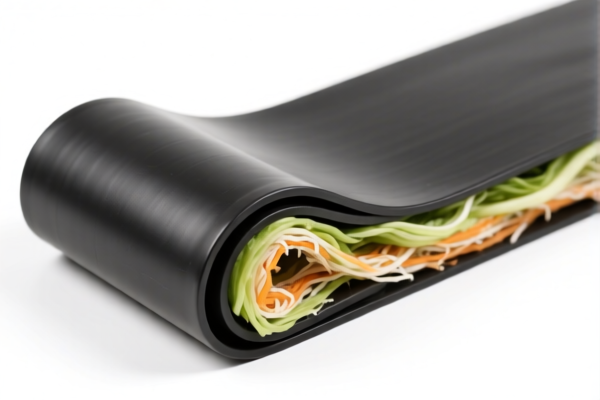

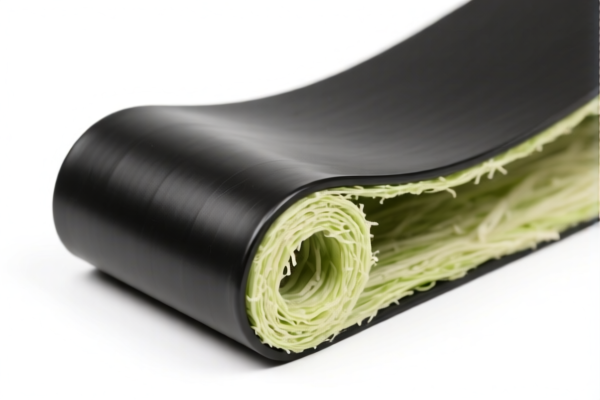
AI Analysis
🛡️ Rubber Transmission Belts with Plant Fibers: Classification, Tariffs & Clearance Strategy
🌐 HS Code Reference & Customs Clearance Guide | 2026 Latest Tariff Analysis | Professional Compliance Strategy
📌 I. Product Definition & Classification: Do You Understand "Rubber Transmission Belts"?
Rubber Transmission Belts are critical power transmission components used in industrial machinery, automotive engines, and agricultural equipment. They convert rotational motion into linear motion or transmit power between shafts. The classification hinges on material composition (pure rubber vs. reinforced) and shape/form (V-belt, flat belt, etc.).
The input "Rubber Conveyor Belt with Main Plant Fibers" contains a critical terminology conflict: 1. "Conveyor Belt" vs. "Transmission Belt": In HS Code terms, "Conveyor Belts" (typically Chapter 40 or 59) and "Transmission Belts" (Chapter 40 or 59 depending on material) are often grouped under 4010 or 5910. However, the provided data focuses on Transmission Belts (4010/5910). 2. "Plant Fibers": This indicates reinforcement material. Pure rubber belts without fabric reinforcement fall under different subheadings than those with textile/plant fiber reinforcement.
⚠️ Key Distinction:
- If the belt is primarily rubber with plant fiber reinforcement (e.g., cotton, hemp) and is a V-belt or flat transmission belt, it likely falls under 4010.31 or 5910.00.
- Crucial Note: The term "Conveyor Belt" in the user input is likely a misnomer for "Transmission Belt" given the HS codes provided (4010/5910 are for transmission belts/belting). We will proceed based on the provided HS Codes which are all Transmission Belts.
📦 II. HS Code Classification Details (2026 Latest Tariff Authority Comparison)
Based on the provided data, here are the three possible classifications for rubber transmission belts, categorized by material and form.
| HS Code | Product Description | Application Scenario | Key Differentiator |
|---|---|---|---|
4010.31.60.00 |
Rubber Transmission Belts: Matched to Vulcanized Rubber material & Transmission Purpose | High-strength industrial V-belts, serpentine belts where rubber is the primary structural component. | Focus on Material (Vulcanized Rubber) and Function. |
4010.31.30.00 |
Rubber Transmission Belts: Matched to Rubber Material & Transmission Belt Form | Standard rubber V-belts, flat belts where the shape/form is the primary classifier. | Focus on Form (V-belt/Flat) within Chapter 40. |
5910.00.10.10 |
Transmission Belts: Matched to V-Belt Form & Artificial/Synthetic Fiber/Composite Material Range | Belts where textile/plant fiber reinforcement (like the "Main Plant Fibers" in input) is dominant or the belt is classified under Chapter 59 due to heavy textile reinforcement. | Focus on Reinforcement Material (Plant/Fiber) and Form (V-Belt). |
🔍 Critical Alert:
- The user input specifies "Main Plant Fibers". This strongly suggests the belt is reinforced with natural fibers (cotton/hemp).
- Chapter 40 (4010) generally covers rubber belts. Chapter 59 (5910) covers textile-reinforced transmission belts.
- If the belt is primarily rubber with plant fiber cords, it may fall under 4010.31.
- If the belt is primarily textile/plant fiber with rubber coating, it may fall under 5910.00.10.10.
- Recommendation: Determine the weight ratio of rubber to plant fibers. If rubber > fiber, lean towards 4010. If fiber > rubber or the belt is essentially a textile belt with rubber, lean towards 5910.
💰 III. 2026 Latest Tariff Rate Breakdown (Including Surcharges & Policy Add-ons)
✅ Applicable Country: United States (US)
✅ Country of Origin: China (CN) (Implied by the 122 Section & 301 Tariffs)
✅ Effective Date: Current tariffs apply (2025-2026 context)
🎯 1. 4010.31.60.00 —— Rubber Transmission Belts (Vulcanized Rubber Focus)
| Item | Content |
|---|---|
| Base Tariff | 2.8% (Most Favored Nation rate) |
| Section 301 Tariff | +25.0% (Additional tariff on Chinese goods) |
| Section 122 Tariff | +10.0% (Specific penalty tariff on Chinese goods) |
| Total Effective Rate | 37.8% |
| Tax Calculation | CIF Value × 37.8% |
| De Minimis Eligibility | ❌ No (Do not qualify for de minimis exemption) |
| Legal Basis Path | HTSUS:4010.31.60.00 → Section 301: Footnote 9903.88.01 → Section 122: IEEPA Authority |
📌 Explanation:
- Base Rate (2.8%): Standard US MFN duty for rubber transmission belts.
- Section 301 (25%): Imposed under the Trade Act of 1974, Section 301, targeting Chinese imports in specific categories.
- Section 122 (10%): An additional punitive tariff imposed on certain Chinese goods, often overlapping with Section 301.
- Total (37.8%): This is a high-cost classification. Importers must account for this in landed cost calculations.
🎯 2. 4010.31.30.00 —— Rubber Transmission Belts (Form-Based Classification)
| Item | Content |
|---|---|
| Base Tariff | 3.4% |
| Section 301 Tariff | +25.0% |
| Section 122 Tariff | +10.0% |
| Total Effective Rate | 38.4% |
| Tax Calculation | CIF Value × 38.4% |
| De Minimis Eligibility | ❌ No |
| Legal Basis Path | HTSUS:4010.31.30.00 → Section 301: Footnote 9903.88.01 → Section 122 |
📌 Note:
- Slightly higher base rate (3.4% vs 2.8%) due to specific subheading nuances.
- Same surcharges apply. No tariff advantage over 4010.31.60.00.
🎯 3. 5910.00.10.10 —— Transmission Belts (V-Belt, Textile/Plant Fiber Reinforced)
| Item | Content |
|---|---|
| Base Tariff | 4.0% |
| Section 301 Tariff | +25.0% |
| Section 122 Tariff | +10.0% |
| Total Effective Rate | 39.0% |
| Tax Calculation | CIF Value × 39.0% |
| De Minimis Eligibility | ❌ No |
| Legal Basis Path | HTSUS:5910.00.10.10 → Section 301 → Section 122 |
📌 Warning:
- This is the highest total tariff (39.0%) among the three options.
- Classifying as "Textile/Plant Fiber" reinforced belts may attract higher base duties.
- Strategic Implication: If the belt can be legitimately classified under 4010 (Rubber-focused) rather than 5910 (Fiber-focused), you save 1.2% on the base rate. However, Section 301 and 122 apply equally, so the total difference is minimal but still costly.
🛠️ IV. Customs Clearance Practical Advice (Battle-Tested Pitfall Guide)
✅ 1. Documentation Checklist (Mandatory)
| Document | Required? | Explanation |
|---|---|---|
| ✅ Product Specification Sheet | ✔️ | Must detail: Material composition (Rubber %, Plant Fiber %), Dimensions, Tensile Strength, Intended Use (Transmission vs. Conveyor). |
| ✅ Material Safety Data Sheet (MSDS) | ✔️ | For rubber compounds and any chemical treatments. |
| ✅ Commercial Invoice | ✔️ | Must explicitly state: "Rubber Transmission Belts, Reinforced with Plant Fibers, For Power Transmission, HS Code XXXX". Avoid ambiguous terms like "Conveyor Belt" if it’s actually a transmission belt. |
| ✅ Packing List | ✔️ | Show unit weight, dimensions, and country of origin. |
| ✅ Certificate of Origin | ✔️ | Essential for verifying China origin (to confirm Section 301/122 applicability). |
| ✅ Label/Marking Photos | ✔️ | Must show model number, rubber type, and fiber content if marked. |
✅ 2. Declaration Tips (Critical Mnemonics)
🔥 "Material Defines HS, Form Confirms It, Name Must Be Precise!"
| Scenario | Correct Declaration Approach | Wrong Approach |
|---|---|---|
| Belt is Rubber-heavy with plant fiber cords | Declare as Rubber Transmission Belt (4010) | Call it "Textile Belt" → Risk of 39% rate |
| Belt is Fiber-heavy with rubber coating | Declare as Textile- Reinforced Transmission Belt (5910) | Call it "Rubber Belt" → Misclassification |
| Misleading Name: "Conveyor Belt" | Correct: "Transmission Belt" (if used for power transmission) | Use "Conveyor Belt" → May trigger Chapter 40/59 scrutiny or wrong HS code |
| Origin: China | Declare as China Origin | Hide origin → Fraud, severe penalties |
✅ 3. Special Circumstances Handling
| Situation | Handling Advice |
|---|---|
| OEM Custom Belts | Provide customer drawings + material specs. Ensure HS code matches the physical product, not just the brand. |
| "Conveyor" vs. "Transmission" Confusion | If the belt is used for conveying materials (not power transmission), it may fall under 4010.92 or 4010.36. But the provided data is for Transmission Belts (4010.31/5910.00). Clarify use! If it’s truly a conveyor belt, these HS codes may be wrong. |
| Plant Fiber Source | If plant fibers are natural (cotton/hemp), ensure they are declared correctly. Some natural fibers may have different country-of-origin implications if blended. |
| Anti-Dumping/Countervailing Duties (AD/CVD) | Check if rubber transmission belts are subject to AD/CVD on China. Currently, Section 301 and 122 are the main surcharges, but AD/CVD could add more. |
🌍 V. Global Market Customs Comparison (2026 Latest)
| Country/Region | Recommended HS Code | Tariff Rate | Certification Requirements | Notes |
|---|---|---|---|---|
| 🇺🇸 United States | 4010.31.60.00 or 5910.00.10.10 |
37.8% - 39.0% | FCC (if electronic components), RoHS (if applicable) | High tariffs due to Section 301 & 122. |
| 🇨🇳 China | 4010.31.60.00 |
2.8% - 4.0% | CCC (if mandatory) | Low import duty, but consider export taxes. |
| 🇪🇺 European Union | 4010.31.60.00 |
~2.5% | CE (if machinery), REACH (chemicals) | No Section 301/122. Lower total cost. |
| 🇬🇧 United Kingdom | 4010.31.60.00 |
~2.5% | UKCA | Post-Brexit rules apply. |
| 🇨🇦 Canada | 4010.31.60.00 |
0% - 5% | None specific | CUSMA benefits may apply if Canadian/Mexican origin. |
📌 Conclusion:
- The US market is the most expensive due to Section 301 and Section 122 tariffs.
- Consider supply chain diversification: If possible, source from Vietnam, Mexico, or Thailand to avoid Section 301/122 (check specific country rulings).
- Classification Accuracy: Ensure the belt is correctly identified as Transmission (for power) vs. Conveyor (for material movement). Misclassification can lead to audits and back-taxes.
📌 VI. Common Errors & Pitfalls Guide (Lessons Learned)
❌ Error 1: Calling a Transmission Belt a "Conveyor Belt" in the commercial invoice.
👉 Consequence: Customs may misclassify it, leading to delays, additional duties, or penalties.
Fix: Use precise terminology: "Rubber Transmission Belt, V-Type, Reinforced with Plant Fibers."
❌ Error 2: Assuming Section 122 doesn’t apply to rubber products.
👉 Consequence: Underpaying duties by 10%.
Fix: Verify Section 122 applicability for all Chinese-origin rubber goods.
❌ Error 3: Ignoring Material Composition (Rubber vs. Fiber).
👉 Consequence: Wrong HS code (e.g., using 5910 when 4010 is correct, or vice versa).
Fix: Analyze the weight percentage of rubber vs. plant fibers.
❌ Error 4: Not declaring Section 301/122 correctly.
👉 Consequence: Seizure of goods, fines, and potential import bans.
Fix: Always include Section 301 and 122 codes in customs entries for China-origin goods.
✅ Correct Declaration Example:
"Rubber Transmission Belts, Model XYZ, Vulcanized Rubber with Plant Fiber Reinforcement, V-Belt Shape, For Industrial Power Transmission, HS Code 4010.31.60.00, Origin: China"
🎯 VII. Conclusion: Precision Classification for Cost Efficiency!
🎯 Key Takeaways:
🔹 "Rubber vs. Fiber: Know Your Weight Ratio!"
🔹 "Section 301 + 122 = 35% Surcharge on China Origin!"
🔹 "Total Tariff: 37.8% - 39.0% – Budget Accordingly!"
📌 Pro Tip:
If your product is eligible for Exclusions under Section 301, apply for them immediately. Also, consider Duty Drawback programs if you re-export or use the belts in manufactured goods.
📣 Immediate Action:
📞 Consult a Customs Broker: Verify HS Code with
4010.31.60.00vs.5910.00.10.10based on material weight.
📄 Prepare Accurate Documentation: Clearly state material composition and intended use.
🚀 Optimize Landed Cost: Factor in 37.8%-39.0% tariff to maintain profit margins.
✨ Professional Clearance, Starting with Accurate Classification!
💼 Every Percent of Tariff Counts – Optimize Your Supply Chain Today!
Customer Reviews
About HS Code Classification
The Harmonized System (HS) is an internationally standardized nomenclature developed by the World Customs Organization (WCO) to classify traded products. Over 200 countries use the HS system as the basis for customs tariffs, trade statistics, and import/export regulations.
Each HS code follows a hierarchical structure:
- Chapter (2 digits) — Broad category of goods (e.g., Chapter 84: Machinery and Mechanical Appliances)
- Heading (4 digits) — More specific grouping within the chapter
- Subheading (6 digits) — Internationally standardized breakdown, used by all WCO member countries
- National subdivisions (8-10 digits) — Country-specific extensions for further classification, such as US HTSUS 10-digit codes
Correct HS code classification is essential for smooth customs clearance, accurate duty payment, and compliance with trade regulations. Misclassification can lead to customs delays, overpayment of duties, or penalties.
When importing from CN to US, the applicable tariff rates may include:
- Most-Favored-Nation (MFN) rate — The standard duty rate applied to WTO members
- General rate — Applied to countries without trade agreements
- Trade remedy duties — Additional tariffs such as Section 301 (anti-dumping), Section 232 (national security), or countervailing duties
The information provided on this page is for reference purposes only. For official classification, please consult with your local customs authority or a licensed customs broker.