Rubber Covering
CN → US| HS Code | Tariff Rate | Origin | Destination | Doc |
|---|---|---|---|---|
| 4016990500 | 20.9% | CN | US | Official Doc |
| 4016910000 | 37.7% | CN | US | Official Doc |
| 4016990500 | 20.9% | CN | US | Official Doc |
| 4016910000 | 37.7% | CN | US | Official Doc |
| 4016990500 | 20.9% | CN | US | Official Doc |
Product Images
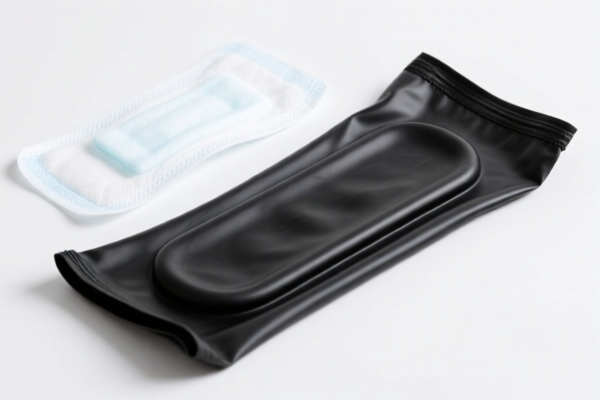
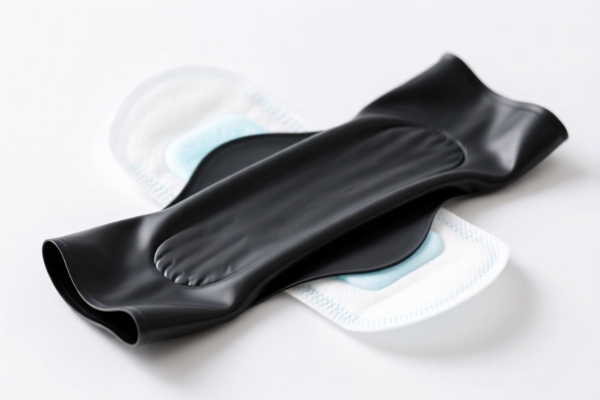
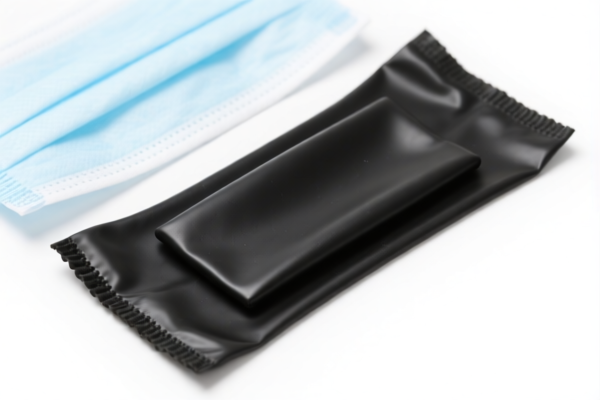
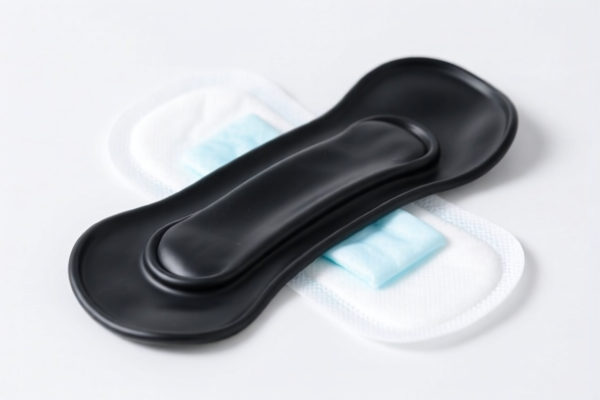
AI Analysis
🛡️ Rubber Covering (硫化橡胶覆盖物)
🌐 HS Code Reference & Customs Clearance Guide | 2026 Latest Tariff Analysis | Professional Classification Strategy
📌 I. Product Definition & Classification: What is "Rubber Covering"?
In international trade, "Rubber Covering" typically refers to articles made of Vulcanized Rubber, used as protective, sealing, or covering layers for various equipment, pipes, or surfaces. Unlike simple raw rubber sheets, these are often finished articles with specific shapes or functions.
⚠️ Key Classification Distinction:
- Specific Purpose: If the covering is exclusively designed for a specific machine part (e.g., specific tire tread, specific conveyor belt segment), it may fall under different subheadings.
- General/Non-Specific Purpose: If it is a general-purpose rubber sheet, mat, or covering not specifically designed for one single machine, it falls under "Other articles of vulcanized rubber other than hard rubber" (Heading 4016).📌 Critical Note for 2026:
- Material: Must be Vulcanized Rubber (硫化橡胶).
- Form: Sheets, rolls, mats, or shaped covers.
- Avoid: Pure natural rubber sheets without vulcanization (rare in finished goods) or hard rubber (ebonite).
📦 II. HS Code Classification Details (2026 Latest Tariff Authority Match)
Based on the provided data, two primary HS Codes apply, differentiated by tariff treatment and specific classification logic.
| HS Code | Product Description | Summary of Match | Total Tax Rate |
|---|---|---|---|
4016.99.05.00 |
Other articles of vulcanized rubber, not specifically covered elsewhere | Matches "兜底" (Catch-all) Rule: General-purpose rubber covering, non-specific use. | 20.9% |
4016.91.00.00 |
Other rubber floor coverings and mats | Exact Match: Rubber covering classified as floor covering/mat. | 37.7% |
🔍 Detailed Classification Logic:
-4016.99.05.00:
- Logic: The item is made of vulcanized rubber and serves as a covering but does not fit into specific categories like floor mats, gaskets, or seals. It is classified under "Other articles" (4016.99).
- Why this code?: It fits the "catch-all" (兜底) rule for non-specific rubber articles.
4016.91.00.00:- Logic: If the "rubber covering" is physically a mat or floor covering (e.g., rubber anti-slip mats, gym mats, industrial floor mats), it must be classified here.
- Why this code?: The description "Rubber Covering" is interpreted as a "mat/floor covering" in this context, leading to a higher tax burden.
💰 III. 2026 Latest Tariff Rate Breakdown (Including Surtaxes)
✅ Applicable Country: United States (US)
✅ Origin: China (CN)
✅ Effective Date: Post-November 2025 (Including subsequent imports)
🎯 1. 4016.99.05.00 —— Other Articles of Vulcanized Rubber (General Covering)
| Item | Content |
|---|---|
| Base Duty Rate | 3.4% (Ad Valorem) |
| Section 301 Surtax | +7.5% (Additional Duty) |
| Section 122 Tariff | +10% (Specific Clause 122) |
| Total Tax Rate | 20.9% |
| Tax Calculation | CIF Value × 20.9% |
| De Minimis Exemption | ❌ Not Eligible (High risk of denial) |
| Legal Path | HTSUS:4016.99.05.00 → Section 301: 7.5% → Section 122: 10% |
📌 Explanation:
- This is the preferred classification for general rubber coverings (e.g., protective covers for machinery, tanks, or non-floor applications).
- The 20.9% rate is significantly lower than the alternative, making it the optimal choice if the product is not a floor mat.
🎯 2. 4016.91.00.00 —— Other Rubber Floor Coverings and Mats
| Item | Content |
|---|---|
| Base Duty Rate | 2.7% (Ad Valorem) |
| Section 301 Surtax | +25.0% (Additional Duty) |
| Section 122 Tariff | +10% (Specific Clause 122) |
| Total Tax Rate | 37.7% |
| Tax Calculation | CIF Value × 37.7% |
| De Minimis Exemption | ❌ Not Eligible |
| Legal Path | HTSUS:4016.91.00.00 → Section 301: 25% → Section 122: 10% |
📌 Explanation:
- If the rubber covering is deemed a floor mat or floor covering, the Section 301 surtax jumps to 25%.
- Even though the base duty is lower (2.7%), the total rate (37.7%) is nearly double that of the general category.
- Risk: Misclassifying a general cover as a "floor mat" can lead to underpayment and penalties. Conversely, misclassifying a floor mat as a general cover can lead to overpayment.
🛠️ IV. Customs Clearance Practical Advice (Real-World Pitfall Guide)
✅ 1. Documentation Checklist (Essential for Clearing)
| Document | Required? | Purpose |
|---|---|---|
| ✅ Product Specification Sheet | ✔️ | Must clearly state: Material (Vulcanized Rubber), Thickness, Hardness (Shore A), Application (General Covering vs. Floor Mat). |
| ✅ Product Photos | ✔️ | Show the item’s shape. If it looks like a flat sheet or roll, argue for 4016.99.05.00. If it has edges, texture, or is cut into mat shapes, prepare for 4016.91.00.00. |
| ✅ Commercial Invoice | ✔️ | Description should avoid ambiguous terms like "Rubber Mat" if you want to aim for the lower rate. Use "Rubber Covering Sheet" or "Protective Rubber Covering". |
| ✅ Origin Certificate | ✔️ | Confirm Chinese origin to apply the correct Surtaxes. |
| ✅ Composition Test Report | ✔️ | Proof of Vulcanization (cross-linking). Raw rubber is classified differently. |
✅ 2. Declaration Strategy (Key Mnemonics)
🔥 "Shape Matters, Use Dictates Class!"
| Scenario | Recommended HS Code | Declaration Name | Reason |
|---|---|---|---|
| Rolls/Sheets of rubber for protective covering | 4016.99.05.00 |
"Vulcanized Rubber Covering Sheet" | Not specifically a floor mat; fits "Other articles". |
| Mats with anti-slip texture, for floors | 4016.91.00.00 |
"Rubber Floor Mat" | Explicitly fits "Floor Coverings and Mats". |
| Shaped Covers for machinery parts | 4016.99.05.00 |
"Vulcanized Rubber Machine Cover" | Non-specific purpose; "Other articles". |
| Door Seals or Gaskets | 4016.99.05.00 |
"Rubber Seal/Gasket" | Not a floor covering. |
⚠️ Critical Warning:
- Do NOT declare a floor mat as a "rubber covering" to save taxes. CBP (U.S. Customs) frequently audits this. If the product is clearly a mat, use4016.91.00.00.
- Do NOT declare a general cover as a "floor mat". You will pay 37.7% instead of 20.9%.
🌍 V. Global Market Comparison (2026)
| Country/Region | Recommended HS Code | Base Duty | Surtaxes | Total Rate | Notes |
|---|---|---|---|---|---|
| 🇺🇸 USA | 4016.99.05.00 |
3.4% | 17.5% (301+122) | 20.9% | Best for general covers. |
| 🇺🇸 USA | 4016.91.00.00 |
2.7% | 35.0% (301+122) | 37.7% | High tax for floor mats. |
| 🇨🇳 China | 4016.99.05.00 |
8.0% | 0% | 8.0% | Lower domestic/import duty. |
| 🇪🇺 EU | 4016.99.00 |
6.5% | 0% | 6.5% | No Section 301 equivalent. |
| 🇬🇧 UK | 4016.99.00 |
6.5% | 0% | 6.5% | Post-Brexit aligned with EU. |
| 🇯🇵 Japan | 4016.99.00 |
6.0% | 0% | 6.0% | Stable tariff structure. |
📌 Conclusion:
- The USA imposes the highest effective tariff due to Section 301 and Section 122.
- The difference between 20.9% and 37.7% is significant. Accurate classification based on product use and shape is critical for cost control.
📌 VI. Common Errors & Pitfalls (Lessons Learned)
❌ Error 1: Calling a floor mat a "Rubber Covering" to avoid the 25% Section 301 tax.
👉 Consequence: Customs audits will reclassify it, leading to back taxes + penalties.
❌ Error 2: Calling a protective machine cover a "Floor Mat".
👉 Consequence: You will pay 37.7% instead of 20.9%, unnecessarily increasing costs.
❌ Error 3: Failing to prove Vulcanization.
👉 Consequence: If the rubber is not vulcanized, it may fall under Chapter 40 (Raw Rubber) or 4008, changing the duty structure entirely.
❌ Error 4: Ignoring Section 122 Tariff.
👉 Consequence: Even if you get the base duty right, forgetting the 10% Clause 122 will result in underpayment and shipment delays.
✅ Correct Approach:
"Vulcanized Rubber Covering, General Purpose, Not for Flooring – HS 4016.99.05.00"
"Rubber Anti-Slip Floor Mat – HS 4016.91.00.00"
🎯 VII. Conclusion: Precise Classification Saves Money!
🎯 Remember the Mnemonic:
🔹 "General Cover = 20.9%, Floor Mat = 37.7%!"
🔹 "Vulcanize it, Shape it, Classify it Right!"📌 Pro Tip:
If your product is a versatile rubber sheet that can be cut for multiple uses (machinery covers, liners, etc.), explicitly state "Non-Floor Covering" in your commercial invoice to support classification under4016.99.05.00.
For floor-specific mats, be honest and use4016.91.00.00to avoid audit risks.
📣 Immediate Action:
📞 Contact a Customs Broker + Provide Product Photos + Confirm Final Use Case.
🚀 Optimize Your Tariff Rate, Ensure Smooth Clearance, and Maximize Profit!
✨ Professional Clearance Starts with Accurate Classification!
💼 Your Cost Savings Are Worth the Precision!
Customer Reviews
About HS Code Classification
The Harmonized System (HS) is an internationally standardized nomenclature developed by the World Customs Organization (WCO) to classify traded products. Over 200 countries use the HS system as the basis for customs tariffs, trade statistics, and import/export regulations.
Each HS code follows a hierarchical structure:
- Chapter (2 digits) — Broad category of goods (e.g., Chapter 84: Machinery and Mechanical Appliances)
- Heading (4 digits) — More specific grouping within the chapter
- Subheading (6 digits) — Internationally standardized breakdown, used by all WCO member countries
- National subdivisions (8-10 digits) — Country-specific extensions for further classification, such as US HTSUS 10-digit codes
Correct HS code classification is essential for smooth customs clearance, accurate duty payment, and compliance with trade regulations. Misclassification can lead to customs delays, overpayment of duties, or penalties.
When importing from CN to US, the applicable tariff rates may include:
- Most-Favored-Nation (MFN) rate — The standard duty rate applied to WTO members
- General rate — Applied to countries without trade agreements
- Trade remedy duties — Additional tariffs such as Section 301 (anti-dumping), Section 232 (national security), or countervailing duties
The information provided on this page is for reference purposes only. For official classification, please consult with your local customs authority or a licensed customs broker.